

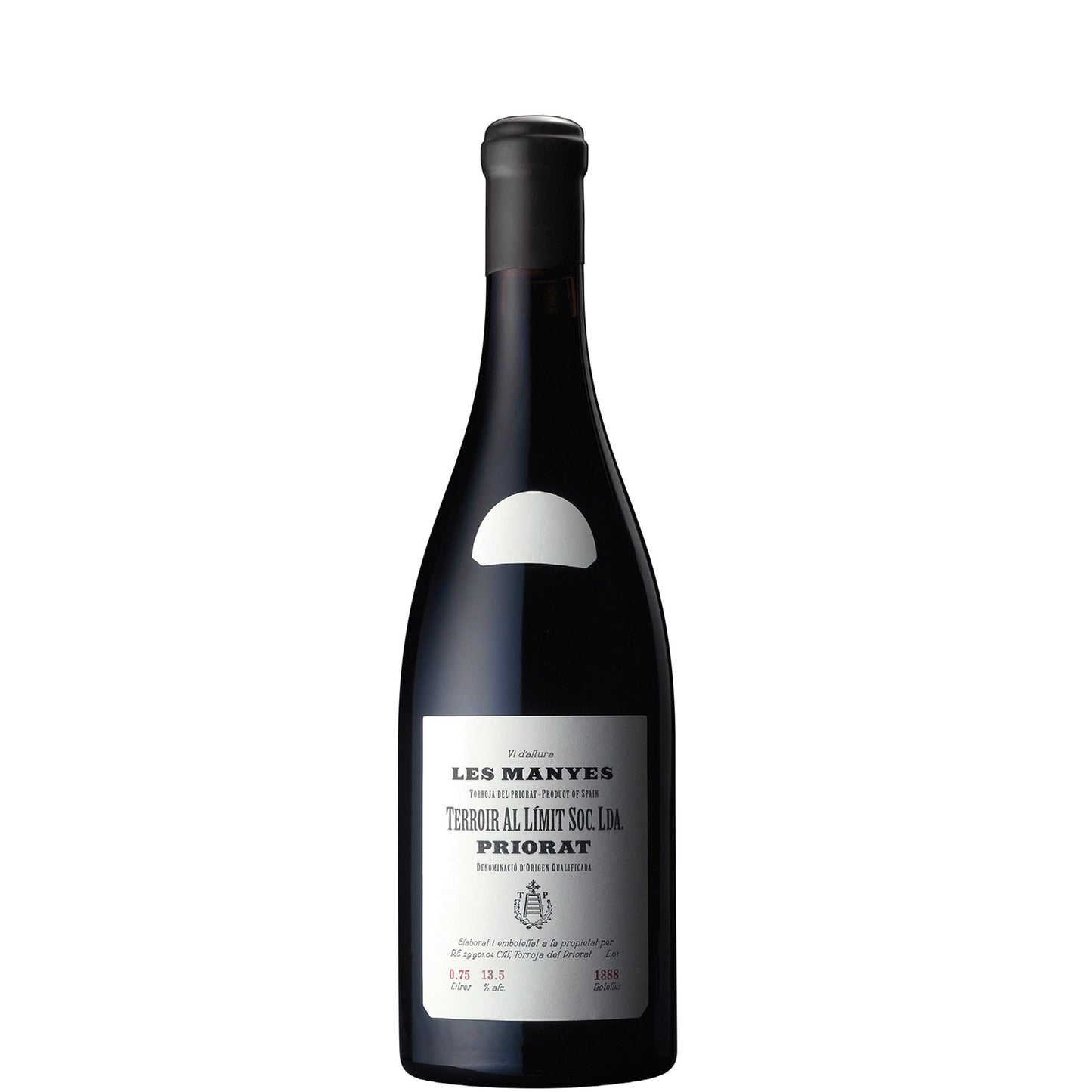
Terroir Al Límit, Les Manyes, 2018
Terroir Al Límit, Les Manyes, 2018
- 75cl
- 14.5%
- Red Still
- Garnacha
- Organic
- Biodynamic
- Vegan
Couldn't load pickup availability

Optimal drinking window: Now - 2034
Les Manyes is the single-vineyard crown jewel of Terroir Al Límit, Dominik Huber's quietly revolutionary project in Priorat. Made from old Garnatxa vines on llicorella slate, it is the antithesis of the region's old blockbuster reputation — no extraction, no new oak swagger, just a wine of needle-sharp precision and an almost Burgundian delicacy.
The 2018 is a superb vintage for the wine: pale, reserved, and beguilingly shy when first opened, it gradually unfolds into something floral and finely etched, with red fruit framed by a mineral tension that makes you lean in rather than sit back.
What the critics say:
"I think the 2018 Les Manyes is more in line with the 2016 than the 2017 is, more elegant, precise, fresh and subtle. This is very young and undeveloped, very primary, a bit shy, and it takes time to take off in the glass to reveal notes of violets and strawberry leaf, elegant and nuanced. The palate is very balanced and elegant—it's a very pretty wine. This is very young and needs air and time in the glass if you open a bottle any time soon. My guess is that this is gong to develop very slowly in bottle, developing complexity and nuance with time. It's a superb vintage for Les Manyes. 3,338 bottles were filled in September 2020."
Tasting Notes
AppearancePale, translucent ruby with a pink-tinged rim — nothing about it announces the intensity within.
NoseReticent at first, almost stubbornly so, then slowly violet and strawberry leaf emerge alongside something cool and stony, like wet slate after rain. There is a floral lift that feels almost more like Pinot Noir than anything you expect from Priorat.
PalateElegant and tightly wound, with bright red fruit held in a framework of fine, silky tannins and vivid acidity. The mineral quality here is not a tasting-note cliché — you can genuinely taste the slate, a dry, almost chalky quality that gives the wine extraordinary length and focus.
FinishLong, precise, and saline, with a persistence that quietly insists you reach for the glass again.
Food Pairings
In Priorat and the wider Catalan countryside, Garnatxa-based reds are traditionally paired with slow-roasted lamb seasoned with wild rosemary and garlic, or the region's famous calçots — grilled spring onions served with romesco sauce. A wine this refined would suit roasted partridge or woodcock, game birds being a natural counterpart to the wine's earthy, mineral quality. Locally cured charcuterie, particularly fuet or llonganissa, would work beautifully at the table while the wine opens in the glass. Aged Manchego or a hard Catalan sheep's cheese would not go amiss either.
We think this wine would go well with
Serve at 16-17°C — any warmer and you risk losing the precision that makes this wine special. Decanting is essential: give it at least 90 minutes in a wide-bowled decanter, ideally two hours or more if you are opening it young. A large Burgundy-style glass will give the floral aromatics room to breathe and show the wine at its most expressive.
Les Manyes is a single parcel of old Garnatxa vines planted on the steep llicorella soils that define Priorat's most celebrated sites — dark, fractured slate and quartz that forces roots deep and stresses the vine productively. The altitude moderates what would otherwise be a brutally hot Mediterranean climate, preserving the acidity and freshness that makes wines like this so unusual for the region. The combination of ancient vines, lean soils, and careful farming yields tiny quantities of intensely concentrated but structurally refined fruit.
Priorat — DOQ Priorat in Catalan classification, one of only two Spanish appellations to hold the highest DOQ designation alongside Rioja — spent the 1990s and early 2000s earning a global reputation for massive, powerful reds that commanded eye-watering prices. The region's llicorella soils and steep terraced vineyards are genuinely exceptional, but a new generation of producers like Terroir Al Límit has reframed what Priorat can be: not weight and alcohol, but tension and precision. It sits in the mountains of Catalonia inland from Tarragona, and at its best produces reds of profound individuality.
Priorat in 2018 had a warm, dry growing season — not unusual for this sun-scorched corner of Catalonia — but with enough balance through the growing cycle to avoid the over-extraction and baked fruit that can dog the region in hotter years. The Garnacha and Cariñena vines, many of them ancient and deep-rooted into the llicorella slate, handled the heat with the kind of quiet resilience that makes old bush vines worth the fuss. What resulted was a harvest of genuinely ripe, concentrated fruit without tipping into the jammy excess that once gave Priorat its reputation for wines that were impressive but exhausting.
The wines from 2018 sit in a sweet spot that reflects both the vintage and a broader shift in how the region's best producers are working — less extraction, more precision, the mineral grip of the slate allowed to speak rather than buried under oak and alcohol. Garnacha in particular shows real depth here: structured but not austere, with the kind of density that rewards patience without demanding it. The top bottles are drinking well now but will continue to develop until 2028 to 2032. A very good vintage, and one that finally shows Priorat as a region of nuance rather than brute force.
FAQs
What does Les Manyes taste like?
Pale, floral, and restrained rather than rich and powerful — think violet, strawberry leaf, and a cool, stony mineral quality that runs through the whole wine. It is closer in spirit to a great Burgundy than to the extracted Priorat reds of twenty years ago.
What food should I serve with it?
Roasted game birds are a natural match — partridge, woodcock, or quail. Slow-roasted lamb with rosemary and garlic would also be outstanding. The wine's mineral tension and fine tannins make it more versatile than you might expect, and it works well with aged hard cheeses too.
How is this different from other Priorat wines?
Most of Priorat's international fame was built on big, extracted, heavily oaked reds with high alcohol and considerable weight. Terroir Al Límit, and Les Manyes in particular, sits at the opposite end of that spectrum entirely — precise, light-footed, and mineral-driven. The grapes and the soils are the same, but the philosophy could hardly be more different.
How many bottles were produced?
Just 3,338 bottles were filled in September 2020. This is a genuinely rare wine, and that scarcity is reflected in both the price and the care with which it repays being kept properly.

OUR GROWERS
Terroir Al Limit


What are you looking for tonight? Tell me the occasion, a grape, a region — or just try a suggestion below.
Your recommendations will appear here.
-
-
Speak to one of our Wine Gurus
Speak to a Wine GuruWith years of experience, our team can help you with all your wine buying and selling needs