

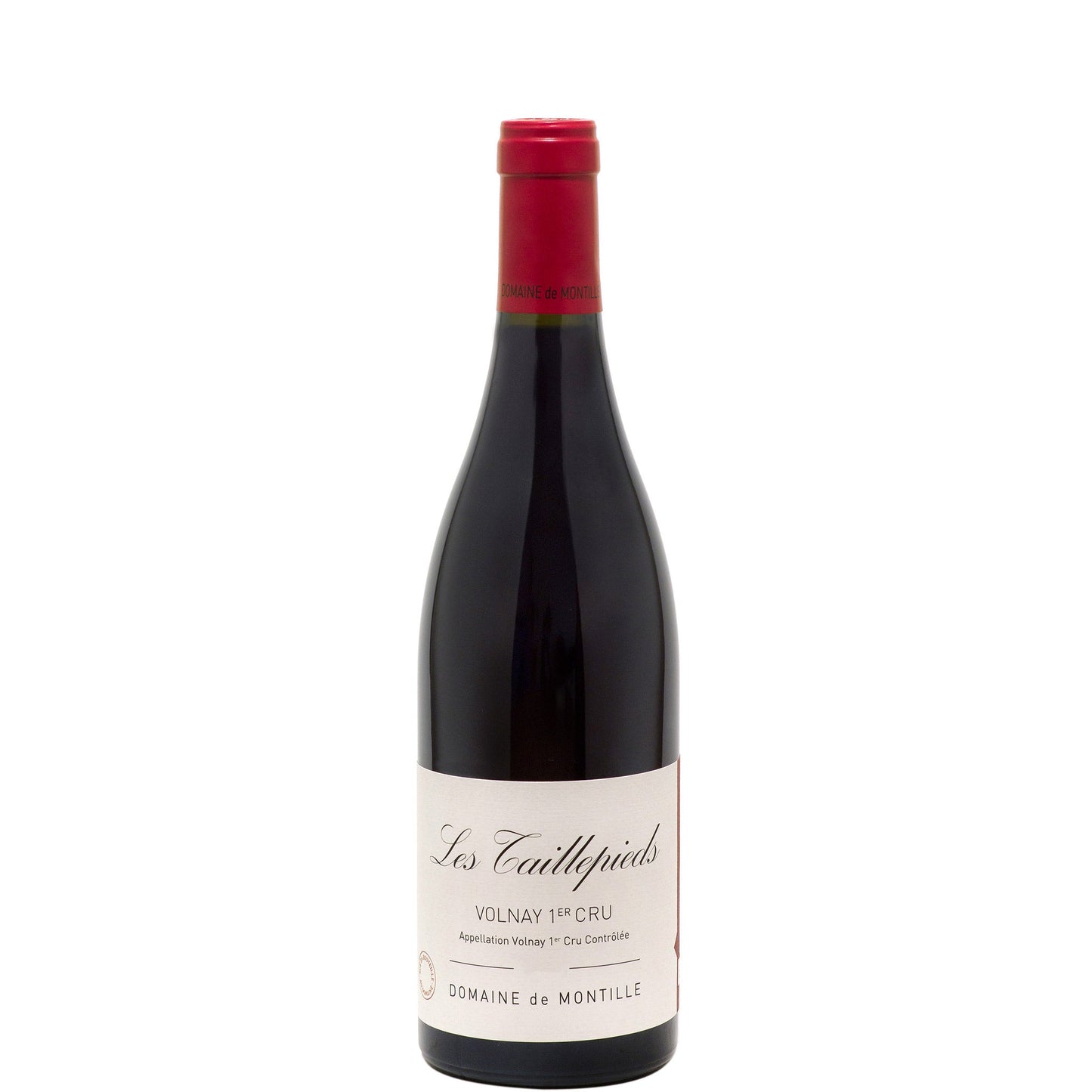
Volnay Premier Cru 'Les Taillepieds', Domaine de Montille, 2017
Volnay Premier Cru 'Les Taillepieds', Domaine de Montille, 2017
- 75cl
- 13%
- Red Still
- Pinot Noir
- Organic
- Biodynamic
Couldn't load pickup availability

Optimal drinking window: Now - 2038
Taillepieds is a class apart in Volnay - the Queen of Cote des Beaune reds, and a regular contender for elevation to Grand Cru. Gravel on limestone soils give a bracing salinity to the wines which help season the rolling waves of intense and varied aromas and flavours of a vineyard that includes vines over eighty years old. One of our most sought-after reds every Burgundy campaign, and with good reason.
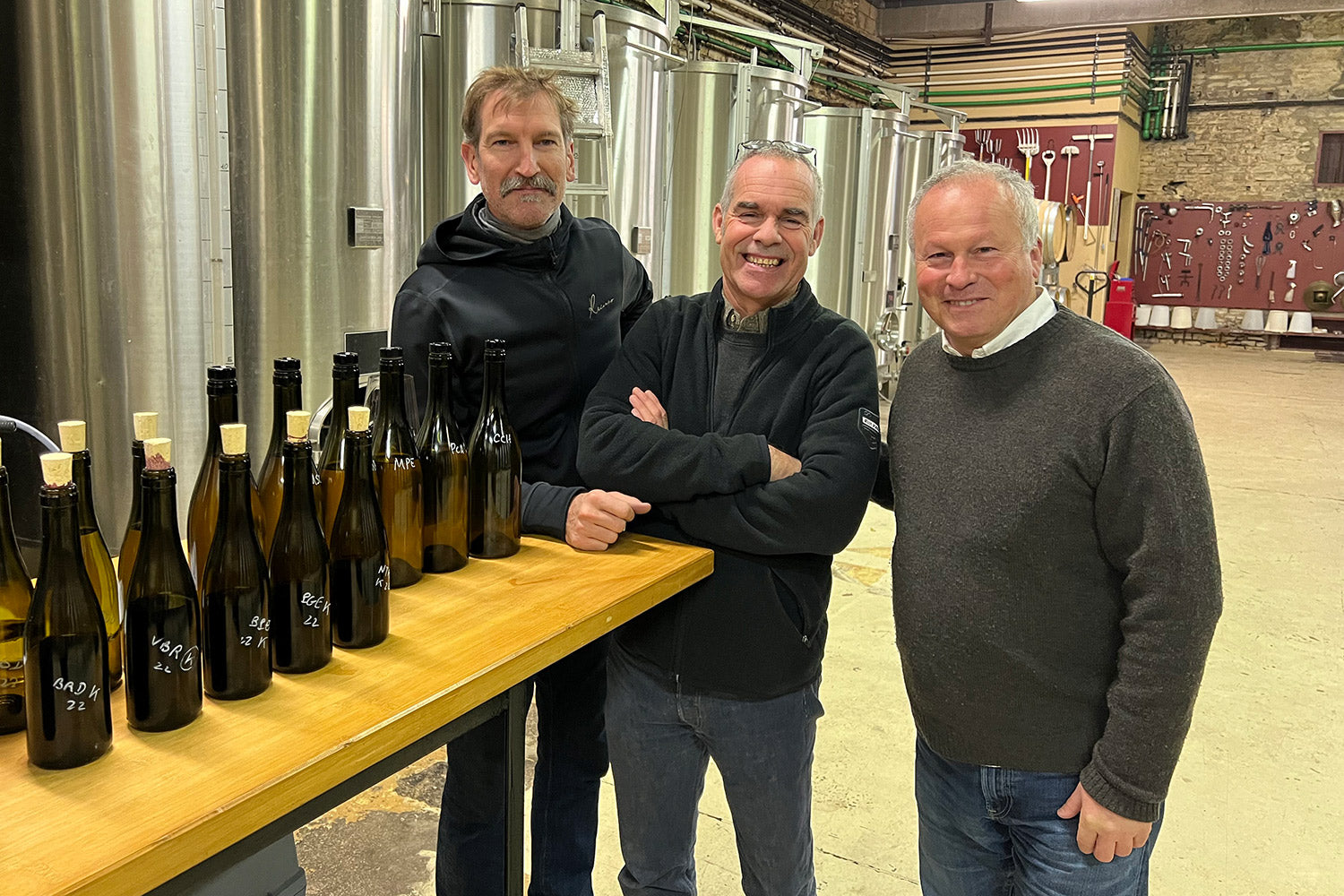
Of the vintage, winemaker Brian Sieve at de Montille says 2017 is built for serious pleasure, with svelte tannins and juicy structure holding plenty of strawberries and raspberries. Preferring to pick early when grapes still have two thirds tartaric acid, and only a third malic acid, he believes the domaine’s 2017 reds have the supple richness and concentration of 2016 with the quantity, acidity and primary red fruit profile of 2011.
Easy to understand, balanced and graceful, with alcohol bordering 13%, 2017 is good news for drinkers and yet he sees nothing to suggest the wines won’t age well.
In 2026, the 2017 is in a genuinely enjoyable place: the primary red fruit is still vivid and the tannins are as svelte as Brian Sieve promised, making it one of those rare Burgundies that rewards drinking now without guilt. Over the next few years, that primary strawberry and raspberry brightness will slowly integrate, giving way to more savoury, earthy complexity — dried rose petal, forest floor, and eventually something closer to aged leather and spice. We would expect it to hit a secondary plateau somewhere around 2030-2033, where the whole-bunch structure and old-vine depth really come into their own. At its peak it should hold comfortably until 2038, and the best-stored bottles may well outlast that. Nothing about this wine suggests it is in a hurry.
What the critics say:
"Often the most complete of the de Montille Volnay premiers crus, this comes from two parcels of 80-year-old vines, both below the village on either side of the road. Floral, nuanced and malty, it isn't excessively marked by its 100% whole bunches, partly because the wine has such depth, freshness and acidity."
Tasting Notes
AppearanceBright, clear ruby with a translucent garnet core — the kind of colour that already signals precision over power.
NoseFloral and lifted, with wild strawberry and raspberry framed by something more savoury and malty underneath — a quality that de Montille's 100% whole-bunch vinification gives without dominating. There is real depth here, and a cool, stony minerality that keeps everything fresh and focused.
PalateSvelte and precise, with the juicy red fruit of the 2017 vintage carrying beautifully on a frame of supple tannins and bright acidity. It has the generosity of a warm year without any excess weight, and that characteristic Taillepieds salinity runs through it like a thread, binding everything together.
FinishLong, mineral, and persistently floral — it lingers with the kind of quiet authority that reminds you why this vineyard is in a conversation all of its own.
Overall impressionVolnay at its most complete: graceful, precise, and with plenty left to say.
Food Pairings
In Burgundy, a wine like this would most naturally find itself opposite roast guinea fowl or a simple poulet de Bresse, where the bird's delicate fat plays to the wine's silky tannins without overwhelming its perfume. Locals might also reach for a dish of oeufs en meurette, eggs poached in red wine sauce, which echoes the wine's own savouriness with satisfying logic. A plate of époisses or Cîteaux cheese — both made within an hour's drive of the vineyard — handles the wine's mineral salinity particularly well. In autumn, braised pigeon or venison with wild mushrooms would be the natural match, as the earthy depth of the game pulls out the wine's more complex secondary notes.
We think this wine would go well with
Serve at around 15-16°C — cool enough to preserve the wine's floral freshness and acidity, but not so cold that the tannins tighten. Decanting for 30-45 minutes will open it up nicely at this stage of its life, though the wine is expressive enough to show well in the glass without fuss. A large-bowled Burgundy glass is the right vessel: it gives the nose room to open and lets the wine's subtlety come forward rather than forcing it.
Les Taillepieds sits on two parcels below the village of Volnay, on either side of the road, with soils of gravel over limestone that drain well and keep yields honest. That limestone base is the key: it lends a distinct mineral salinity to the wine, a kind of seasoning that lifts and focuses the fruit rather than letting it sprawl. The 80-year-old vines reach deep into this stony subsoil, pulling up concentration and complexity that younger roots simply cannot replicate. The combination of elevation, exposure, and old-vine intensity is why Taillepieds is spoken of, not entirely fancifully, as grand cru material.
Volnay is the great red wine village of the Côte de Beaune, producing Pinot Noir of exceptional elegance and perfume from soils that are lighter and more limestone-rich than Pommard to the south. Its premiers crus are among the most celebrated in all Burgundy, and Taillepieds sits near the top of that hierarchy. Unlike Pommard, which leans towards structure and weight, Volnay is all about finesse: silky tannins, floral lift, and a linear precision that can age surprisingly well. The appellation has long lobbied for grand cru status for its finest sites, and Taillepieds is invariably first on the list.
The 2017 vintage in Burgundy arrived after a series of weather curveballs that kept growers on their toes from spring through harvest. April frosts dealt a brutal blow across the Côte d'Or, slashing yields by up to 60% in some villages, whilst those who escaped relatively unscathed found themselves with healthier vines and more concentrated fruit. The summer that followed was warm and dry, ripening what remained on the vine beautifully, and harvest began early in late August under ideal conditions.
What emerged from this challenging year surprises us still: wines of remarkable purity and focus, where the reduced yields translated directly into intensity without heaviness. The Pinot Noirs show beautiful red fruit clarity with firm but approachable tannins, whilst the Chardonnays display precision and mineral backbone that speaks clearly of their terroir. We find the whites drinking beautifully now and will continue to reward patience over the next decade, whilst the reds are starting to show their considerable charm and should peak between now and 2030.
FAQs
What does this wine taste like?
Floral, precise, and mineral, with lifted strawberry and raspberry fruit, a malty savouriness from whole-bunch vinification, and a persistent stony salinity on the finish. It is Volnay at its most complete: all finesse and focus, with real depth beneath the elegance.
When should I drink this wine?
It is genuinely enjoyable now — 2017 produced svelte tannins and juicy, expressive fruit that make this one of the more approachable vintages from Taillepieds. That said, it has the structure and depth to reward patience, and we think it will be at its most complex between 2029 and 2038. No rush, but no need to wait either.
Is this worth cellaring?
Yes, without question. The combination of 80-year-old vines, old limestone soils, and de Montille's exacting whole-bunch approach gives this wine genuine ageing potential. Brian Sieve sees nothing to suggest the 2017s won't develop well, and the wine's natural acidity and concentration back that up. Drink a bottle now and put the rest away.
What food should I serve with this?
Roast guinea fowl or poulet de Bresse are the classic Burgundian matches, where delicate poultry fat plays to the wine's silky tannins without competing with its perfume. In autumn, braised pigeon or venison with wild mushrooms would pull out its more savoury, earthy complexity. Strong washed-rind cheeses like époisses also work particularly well with the wine's mineral salinity.
How should I serve it?
Serve at around 15-16°C in a large-bowled Burgundy glass. Decanting for 30-45 minutes will help open up the nose, though the wine is expressive enough to show well without much coaxing. Avoid serving it too warm, which can blur the freshness and floral lift that make this wine what it is.
Why is Les Taillepieds considered so special?
Taillepieds is widely regarded as one of the finest premiers crus in Volnay — and Volnay itself is the benchmark for elegance on the Côte de Beaune. The site's gravel over limestone soils, combined with vines over 80 years old, produces wines of unusual depth and a distinctive mineral salinity that sets them apart from neighbouring plots. It is regularly cited in discussions about which Volnay sites deserve promotion to grand cru. De Montille's stewardship of the two parcels here is considered among the appellation's very best.
Explore related wines


What are you looking for tonight? Tell me the occasion, a grape, a region — or just try a suggestion below.
Your recommendations will appear here.
-
-
Speak to one of our Wine Gurus
Speak to a Wine GuruWith years of experience, our team can help you with all your wine buying and selling needs