

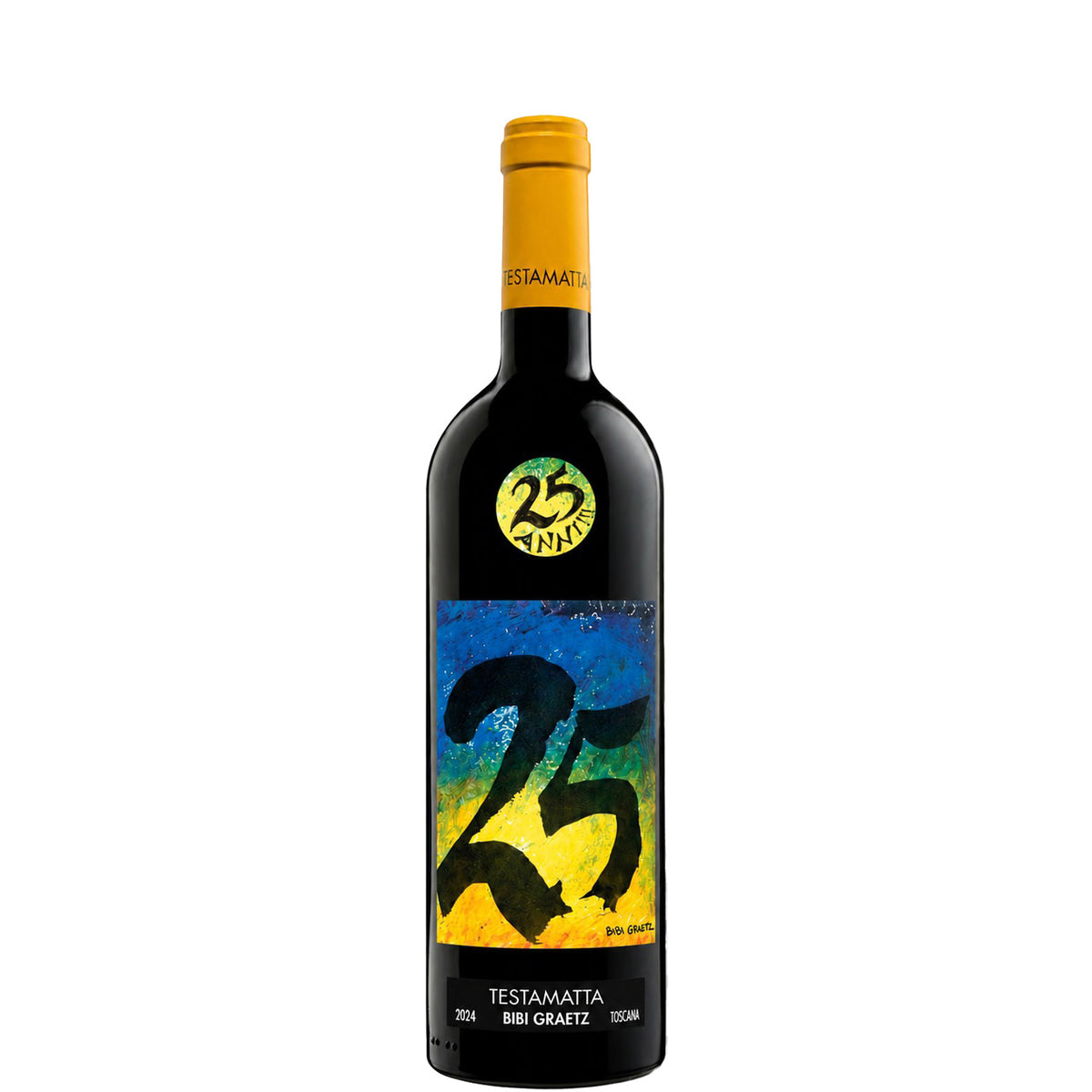
Bibi Graetz, Testamatta, 2024
Bibi Graetz, Testamatta, 2024
- 75cl
- 13%
- Red Still
- Sangiovese
- Organic
Couldn't load pickup availability

Optimal drinking window: 2026 - 2038
Est. delivery in Spring, 2027
Testamatta — 'crazy head' in Tuscan dialect — is Bibi Graetz's flagship red, and it earns the name. A pure Sangiovese sourced from old vines across the Fiesole hills above Florence, it is the wine that put Graetz on the map in the early 2000s and hasn't stopped turning heads since. There is something distinctly un-corporate about it: made by an artist turned winemaker in a medieval castle, from vines that most people had given up on, it has a raw energy that careful committee winemaking rarely produces.
A serious wine wearing a slightly mad label, and better for it.
What the critics say:
"One of the most perfumed Testamatta ever made with orange blossom, red rose, hibiscus and sandalwood. Medium-bodied with ultra-fine tannins and a crunchy, refined finish. Bright and delicious. sangiovese. Drink or hold."
"The Bibi Graetz 2024 Testamatta has a pretty elegance, with a texture reminiscent of a tapestry woven from fine silk threads. The mouthfeel is mild and mid-weight, with delicate structure and lovely acidity that gives the wine a clean, snappy close. This is an especially graceful expression of Sangiovese. Testamatta is made from 100% Sangiovese sourced from several Tuscan vineyard sites."
The Fiesole hills sit northeast of Florence at altitudes between 250 and 500 metres, where the combination of elevation and Apennine influence brings cool nights that preserve acidity in the fruit. Soils are a mix of alberese — the compact, calcium-rich clay and limestone typical of inland Tuscany — and galestro, the friable schist that drains well and stresses the vines productively. Old vines, some over 70 years, dig deep into these thin soils and produce small, concentrated bunches. The result is Sangiovese with real structural density and the kind of mineral grip that flat valley floor fruit rarely achieves.
Testamatta is classified as an IGT Toscana, which in this context means freedom rather than a step down. The IGT category in Tuscany was historically embraced by producers who wanted to make pure Sangiovese or international varieties outside the constraints of Chianti Classico's blending rules. It sits alongside the so-called Super Tuscans in the sense that the label tells you little and the producer tells you everything. Tuscany's IGT wines range from supermarket fare to some of the region's most ambitious and expensive bottles; Testamatta is firmly in the latter camp.
The 2024 growing season in Tuscany was defined by a cool, wet spring followed by a summer that never quite committed to the heat Sangiovese craves — periodic rain events through the summer kept growers watchful and selective work in the vineyard essential. Those who managed canopies well and harvested at the right moment came out ahead; those who hesitated paid for it. It was a vintage that rewarded attentiveness rather than simply good fortune, and the best producers — particularly in Chianti Classico and Montalcino — rose to that challenge.
What landed in the cellar was fresher and more lifted than the riper, more muscular style that warmer years like 2022 tend to produce. Sangiovese shows bright acidity and firm structure with real energy behind it — less about sheer density, more about definition and length. It is too early to draw firm conclusions on the very best Brunello and Riserva releases, which will need time to resolve, but the Rosso and Chianti-level wines are already drinking well and offering genuine pleasure without demanding patience.

OUR GROWERS
Bibi Graetz
Explore related wines


-
-
Speak to one of our Wine Gurus
Speak to a Wine GuruWith years of experience, our team can help you with all your wine buying and selling needs