

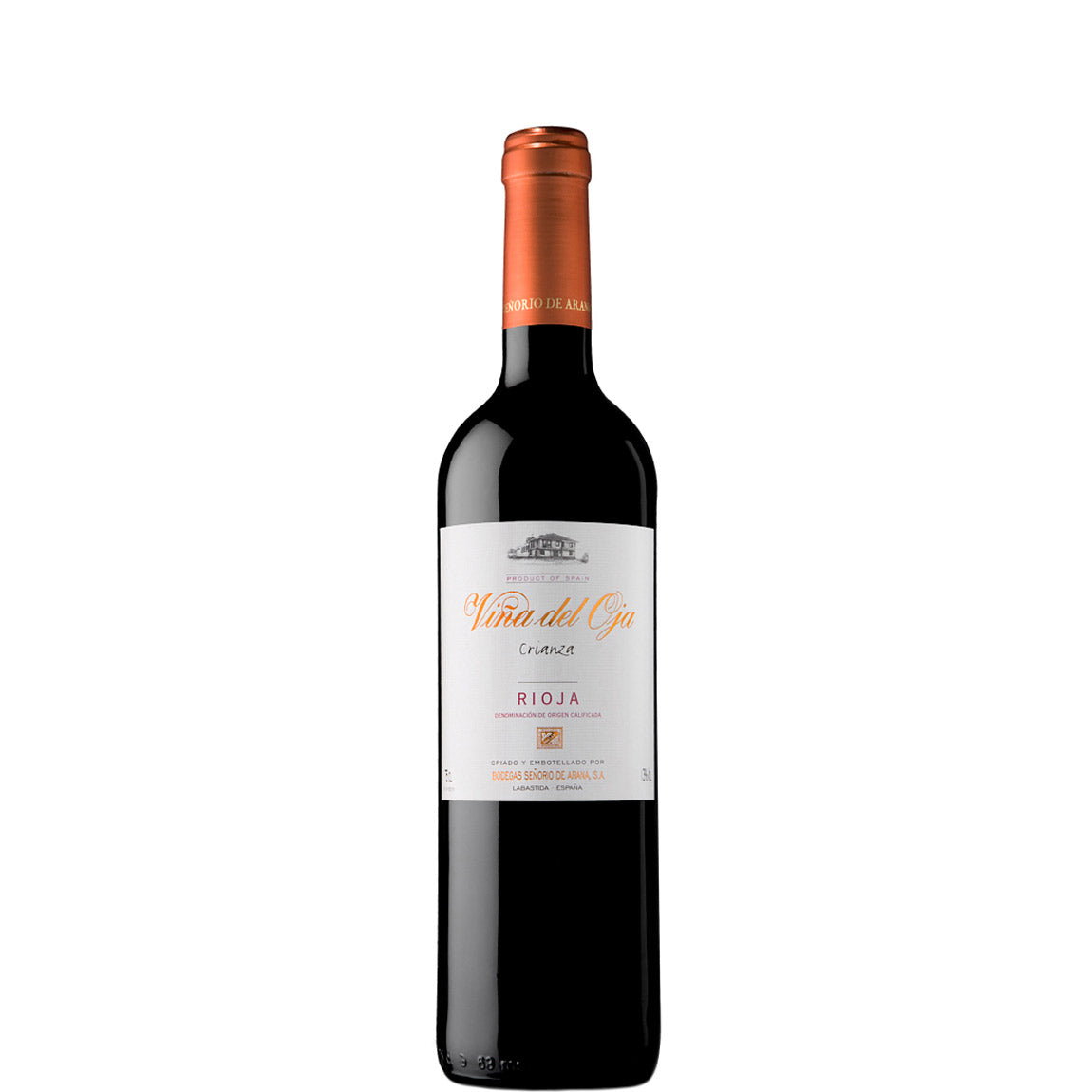
Bodegas Señorío de Arana, Viña Del Oja Rioja Gran Reserva, 2017
Bodegas Señorío de Arana, Viña Del Oja Rioja Gran Reserva, 2017
- 75cl
- Red Still
- Tempranillo, Mazuelo, Graciano
Couldn't load pickup availability

Optimal drinking window: 2026 - 2035
Bodegas Señorío de Arana is one of Rioja Alavesa's quietly serious operators, and this Viña Del Oja Gran Reserva is the kind of wine that reminds you why the category exists. Ninety percent Tempranillo, with Mazuelo and Graciano filling out the blend, it spent 30 months in French and American oak before years of further bottle age — and that patience shows. The 2017 is fully open and singing: dried red berries, a whisper of vanilla, a gamey, almost charcuterie-like depth, and a palate that moves from balsamic spice to cool menthol with real elegance.
This is Gran Reserva Rioja doing exactly what it should — silky, developed, and long. Open it with something slow-cooked, and you'll be very glad you did.
The 2017 is already in a very good place — primary fruit has softened and integrated, and the secondary complexity of dried fruit, spice, and that distinctive gamey, balsamic character is fully expressed. We think the window from now until around 2030 represents peak drinking, when everything is in balance. Hold it beyond that and the fruit will continue to fade, leaving a more austere, earthy profile that some will love. By 2035, it will likely be at the outer edge of its pleasure range. There is no urgent need to rush, but equally no reason to wait.
Tasting Notes
AppearanceMedium ruby with a softening, garnet-tinged rim that signals genuine age.
NoseDried cherries, a touch of vanilla, and an earthy, almost gamey depth that speaks to serious bottle development. Underneath there's a suggestion of dried herbs and something faintly meaty — think charcuterie rather than raw. It's a developed, confident nose that asks you to slow down.
PalateFull but not heavy, with soft, well-integrated tannins and a lovely silky texture that carries the wine from entry to finish. Balsamic, warming spice, and a cool menthol note run through the mid-palate, keeping things lively. There's real elegance here — nothing forced, nothing over-extracted.
FinishVery long, with that menthol and spice note lingering well after the glass is empty.
Overall impressionA thoroughly satisfying, classically built Gran Reserva that earns every month of the patience it demanded.
Food Pairings
In Rioja Alavesa, a wine like this would be poured alongside a slow-roasted lamb — chuletillas al sarmiento, grilled over vine cuttings, is the region's most iconic pairing and makes complete sense here. Braised ox cheek or a rich cocido madrileño would be equally at home. The locals also love it with aged Manchego or Idiazabal — the nutty, slightly smoky cheese matching the wine's own oak-derived warmth. If you're going simpler, a plate of jamón ibérico and some good bread is never wrong.
We think this wine would go well with
Serve at around 17°C — any warmer and the alcohol will start to dominate what is a wine built on finesse rather than weight. This one doesn't need a long decant; 30 minutes in a wide-bowled glass should be plenty to let it open up, and the wine will continue to evolve pleasantly in the glass over an hour or so. A generous Burgundy-style glass works well, giving the developed aromatics room to breathe.
Rioja Alavesa sits on the southern slopes of the Cantabrian mountains, where altitude and a cooler Atlantic influence temper what could otherwise be an unforgivingly hot growing season. The soils here are predominantly chalky clay with limestone, which gives wines their characteristic freshness and mineral backbone. These conditions allow Tempranillo to ripen slowly and evenly, building the kind of structural complexity that rewards extended ageing.
Rioja is Spain's most celebrated red wine appellation, divided into three subzones — Alavesa, Alta, and Oriental — each with its own distinct personality. Rioja Alavesa, straddling the Basque Country, tends to produce the most elegant and aromatic expressions, with higher altitude and cooler temperatures playing a significant role. Gran Reserva is the appellation's top tier, requiring a minimum of five years ageing before release, of which at least 18 months must be spent in oak — though the best producers, like Arana, go considerably further. It is a category that rewards both makers and drinkers willing to invest time.
Mother Nature served up a proper curveball in 2017, delivering one of those vintages that kept Rioja's winemakers on their toes from start to finish. Spring arrived with late frosts that had growers lighting fires in their vineyards, followed by a summer that swung between scorching heat and unexpected rainfall. The growing season felt like a game of chess against the weather, with harvest timing becoming absolutely critical as producers rushed to pick before autumn rains could dilute what they'd worked so hard to achieve.
What emerged were wines with real personality - leaner and more mineral-driven than the plush 2016s, with Tempranillo showing particular freshness and vivid red fruit character rather than the deeper, more brooding profile of easier years. We find these 2017s have an almost Burgundian tension to them, built more on finesse than power. The quality varies more than usual - this was a vintage where skilled winemaking truly mattered - but the best bottles are drinking beautifully now and should hold their nerve until 2030.
FAQs
What does this wine taste like?
Dried cherries, vanilla, and a gamey, balsamic depth are the defining characters here, with a cool menthol thread running through the palate and a very long, spicy finish. It is silky and fully developed — this is what classic Gran Reserva Rioja is supposed to taste like.
When should I drink this wine?
It is drinking very well right now, with all the secondary complexity you would want from a wine at this stage. We would aim to drink it between now and around 2030 for the best balance, though bottles kept in good conditions should hold until 2035.
What food should I pair this with?
Slow-roasted lamb is the classic local match, but braised beef, ox cheek, or a richly sauced game dish would all work brilliantly. Aged sheep's milk cheese is also a great shout if you are keeping things simple.
Does it need decanting?
A short decant of around 30 minutes is all it needs — the wine is well developed and won't benefit from hours of air. Pour it into a wide-bowled glass and let it open in the glass from there.
Is this worth cellaring further?
It is already at or very close to its peak, so further extended cellaring is not something we would recommend unless your conditions are excellent. Enjoy it over the next four to five years rather than putting it away again.
What makes this a Gran Reserva?
Gran Reserva is Rioja's top classification, requiring at least five years of ageing before release, with a minimum of 18 months in oak. Arana goes further than the minimum, giving this wine 30 months in French and American oak casks before additional bottle ageing. It is a labour-intensive, old-school approach that the 2017 thoroughly justifies.

Explore related wines


What are you looking for tonight? Tell me the occasion, a grape, a region — or just try a suggestion below.
Your recommendations will appear here.

-
-
Speak to one of our Wine Gurus
Speak to a Wine GuruWith years of experience, our team can help you with all your wine buying and selling needs