

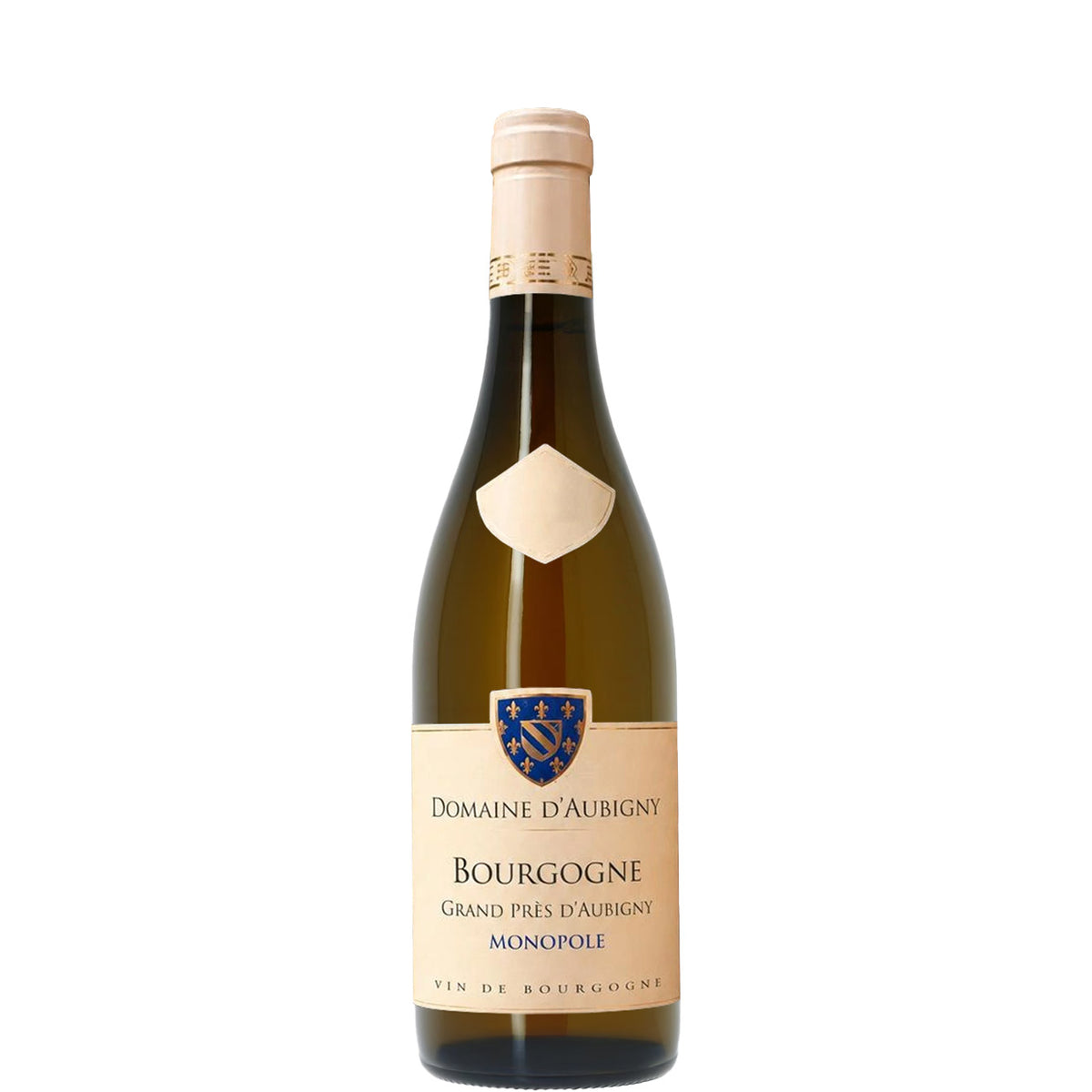
Bourgogne Blanc 'Grand Près d'Aubigny' Monopole, Domaine d'Aubigny, 2024
Bourgogne Blanc 'Grand Près d'Aubigny' Monopole, Domaine d'Aubigny, 2024
- 75cl
- 14%
- White Still
- Chardonnay
- Organic
Couldn't load pickup availability

Optimal drinking window: 2026 - 2033
A single-vineyard Bourgogne Blanc with ideas above its station, 'Grand Près d'Aubigny' is a monopole, meaning Domaine d'Aubigny holds the plot entirely to itself. That's a rare thing at this level of the Burgundy hierarchy, and it shows in a wine that tastes more Village than its regional label suggests, all citrus zest and wet-stone precision rather than anything soft or forgettable.
Expect pale gold in the glass, a nose of lemon pith and crushed chalk, and a palate that stays lean and nervy rather than buttery.
Domaine d’Aubigny is one of those Burgundian stories that sounds made up, but isn’t. Founded in 1132 as a métairie of the Abbaye de Mézières, the estate predates Clos de Vougeot and now sits quietly in the hills above Rully, hiding one of the largest enclosed vineyards in the Côte Chalonnaise. The single clos is so vast it spans multiple appellations, which neatly explains why “Clos” will never appear on the label, bureaucracy remains undefeated.
Since taking over in 2021, Kwame Onwuachi and his partners have rebuilt the domaine as a fully organic, mixed farm. High-trained vines, grassed rows, on-site livestock and total nitrogen autonomy all feed into a thoughtful, low-intervention approach. Trained in Beaune after a previous life in San Francisco tech, Kwame brings both discipline and ambition. The wines are still finding their voice, but the direction is clear, and the best bottles here are already genuinely impressive.
Right now the wine is bright and citrus-driven, with its chalky minerality doing most of the talking. Give it until 2028 or so and the fruit will deepen towards orchard and stone fruit, with the oak knitting in more seamlessly. By 2031 to 2033 expect a more textured, savoury wine with honeyed edges.
Tasting Notes
AppearancePale gold with a greenish glint at the rim.
NoseLemon pith and crushed chalk, with a touch of white blossom and crisp green apple underneath.
PalateTaut and saline, with citrus and orchard fruit riding over a distinctly stony, mineral core. There's a gentle creaminess from the barrel, but it never softens the wine's edges.
FinishLong, dry, and flinty, with a final squeeze of lemon.
Overall impressionA regional label that drinks like it has something to prove, and does.
Food Pairings
In Burgundy, a wine like this turns up alongside jambon persillé or a simple plate of gougères at the start of a meal, its acidity cutting straight through the richness. Locals would happily pour it over a dish of quenelles de brochet in a light cream sauce, or alongside freshwater fish from the Saône. It's equally at home with a wedge of Comté, where the wine's saline edge plays off the cheese's nuttiness.
We think this wine would go well with
Serve at 11-12°C, cool but not fridge-cold, to let the mineral character show through. No decanting required, though a few minutes in the glass before drinking won't hurt. A tulip-shaped white wine glass will do justice to both the aromatics and the structure.
The Grand Près d'Aubigny parcel sits on classic Burgundian limestone and clay, with the kind of free-draining, mineral-rich soil that keeps Chardonnay taut rather than fat. Being a monopole, the vines enjoy a single, consistent exposure and a grower's undivided attention, which goes some way to explaining the wine's unusual focus for its appellation level. Cool nights in this part of Burgundy preserve the acidity that gives the wine its backbone.
Bourgogne Blanc is the broadest white appellation in Burgundy, covering Chardonnay grown outside the named villages and grand crus, and it's often treated as the entry point to the region. This wine quietly argues against that reputation. A monopole designation within a regional appellation is unusual and signals a grower who has identified a special piece of land worth bottling on its own, even if the paperwork doesn't officially reward them for it.
The 2024 growing season in Burgundy was, frankly, a test of nerve. A wet spring brought significant mildew pressure, and vignerons who stayed sharp in the vineyard — working fast, keeping canopies open, reducing yields where necessary — came out the other side with something worth talking about. Summer brought warmer, drier conditions that helped the fruit recover composure, and harvest arrived broadly on the later side, with growers picking carefully to find phenolic ripeness without sacrificing freshness. Quantity was down across much of the Côte, which concentrates minds as much as it concentrates wine.
What emerged is a vintage that rewards those who put the work in. The Pinots we have tasted carry real precision and translucency — not because they are light, but because the acidity is lively and the fruit unforced. Chardonnays from the Côte de Beaune look particularly promising: taut, mineral, with genuine length. This is not a vintage to panic-open. Most village and premier cru reds want three to five years at minimum, with the better appellations drinking well until 2035 and beyond. The whites are more approachable now, though the best will reward patience too.
FAQs
What does this wine taste like?
Lemon pith, crushed chalk, and crisp orchard fruit, with a saline, flinty finish rather than anything rich or buttery.
When should I drink this wine?
It's lively and precise now, but will reward patience until 2033 as it gains texture and depth.
What food should I pair it with?
Try it with jambon persillé, quenelles de brochet, or a wedge of Comté, all classic Burgundian matches for its acidity.
How should I serve it?
Serve at 11-12°C in a tulip-shaped white wine glass. No decanting needed.
Is this wine worth cellaring?
Yes, within reason. As a monopole it has more concentration than a typical Bourgogne Blanc and will happily hold until 2033.
What makes this wine unusual for its appellation?
It comes from a single, wholly-owned vineyard, a monopole, which is rare at the regional Bourgogne Blanc level and gives it unusual focus and character.

Explore related wines


What are you looking for tonight? Tell me the occasion, a grape, a region — or just try a suggestion below.
Your recommendations will appear here.
-
-
Speak to one of our Wine Gurus
Speak to a Wine GuruWith years of experience, our team can help you with all your wine buying and selling needs