

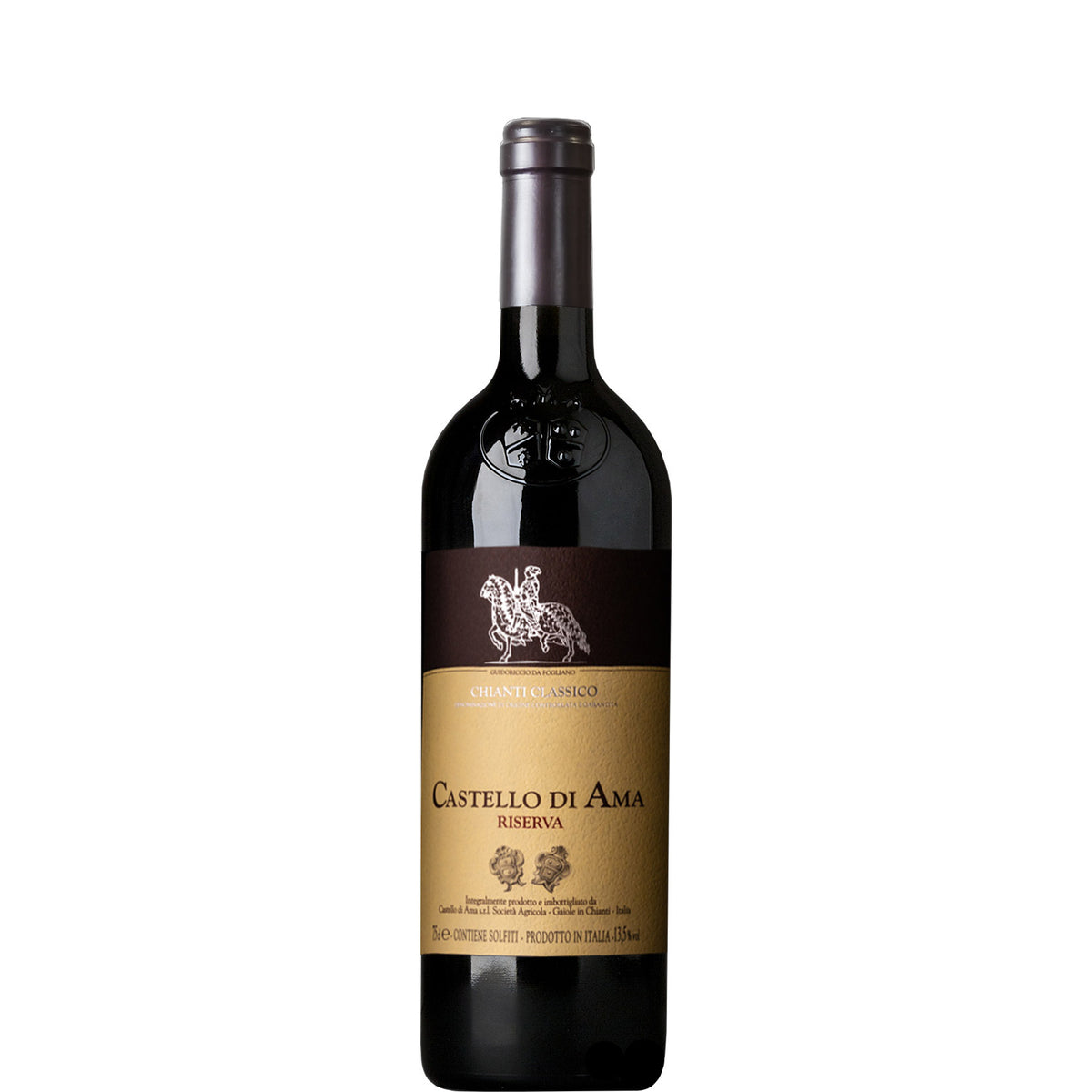
Castello di Ama, Chianti Classico Riserva, 2006
Castello di Ama, Chianti Classico Riserva, 2006
- 75cl
- 14%
- Red Still
- Sangiovese, Malvasia Nera, Merlot
Couldn't load pickup availability

Optimal drinking window: 2026 - 2032
Est. delivery in November, 2026
Castello di Ama needs no introduction to anyone who takes Chianti Classico seriously, and this 2006 Riserva shows exactly why the estate sits at the top table. Sangiovese leads, propped up by a splash of Malvasia Nera and Merlot, farmed across the cooler, higher vineyards around Gaiole that give Ama's wines their lifted, perfumed edge rather than the brawnier style found lower down the valley.
Two decades on, this is drinking in that lovely in-between place: the fruit has settled into something drier and more savoury, all dried cherry, leather and crushed herbs, while the tannins have softened into something fine rather than fierce. One for a long dinner table and a slow-cooked ragù.
The vineyards sit at relatively high altitude, around 450-500 metres, near the village of Lecchi in the Gaiole subzone, among the coolest and most elevated sites in Chianti Classico. The soils are a mix of galestro and alberese, that crumbly, mineral-rich limestone and schist that drains well and stresses the vines just enough to concentrate flavour. The altitude brings marked diurnal temperature swings, preserving acidity and giving Ama's wines their characteristic perfume and freshness rather than sheer weight.
Chianti Classico is the historic heartland from which the wider, much-abused Chianti name sprawled outward, and Riserva status demands a minimum of 24 months ageing with at least three in bottle, plus a slightly higher minimum alcohol. It sits apart from basic Chianti Classico in structure and ambition, built for the table and for time rather than easy early drinking. Gaiole, Ama's home commune, tends to produce some of the zone's most aromatic and structured examples, prized precisely for the altitude that keeps things fresh.
2006 is one of those Tuscan vintages we find ourselves quietly championing rather than shouting about, perhaps because it sits in the shadow of its more famous neighbours. A warm, largely dry growing season with none of the drama of extreme heat spikes meant steady, even ripening through the summer, and growers who held their nerve waited for a harvest that delivered both ripeness and freshness. It wasn't a vintage of excess; it was one of balance, and in Tuscany that's worth celebrating.
Sangiovese in particular found a lovely equilibrium that year, with the tannic structure to age gracefully and enough fruit concentration to carry it. Brunello di Montalcino from 2006 earned considerable acclaim, and Chianti Classico producers who took their time produced wines with real backbone. These are not wines built for instant gratification; the top examples needed patience, and we think many are now hitting their stride. Drink now if you've got them, though the best structured bottlings, particularly Brunello, still have years of graceful evolution ahead.

Explore related wines


-
-
Speak to one of our Wine Gurus
Speak to a Wine GuruWith years of experience, our team can help you with all your wine buying and selling needs