

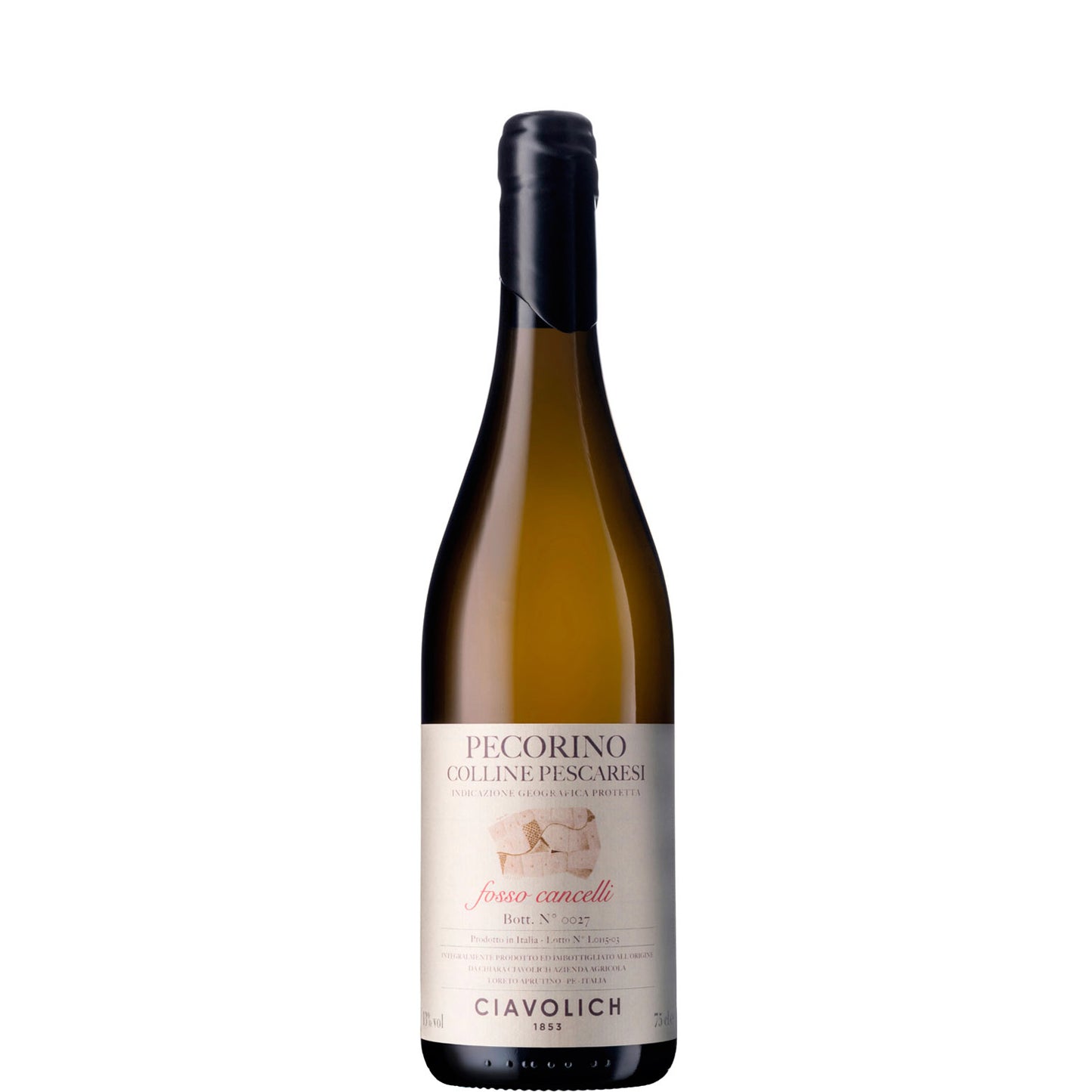
Ciavolich, Pecorino, Fosso Cancelli, 2022
Ciavolich, Pecorino, Fosso Cancelli, 2022
- 75cl
- 13%
- White Still
- Pecorino
Couldn't load pickup availability

Optimal drinking window: Now - 2028
Est. delivery in late summer, 2026
Pecorino is one of central Italy's great white grape recoveries, rescued from near-extinction in the Apennine foothills and now making some of Abruzzo's most characterful whites. Ciavolich's Fosso Cancelli bottling is a fine example of what the variety does best: taut, mineral-driven, with a citrus and stone-fruit freshness that feels both Alpine and Mediterranean at once. There's real personality here, and none of the flabby fruit-salad character that can plague lesser versions.
Superb with shellfish, fried fish, or simply a good piece of aged Pecorino cheese - the sheep's cheese that, legend has it, gave the grape its name.
The 2022 is in a sweet spot right now — primary fruit is vivid, the acidity is well-integrated, and the mineral character is at its most expressive. Over the next year or two, the citrus notes will soften slightly and a more honeyed, lanolin-like quality may emerge, which can be attractive in its own right. By 2027 or 2028, the wine will likely begin to lose the precision and freshness that define it at its best. Pecorino can age longer than you might expect, but this particular bottling is built for vitality rather than longevity — drink it while it still has that electric edge.
Tasting Notes
AppearancePale straw gold with a faint green tinge and good clarity.
NoseFresh and precise — lemon zest, white peach, and a flinty, almost chalky mineral quality that gives it real lift. There's a subtle floral note, like dried chamomile, lurking in the background.
PalateCrisp and medium-bodied, with bright citrus acidity driving things forward alongside ripe pear and a saline, stony undercurrent that keeps it honest. The texture is pleasingly rounded without ever losing its line.
FinishClean and persistent, with a final squeeze of lemon and that mineral edge holding firm to the last.
Overall impressionA focused, energetic white that earns its place at any serious table.
Food Pairings
In Abruzzo, this style of Pecorino would land naturally alongside brodetto alla vastese, the region's saffron-tinged Adriatic fish stew. Fried anchovies or scampi crudi with a squeeze of lemon are the kind of simple, briny partners that let the wine's saline quality shine. Locals might also pour it with maccheroni alla chitarra dressed in a light clam sauce, or simply with a board of local cheeses — fittingly, aged Pecorino among them.
We think this wine would go well with
Serve at 10-11°C — cold enough to preserve the acidity and freshness, but not so cold that you lose the mineral detail. No decanting needed; just pour straight from the fridge after letting it sit for five minutes on the table. A standard white wine tulip works well, though a slightly wider bowl will open up the floral notes if you want to explore the nose.
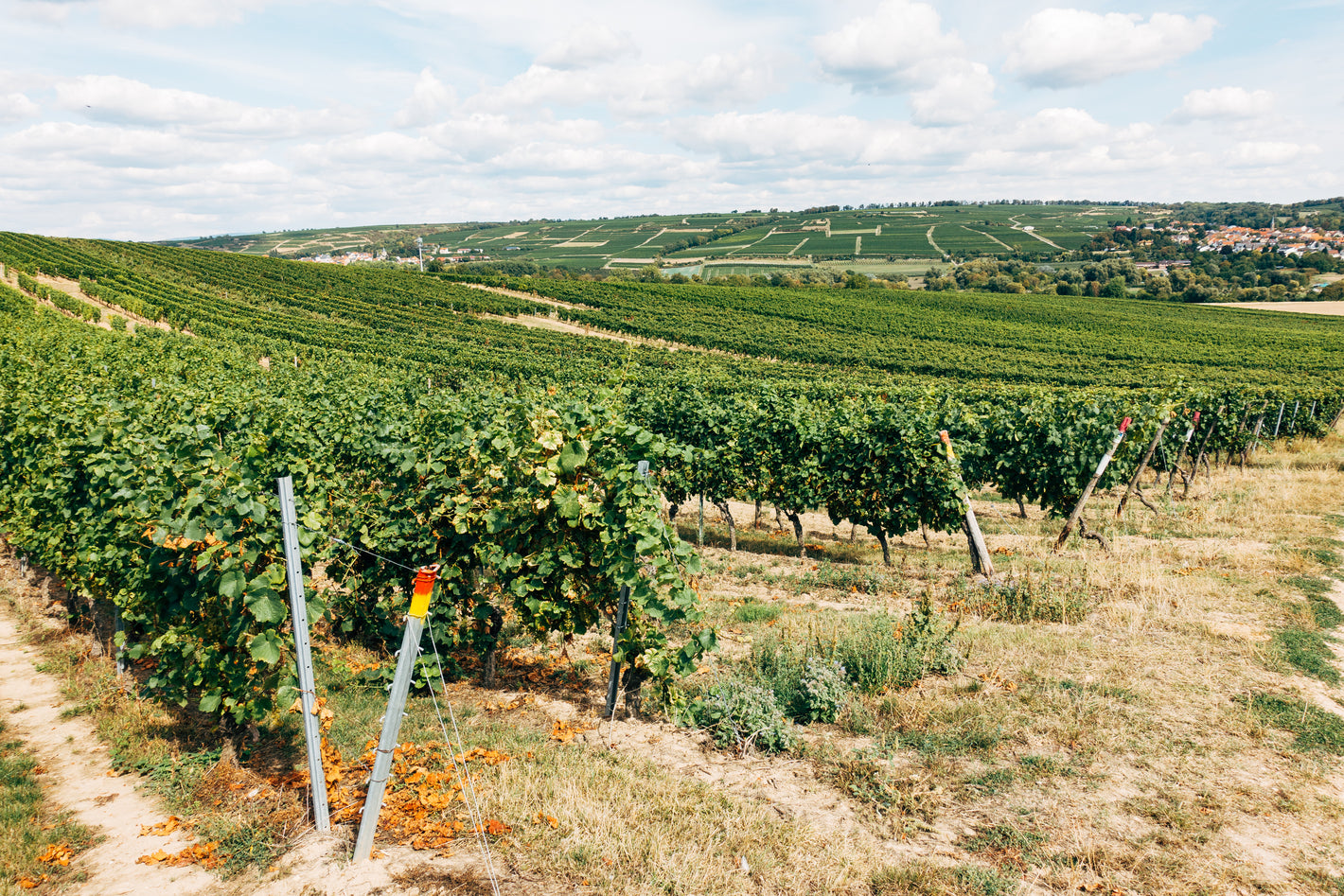
The Fosso Cancelli vineyard sits in the hills behind Pescara at moderate altitude, where the Apennines begin to moderate the Adriatic heat. Soils are predominantly clay and limestone, which lend the wine its characteristic mineral tension and help retain freshness through the warm growing season. The diurnal temperature swings at altitude are key to preserving Pecorino's natural acidity, without which the variety can easily tip into heaviness.
Pecorino has its own DOC designation within Abruzzo — Abruzzo Pecorino DOC — reflecting the grape's resurgence as a variety of serious regional importance after decades of near-disappearance. The rules require 85% minimum Pecorino, though most serious producers use 100%. Compared to Trebbiano d'Abruzzo, which dominates the region's white wine production, Pecorino offers more aromatic intensity, higher natural acidity, and considerably more age-worthiness in ambitious hands.
The 2022 vintage in Abruzzo arrived as a relief after several challenging years, though it demanded careful vineyard management throughout. A dry spring set the stage, followed by intense summer heat that stressed vines across the region's hillside sites. The saving grace came from cooler nights in the Apennine foothills, where many of the best producers farm, allowing grapes to retain freshness despite the challenging conditions. Harvest began earlier than usual, with smart winemakers picking in the cool dawn hours to preserve what acidity they could.
What emerged are wines with ripe, generous fruit but more restraint than you might expect from such a warm year. The Montepulciano d'Abruzzo shows beautiful density without the jammy heaviness that can plague hot vintages here, while Trebbiano d'Abruzzo delivers surprising mineral backbone alongside its characteristic stone fruit flavours. We find these wines drinking beautifully now, offering immediate pleasure with enough structure to reward patient cellaring for five to eight years. It's a vintage that showcases modern Abruzzo at its most accomplished.
FAQs
What does Ciavolich Fosso Cancelli Pecorino taste like?
Bright and precise, with lemon zest, white peach, and a saline, stony mineral quality running through the whole wine. It's crisp and medium-bodied, with real freshness and a clean, lingering finish. Think focused and energetic rather than rich or creamy.
When should I drink the 2022 vintage?
It's drinking very well right now and will remain at its best until around 2027 or 2028. This is a wine defined by its freshness and precision, so there's no benefit in waiting — the sooner the better.
What food should I serve with this wine?
Anything from the sea works brilliantly — shellfish, fried anchovies, clam pasta, or a simple grilled fish with lemon. It's also a natural match for aged Pecorino cheese, which shares both the grape's name and something of its saline character.
How should I serve it?
Serve at around 10-11°C, straight from the fridge with a few minutes to breathe. No need to decant. A standard tulip-shaped white wine glass is ideal.
Is Pecorino a well-known grape?
It's better known than it was, but still relatively under the radar outside Italy. The grape was nearly extinct by the mid-twentieth century before a handful of Abruzzo and Marche producers revived it in the 1980s and 90s. It's now one of central Italy's most exciting white varieties — higher in acidity and more mineral than Trebbiano, and with a real sense of identity.
Is this wine worth buying by the case?
At this price point and quality level, yes. It's a versatile, food-friendly white with enough character to reward attention, and it performs consistently across vintages. Stock a few bottles for the next couple of years and you'll be well covered for everything from weeknight fish suppers to smarter occasions.

OUR GROWERS
Ciavolich


What are you looking for tonight? Tell me the occasion, a grape, a region — or just try a suggestion below.
Your recommendations will appear here.
-
-
Speak to one of our Wine Gurus
Speak to a Wine GuruWith years of experience, our team can help you with all your wine buying and selling needs