
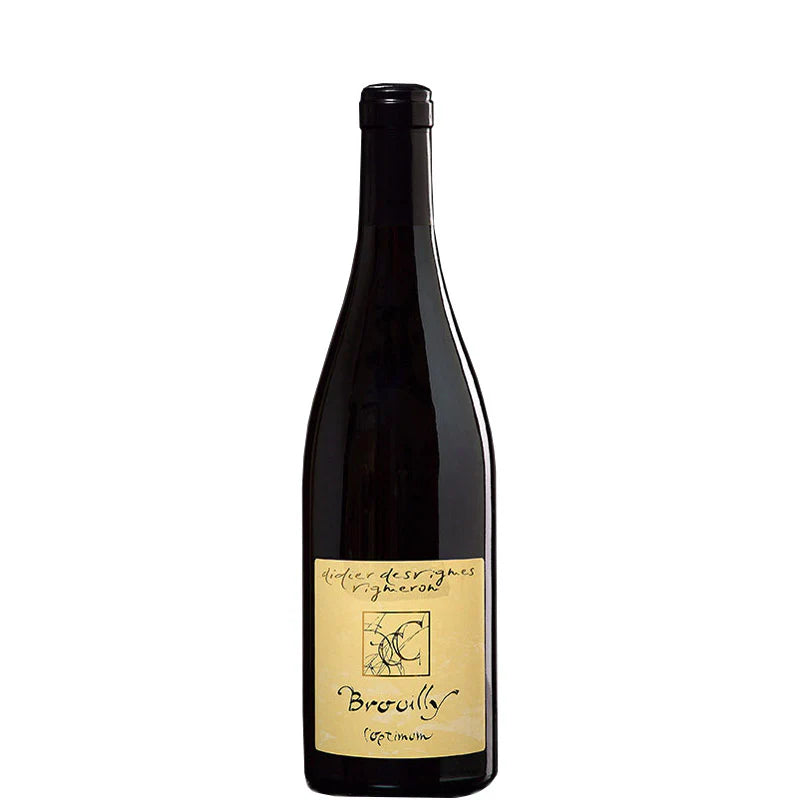
Domaine Du Calvaire De Roche-Gres, Brouilly Cuvée L'Optimum, Didier Desvignes, 2020
Domaine Du Calvaire De Roche-Gres, Brouilly Cuvée L'Optimum, Didier Desvignes, 2020
- 75cl
- 13%
- Red Still
- Gamay
Couldn't load pickup availability

Optimal drinking window: 2026 - 2029
Another masterpiece by Didier Desvignes who is a genius with the Gamay grape. Coming from vineyards close to the Mont de Brouilly where the soil gives a finesse to the wines, this is a very fruity and easy drinking wine with bags of blackcurrant and raspberry fruit. This is an ideal wine for simply quaffing with some charcuterie or at its finest with a duck breast or a simple coq au vin.
Brouilly is the most southerly of all of the crus of the Beaujolais and is also the most extensive in terms of the area it covers. With the Mont de Brouilly at the centre the vineyards extend around the base and tend to be the earliest ripening of all of the crus. They have good eastern exposure.
The 2020 vintage in Beaujolais produced ripe, generous wines with good natural freshness, and this Brouilly is already hitting its stride. The primary fruit — raspberry, blackcurrant, violet — is vivid and forward right now, which is precisely the point. Over the next year or two it will soften very slightly and the mineral quality from the granite soils may become a little more pronounced. Don't expect dramatic secondary development; this is a wine designed for pleasure in the near term, and we'd drink it up by 2029 before the fruit begins to fade and the freshness that makes it so appealing starts to recede.
Tasting Notes
AppearanceBright, clear ruby with a violet-tinged rim and good luminosity in the glass.
NoseImmediate and inviting: fresh raspberry, blackcurrant, and a whisper of crushed violet. There's a faint granitic mineral quality underneath, the kind that tells you this fruit didn't come from nowhere.
PalateLight to medium-bodied with a silky, almost frictionless texture and Gamay's characteristic fresh-fruit exuberance front and centre. The tannins are fine-grained and barely noticeable, and the acidity keeps everything lively and focused without any sharp edges.
FinishClean and bright, with a pleasing persistence of red fruit and a faint mineral echo.
Overall impressionA textbook argument for Gamay done with care: joyful, precise, and very hard to put down.
Food Pairings
In the Beaujolais and wider Lyon region, a wine like this would most naturally find itself on the table at a bouchon alongside a charcuterie board piled with rosette de Lyon, pâté en croûte, and cornichons. Locals would think nothing of serving it with a simple poulet rôti or a pot of coq au vin, where the wine's acidity cuts through the richness without overpowering the dish. Duck breast, especially with a fruit-based sauce, is a natural partner, as is a plate of andouillette if you're feeling adventurous. Further south, you'd find it alongside a salade lyonnaise, the warm lardons and poached egg making a fine contrast to the wine's bright fruit.
We think this wine would go well with
Serve at around 13-14°C — slightly cooler than a typical red, which is very much in keeping with how the Beaujolais locals approach their crus. No need to decant; this wine is at its best poured straight from the bottle and enjoyed young. A standard tulip-shaped red wine glass works well, though a wider-bowled Burgundy glass will open up the aromatics if you want to make more of the nose.
The Calvaire de Roche-Grès vineyard sits close to the Mont de Brouilly, the volcanic cone at the heart of the appellation. The soils here are predominantly granite and schist-based, giving wines a lift and mineral precision that distinguishes them from the heavier clay soils further from the hill. The easterly aspect encourages early, even ripening, and the altitude provides enough diurnal variation to keep the fruit bright and the acidity lively.
Brouilly is the southernmost and largest of the ten Beaujolais crus, covering around 1,300 hectares across six communes. It sits below the Mont de Brouilly, which has its own separate cru designation for the steeper volcanic slopes. Brouilly tends to produce the most approachable and fruit-forward of the crus — earlier to ripen, earlier to drink — and at its best it has a freshness and charm that makes it one of the most instantly rewarding wines in France. It should not be confused with Côte de Brouilly, which occupies the higher, steeper ground on the hill itself and typically produces more structured, mineral wines.
We'll be honest: 2020 in Burgundy was a vintage that kept everyone on their toes. A warm, dry spring brought early budbreak, then summer turned properly scorching with temperatures hitting 40°C in August. The saving grace came from perfectly timed August rains that rescued the vines from serious drought stress, followed by ideal September weather that allowed for unhurried picking. Yields were mercifully normal after several years of frost-ravaged harvests, and crucially, the heat never tipped into the jammy territory that can plague warmer vintages here.
What emerged were wines with surprising freshness despite the heat, showing ripe fruit balanced by good acidity and lovely mineral precision. The reds have more immediate charm than the structured 2019s, with silky tannins and generous Pinot Noir character, whilst the whites display beautiful richness without losing that crystalline Burgundian tension we adore. This isn't a legendary vintage like 2005 or 2010, but it's thoroughly delicious and more approachable in youth than many Burgundy vintages. The village wines are drinking beautifully now, Premier Crus are just hitting their stride, and the Grands Crus will reward patience for another five to ten years.
FAQs
What does this wine taste like?
Fresh and fruit-forward, with vivid raspberry and blackcurrant, a silky texture, and a clean mineral finish. It's light to medium-bodied with fine tannins and bright acidity — Gamay at its most generous and approachable.
When should I drink it?
It's drinking well right now and will continue to do so until around 2029. This isn't a wine that rewards long cellaring — its charm is in its freshness and fruit, so enjoy it while that's at its peak.
What food should I serve it with?
Charcuterie is the classic match, but it's equally good with duck breast, coq au vin, or a simple roast chicken. Serve it slightly cool and it works well as a relaxed weeknight red without needing any occasion to justify opening it.
Should I decant it?
No need. Pour it straight from the bottle, ideally after a short spell in the fridge to bring it down to around 13-14°C. Decanting won't add much here and may actually knock some of the freshness out of it.
How does this compare to other Beaujolais crus?
Brouilly is the most southerly and extensive of the ten crus, and tends to be the most immediately approachable — riper and more fruit-driven than Morgon or Moulin-à-Vent, with less of the structured, age-worthy quality you find in those appellations. Think of it as the cru you reach for when you want joy without deliberation.
Is Didier Desvignes worth seeking out?
Very much so. He's one of the most careful and talented producers working in the Beaujolais crus, with a real sensitivity to individual vineyard sites. His wines consistently punch above the appellation's modest reputation.


What are you looking for tonight? Tell me the occasion, a grape, a region — or just try a suggestion below.
Your recommendations will appear here.
-
-
Speak to one of our Wine Gurus
Speak to a Wine GuruWith years of experience, our team can help you with all your wine buying and selling needs