

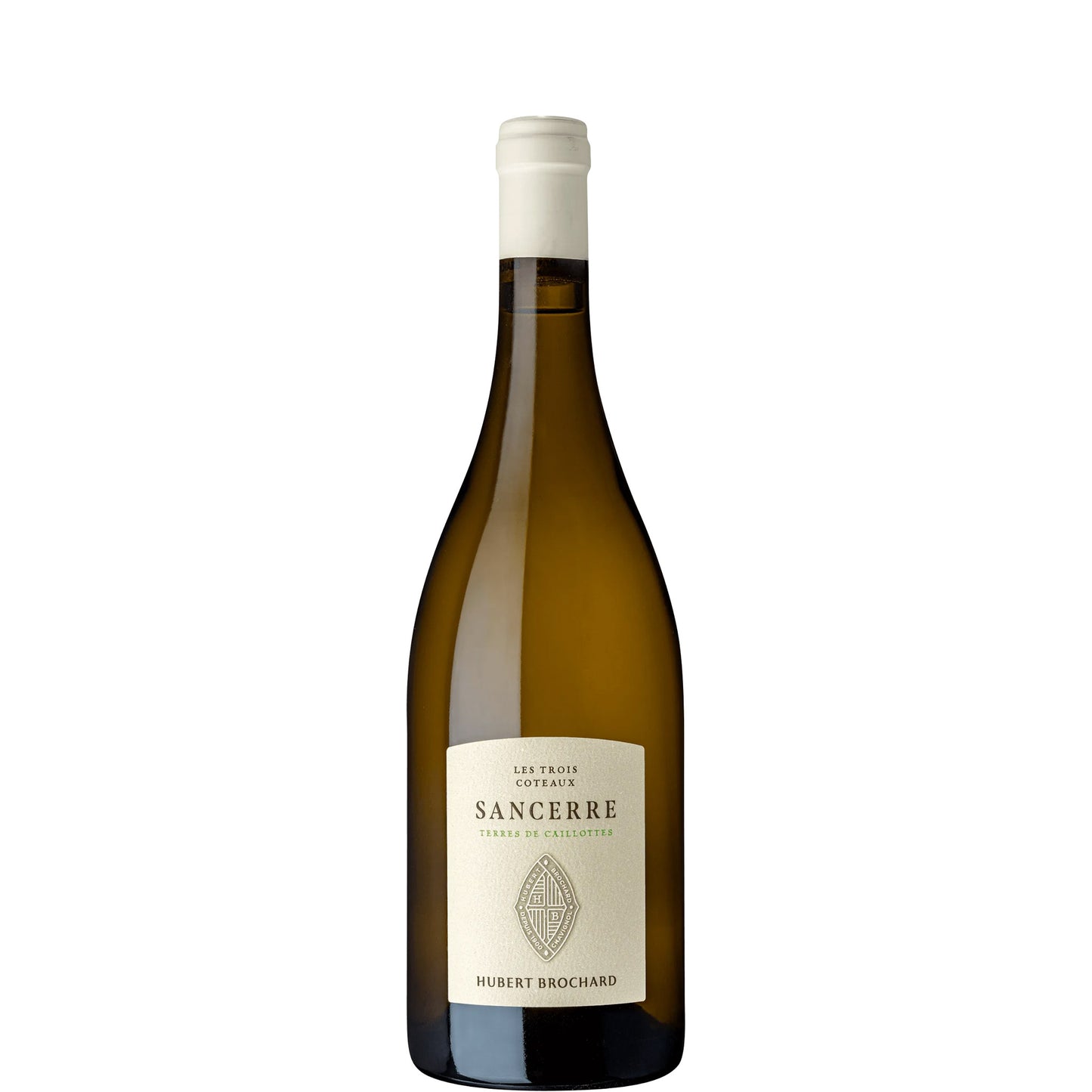
Domaine Hubert Brochard, Sancerre Les Troix Coteaux 'Terres de Caillottes', 2023
Domaine Hubert Brochard, Sancerre Les Troix Coteaux 'Terres de Caillottes', 2023
- 75cl
- 13.5%
- White Still
- Sauvignon Blanc
Couldn't load pickup availability

Optimal drinking window: Now - 2030
The 2023 Terres de Caillottes from Domaine Hubert Brochard is a vibrant, full-bodied Sancerre with bright fruit and a rounded, generous feel. Sourced from Chavignol’s three steep, limestone-strewn slopes, it shows both grit and finesse.
Hand-harvested and vinified across barrels, amphorae, and stainless steel, the wine rests six months on lees, gaining texture and that classic Sancerre minerality. A confident, expressive Sauvignon Blanc, spot-on with goat cheese, seafood, or just a quiet evening glass.
This 2023 is drinking beautifully now, with primary citrus and mineral flavours in perfect balance. Over the next two years, we expect the lees ageing to integrate further, adding texture while the limestone minerality becomes even more pronounced. By 2028, the wine should reach its peak, showing secondary complexity while retaining that essential Sauvignon Blanc freshness. Unlike simpler Sancerres that fade quickly, this has the structure to hold until 2030, though the vibrant fruit character will gradually give way to more developed, honeyed notes. The mineral backbone will remain constant throughout - that's the mark of serious Chavignol terroir.
What the critics say:
"I was expecting the Terres Blanches to be more Chablis-esque than the Caillottes, however, this has the edge on power and style. From vineyard parcels in Chavignol, on 25-degree slopes of caillottes and griottes. Vinified in a mix of amphorae, stainless steel and barrel, then matured six months on lees. 45,000 bottles produced. There is a distinct force and energy here; a touch of sea-shell salinity on nose and palate, with a long, fine finish. Definitely of good, premier cru Chablis quality."
Tasting Notes
AppearancePale gold with brilliant clarity and a slight green tinge at the rim.
NoseImmediately striking with wet limestone and crushed oyster shell, followed by white grapefruit and green apple. There's a subtle herbal lift - more thyme than the usual Sancerre grass - and underneath, that distinctive gunflint minerality that speaks of serious terroir.
PalateFull-bodied for Sancerre, with real weight and texture from the lees ageing. The limestone minerality drives through citrus pith and stone fruit, while the mixed fermentation vessels add complexity without overwhelming the varietal character. Bright acidity keeps everything in line, but there's a roundedness here that sets it apart from standard Sancerre.
FinishLong and saline, with that sea-shell minerality lingering alongside lime zest and a whisper of white pepper.
Overall impressionThis is Sancerre with the power and precision of premier cru Chablis - confident, mineral-driven, and built to last.
Food Pairings
In Sancerre, this would be the natural partner for the local Crottin de Chavignol - that famously pungent goat cheese that somehow finds perfect harmony with the wine's mineral intensity. River fish from the Loire, particularly pike-perch with beurre blanc, showcase the wine's salinity and weight. Spring vegetables like asparagus and artichokes work beautifully, while the locals also reach for it with their beloved rillons - crispy pork belly that the wine's acidity cuts through effortlessly. Come autumn, wild mushrooms from the surrounding forests create magical pairings with the wine's earthy undertones.
We think this wine would go well with
Serve well-chilled at 8-10°C in a medium-sized white wine glass that will concentrate the mineral aromatics without overwhelming the citrus lift. No decanting needed - this wine shows its best straight from the bottle. The fuller body means it can handle slightly warmer serving temperatures than lighter Sancerres, and it actually opens up beautifully in the glass over 20-30 minutes. We find Burgundy glasses work particularly well, given the wine's Chablis-like intensity and structure.
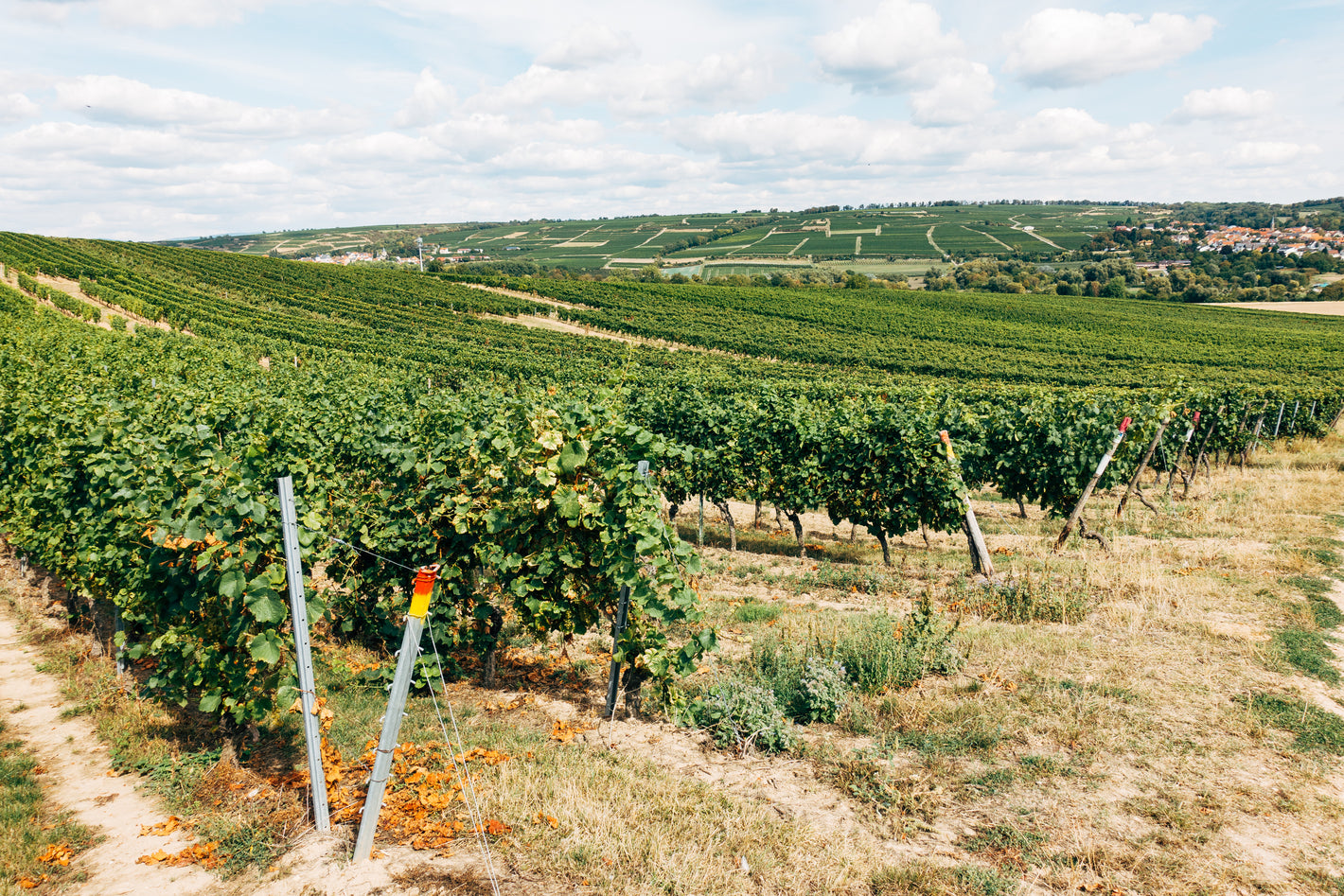
The Terres de Caillottes vineyard sits on Chavignol's famous three slopes, where 25-degree gradients challenge both vine and vigneron. The soils are pure limestone - caillottes and griottes stones that drain quickly and reflect heat back to the vines. This harsh, chalky terroir forces the Sauvignon Blanc roots deep, creating wines with mineral intensity and natural acidity. The steep gradient means hand-harvesting only, but rewards with fruit of exceptional concentration and purity.
Sancerre sits on the Loire's left bank, where Kimmeridgian limestone creates some of France's most mineral-driven Sauvignon Blanc. The appellation spans 2,800 hectares across 14 communes, but the best sites cluster around villages like Chavignol and Bué. Unlike the grassy, tropical style of New World Sauvignon Blanc, Sancerre emphasises stone fruit, citrus, and that distinctive gunflint minerality. The limestone soils here are geologically identical to Chablis, explaining why the finest Sancerres share that Burgundian precision and longevity.
The 2023 Loire vintage feels like the region caught a break after several years of climate extremes. Spring arrived gently, without the brutal frosts that have haunted growers in recent seasons, and summer brought the kind of balanced warmth that lets vines ripen steadily rather than sprint to the finish line. We love how this steady rhythm shows in the wines — there's a naturalness to the ripening that translates into vibrant, focused flavours across the board.
What landed in our cellars has that classic Loire precision we're always hunting for, but with more flesh on the bones than some of the leaner years. The Sauvignon Blancs from Sancerre and Pouilly-Fumé crackle with mineral energy while actually filling your mouth, and the Chenin Blancs from the middle Loire show beautiful balance between their natural acidity and ripe fruit character. Most of these wines are singing right now — the whites especially have hit that sweet spot where youth and drinkability overlap perfectly. The reds will reward a bit more patience, but honestly, we're already dipping into our allocations because they're so bloody delicious.
FAQs
What does this Sancerre taste like?
This is powerful, mineral-driven Sauvignon Blanc with sea-shell salinity, bright citrus, and limestone intensity - more like premier cru Chablis than typical Sancerre in its concentration and structure.
When should I drink this wine?
It's drinking beautifully now and will continue to improve until 2028, holding its quality until 2030. The mineral backbone means it ages more gracefully than most Sancerres.
What food pairs best with this wine?
Classic with Crottin de Chavignol goat cheese, but the wine's weight and salinity make it excellent with river fish, shellfish, asparagus, and even crispy pork belly.
How should I serve this wine?
Serve well-chilled at 8-10°C in a medium white wine glass. No decanting needed, and it opens beautifully in the glass over 20-30 minutes.
What makes this different from other Sancerres?
The combination of steep Chavignol limestone slopes and mixed fermentation in amphorae, barrels, and steel creates unusual power and complexity - this has the mineral intensity of premier cru Chablis.
Is this wine worth cellaring?
Yes, unlike many Sancerres this has the structure to improve for 2-3 years and hold quality until 2030, developing secondary complexity while retaining its mineral core.
Explore related wines


What are you looking for tonight? Tell me the occasion, a grape, a region — or just try a suggestion below.
Your recommendations will appear here.
-
-
Speak to one of our Wine Gurus
Speak to a Wine GuruWith years of experience, our team can help you with all your wine buying and selling needs