
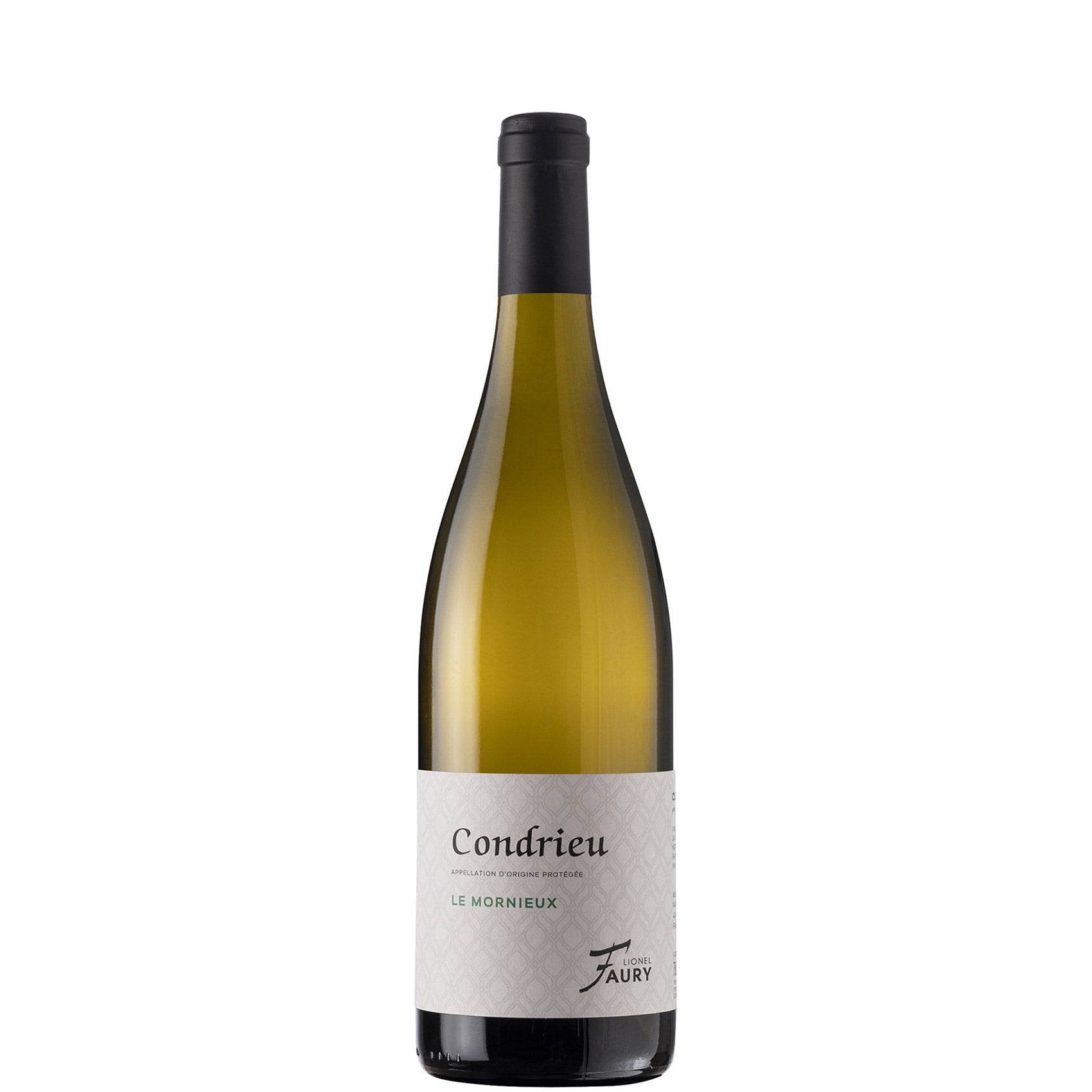
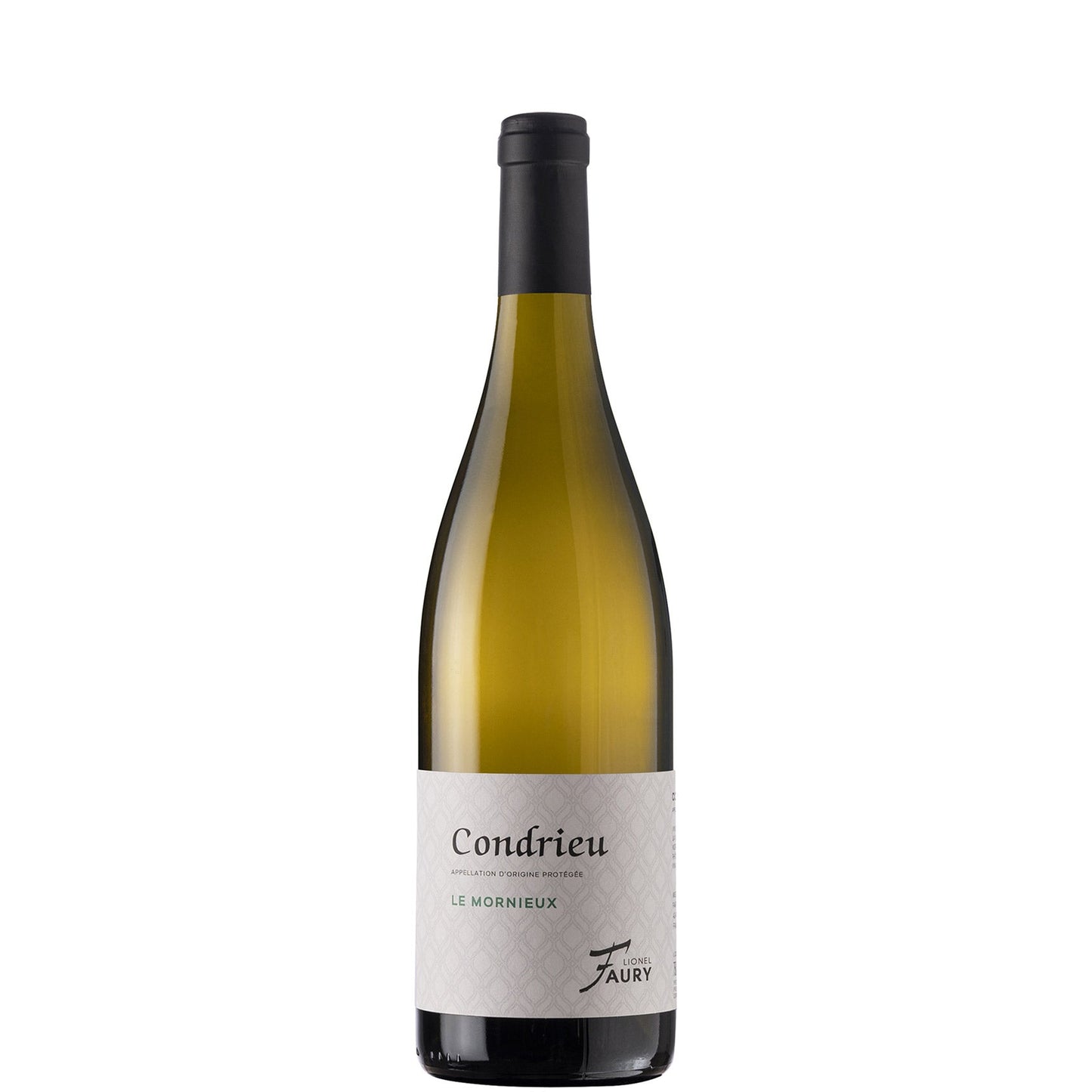
Domaine Lionel Faury, Condrieu, Le Mornieux, 2022
Domaine Lionel Faury, Condrieu, Le Mornieux, 2022
- 75cl
- 14.5%
- White Still
- Viognier
- Vegetarian
- Vegan
Couldn't load pickup availability

Optimal drinking window: 2026 - 2030
Condrieu is Viognier's spiritual home, and Lionel Faury's Le Mornieux is one of the appellation's more compelling arguments for why that matters. The Mornieux lieu-dit sits on the steep, decomposed granite slopes above the Rhône, and the 2022 vintage gave the grape the warmth it craves without tipping into flabbiness — the result is a wine of real presence, all white peach and apricot blossom with a gingery spice and a waxy, almost lanolin-like texture that is pure Viognier at its most expressive.
This is not a wine for those who like their whites lean and angular. Le Mornieux is generous, sensory, and unabashedly aromatic — but there is genuine grip on the finish, and a saline, granitic mineral thread that keeps everything honest.
In 2026, Le Mornieux is at or very close to its peak: the primary aromatics are vivid and the texture is seamlessly integrated following four years on cork. Drink it now through 2028 for the full aromatic fireworks — that blossom-and-peach intensity that makes Condrieu so compulsive is at its most expressive in this window. By 2029 to 2030, the wine will likely shift toward a richer, more honeyed, nutty character as the primary fruit fades; some people find this phase equally rewarding, though the youthful exuberance will be gone.
What the critics say:
"I totally dig the 2022 Condrieu Le Mornieux, a Viognier of class and substance. Prominent apricot, quince, spring blossom, cedar, acacia, honey and ripe peach all race out of the glass. Rich and concentrated, the full-bodied 2022 checks out with persistence on the stone fruit-laden finisha powerhouse."
Tasting Notes
AppearanceBright, medium-deep gold with a greenish glint at the rim.
NoseIntensely aromatic from the first pour — white peach, ripe apricot, and a distinctive violet-and-blossom lift that is Viognier's calling card. Beneath the floral exuberance there is fresh ginger, a touch of beeswax, and a subtle almond-skin note that gives it more substance than pure perfume.
PalateFull-bodied and textured, with that characteristic waxy, almost unctuous mouthfeel, but 2022's ripeness is balanced by lively acidity that keeps the wine from feeling heavy. White peach and nectarine carry through from the nose, joined by a savoury, mineral thread on the mid-palate that grounds the whole thing in its granite origins.
FinishLong and persistently aromatic, with a clean saline-mineral note and a whisper of dried apricot that lingers well after the glass is empty.
Overall impressionViognier with genuine restraint and a sense of place — the aromatics seduce, but the structure earns your respect.
Food Pairings
Up in the northern Rhône, Condrieu has long been the natural partner for freshwater fish from the river below — pike quenelles in a crayfish bisque being the classic pairing, a dish still found on menus in Lyon and Vienne. Locally, it is also poured alongside écrevisses à la crème, the richness of the sauce meeting the wine's texture halfway. Foie gras — particularly a terrine with a little peach or apricot chutney — is an inspired match, the wine's sweetness of fruit echoing and amplifying the fat of the liver without overwhelming it. A little further south, you find it paired with strongly flavoured soft cheeses, and at the table it will hold its own against a simple roast chicken basted in herbed butter.
We think this wine would go well with
Serve between 11 and 13°C — cold enough to keep the aromatics focused, but not so cold that you mute the texture and complexity. No need to decant; this wine opens up quickly in the glass, and spending 15 minutes in the fridge after opening is more useful than any decanting ritual. A wide-bowled white Burgundy glass works well, giving the aromatic compounds room to gather and allowing you to get your nose properly into it.
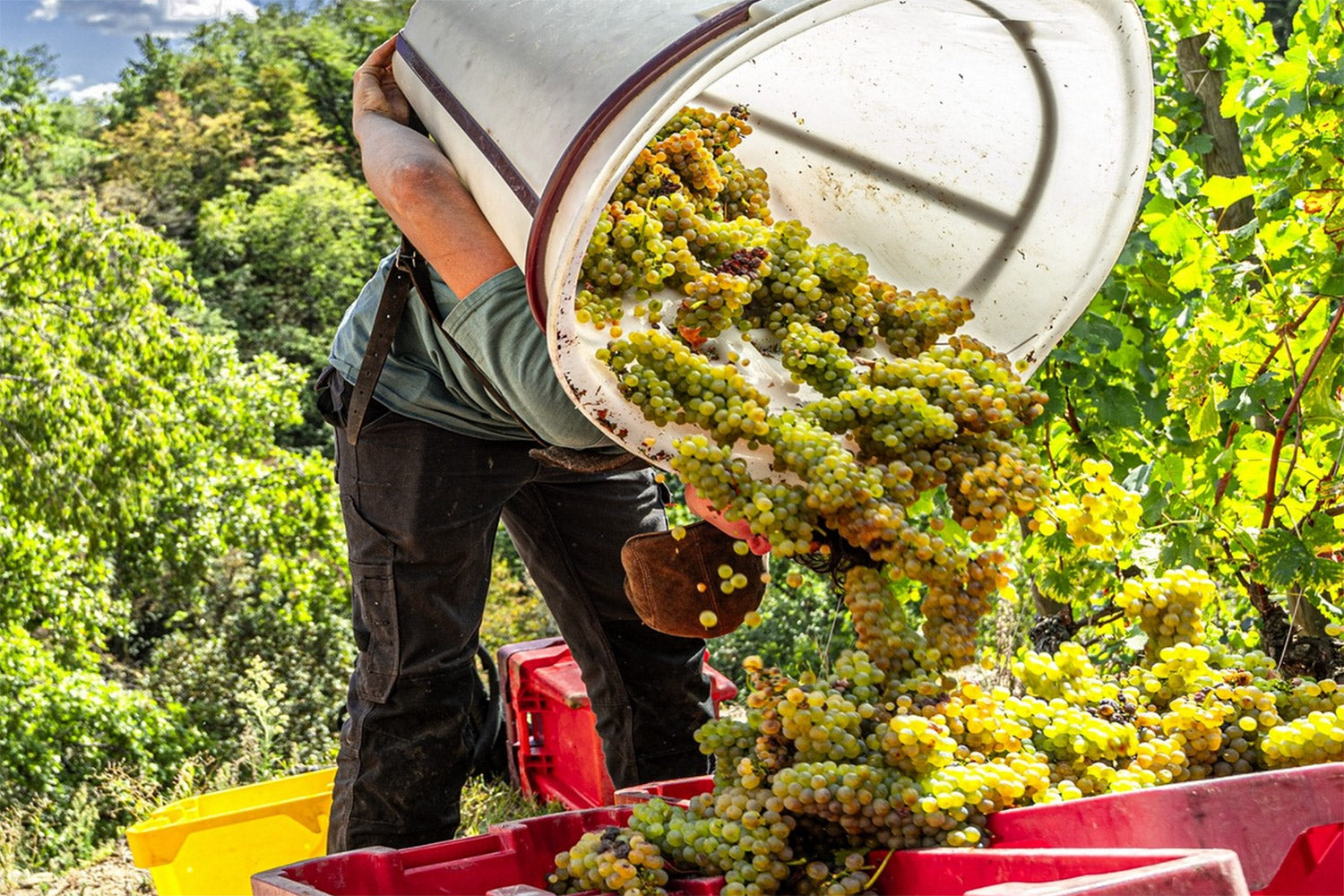
Le Mornieux is a single lieu-dit on the south-facing granite terraces above Chavanay, where thin, sandy, decomposed granite soils force the Viognier vines to dig deep for water and nutrients. The steep gradient — some sections close to 45 degrees — means hand-harvesting is essential and yields are naturally low. The combination of poor, fast-draining soils and maximum sun exposure concentrates the grape's aromatics while the altitude and cool nights preserve the freshness that separates fine Condrieu from the soupy versions. Granite, uniquely, gives Viognier a mineral backbone it rarely achieves elsewhere.
Condrieu is a tiny, fiercely steep appellation just south of Côte-Rôtie on the northern Rhône's right bank, covering fewer than 200 hectares and producing exclusively white wine from 100% Viognier. It is one of the world's most singular appellations — no blending permitted, no other grape allowed — and at its best produces whites of extraordinary aromatic intensity: peach, apricot, violet, and a haunting floral lift that no other grape quite replicates. Unlike Burgundy whites, which reward decades in the cellar, most Condrieu is best drunk young, while that fragrant primary character is still singing. The appellation's reputation oscillated wildly in the late 20th century as fashion drove some producers toward overripe, overoaked caricatures, but a generation of careful growers has restored its credibility.
The 2022 growing season in the Rhône started promisingly before delivering one of those vintages that separates the wheat from the chaff. A warm, dry summer tested vine health and vineyard management across both north and south, with August heat pushing some sites to their limits. The harvest came early but remained manageable for growers who kept their nerve, though yields dropped significantly in many appellations.
What emerged feels concentrated rather than cooked, with Syrah from the northern Rhône showing particular poise despite the challenging conditions. The southern appellations produced Grenache-based blends with real intensity and structure, though we're finding the best examples needed careful selection in the cellar. These wines are drinking well now but the stronger examples will reward patience until 2028. Not a vintage for the history books, but one that rewards knowing your producers.
FAQs
What does Le Mornieux taste like?
This is Viognier in its most expressive form — white peach, apricot blossom, and ginger spice, with a full, waxy texture and a mineral, saline thread on the finish that keeps it grounded. It is generous and aromatic without being heavy or overblown.
When should I drink it?
It is drinking superbly right now, in 2026, and we would aim to enjoy it over the next two to three years while the aromatic intensity is at its peak. It will hold until around 2030, shifting toward a richer, nuttier character as it ages, but the real joy is in the wine as it stands today.
What food should I pair it with?
Classic northern Rhône matches work brilliantly — pike quenelles, crayfish bisque, or any rich freshwater fish preparation. Foie gras terrine with a stone-fruit chutney is a wonderful pairing, as is roast chicken with herbed butter or a soft, well-flavoured cheese. The wine's texture loves fat; lean, delicate dishes can struggle to match its weight.
How should I serve it?
Serve between 11 and 13°C in a wide-bowled white Burgundy glass — you want room for those aromatics to gather. No need to decant; fifteen minutes in the fridge after opening is all the preparation this wine needs.
Is Condrieu always made from Viognier?
Yes, always and exclusively. Condrieu is one of the few appellations in France where only a single grape variety is permitted, and Viognier is it. No blending, no exceptions — which is part of what makes it such a singular experience and such a precise expression of what Viognier can do on granite slopes.
Is this worth cellaring?
Only if you prefer the aged, honeyed style to the aromatic freshness of youth. Most Condrieu — including this one — is best drunk within five or six years of the vintage. The primary fruit and floral lift that make it so compelling begin to fade beyond that point, and unlike white Burgundy or Hermitage Blanc, Viognier rarely develops additional complexity to compensate for the loss.


What are you looking for tonight? Tell me the occasion, a grape, a region — or just try a suggestion below.
Your recommendations will appear here.
-
-
Speak to one of our Wine Gurus
Speak to a Wine GuruWith years of experience, our team can help you with all your wine buying and selling needs