

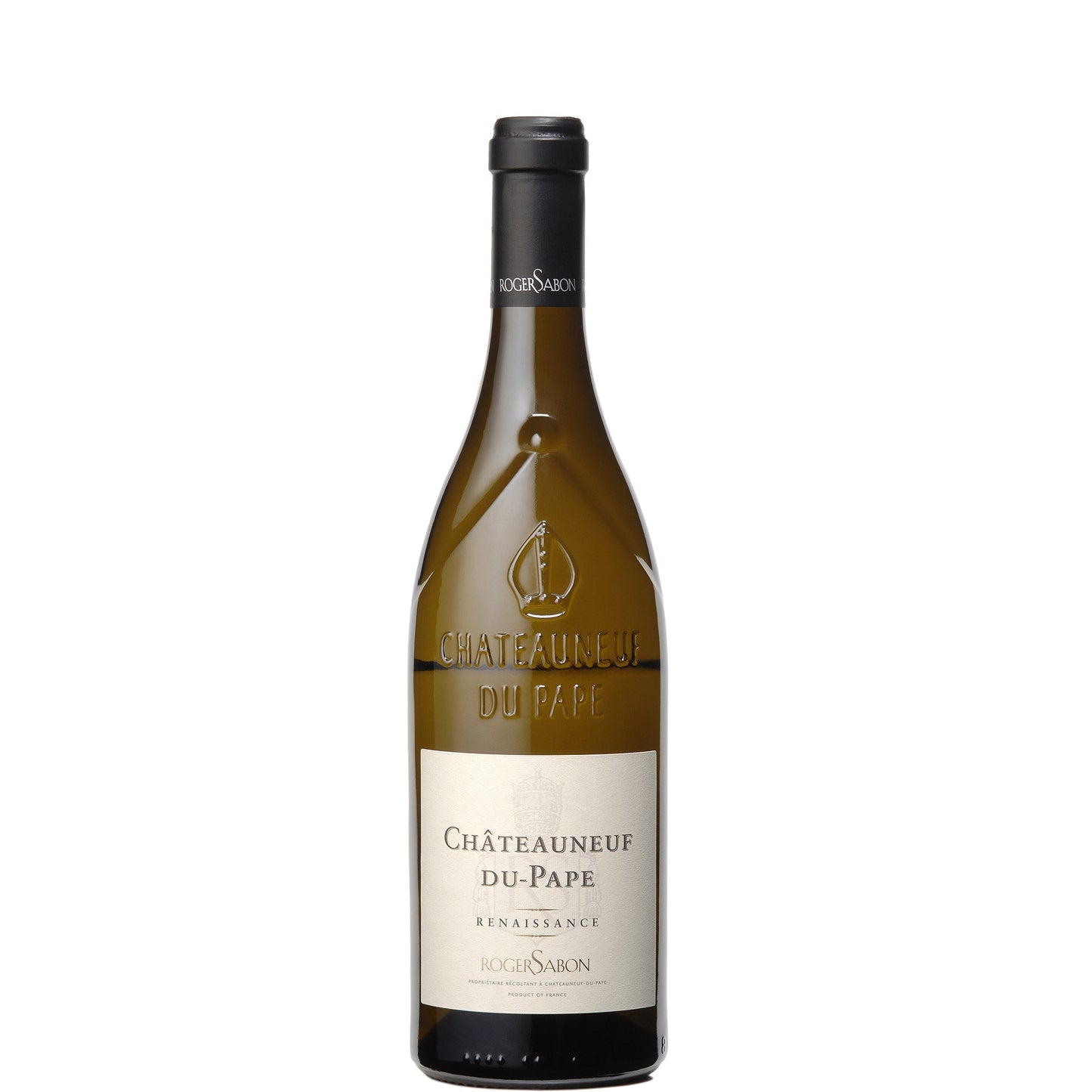
Domaine Roger Sabon, Châteauneuf-du-Pape Blanc, Renaissance, 2024
Domaine Roger Sabon, Châteauneuf-du-Pape Blanc, Renaissance, 2024
- 75cl
- 13%
- White Still
- Clairette, Grenache Blanc, Roussanne, Bourboulenc
- Organic
Couldn't load pickup availability

Optimal drinking window: 2026 - 2040
White Châteauneuf is one of the southern Rhône's great secrets. It makes up for less than 7% of the appellation's production, yet it's arguably the most compelling. Sabon's Renaissance is among the finest expressions: a blend led by Clairette and Grenache Blanc, with Roussanne adding weight and Bourboulenc keeping things lively.
The 2024 vintage brought freshness the south doesn't always get, and it shows; there's a brightness that lifts the wine well above the sometimes heavy, oxidative style that gave white Châteauneuf a mixed reputation in lesser hands.
What you get is richness without weight, generosity without blowsiness. White peach, warm stone, and a waxy, almost honeyed mid-palate that stops well short of sweetness, balanced by a saline, mineral finish that feels almost coastal. It's drinking well right now, but we'd give it another year or two in the cellar if you can manage it — the complexity is still assembling itself.
Right now the wine is in a very good place — the primary fruit is still vivid and the mineral freshness of the 2024 vintage is doing exciting things. Over the next one to two years, expect that freshness to knit more tightly with the texture, and a nutty, honeyed complexity to start emerging from the Roussanne and Clairette. Around 2028-2030 is likely the sweet spot, when everything is integrated and the wine has found its full voice. After 2032 it may start to soften and broaden, and by 2040 it will be at the outer edge of its drinking window — still interesting, but past its peak.
What the critics say:
"Fresh and perfumed, the 2024 Chateauneuf du Pape Renaissance Blanc is a beauty, opening with aromas of white fruits, pear, herbs and a touch of fresh mint. Medium- to full-bodied, layered and sappy, it is satiny and juicy, concluding with a long, mouthwatering finish. Composed of equal parts Roussanne, Clairette, Grenache Blanc and Bourboulenc, it was vinified in foudres and matured in stainless steel."
Tasting Notes
AppearanceDeep gold with a faint green edge — bright, clear, and inviting.
NoseWhite peach and ripe pear up front, then warm stone, beeswax, and a subtle floral lift — acacia, perhaps, fading into something more mineral and smoky. There's no oxidative heaviness here; it's fresh and precise for the appellation.
PalateFull-bodied but not heavy, with that waxy, almost honeyed Grenache Blanc texture doing the structural work. Apricot and grilled almond sit in the mid-palate, while Bourboulenc keeps the acidity honest and Roussanne adds a whisper of spice on the back end. The balance is quietly impressive.
FinishLong and saline, with a cool mineral streak that makes the wine feel fresher than its alcohol suggests.
Overall impressionOne of the most convincing arguments for white Châteauneuf you'll find at this price.
Food Pairings
In and around Avignon, this style of wine is the natural partner for brandade de morue — the silky salt cod and olive oil purée that has been a Provençal staple for centuries. The saline, mineral quality in the wine mirrors the cod beautifully without overwhelming it. Locally, you'd also find it poured alongside a bourride, the garlicky fish stew that's the southern answer to bouillabaisse, or with a tian of courgette and aubergine from a wood-fired oven. For something simpler, a plate of aged Banon goat's cheese from just up the road in the Alpes-de-Haute-Provence is hard to argue with.
We think this wine would go well with
Serve at around 12-13°C — cold enough to keep it fresh, warm enough to let the texture and aromatic complexity show. This doesn't need decanting, though giving it fifteen minutes in the glass before drinking makes a real difference as it opens up. A wide-bowled white wine glass works best; the extra surface area lets the waxy, stony aromas gather before you drink.
The Renaissance vineyard sits on the classic galets roulés — those large, round, heat-retaining stones that Châteauneuf-du-Pape is famous for — over a sandy, clay-rich subsoil that retains just enough moisture to keep the vines balanced through the scorching southern summers. The Mediterranean climate means long, dry growing seasons with fierce sun, but the Mistral wind is the great regulator here, drying out disease pressure and preserving acidity in the grapes. For a white wine in such a warm climate, that acid retention is everything — it's what gives Renaissance its structure and longevity.
Châteauneuf-du-Pape is the Rhône's most celebrated appellation, sitting just north of Avignon and covering around 3,200 hectares. It was, famously, the first French AOC to be formally delimited, back in 1936, and permits an unusually wide range of grape varieties — thirteen in the current rules, though in practice most whites are built around Grenache Blanc, Clairette, Roussanne, and Bourboulenc. The appellation has a complex reputation: the reds are internationally famous, while the whites remain underappreciated outside enthusiast circles, despite regularly punching well above their weight. Yields are tightly controlled and mechanical harvesting is banned, which keeps quality floors high across the board.
The 2024 vintage in the Rhône arrived after a growing season that kept everyone guessing. Spring brought its share of rain, which replenished soils after previous dry years, but summer turned properly hot with several intense spells that had growers scrambling to protect their fruit. The saving grace came from cool nights that preserved acidity, and crucially, harvest conditions stayed dry and stable when it mattered most. Syrah and Grenache both ripened well, though yields varied considerably depending on how effectively each domaine managed the heat stress.
What emerged from the cellars shows all the hallmarks of a warm vintage done right: the reds have immediate appeal with ripe, fleshy fruit and supple tannins, whilst the whites display surprising freshness alongside their generous stone fruit flavours. Northern Rhône Syrah has produced wines with real depth and concentration, and we're particularly impressed by how the southern blends have retained their characteristic garrigue perfume despite the challenging conditions. Most 2024 reds are drinking beautifully now and will continue to develop until 2032, making this a vintage that rewards both early drinking and patient cellaring.
FAQs
What does Sabon's Renaissance Blanc taste like?
Rich and characterful, with white peach, warm stone, beeswax, and a saline mineral finish. There's real texture from the Grenache Blanc and Roussanne, but the 2024 vintage brings a freshness that keeps it lively rather than heavy.
When should I drink the 2024 vintage?
It's already drinking well and there's no need to wait. That said, another one to two years in the cellar will allow the wine to integrate further, and the sweet spot is probably around 2028-2030. We'd drink it until around 2040.
What food works best with this wine?
Anything that plays to the wine's saline, mineral quality — brandade de morue, a rich fish stew, or grilled sea bass with olive oil and herbs. Aged goat's cheese is another excellent match if you're keeping things simple.
How should I serve it?
Serve at around 12-13°C in a wide-bowled white wine glass. No need to decant, but give it fifteen minutes in the glass before drinking and you'll be well rewarded.
Is white Châteauneuf-du-Pape worth cellaring?
Yes, and it's one of the most underestimated cellaring propositions in the southern Rhône. The best examples — and Renaissance is among them — develop real complexity over five to eight years, moving from fresh and fruity to nutty, honeyed, and mineral. Just don't leave it too long: unlike the reds, these whites don't go on indefinitely.
How does Renaissance compare to Sabon's other whites?
Renaissance is the top cuvée, drawn from the oldest vines and given more careful selection. It has more depth and structure than Sabon's entry-level Châteauneuf Blanc, and it's the wine to reach for if you're planning to cellar anything or pairing with a serious meal.

OUR GROWERS
Domaine Roger Sabon


What are you looking for tonight? Tell me the occasion, a grape, a region — or just try a suggestion below.
Your recommendations will appear here.
-
-
Speak to one of our Wine Gurus
Speak to a Wine GuruWith years of experience, our team can help you with all your wine buying and selling needs