

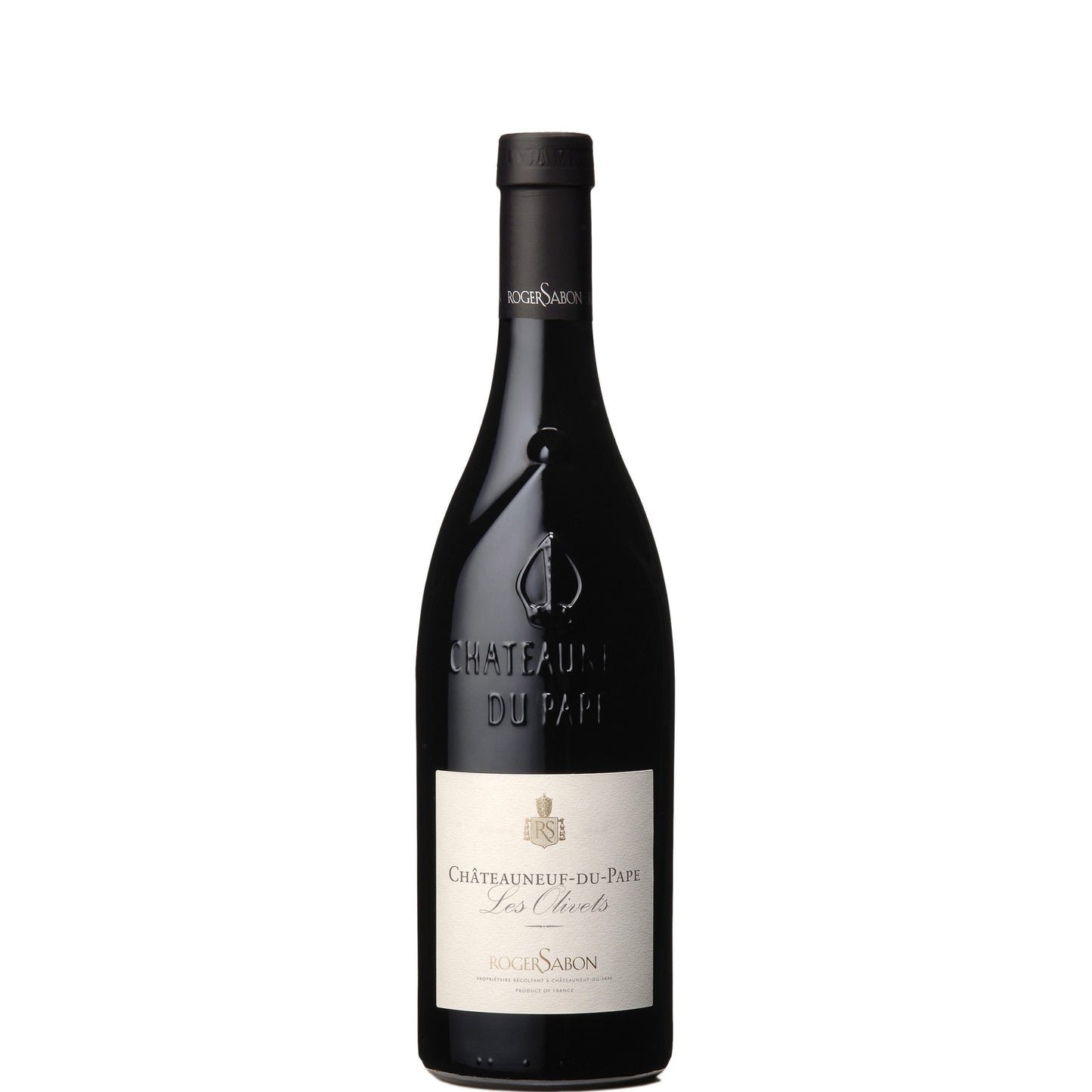
Domaine Roger Sabon, Châteauneuf-du-Pape, Les Olivets, 2024
Domaine Roger Sabon, Châteauneuf-du-Pape, Les Olivets, 2024
- 75cl
- 14.5%
- Red Still
- Grenache, Syrah, Mourvèdre
Couldn't load pickup availability

Optimal drinking window: 2026 - 2035
Les Olivets is the entry point into Roger Sabon's Châteauneuf-du-Pape range, and a very fine place to start. Drawn from younger vines across the appellation, it has all the warmth and generosity that made this corner of the southern Rhône famous; dark fruit, wild herb, and a full, round palate that does exactly what a great CdP should do without asking you to wait a decade for the privilege.
The 2024 vintage in the southern Rhône was one of fresher character than recent scorched years, and Les Olivets wears that freshness well — there's lift and energy alongside the usual sun-warmed richness.
Right now, Les Olivets 2024 is in a very approachable, fruit-forward place — the primary cherry and plum fruit is vivid, the tannins are soft, and the wine needs nothing more than a decant. Over the next two to three years the fruit will settle and integrate, and more of the savoury, earthy complexity will start to emerge. By 2028 to 2030 it should be at a particularly satisfying middle age, where freshness and depth sit in balance.
Tasting Notes
AppearanceDeep ruby-garnet, generous and opaque at the core with a bright, youthful rim.
NoseDark cherry and ripe plum come first, then wild Provençal herbs — thyme, rosemary, lavender — with a dusting of cracked black pepper and a faint warmth of cinnamon. The 2024 vintage lends a freshness that keeps everything lifted rather than jammy.
PalateFull-bodied but not heavy, with the generous, rounded texture that is Grenache's calling card. Ripe tannins, plenty of dark fruit, and that characteristic southern warmth, balanced by enough freshness to prevent the wine feeling overblown. Savoury garrigue runs through the mid-palate.
FinishLong, spiced, and warming, with dried herbs and a gentle grip of tannin that encourages another sip.
Overall impressionA proper, generous Châteauneuf that delivers the full southern Rhône experience without demanding years of patience.
Food Pairings
In and around Châteauneuf-du-Pape, this kind of wine goes to the table with daube d'agneau — slow-braised lamb with olives, orange peel, and herbs — which mirrors the wine's own garrigue character almost too perfectly. Wild boar or rabbit cooked with thyme and tomato is another classic pairing from the Provençal kitchen. A leg of lamb roasted with whole garlic cloves would be just as at home. Harder aged cheeses from the region, particularly the assertive Pélardon or a mature Comté, hold their own against the wine's weight and spice.
We think this wine would go well with
Serve at around 17°C — slightly cooler than you might expect for a big southern red, which keeps the alcohol from feeling heavy and lets the fruit stay fresh. Decanting for 30 to 45 minutes is worth doing, particularly with a young vintage like 2024; it opens the wine up and softens the tannins without losing any of its energy. A large-bowled Burgundy-style glass gives Grenache the room it needs to express itself properly.
Les Olivets draws on Sabon's younger vine parcels spread across different soil types within Châteauneuf-du-Pape, including the famous large rounded galets roulés — stones that absorb heat during the day and release it at night, pushing ripeness even in cooler years. The appellation sits at relatively low altitude on a plateau north of Avignon, baked by the Provençal sun and scoured by the Mistral, which keeps disease pressure low and concentrates the fruit. Sandy and clay-limestone soils also feature across the estate, adding different textural elements to the blend.
Châteauneuf-du-Pape is the most celebrated appellation of the southern Rhône, built on a reputation for powerful, generous reds that age surprisingly well. It permits up to 13 grape varieties, though Grenache almost always leads, with Syrah and Mourvèdre the principal supporting cast. Yields are tightly controlled and the wines must reach a minimum of 12.5% ABV — in practice they almost always exceed this significantly. Compared to its northern Rhône neighbours like Hermitage or Côte-Rôtie, CdP is broader and more voluptuous, less about cool-climate precision and more about warmth, spice, and sheer character.
The 2024 vintage in the Rhône arrived after a growing season that kept everyone guessing. Spring brought its share of rain, which replenished soils after previous dry years, but summer turned properly hot with several intense spells that had growers scrambling to protect their fruit. The saving grace came from cool nights that preserved acidity, and crucially, harvest conditions stayed dry and stable when it mattered most. Syrah and Grenache both ripened well, though yields varied considerably depending on how effectively each domaine managed the heat stress.
What emerged from the cellars shows all the hallmarks of a warm vintage done right: the reds have immediate appeal with ripe, fleshy fruit and supple tannins, whilst the whites display surprising freshness alongside their generous stone fruit flavours. Northern Rhône Syrah has produced wines with real depth and concentration, and we're particularly impressed by how the southern blends have retained their characteristic garrigue perfume despite the challenging conditions. Most 2024 reds are drinking beautifully now and will continue to develop until 2032, making this a vintage that rewards both early drinking and patient cellaring.
FAQs
What does Les Olivets taste like?
It is a rich, generous southern Rhône red with dark cherry, ripe plum, wild herbs, and cracked pepper. The palate is full and round with warming spice and a long, savoury finish — everything you want from a Châteauneuf-du-Pape without waiting years for it to open up.
When is the best time to drink the 2024 vintage?
It is drinking very well right now and will continue to do so until around 2035. The 2024 vintage has good freshness, so there is no urgency — but equally no reason to wait. Open it over the next few years for the best of both fruit and developing complexity.
What food should I serve with it?
Slow-braised lamb with olives and herbs is the regional classic and an almost perfect match. Roast lamb, wild boar, rabbit with thyme and tomato, or a well-aged hard cheese will all work brilliantly. The wine's warmth and spice mean it can handle bold, herb-driven cooking without blinking.
How should I serve it?
Serve at around 17°C and decant for 30 to 45 minutes before drinking. A large-bowled glass gives the wine space to open up. Avoid serving it too warm, which can make the alcohol feel heavy.
Is Les Olivets worth cellaring?
It will hold comfortably until 2035, and a few years of bottle age will add some earthy, savoury depth. That said, it is not a wine built for extended cellaring in the way that Sabon's Prestige cuvée is — it is designed to be enjoyed in its youth and mid-life, not squirrelled away for a decade.
How does Les Olivets compare to Sabon's other Châteauneufs?
Les Olivets sits at the approachable end of the Sabon range, made from younger vines and designed for earlier drinking. Above it sit the Réserve and the rare, highly sought-after Prestige, both of which come from older vines and need more time. Les Olivets is the right place to start — it gives you the full Sabon character without the wait or the price tag.

OUR GROWERS
Domaine Roger Sabon


What are you looking for tonight? Tell me the occasion, a grape, a region — or just try a suggestion below.
Your recommendations will appear here.
-
-
Speak to one of our Wine Gurus
Speak to a Wine GuruWith years of experience, our team can help you with all your wine buying and selling needs