

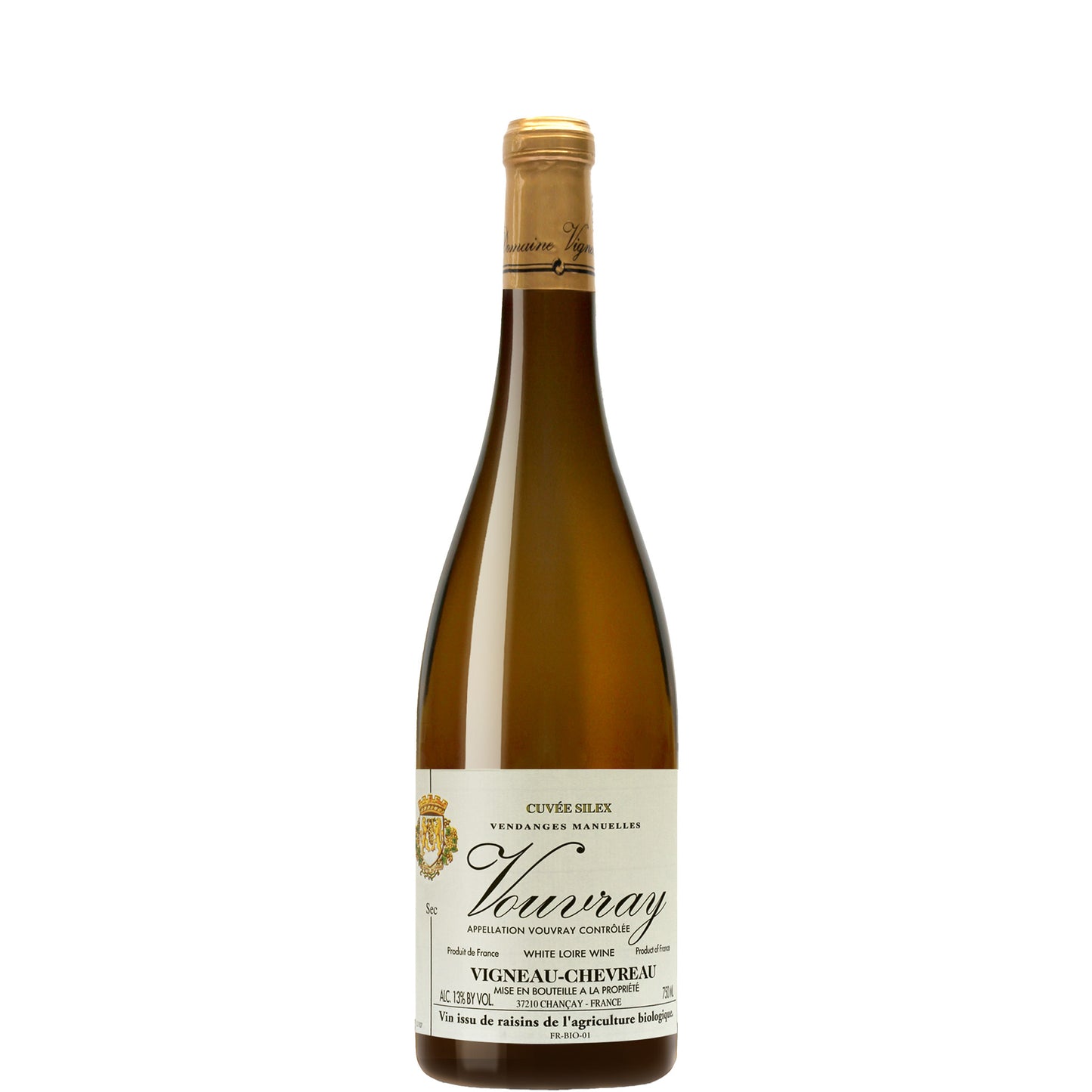
Domaine Vigneau-Chevreau, Vouvray, Sec Silex, 2025
Domaine Vigneau-Chevreau, Vouvray, Sec Silex, 2025
- 75cl
- 12.5%
- White Still
- Chenin Blanc
- Organic
- Biodynamic
Couldn't load pickup availability

Optimal drinking window: 2026 - 2033
Vigneau-Chevreau's Sec Silex is dry Vouvray at its most purposeful. This is Chenin Blanc grown on the appellation's coveted silex soils — the flinty, siliceous subsoil that gives the wine a nervy, electric quality you simply don't get from tuffeau-dominated plots. Expect green apple, white flowers, and that signature struck-flint character that makes Loire Chenin so compelling when it's this focused. It's bone dry, relatively lean, and built around acidity rather than richness — which means it rewards a proper chill and a plate of food.
The 2025 vintage in the Loire was bright and well-balanced, and this wine has the freshness to show it. If you've never understood why dry Vouvray excites people, this is where to start.
Right now, the 2025 is in its primary phase and showing excellent freshness — the fruit is vivid, the acidity is lively, and the flint mineral character is at its most pronounced. Over the next two to three years, the wine will begin to integrate and the waxy, lanolin texture typical of aged Chenin will start to emerge. By around 2028-2029 it should hit a particularly interesting middle period where primary fruit and secondary complexity coexist. It will plateau somewhere around 2030-2031 and remain enjoyable until around 2033, after which the fruit may start to fade, though the best silex-site wines from this domaine have surprised before.
Tasting Notes
AppearancePale gold with a faint green tint and excellent clarity.
NoseClean and precise, with green apple, quince, and white blossom up front. Behind that, there's a cool, stony quality — wet flint, almost like sparks off a whetstone — that announces the silex soils immediately. It's restrained rather than aromatic, which is exactly the point.
PalateBone dry, with brisk acidity that gives the wine real shape and tension. The fruit sits in the green-to-yellow spectrum — apple, pear, lemon zest — and there's a waxy, lanolin texture that's pure Chenin. The mineral quality carries through from nose to palate with impressive consistency.
FinishLong and saline, with the flint and citrus pith lingering well after the wine has gone.
Overall impressionA genuinely site-specific dry white that earns every sip.
Food Pairings
In the Touraine, dry Vouvray like this is the go-to wine for freshwater fish — pike with beurre blanc is the classic pairing, and it's classic for a reason: the acidity cuts through the butter and the minerality echoes the river. Locally, you'd also find it alongside rillettes de Tours, the rich pork spread that needs something with real bite to balance it. Goat's cheese from the Loire — a young Sainte-Maure de Touraine, chalk-dusted and tangy — is another natural match. And don't overlook it with simple grilled asparagus when the season arrives: few wines handle that particular vegetable with as much grace.
We think this wine would go well with
Serve cool, around 9-11°C — cold enough to emphasise the freshness and mineral precision, but not so cold that it shuts the wine down entirely. No decanting needed; this wine is made to be poured straight from the bottle. A standard white wine glass with a moderate bowl works well, though a slightly larger Burgundy-style glass will coax out a little more of the floral character on the nose if you want to explore it.
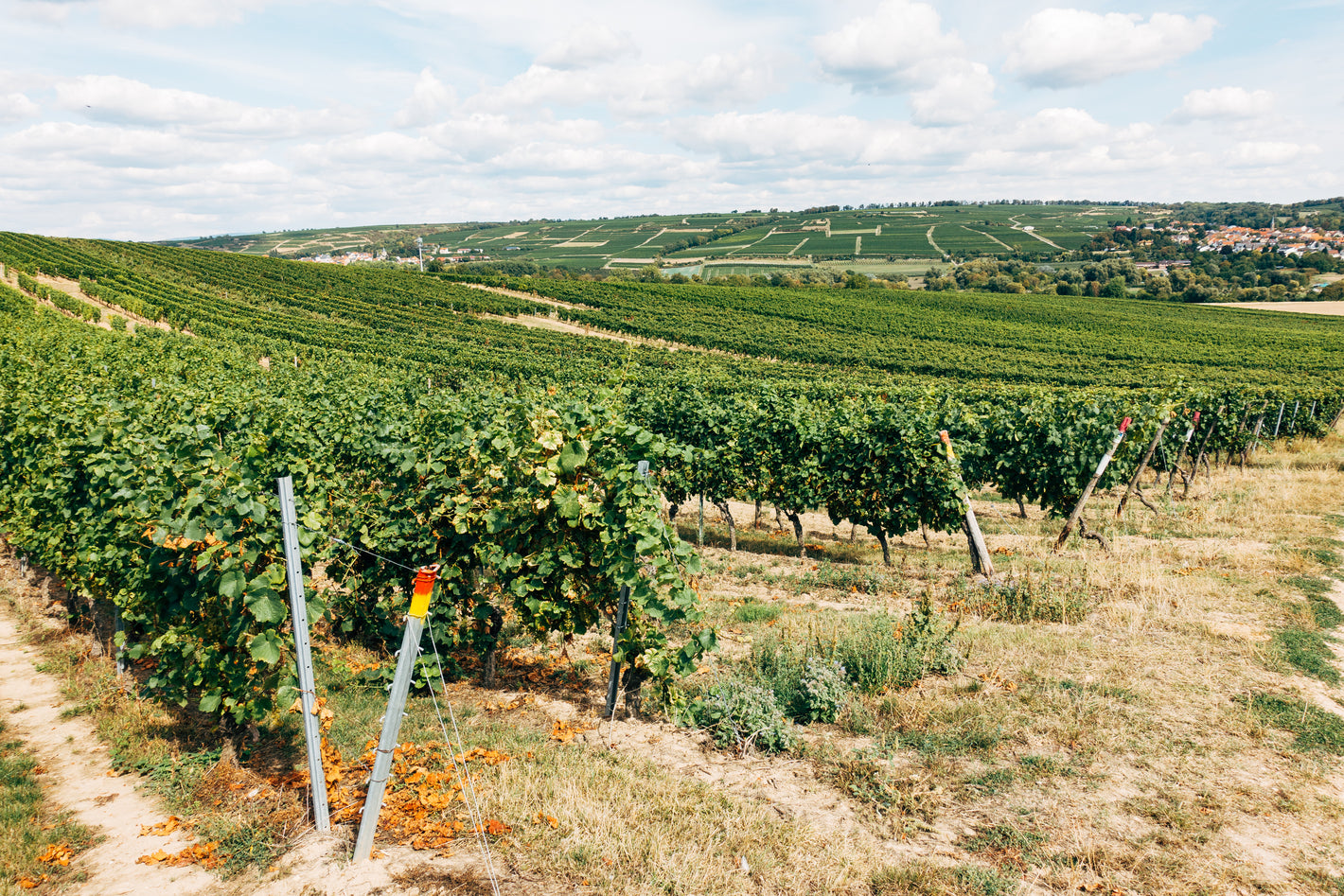
The Sec Silex comes from vineyards planted on silex — a hard, siliceous flint-rich soil that drains extremely well and forces the vines to dig deep for water and nutrients. This stress, combined with silex's natural heat retention, produces grapes with concentrated flavour but also a distinctive mineral edge, often described as struck flint or wet stone. The vineyards sit on the gentle slopes north of the Loire river, with a continental climate moderated by the river's influence, giving long growing seasons ideal for Chenin Blanc's slow ripening.
Vouvray is one of the Loire Valley's most celebrated white wine appellations, sitting just east of Tours and planted exclusively with Chenin Blanc — no exceptions. It spans a range of styles from bone-dry (sec) to off-dry (demi-sec), medium-sweet (moelleux), and fully botrytised (liquoreux), as well as sparkling pétillant and fully sparkling versions. What distinguishes Vouvray from its neighbour Montlouis-sur-Loire, just across the river, is its predominantly tuffeau limestone soils, though pockets of silex and clay-silex exist, producing wines of a different, more electric character. In the dry styles especially, Vouvray can age for decades — this is not a region defined by early drinking.
The 2025 vintage hasn't happened yet — we're still firmly planted in 2024, watching this year's grapes ripen along the Loire. While we'd love to peer into our crystal decanter and predict what nature has in store, even our most enthusiastic soothsaying has its limits. What we can tell you is that the Loire continues to deliver some of France's most thrilling wines, vintage after vintage, from the mineral-driven Muscadet of the Atlantic coast to the profound Cabernet Franc of Chinon and Bourgueil.
For now, we're busy celebrating the brilliant 2022s that are drinking superbly, the structured 2020s that reward patience, and the occasional treasure from earlier decades that reminds us why Loire wines age so gracefully. Check back with us in late 2025 when we've actually tasted what the vines produce, rather than what our imagination conjures. We promise the wait will be worth it — the Loire rarely disappoints, and when it does deliver, we'll be the first to tell you exactly why you should be excited.
FAQs
What does Sec Silex taste like?
It's dry, precise, and mineral-driven. Think green apple, quince, lemon zest, and a cool, flinty quality that comes directly from the silex soils the vines grow on. The acidity is the wine's backbone and its great strength.
Is this wine sweet at all?
No. Sec means dry, and this is genuinely bone dry. Vouvray does produce off-dry and sweet styles, which can cause confusion, but the Sec Silex has no residual sweetness to speak of. The fruit character can make it seem richer than it is, but the acidity keeps everything taut and dry on the finish.
When should I drink it?
It's drinking well now and will continue to do so until around 2033. If you're opening it young, give it a little time in the glass to open up. It doesn't need cellaring to be enjoyable, but a few more years will bring out additional complexity and that waxy, honeyed character that aged Chenin Blanc is famous for.
What food should I serve it with?
Freshwater fish with butter sauces is the regional classic, but it also works brilliantly with Loire goat's cheese, asparagus, simply prepared chicken or pork, and anything that benefits from a wine with real acidity and a mineral edge. Avoid very rich, heavily spiced dishes — this wine's strength is precision, not power.
How should I serve it?
Serve at around 9-11°C — properly chilled but not ice cold. No decanting needed; pour straight from the bottle into a standard white wine glass. If you want to bring out the floral notes on the nose, a slightly larger bowl helps.
What makes silex soils special?
Silex is a hard, flint-rich siliceous soil that drains quickly and retains heat well. It forces vines to root deeply, producing concentrated fruit with a distinctive mineral, almost smoky character often described as wet flint or struck stone. In Vouvray, silex plots are rarer than the dominant tuffeau limestone, which is part of what makes this cuvée worth seeking out.

OUR GROWERS
Domaine Vigneau-Chevreau
Explore related wines


What are you looking for tonight? Tell me the occasion, a grape, a region — or just try a suggestion below.
Your recommendations will appear here.

-
-
Speak to one of our Wine Gurus
Speak to a Wine GuruWith years of experience, our team can help you with all your wine buying and selling needs