

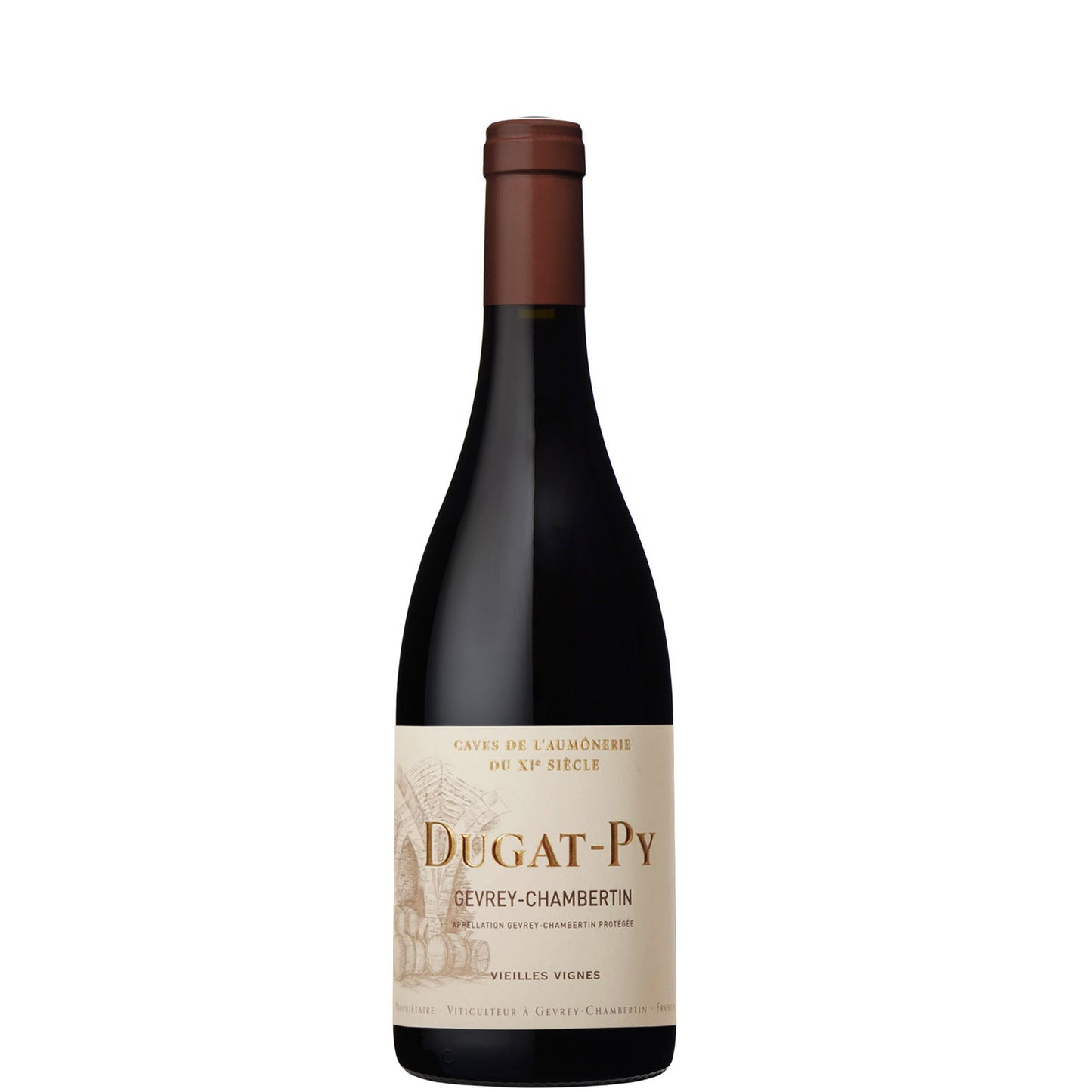
Gevrey-Chambertin 'Vieilles Vignes', Domaine Dugat-Py, 2020
Gevrey-Chambertin 'Vieilles Vignes', Domaine Dugat-Py, 2020
- 75cl
- 13.5%
- Red Still
- Pinot Noir
- Organic
- Biodynamic
Couldn't load pickup availability

Optimal drinking window: Now - 2040
One of the top domaines in Burgundy, Dugat-Py also has one of the most impressive and extensive cellars in the region, originally built in 11th century for the Abbey of Saint Benigné in Dijon. Loïc Dugat, now 13th generation, is continuing the family tradition of making some of the greatest and most sought-after wines in Burgundy, from the family’s eleven hectares of perfectly-sited vineyards, planted with vines averaging nearly seventy years old. Everything is done by hand, while a horse is used to plough a few of the vineyards.
The domaine has been fully organic since 2003, with Loïc now working biodynamically across a number of sites. The wines are vinified with as little intervention as possible and are bottled unfined and unfiltered. Since 2017 the use of new oak has been reduced which really allows the quality of these sites and the character of the old vine fruit to shine through from barrel.
Under Loic’s stewardship and with a string of superb vintages, Dugat-Py is now firmly back in the front rank of Burgundy’s top domaines. These are not inexpensive wines but if you consider that the village level “Vieilles Vignes” and “Coeur du Roy” are better than most growers' 1er Crus, whilst Dugat-Py’s 1er Crus are more thrilling than a lot of others’ Grand Crus then it helps put purchases in perspective.
In 2026, this is in an interesting transitional phase: the primary fruit is still vivid and expressive, but the wine's structure and old-vine concentration are beginning to pull it towards something more serious. Between 2027 and 2030 the tannins should knit together more fully and secondary complexity — forest floor, spice, dried herbs — will start to take over from the brighter red fruit. The peak window is likely 2028 to 2038, when everything should be in harmony. Beyond that, the wine will begin to lean into a more tertiary, autumnal character that devotees of mature Burgundy will find hard to resist, though the finish may gradually soften after 2040.
Tasting Notes
AppearanceDeep, luminous ruby with a garnet edge, clear and precise in the glass.
NoseDark cherry, wild strawberry, and dried rose petal open things up, with an earthy undercurrent of damp forest floor and iron-rich soil. There is a subtle spice from restrained oak — barely there, just enough to give the nose a quiet backbone — and with air, something closer to game and sous-bois begins to emerge.
PalateThe old-vine concentration is obvious from the first sip: a density and depth you simply do not find in younger plantings, yet 2020's generous ripeness keeps things plush rather than austere. Silky, fine-grained tannins carry the wine across the palate with real elegance, and there is a bright, nervy acidity underneath that keeps everything lifted and focused.
FinishLong, mineral, and savoury — the fruit recedes and leaves behind that distinctive Gevrey grip and a faint iron-edged persistence.
Overall impressionVillage-level on paper, Premier Cru in ambition and execution — this is Gevrey with genuine depth to unpack.
Food Pairings
In Burgundy, this kind of Gevrey would rarely leave the table without something substantial alongside it. Coq au vin is the obvious answer — slowly braised in local Pinot Noir with lardons and pearl onions, it mirrors the wine's earthy, savoury character perfectly. Boeuf bourguignon works for the same reasons. Locally, you would also find it poured with époisses or a ripe Comté, the creamy richness of the cheese softening the wine's tannins beautifully. In autumn, a roast partridge or wood pigeon with a gratin dauphinois would be the kind of pairing that makes you want to open a second bottle.
We think this wine would go well with
Serve at 16-17°C — too warm and the fruit turns jammy, too cool and the tannins tighten unnecessarily. At six years old, this will benefit from at least 45 minutes in a decanter, which helps the wine open up and shed any youthful reticence. A large Burgundy bowl — Zalto or Riedel Pinot Noir — gives the aromatics the space they need to develop in the glass.
Gevrey-Chambertin's vineyards sit on Bathonian limestone and marl-rich soils at the foot of the Côte de Nuits escarpment, with the village plots benefiting from well-drained, iron-rich brown limestone soils that give the wines their characteristic combination of muscle and perfume. The 'Vieilles Vignes' designation at Dugat-Py is not a marketing flourish — vines averaging nearly seventy years old have root systems reaching deep into the subsoil, producing concentrated, complexly flavoured fruit in volumes far smaller than younger plantings. The Côte de Nuits continental climate brings warm summers and cool nights that preserve freshness, while the aspect of these sites provides excellent drainage after rain.
Gevrey-Chambertin is the largest and arguably most storied commune on the Côte de Nuits, home to nine Grand Crus including Chambertin itself, Napoleon's reportedly favourite wine. At village level, the appellation demands Pinot Noir grown within the commune's boundaries, but quality varies wildly depending on who is making it and where the vines sit. What makes Dugat-Py's village wine exceptional is that the 'Vieilles Vignes' fruit comes from parcels that in less distinguished hands would seem like a Premier Cru waiting to happen — the appellation rules are the floor here, not the ceiling.
We'll be honest: 2020 in Burgundy was a vintage that kept everyone on their toes. A warm, dry spring brought early budbreak, then summer turned properly scorching with temperatures hitting 40°C in August. The saving grace came from perfectly timed August rains that rescued the vines from serious drought stress, followed by ideal September weather that allowed for unhurried picking. Yields were mercifully normal after several years of frost-ravaged harvests, and crucially, the heat never tipped into the jammy territory that can plague warmer vintages here.
What emerged were wines with surprising freshness despite the heat, showing ripe fruit balanced by good acidity and lovely mineral precision. The reds have more immediate charm than the structured 2019s, with silky tannins and generous Pinot Noir character, whilst the whites display beautiful richness without losing that crystalline Burgundian tension we adore. This isn't a legendary vintage like 2005 or 2010, but it's thoroughly delicious and more approachable in youth than many Burgundy vintages. The village wines are drinking beautifully now, Premier Crus are just hitting their stride, and the Grands Crus will reward patience for another five to ten years.
FAQs
What does this wine taste like?
Dark cherry, wild strawberry, dried rose, and earthy forest floor, with silky tannins and a long mineral finish. The old vines give a concentration and depth that you rarely find at village level — this drinks closer to a Premier Cru than its appellation suggests.
When is the best time to drink this?
It is approachable now with a good decant, but patience will be rewarded. We would ideally wait until 2028 for the tannins to fully integrate, and the wine should remain at its best until around 2038. Lovers of mature Burgundy could push it further.
Is this worth cellaring?
Yes, unequivocally. Dugat-Py's 'Vieilles Vignes' is one of those rare village Burgundies with the structure, concentration, and provenance to age meaningfully. The 2020 vintage adds generous ripeness without losing focus, and the old-vine fruit will continue to develop over the next decade at least.
What food should I serve with this?
Classic Burgundian fare works best — coq au vin, boeuf bourguignon, roast pigeon, or a ripe Comté or époisses. The wine's earthy, savoury character loves something rich and slow-cooked alongside it.
How should I serve it?
At 16-17°C, decanted for at least 45 minutes. Use a large Burgundy bowl to give the aromatics room to breathe. Do not rush it out of the decanter — this is a wine that rewards a little patience at the table as well as in the cellar.
How does this compare to Dugat-Py's other wines?
The 'Vieilles Vignes' sits at the entry point of the Dugat-Py range, but do not let that mislead you. Loïc Dugat's village wine outperforms most growers' Premier Crus, and at its best it offers a genuine window into what makes this domaine one of Gevrey's finest. The Premier Crus and Grand Crus go further, but this is the place to start.

Explore related wines


What are you looking for tonight? Tell me the occasion, a grape, a region — or just try a suggestion below.
Your recommendations will appear here.
-
-
Speak to one of our Wine Gurus
Speak to a Wine GuruWith years of experience, our team can help you with all your wine buying and selling needs