

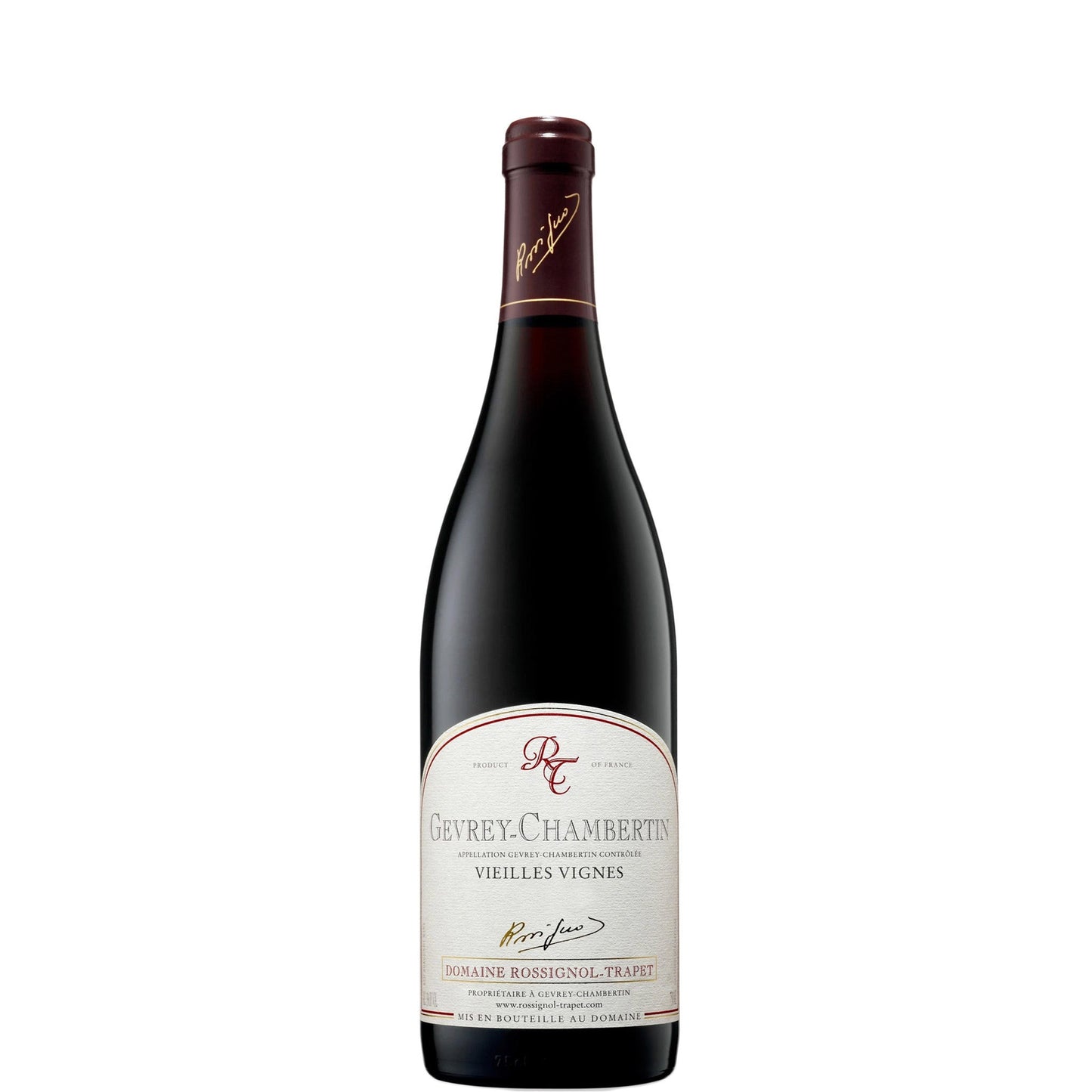
Gevrey-Chambertin Vieilles Vignes, Domaine Rossignol-Trapet, 2021
Gevrey-Chambertin Vieilles Vignes, Domaine Rossignol-Trapet, 2021
- 75cl
- 13%
- Red Still
- Pinot Noir
- Organic
- Biodynamic
Couldn't load pickup availability

Optimal drinking window: 2026 - 2036
Domaine Rossignol-Trapet’s Gevrey-Chambertin Vieilles Vignes 2021 is classic Côte de Nuits Pinot Noir, with the purity and freshness that make this biodynamic domaine such a favourite. Made from old vines averaging around 50 years, the wine brings together parcels across Gevrey-Chambertin, combining stony, gravelly soils that lend finesse with deeper clay soils that add body and structure.
The 2021 is fragrant and finely drawn, with wild strawberry, raspberry and red cherry, alongside rose petals, woodland notes and a gentle touch of spice. There’s a lovely savoury edge, fresh acidity and fine, supple tannins, with enough structure to give it staying power without losing its elegance. A proper village Gevrey, more about detail and balance than sheer weight.
Try it with roast duck, coq au vin or wild mushrooms with thyme.
Through 2027 or 2028, expect the primary red fruit to begin knitting together with the earthy, whole-bunch-derived secondary notes, producing greater complexity and a rounder texture. By the early 2030s the wine should be at its most expressive, the minerality more prominent and the fruit shifting toward darker, dried notes.
Tasting Notes
AppearanceClear, mid ruby with a bright, lively rim — the telltale translucency of well-farmed Pinot Noir.
NoseRed cherry and wild strawberry up front, then a lovely lift of dried rose petal and a little crushed violet. Underneath, there is that classic Gevrey earthiness — damp stone, mushroom, a faint wisp of woodsmoke — that the whole bunches bring into focus without dominating.
PalateSilky in texture but with real presence: fine-grained tannins that provide shape without austerity, and a seam of fresh acidity keeping everything lively. The fruit is poised rather than generous — red and dark cherry in balance, with a subtle mineral quality that speaks to those old vine roots doing their quiet work.
FinishLong and measured, with a mineral persistence and a final note of spice from the oak that has been restrained enough to stay in the background where it belongs.
Overall impressionA village Gevrey that earns its keep through precision and poise rather than sheer volume.
Food Pairings
In Burgundy, a wine like this would find its natural home at a Sunday table with roast guinea fowl or poulet de Bresse, ideally with a sauce built from the pan juices and a splash of the wine itself. Locals are also devoted to coq au vin, slow-braised until the chicken has absorbed every last bit of that earthy, winey depth. Beef bourguignon is the other obvious answer, though the Burgundians would tell you it wants a slightly older bottle. Mushroom dishes are a natural match too, whether a simple omelette aux cèpes or a proper risotto-style dish of spelt with wild fungi. At the very least, a well-aged comté and a decent hunk of bread would not go amiss.
We think this wine would go well with
Serve at around 15-16°C — slightly cooler than you might think, as the wine will open in the glass and warmer temperatures tend to flatten the freshness that makes it sing. A brief decant of 20-30 minutes will help if you are opening it on the younger side, though this is not a wine that needs hours of air. A large-bowled Burgundy glass gives the nose room to open up and lets those delicate aromas gather rather than dissipate.
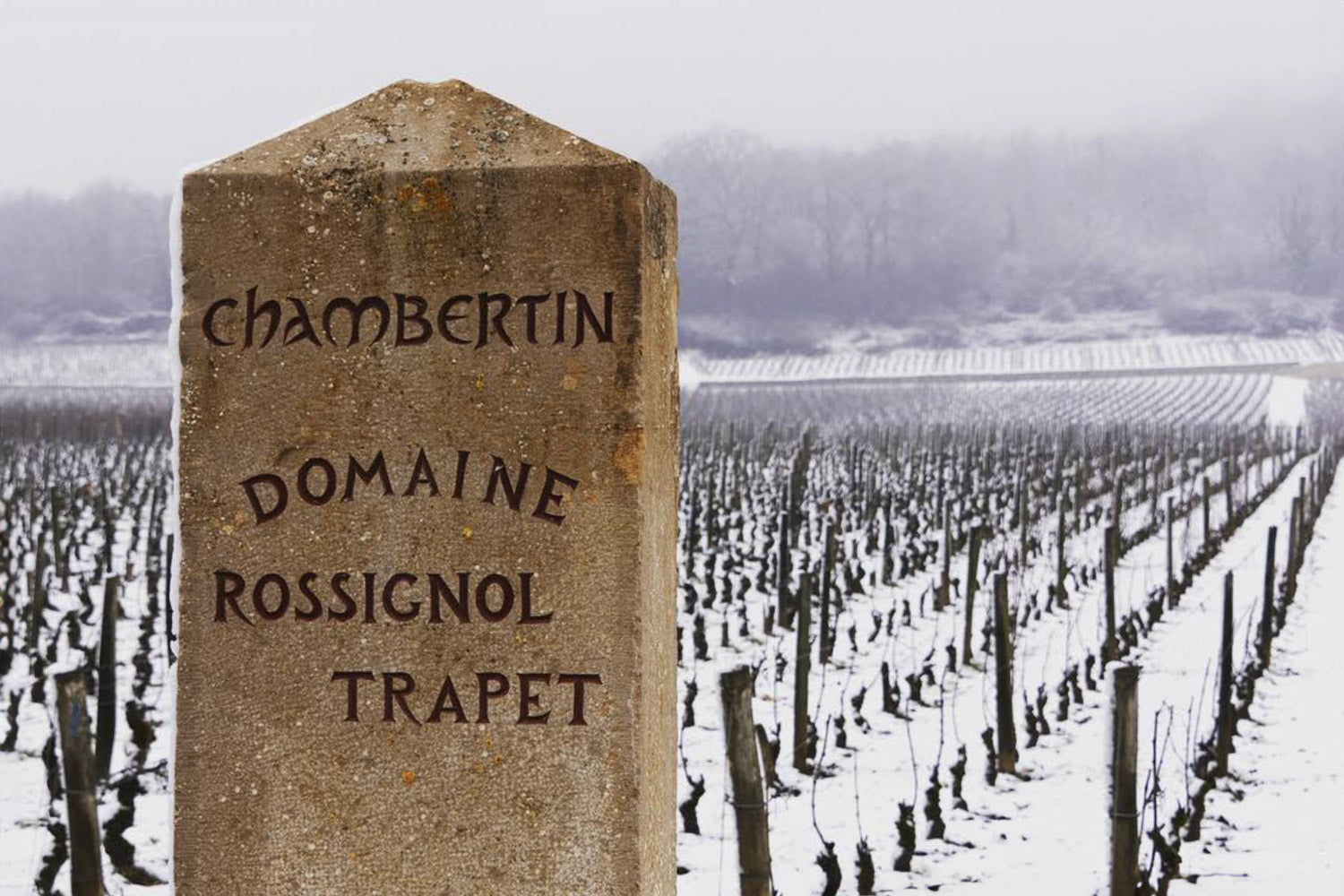
Gevrey-Chambertin's village-level vineyards sit on a mix of limestone, clay, and marlstone soils at the foot of the Côte de Nuits escarpment, typically at 250-300 metres. The old vines Rossignol-Trapet works with reach deeper into this rocky subsoil than younger plantings ever could, drawing up minerals and intensity that you simply cannot engineer. The climate here is continental, with warm summers and cool autumns that slow ripening and preserve the freshness that defines great Burgundy. It is that combination of lean soils, old roots, and temperature range that gives village Gevrey its signature earthiness and grip.
Gevrey-Chambertin is the northernmost and largest of the great Côte de Nuits communes, home to more Grands Crus than any other village in Burgundy. At village level, the appellation covers a broad swathe of land stretching from the foot of the slope eastward toward the plain, and quality varies considerably depending on where exactly the vines sit. What distinguishes Gevrey even at its entry level from, say, Chambolle-Musigny or Vosne-Romanée is a structural solidity, a firmer tannic backbone, and a darker, more earthy character. That firmness can read as austerity in youth, but in the right hands it becomes the architecture that allows the wine to age with real grace.
FAQs
What does this wine taste like?
It is poised and precise rather than plush. Think red cherry, wild strawberry, and dried rose petal on the nose, with a classic Gevrey earthiness underneath — damp stone, a little mushroom, a faint whole-bunch spice. On the palate it is silky but structured, with fine tannins, fresh acidity, and a mineral finish that lingers.
When should I drink it?
It is already very enjoyable, which is one of the pleasures of 2021 Burgundy. That said, give it until 2028 or so and it will have developed more complexity and a rounder texture. We would drink it comfortably until 2036.
What food should I pair it with?
Classic Burgundian matches work brilliantly: roast guinea fowl, coq au vin, beef bourguignon, or anything with wild mushrooms. It is also genuinely good with a well-aged comté if you want something simpler.
Should I decant it?
A short decant of 20-30 minutes is worthwhile if you are opening it on the younger side. It does not need hours of air, but a little time in a large-bowled glass will help the nose open and the tannins settle.
Is this worth cellaring?
Yes, with a realistic horizon. This is a village-level wine, not a Premier or Grand Cru, so we would not cellar it beyond 2036. The sweet spot is probably 2028-2033, when the fruit, earth, and mineral notes are likely to be in the best balance.
What makes Rossignol-Trapet worth buying?
The domaine has farmed biodynamically for decades, which at this point is a genuine commitment rather than a marketing angle. Their approach in the cellar — restrained new oak, whole bunches used judiciously — lets the village character speak clearly without being over-dressed. This is honest, well-made Gevrey from people who know exactly what they are doing.
Explore related wines


What are you looking for tonight? Tell me the occasion, a grape, a region — or just try a suggestion below.
Your recommendations will appear here.
-
-
Speak to one of our Wine Gurus
Speak to a Wine GuruWith years of experience, our team can help you with all your wine buying and selling needs