

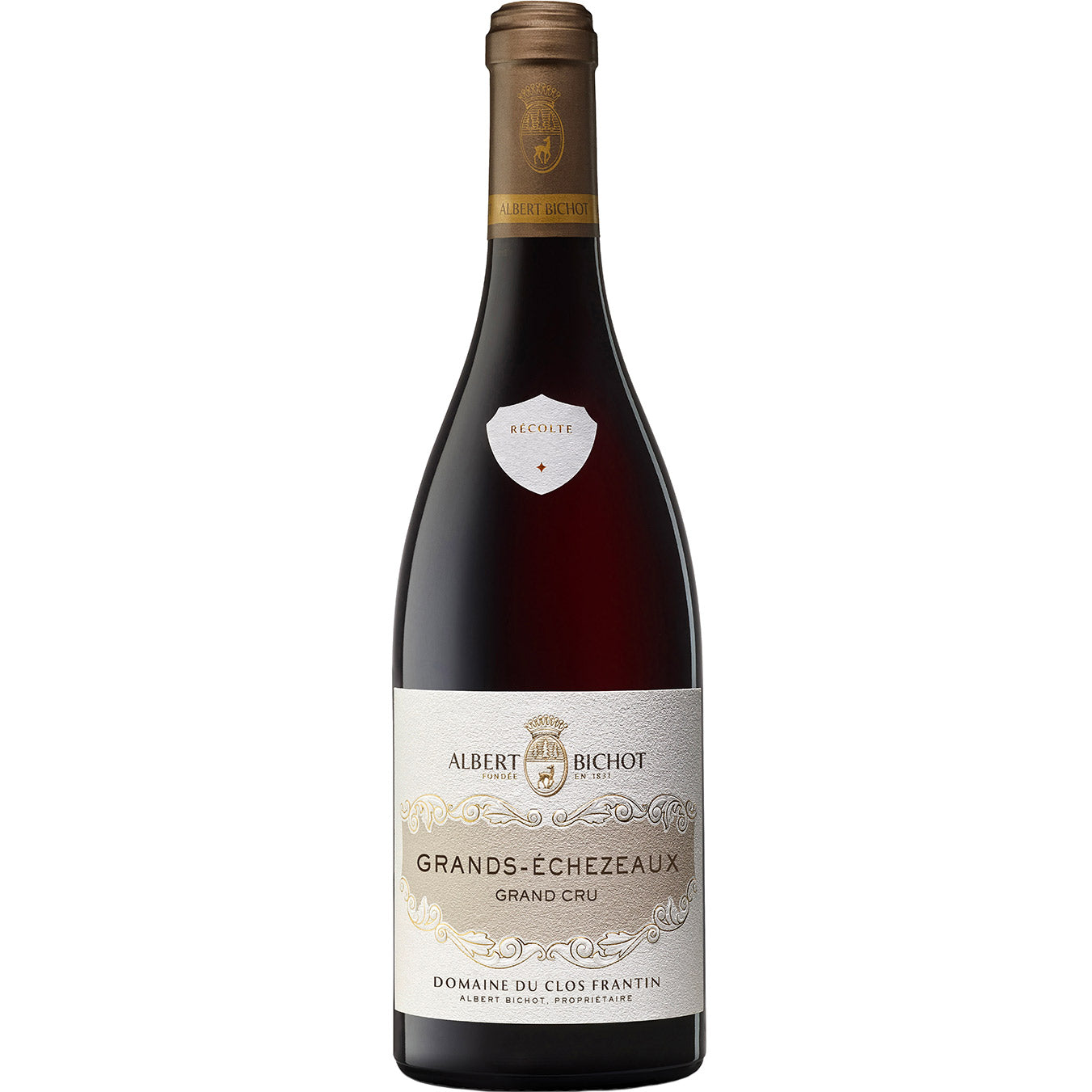
Grands Echézeaux Grand Cru, Domaine du Clos Frantin, 2016 - Magnum
Grands Echézeaux Grand Cru, Domaine du Clos Frantin, 2016 - Magnum
- 150cl
- 13%
- Red Still
- Pinot Noir
- Organic
Couldn't load pickup availability

Optimal drinking window: Now - 2045
Grands Échézeaux sits just above Échézeaux on the slope of the Vosne-Romanée hillside, and the step up in intensity is palpable. This is one of Burgundy's great but quietly undersung Grand Crus — far less famous than its neighbour La Tâche or Romanée-Conti, which means it rewards the curious without quite the same eye-watering price tag. Domaine du Clos Frantin, the Vosne-based estate owned by négociant house Albert Bichot, has been farming these parcels for decades and brings a restrained, classicist hand to the winemaking.
The 2016 vintage produced wines of brilliant natural balance across the Côte de Nuits, and in magnum format this has had the ideal conditions to knit together with grace.
Right now, in 2026, Grands Échézeaux from Clos Frantin is at an intriguing crossroads: the primary fruit of 2016 is beginning to yield to secondary complexity, but the wine has not yet arrived at its destination. Between 2028 and 2032 we would expect it to hit a sustained plateau of real brilliance, with the mineral and earthy registers fully integrated and the tannins polished to their finest grain. The magnum format gives it an additional few years of margin over the standard bottle, so the upper end of that plateau probably extends comfortably to 2040. After 2040, it will depend on storage, but the finest examples of 2016 from this slope have the structural reserves to evolve rather than simply fade.
What the critics say:
"The domaine owns two parcels in Grands Echézeaux (one next to Drouhin and one next to DRC), with a combined size of a quarter-hectare. There is marvellous depth of plummy fruit aromas and rewarding concentration on the palate, with some spice aromas from the cask ageing (70% new) that are noticeable on the finish at this point."
Tasting Notes
AppearanceDeep, translucent ruby with a garnet edge that speaks to a decade of considered development in bottle.
NoseThere is a wonderful tension between ripe red cherry and darker, earthier registers — dried mushroom, damp stone, and a whisper of dried rose petal. The oak has long since integrated, leaving a subtle sandalwood quality that adds intrigue without imposing.
PalateSilky in texture but with genuine presence — the tannins are fine-grained and persistent, and the acidity of 2016 keeps everything taut and directional. Red plum and cranberry sit alongside autumnal undergrowth, with a saline, iron-tinged mineral quality that is unmistakably Vosne. In magnum, it feels weightier and more complete than the standard format at this stage.
FinishLong, precise, and mineral, with the iron-rich soil character lingering well after the fruit has faded.
Overall impressionA wine still becoming itself, with the bones and balance to reward another decade of patience — but compelling enough to justify opening now with a generous decant.
Food Pairings
In Burgundy, a wine like this would most naturally find its way to the table alongside a classic coq au vin, where the earthy, wine-braised depth of the dish mirrors the wine's own character without competing with it. A roast pigeon with lentils and lardon is the kind of thing locals in Vosne-Romanée would reach for — something with iron and fat to match the wine's mineral edge. Époisses, the notoriously pungent washed-rind cheese of the region, is a classic if divisive pairing; the wine has just enough structure to hold its ground. Further into the meal, a simple Charolais beef fillet with bone marrow and shallot jus would be the sort of thing that makes everyone put down their phone.
We think this wine would go well with
Serve at 16-17°C — a touch cooler than many expect for red Burgundy, which allows the aromatics to open without the alcohol pushing forward. Decant for at least one hour, and ideally two; in magnum format the wine has more volume to breathe through and will reward the extra time. A wide-bowled Burgundy glass is the right tool here, giving the aromatic complexity the space it needs to unfurl properly.
Grands Échézeaux occupies a privileged mid-slope position in Flagey-Échézeaux, just below the stone wall of the Clos de Vougeot. The soils here are a mix of reddish clay and limestone with significant iron content, which underpins the wine's characteristic combination of depth and minerality. The aspect is broadly east-facing with good drainage and moderate altitude, giving a slightly cooler microclimate than the lower-lying parcels of plain Échézeaux. That extra tension in the growing season is precisely what gives Grands Échézeaux its firmer structure and greater age-worthiness.
Grands Échézeaux is a Grand Cru appellation covering just under nine hectares in the commune of Flagey-Échézeaux, on the southern edge of the Côte de Nuits. It is often grouped with its larger neighbour Échézeaux, but the two are quite different in character: Grands Échézeaux is more structured, more mineral, and more consistently excellent vintage to vintage. The appellation produces only Pinot Noir and sits directly adjacent to the Clos de Vougeot, sharing something of its power while adding the more refined aromatic profile that marks out Vosne-Romanée's gravitational pull on this stretch of slope. Yields are tightly controlled and all production must meet the exacting standards of Burgundy's Grand Cru hierarchy.
The 2016 growing season in Burgundy started promisingly but turned tricky, with spring frosts causing real damage in some vineyards before a warm, dry summer rescued what remained. Hail struck parts of the Côte de Beaune particularly hard, reducing yields but concentrating what survived. The harvest began earlier than usual, with growers picking healthy, ripe grapes under ideal September conditions.
What emerged from the cellars shows real class: reds with genuine depth and structure that sidestep the over-ripeness trap of some warmer years, while the whites display that brilliant tension between richness and minerality that makes great white Burgundy so compelling. The Pinot Noirs have lovely fruit intensity without losing their sense of place, and the Chardonnays show beautiful balance. We find these wines drinking beautifully now but reckon the better examples will reward patience until the late 2020s, particularly the premier and grand crus which have the stuffing to go much longer.
FAQs
What does Grands Échézeaux taste like compared to other Grand Crus?
It sits between the more approachable, generous character of plain Échézeaux and the sheer power of Clos de Vougeot. Think silky red fruit, iron-tinged minerality, dried rose, and forest floor — more precise and structured than its neighbours, and with a fineness of tannin that marks it out as something special. It is closer to Vosne-Romanée in spirit than to the Côte de Beaune, if that helps orient you.
When is the best time to drink this wine?
It is drinking well now with a thorough decant, but we would genuinely suggest holding it until 2028 at the earliest if you want to see it at its most complete. The sweet spot is probably 2030 to 2038, and in magnum format that window is wider still. If patience is not your strong suit, give it at least two hours in a decanter and it will reward you generously.
Is the magnum format worth it for this wine?
For a wine of this quality and age-worthiness, yes — unequivocally. The larger format means a slower, more even development in bottle, which tends to produce finer-grained tannins and more aromatic complexity over time. It also makes for a rather magnificent table presence if you are opening it for a special occasion.
What food should I serve with this?
Classic Burgundian cooking is hard to beat: roast pigeon, coq au vin, or a simply prepared fillet of Charolais beef with bone marrow and shallots. The wine has enough mineral structure to handle something with real depth, and enough elegance to be ruined by anything too heavy or aggressively spiced. Keep it regional and you will not go wrong.
How should I serve it?
Decant for a minimum of one hour, ideally two, and serve at around 16-17°C. A wide-bowled Burgundy glass gives the aromatics room to develop. Do not serve it too warm — the elegance of a wine like this gets lost above 18°C.
Is Domaine du Clos Frantin a reliable producer of Grands Échézeaux?
Yes. As the estate arm of Albert Bichot, Clos Frantin has been farming these Grand Cru parcels for decades and brings genuine seriousness to the winemaking. The style is classical and restrained rather than flashy, which suits the character of the appellation perfectly. The 2016 vintage is widely regarded as one of the finest recent years across the Côte de Nuits, so the combination of producer and year is a particularly good one.
Explore related wines


What are you looking for tonight? Tell me the occasion, a grape, a region — or just try a suggestion below.
Your recommendations will appear here.
-
-
Speak to one of our Wine Gurus
Speak to a Wine GuruWith years of experience, our team can help you with all your wine buying and selling needs