

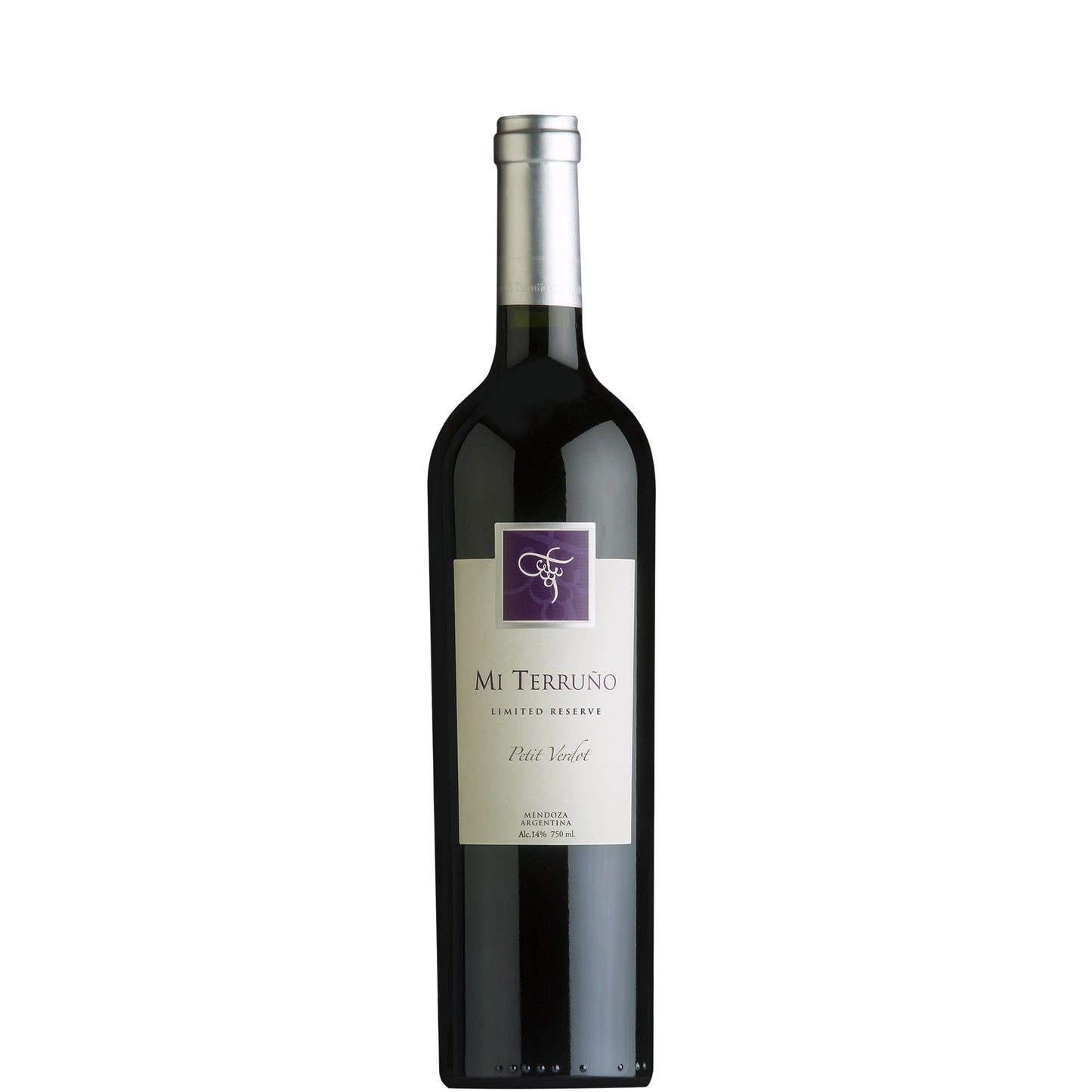
Mi Terruño, Petit Verdot Limited Reserve, 2016
Mi Terruño, Petit Verdot Limited Reserve, 2016
- 75cl
- 13.5%
- Red Still
- Petit Verdot
Couldn't load pickup availability

Optimal drinking window: 2026 - 2032
Petit Verdot as the headline act rather than the supporting cast — that is Mi Terruño's bet with this Limited Reserve, and it pays off. The grapes come from Perdriel and Luján de Cuyo, two of Mendoza's most serious addresses, and the wine carries the weight you'd expect: deep ruby in the glass, dark fruit piled high, and tannins that are firm but finished to a polish after ten months in French oak. There is mocha, black raspberry, and a nutty warmth from the barrel that keeps pulling you back for another sniff.
On the palate it is robust without being blunt — smooth enough to drink now alongside a proper cut of beef, but with enough structure to hold its shape.
At ten years old, this wine is at or very close to its peak drinking window. The primary fruit — plum, raspberry — has integrated with the oak rather than competing with it, and the tannins have rounded into that velvety texture the wine always promised.
Tasting Notes
AppearanceDeep ruby with a violet rim that still holds a youthful intensity at ten years old.
NoseDark plum leads, with black raspberry and a thread of mocha running underneath. Give it time in the glass and a nutty, toasty quality from the French oak starts to emerge — the kind of thing that rewards patience rather than impatience.
PalateFull-bodied and smooth, with tannins that have softened into something velvety without losing their grip. The fruit is generous and ripe, balanced by a savoury edge and that characteristic oak warmth.
FinishLong and nutty, with the dark fruit lingering alongside a faint mineral dryness.
Overall impressionA serious, meat-friendly red that has found its stride and is drinking well right now.
Food Pairings
In Mendoza, a wine like this belongs next to the asado — the Argentine grill ritual that centres on slow-cooked beef ribs, short ribs, and chorizo, eaten over several hours with chimichurri on the side. Locally, it would also be paired with locro, a rich stew of maize, beans, and pork that turns up at winter tables across the Andean provinces. A grilled rib-eye or a slow-braised lamb shoulder with herbs would be just as fitting. The wine's structure was built for fat and char, so don't hold back on the meat.
We think this wine would go well with
Serve at around 17°C — any warmer and the alcohol starts to dominate. A 30-minute decant will open up the nose and soften the last edges of tannin; the wine has had ten years to settle, so it doesn't need much coaxing. A large-bowled Bordeaux-style glass gives the dark fruit and oak plenty of room to breathe.
Perdriel and Luján de Cuyo sit at altitude in the foothills of the Andes, typically between 900 and 1,050 metres above sea level. The elevation brings significant day-to-night temperature swings, which slow ripening and help the grapes build structure alongside flavour rather than just sugar. Soils are largely alluvial — stones, sand, and silt deposited by Andean meltwater over millennia — draining freely and keeping vine stress at a productive level. For a grape as naturally vigorous and thick-skinned as Petit Verdot, this environment is close to ideal.
Luján de Cuyo was Argentina's first designated Denominación de Origen Controlada, granted in 1993, and it remains Mendoza's most prestigious sub-region. It is best known as the spiritual home of Argentine Malbec, but its altitude and well-drained soils suit any variety that benefits from slow, even ripening. Perdriel, sitting just south of the city of Luján, is one of its most respected districts — consistently producing wines with more structure and concentration than those from lower-lying parts of Mendoza.
FAQs
What does this wine taste like?
Rich and generous, with dark plum, black raspberry, and mocha on the nose, and velvety tannins on the palate with a nutty, oak-edged finish. It is full-bodied but smooth — Petit Verdot at its most approachable.
When is the best time to drink it?
It is drinking well right now and we would open it with confidence until around 2032. At ten years old it has reached its stride, so there is no need to wait any longer.
What food should I pair it with?
This was built for meat. Grilled rib-eye, slow-roasted lamb, beef short ribs — anything with fat and depth. The classic Argentine pairing would be an asado with chimichurri, which is hard to argue with.
Should I decant it?
Yes — around 30 minutes should do it. The wine has had a decade to settle, so it does not need hours in a decanter, but a brief aeration will open up the nose and smooth out any remaining edges.
Is Petit Verdot usually made as a single variety?
Rarely. In Bordeaux, where it originates, Petit Verdot is used in small quantities to add colour, spice, and structure to blends. In the New World — and Mendoza in particular — a handful of producers bottle it on its own, which lets its natural boldness and dark fruit character take centre stage. This is one of those bottles.
How should I store any remaining bottles?
Keep them in a cool, dark place at a steady temperature — ideally around 12-14°C. The wine is close to its peak, so avoid storing it anywhere warm or with significant temperature fluctuation, and plan to drink remaining bottles within the next few years.

Explore related wines


What are you looking for tonight? Tell me the occasion, a grape, a region — or just try a suggestion below.
Your recommendations will appear here.
-
-
Speak to one of our Wine Gurus
Speak to a Wine GuruWith years of experience, our team can help you with all your wine buying and selling needs