

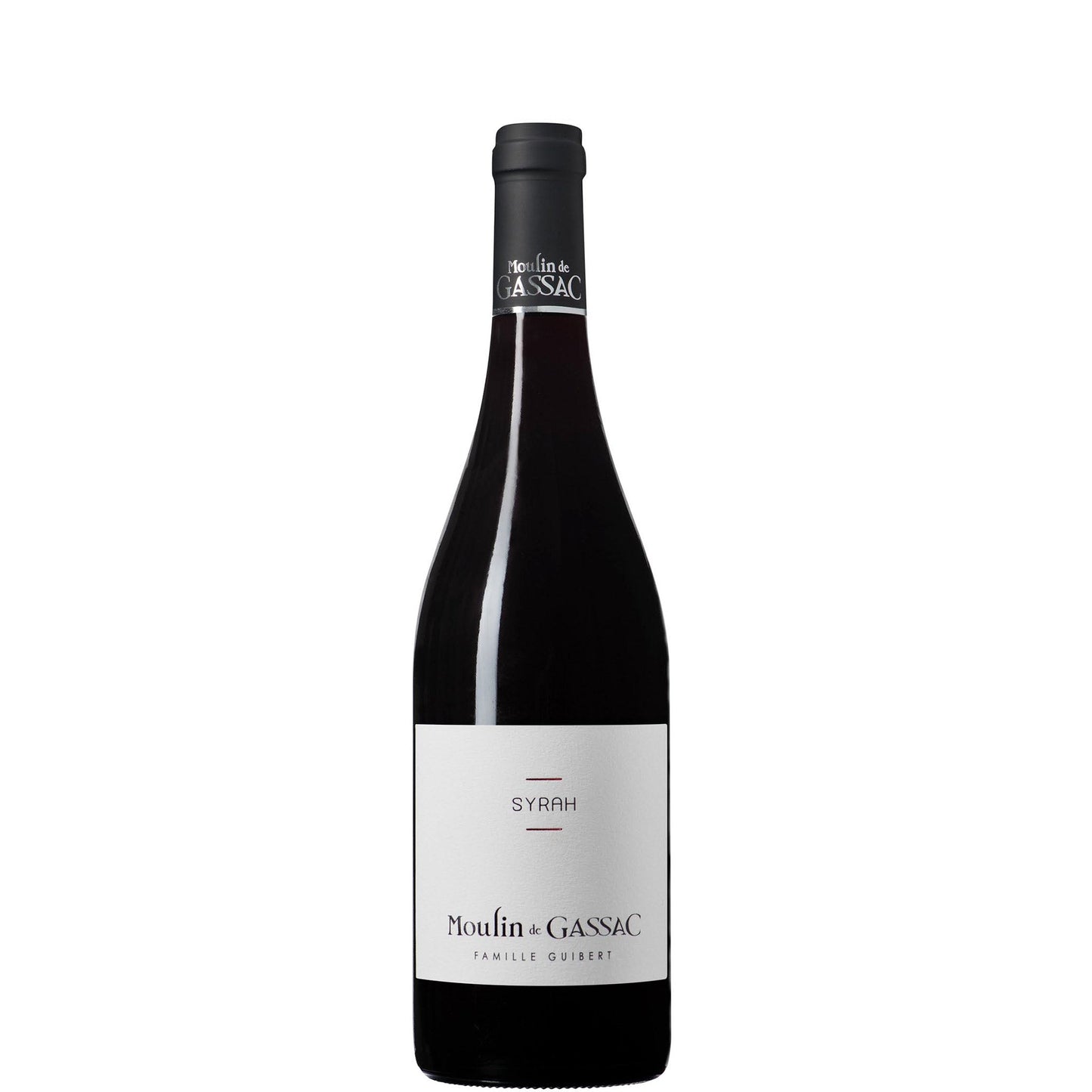
Moulin De Gassac Syrah, 2024
Moulin De Gassac Syrah, 2024
- 75cl
- 13.5%
- Red Still
- Syrah
Couldn't load pickup availability

Optimal drinking window: 2026 - 2030
Moulin de Gassac is the second label of the legendary Mas de Daumas Gassac — the estate that put the Languedoc on the fine wine map in the 1970s and has never really looked back.
This Syrah is the everyday expression of that same spirit: southern France done with purpose and without fuss. Grown in the garrigue-scented hills above Aniane, it delivers the kind of dark, spiced fruit and dry, herbal savouriness that makes the Languedoc so compelling at this price point.
We think of it as the wine you open when you want something with genuine character rather than something merely inoffensive. Ripe but not heavy, with black plum, cracked pepper, and a hint of woodsmoke from the scrubland that surrounds the vines.
At two years old, the 2024 is already drinking very comfortably, with the primary dark fruit and pepper in full voice. Over the next year or two, the tannins will continue to soften and the savoury, herbal secondary notes will become more pronounced. We would expect it to plateau around 2028, at which point the fruit and structure will be in their best balance.
Tasting Notes
AppearanceDeep ruby-purple with a clear, bright rim typical of a young Mediterranean Syrah.
NoseDark plum, black olive, and dried thyme come first, with a pleasant waft of woodsmoke and cracked black pepper behind. It is direct and honest rather than showy, with none of the jammy excess that can dog warm-climate Syrah.
PalateMedium-to-full bodied with supple, well-integrated tannins and a dry, savoury core. The fruit is ripe without being sweet — think cooked blackberry and plum skin rather than jam — and the herbal, peppery character runs all the way through. Good freshness for the vintage and the region.
FinishClean and dry, with lingering pepper and a faint iron-and-herb note that signals the soil beneath.
Overall impressionA seriously enjoyable southern Syrah that punches well above its modest price tag.
Food Pairings
In the villages around Aniane and the Hérault, this sort of Syrah is poured without ceremony alongside grilled lamb chops scattered with herbes de Provence — the match is almost embarrassingly good. Daube d'agneau, slow-cooked with olives and orange peel, is another local favourite that mirrors the wine's savoury, spiced character. Tapenade on grilled bread or a plate of charcuterie from the Aveyron — saucisson sec, pâté, maybe a slice of coppa — would work brilliantly as a starter. If you want something more substantial, a cassoulet made the Languedoc way, with Toulouse sausage and duck confit, is the natural conclusion.
We think this wine would go well with
Serve at around 16-17°C — cool enough to keep the wine fresh but warm enough for the southern fruit and spice to open up properly. A 20-minute decant will help if the wine seems a touch closed on opening, though at this stage of its life it is unlikely to need much coaxing. A standard Bordeaux or large tulip glass works well; nothing too wide, which would let the aromatic precision dissipate too quickly.
The vineyards around Aniane in the Hérault sit on a rare glacial deposit of powdery red and brown soils — a mix of ancient alluvial gravel, iron-rich clays, and volcanic material that drains well and forces the vines to work. The climate is classic Mediterranean: hot, dry summers tempered by the Tramontane wind and cool nights that preserve freshness and keep alcohol in check. The surrounding garrigue — rosemary, thyme, wild herbs — is not just scenery; it genuinely influences the aromatic character of the wines.
The Moulin de Gassac Syrah falls under the IGP Pays d'Hérault designation, a broad but flexible classification covering much of the Languedoc's hinterland. Unlike the stricter AOC rules that govern Pic Saint-Loup or Terrasses du Larzac nearby, IGP status gives producers the freedom to plant what they like, blend as they see fit, and irrigate if needed — which is exactly why Daumas Gassac chose it decades ago when Cabernet Sauvignon had no place in the local AOC rulebook. It is a classification that rewards ambition over conformity.
The 2024 vintage in Languedoc presents something of a puzzle wrapped in an enigma. We're still piecing together the full picture of this growing season, but what's emerging suggests a year that kept vignerons on their toes. Early reports point to a vintage shaped by contrast rather than consistency, with conditions varying dramatically across the region's sprawling landscape from coastal Picpoul vineyards to high-altitude Faugères plots.
What we can say with confidence is that 2024 has produced wines with real personality, though it's far too early to make grand pronouncements about quality. The reds we've tasted so far show promising structure, whilst the whites display the kind of freshness that makes Languedoc such an exciting region when it gets things right. Most 2024s won't be ready for serious evaluation until well into 2025, so we're exercising unusual patience for a team that typically can't wait to crack open the latest arrivals.
FAQs
What does this wine taste like?
Dark, dry, and savoury — think black plum, black olive, cracked pepper, and dried thyme, with a clean, iron-edged finish. It is ripe but not heavy, and has a genuine herbal freshness that sets it apart from blowsier southern French Syrahs.
When is the best time to drink it?
It is drinking well right now and will continue to do so until around 2029 or 2030. There is no pressing reason to cellar it; this is a wine built for pleasure in its youth rather than long-term transformation.
What food should I pair it with?
Grilled lamb is the classic match — the wine's peppery, herbal character is almost designed for it. It also works beautifully with charcuterie, tapenade, slow-cooked meat dishes like daube, and anything with aubergine or roasted peppers. Avoid delicate fish or dishes with a lot of cream, which would be overwhelmed.
How should I serve it?
Serve at around 16-17°C — straight from a cool cellar or after 20 minutes in the fridge if your room is warm. A brief decant of 20 minutes or so will open it up, though it is unlikely to be tightly shut at this age. Use a standard large red wine glass.
Is this related to the famous Mas de Daumas Gassac red?
Yes — Moulin de Gassac is the second label of Mas de Daumas Gassac, the Languedoc estate that became famous in the 1980s for producing Cabernet Sauvignon-based reds that drew comparisons to Bordeaux. This Syrah is a different animal — lighter, more approachable, and made for drinking rather than collecting — but it comes from the same family and carries the same commitment to making serious wine in the south of France.
Is this wine organic?
Mas de Daumas Gassac has farmed sustainably and without herbicides or pesticides for many years, and the estate is well known for protecting the biodiversity of its land. However, it does not currently hold a formal organic or biodynamic certification, so we cannot make that claim on the label's behalf.


What are you looking for tonight? Tell me the occasion, a grape, a region — or just try a suggestion below.
Your recommendations will appear here.
-
-
Speak to one of our Wine Gurus
Speak to a Wine GuruWith years of experience, our team can help you with all your wine buying and selling needs