

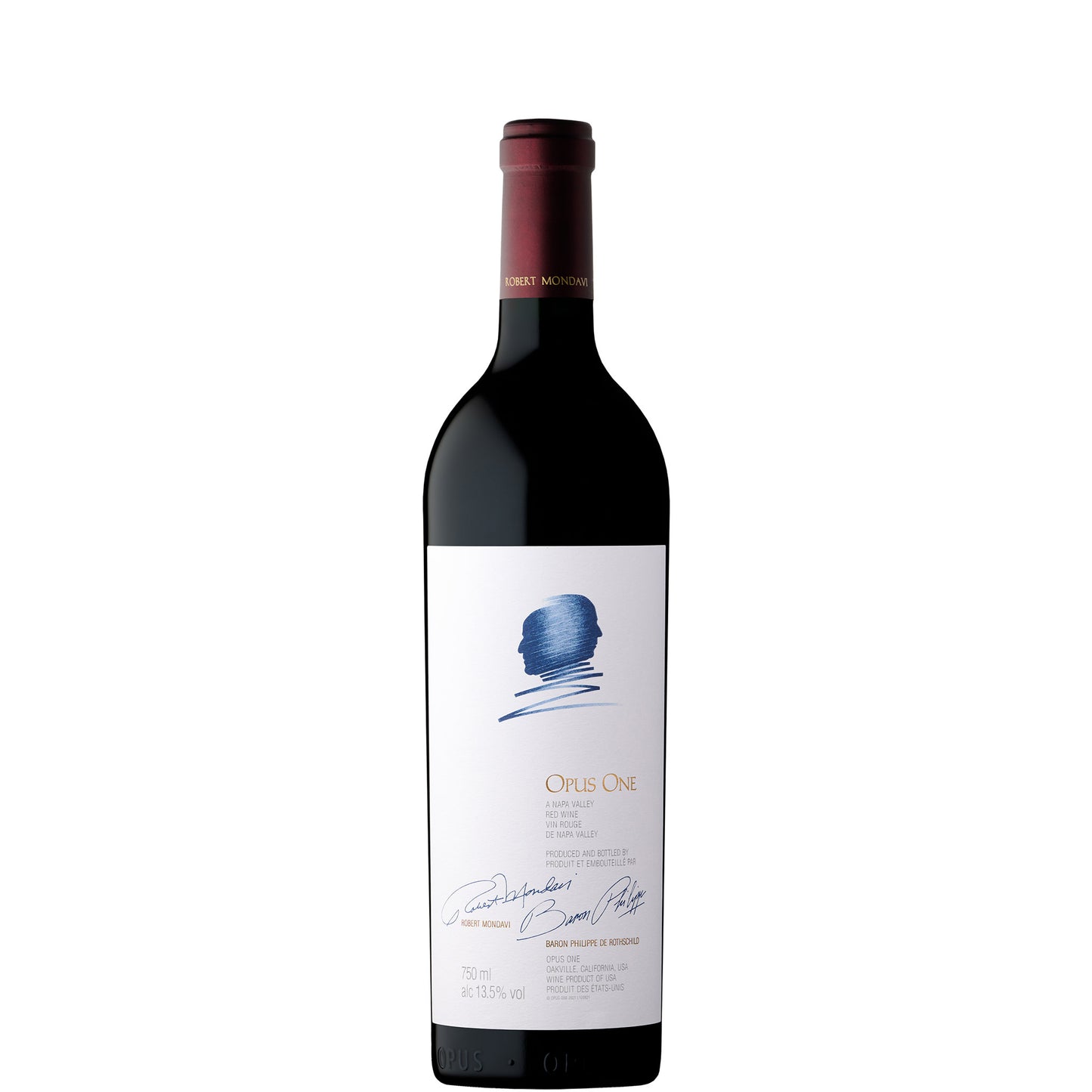
Opus One, 2023
Opus One, 2023
- 75cl
- 13.5%
- Red Still
- Cabernet Sauvignon, Cabernet Franc, Petit Verdot, Merlot, Malbec
- Organic
Couldn't load pickup availability

Optimal drinking window: 2028 - 2050
Est. delivery in 2027
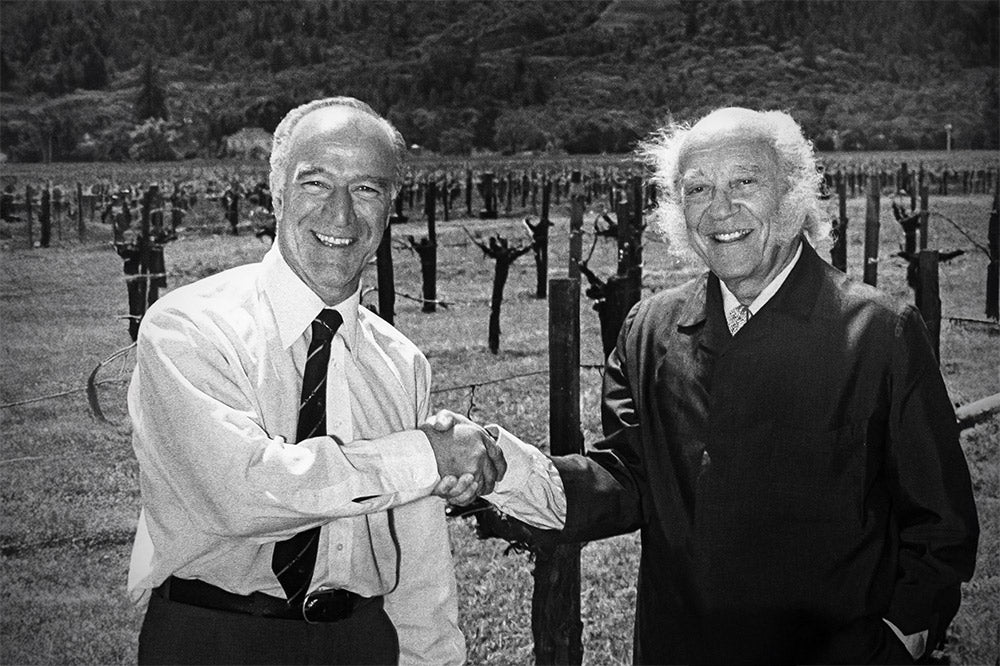
Opus One is the wine that rewrote the rules about what California could be. Born in 1979 from the handshake between Robert Mondavi and Baron Philippe de Rothschild, it remains one of the great transatlantic stories in wine — Napa ambition filtered through Médoc discipline.
Cabernet Sauvignon dominates the blend, supported by Merlot, Cabernet Franc, Petit Verdot, and Malbec — the full Bordeaux cast, performing in California sunshine. The 2023 growing season in Napa was marked by a cooler-than-average summer that preserved freshness and pushed ripening later into autumn, producing wines of real definition.
What the critics say:
"Divine aromatically and utterly ethereal. We’re in the laboratory at the back of the florists where the florist is concocting and concentrating the floral essences to preserve their purity and we have the fresh petals alongside. Violet, lily of the valley, a little wild thyme and the hint of coolness that imparts. So gracious, the tannins so filigree in texture. Intensely layered. Ample in frame, but not overly so. Crushed blueberries, wrapped in velvet, with freshly grated dark black chocolate. Delightful and sublime but with massive aging potential."
"The bouquet is utterly enticing, offering cool blue-fruit notes and a dusting of cocoa-powder freshness that stirs anticipation for the first sumptuous sip. On the palate, satiny richness unfolds, imbued with crunchy red cherry and juicy blackberry fruit, alongside refined sagebrush and tobacco nuances. There is a sense of intricately fine-knit tannins – compact yet impressively integrated at this youthful stage – framed by subtle, refined oak spice. The finish is long and mineral, marked by graphite and a touch of black sea salt. The wine was fermented entirely with native yeasts in stainless steel, with a portion aged in amphora in this vintage, before maturing for 19 months in 95% new French oak. The blend is rounded out by small additions of Malbec and Petit Verdot. In 2023, the vines were farmed regeneratively for the first time, with harvest completed by mid-October."
"A measured, balanced growing season, dry but without the heat spikes of 2022, and this Opus is a pretty stately beast, deep rich purple, intense, structured, edges of violet set against black fruits, cassis, bilberry, damson. This is one of the slowest unrolls that I have had with Opus, it rewards patience to showcase the chalk and slate texture of the tannins, and you can safely put this away for a few years before drinking. Cabernet Sauvignon dominant in terms of its construction and architecture, 95% new oak. A long slow harvest in this exceptional year, from September 14 to October 16, Michael Silacci winemaking director. Sustainable farming initiatives significantly increased in this year, with the addition of Kimberlee Marrineli to the team, including planting of cover crops across the vineyard to lower soil temperature. The oak is a little higher than in the Overture but less evident in the armatics."
"The 2023 Opus One is a super classic wine. Brisk acids, fine tannins and lifted aromatics signal an Opus One of exquisite finesse and class. Red/purplish fruit, mint, orange peel and chalk are all woven together in a fabric of nearly indescribable class. The 2023 floats on the palate with understated finesse and lightness, but it's not light in any way. This is class personified."
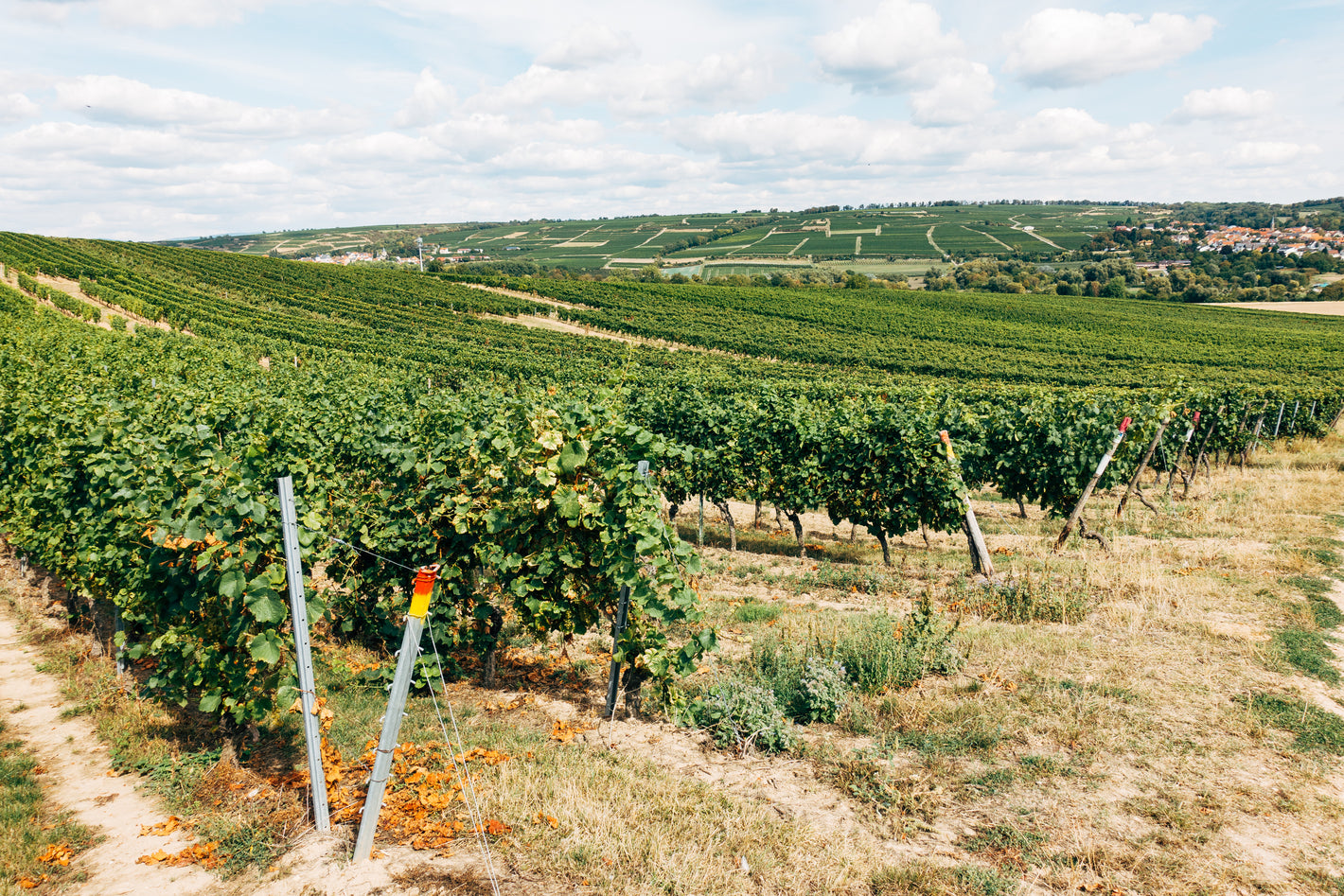
Opus One's vineyards sit primarily on the Oakville bench in the heart of Napa Valley, where well-drained alluvial soils over gravel and clay keep vine stress high and yields low. The Mayacamas mountains to the west block afternoon fog, allowing extended hang time, while cool morning air from San Pablo Bay to the south preserves acidity. This east-facing position means the vines get gentle morning sun rather than the fierce afternoon heat that can tip Napa reds into jamminess. The result is fruit that ripens fully but never loses its structural spine.
Napa Valley AVA is California's most celebrated wine region, stretching roughly 30 miles from Carneros in the south to Calistoga in the north, encompassing 16 sub-appellations including Oakville, where Opus One sits. The region's rules require that at least 85% of grapes come from within the Napa Valley boundary, though top producers like Opus One work entirely from estate fruit. Compared to Sonoma to the west, Napa tends toward richer, more structured reds, particularly Cabernet Sauvignon, aided by the valley's warm days and cool nights. Oakville is widely regarded as Napa's finest address for Cabernet, sharing the same latitude as the Médoc's greatest communes.
After the drought years that dominated much of the early 2020s, 2023 brought Napa something it had almost forgotten: a genuinely wet winter. Atmospheric rivers dumped substantial rainfall across California through the early months, replenishing reservoirs and pushing water tables up in ways the valley hadn't seen for years. The growing season that followed was cooler and more drawn out than recent vintages, with harvest arriving later than many growers had become accustomed to. That extra hang time matters — it tends to produce phenolic ripeness without the sugar accumulation that forces winemakers into picking decisions they'd rather not make.
The result across Napa is a vintage that feels more detailed and less obviously plush than the blockbuster heat years. Cabernet Sauvignon shows real structure — tannins that have something to say — alongside fruit that doesn't overwhelm the conversation. These are wines built for the medium to long term. The best examples from Oakville, Rutherford, and Stags Leap will reward patience; give the serious reds until at least 2028, and the top names considerably longer. If you're reaching for bottles now, give them air and time in the glass.
OUR GROWERS
Opus One
Explore related wines


-
-
Speak to one of our Wine Gurus
Speak to a Wine GuruWith years of experience, our team can help you with all your wine buying and selling needs