

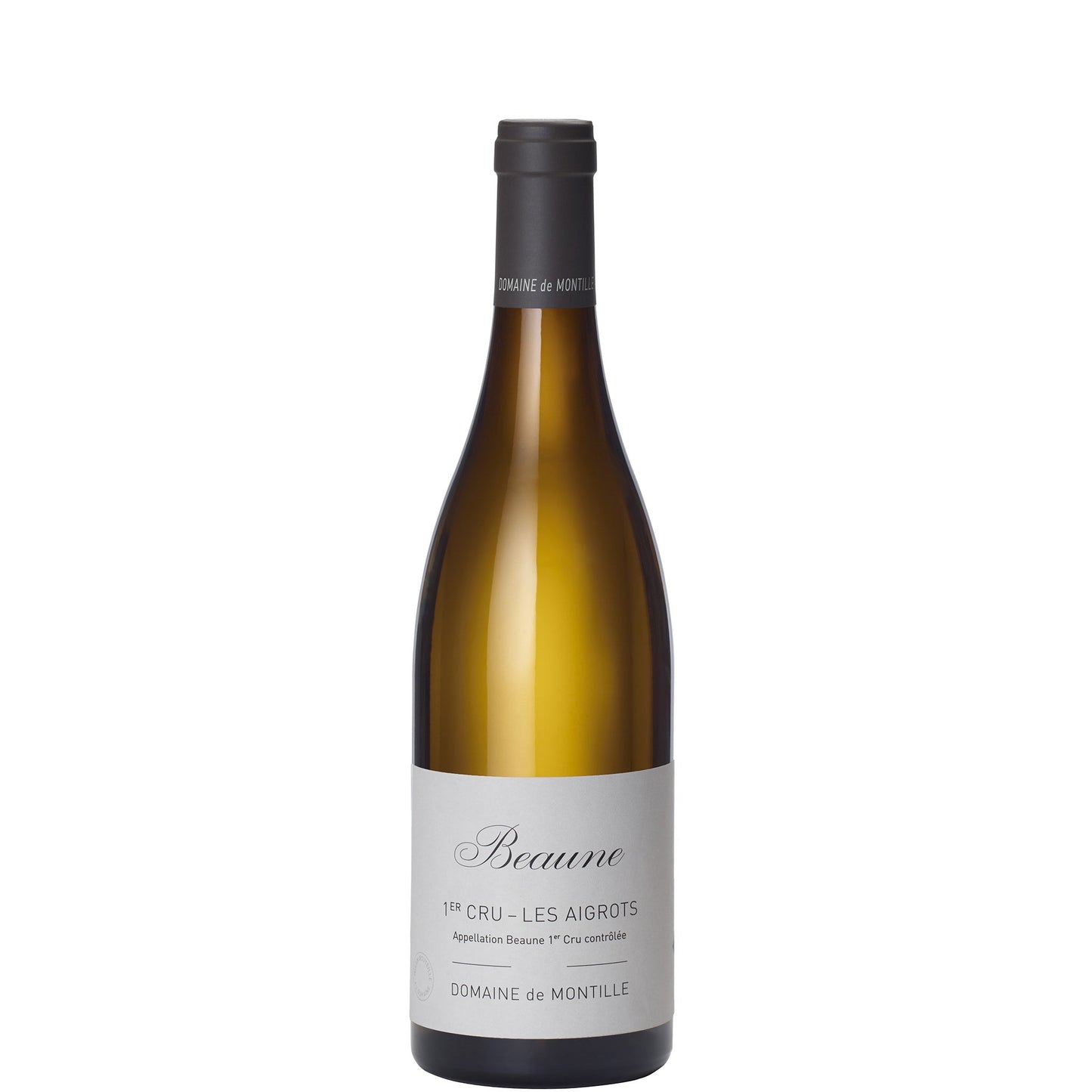
Premier Cru, Les Aigrots Blanc, Domaine de Montille, 2021
Premier Cru, Les Aigrots Blanc, Domaine de Montille, 2021
- 75cl
- 13%
- White Still
- Chardonnay
- Organic
- Biodynamic
Couldn't load pickup availability

Optimal drinking window: Now - 2034
Les Aigrots is one of Beaune's more quietly compelling premiers crus — not the flashiest name on the Côte de Beaune, but in the hands of Domaine de Montille it becomes something rather serious. This is white Burgundy made with deliberate restraint: low yields, minimal intervention, and a refusal to flatter through excess oak. The 2021 vintage, for all its difficult growing season, produced whites of real precision and energy, and Les Aigrots Blanc is a fine example — tight-knit, mineral, and built on tension rather than weight.
The wine opens with white peach and lemon curd cut through by a chalky, saline undercurrent, and the palate has a focused, almost steely quality that keeps you reaching back. There is oak here, but it serves the wine rather than defines it.
Right now the wine is in a satisfying but slightly closed phase — the fruit is there, the structure is evident, but it hasn't fully loosened its grip. Over the next two to three years, expect the chalky mineral quality to integrate with the fruit and the whole thing to become more generous and expressive without losing its underlying tension. By 2029 or 2030 it should be hitting a genuinely lovely stride, with the primary peach and citrus beginning to give way to more honeyed, nutty complexity. Peak drinking is most likely somewhere between 2029 and 2034, after which the wine may start to soften and lose the precise, focused quality that makes it so compelling.
Tasting Notes
AppearancePale gold with a faint green tint and real clarity in the glass.
NoseWhite peach, lemon curd, and fresh-cut apple sit alongside something more stony and mineral — almost like wet chalk after rain. A subtle toastiness from the oak is present but well-integrated, and there is a faint floral lift, perhaps acacia, that adds brightness.
PalateThe entry is taut and focused, with citrus and stone fruit kept in check by a firm, almost steely acidity. There is real texture here — not the broad, creamy kind you find in Meursault, but something more precise, more angular. The oak is measured, adding structure without softening the wine's essential tension.
FinishLong, saline, and mineral, with a lemon-zest persistence that keeps the wine feeling alive well after the glass is empty.
Overall impressionA serious, nervy white Burgundy that earns its premier cru credentials through restraint and precision rather than generosity.
Food Pairings
In Burgundy, a wine like this would typically find its way to the table alongside quenelles de brochet — the classic pike dumplings in cream sauce that are a staple of Lyonnais and Burgundian brasseries. It is equally at home with a simple roast poulet de Bresse, the famed local chicken cooked with butter and tarragon, where the wine's acidity cuts through the richness with ease. Local cheeses such as Époisses are a more challenging match given their intensity, but a younger, milder Cîteaux from the nearby abbey works well. Freshwater fish — trout, perch, or pike — prepared simply with butter and lemon are perhaps the most natural companions of all.
We think this wine would go well with
Serve at 11-13°C — cold enough to feel refreshing, warm enough to let the mineral character express itself. No need to decant, though giving it thirty minutes in the glass before drinking does help open it up if it seems closed on first pour. A larger, tulip-shaped white Burgundy glass will give the nose the room it needs to develop.
Les Aigrots lies on the southern end of the Beaune premier cru belt, on slopes that face south-east at around 250 metres altitude. The soils here are a mix of limestone scree and clay over a Jurassic limestone bedrock — leaner and more mineral-driven than some of Beaune's richer, more southerly premiers crus. This leanness is the key to the wine's character: it pushes the Chardonnay toward precision and salinity rather than roundness, and the altitude and aspect give the grapes a longer, cooler ripening season that preserves freshness.
Beaune Premier Cru sits within the broader Côte de Beaune appellation, one of the most storied wine communes in Burgundy. Unlike Meursault or Puligny-Montrachet to the south, Beaune is primarily known as a red wine village, which means its white premiers crus remain somewhat under the radar — and considerably undervalued relative to their quality. The appellation rules require hand-harvesting and mandate low-intervention winemaking in its most serious expressions, though in practice the quality gap between producers is enormous. Les Aigrots Blanc sits at the upper end of what this commune can achieve in white.
The 2021 growing season in Burgundy started badly and got worse before pulling off one of wine's great escapes. Spring frost in April devastated vineyards across the Côte d'Or, followed by a summer that alternated between biblical downpours and scorching heat. Many producers lost 50% or more of their crop to the frost alone, then watched hail batter what remained in some unlucky villages. By August, with rot creeping through rain-soaked vineyards, even the most optimistic vignerons were writing off the vintage.
What emerged from this chaos surprised everyone: wines with remarkable freshness and purity, if you can find them. The tiny yields meant those grapes that survived were intensely concentrated, while the September sunshine saved the day with perfect ripening conditions. We find the reds show beautiful fruit clarity without heaviness, drinking with an immediacy that makes them irresistible now but promising a decade or more of evolution. The whites are particularly stunning, with a mineral intensity that cuts through their richness. Yes, there's not much 2021 Burgundy about, and yes, it's expensive, but this is one of those vintages where disaster bred greatness.
FAQs
What does Les Aigrots Blanc taste like?
It is a taut, mineral white Burgundy — white peach and lemon curd on the nose, with a stony, saline quality running through the palate. The oak is restrained and the acidity is the star. If you are expecting the broad, buttery style of Meursault, this will surprise you with its precision and focus.
When is the best time to drink this wine?
It is enjoyable now, particularly with food, but it is not quite at its most expressive. We think the sweet spot is 2027 to 2033, when the mineral and fruit elements will have integrated and the wine will feel more complete.
What food should I pair with this wine?
Classic white Burgundy territory: roast chicken, freshwater fish, simple cream sauces, and anything where good acidity is an asset. Avoid very rich or heavily spiced dishes — this wine rewards understatement on the plate as much as in the glass.
How should I serve it?
Serve at 11-13°C in a generous tulip-shaped white wine glass. No need to decant, but give it a little time in the glass before drinking — it opens up noticeably after twenty to thirty minutes.
Is Domaine de Montille a reliable producer?
One of the most reliable in all of Burgundy. Hubert de Montille was a genuine icon of the region, and his children Étienne and Alix have maintained and built on that reputation with wines that are consistently precise, age-worthy, and made without compromise. This is not a domaine chasing scores — it is one chasing longevity.
Why buy a Beaune premier cru rather than Meursault or Puligny?
Beaune's white premiers crus remain undervalued relative to their southern neighbours, which means you get serious, site-driven white Burgundy at a price that feels almost reasonable by Côte de Beaune standards. Les Aigrots in particular has a minerality and tension that competes with wines costing considerably more from more famous appellations.
Explore related wines


What are you looking for tonight? Tell me the occasion, a grape, a region — or just try a suggestion below.
Your recommendations will appear here.

-
-
Speak to one of our Wine Gurus
Speak to a Wine GuruWith years of experience, our team can help you with all your wine buying and selling needs