

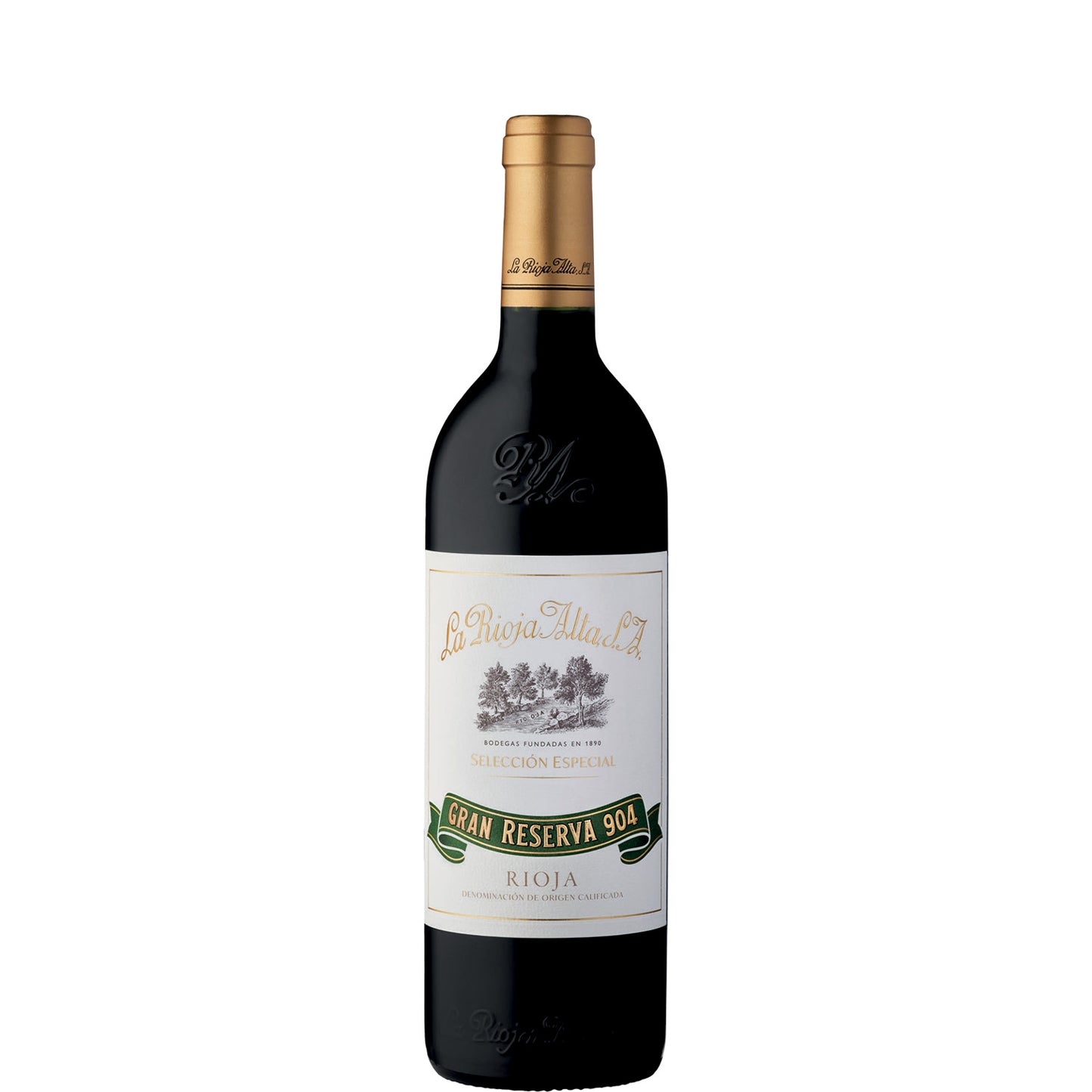
Rioja Gran Reserva 904, La Rioja Alta, 1997
Rioja Gran Reserva 904, La Rioja Alta, 1997
- 75cl
- 13%
- Red Still
- Tempranillo, Graciano
- Organic
- Biodynamic
Couldn't load pickup availability

Optimal drinking window: 2026 - 2035
904 is La Rioja Alta's icon, a Gran Reserva made only in the finest years and aged with a patience that most modern producers would find frankly alarming. The 1997 spent six years in American oak and several more in bottle before release, which means what arrives in your glass is a wine already deep into its secondary life: dried cherry, tobacco leaf, old leather, and that particular Riojan quality of cedar-inflected calm.
At nearly 30 years old, this is not a wine that needs anything from you except a good glass and a little time to open.
The 1997 904 is already in its sweet spot and has been for several years. The primary cherry fruit has long since given way to the dried-fruit, tobacco, and leather complexity that defines mature Rioja at its best, and the oak integration is seamless. It will hold comfortably until 2032 to 2035 with good storage, and there is no rush, but do not expect further transformation. After 2035 or so, the fruit will begin to dry out further and the wine may lose the balance that currently makes it so satisfying.
What the critics say:
"This vintage of La Rioja Alta’s 904 highlights its difference as a producer. A ‘good’ rated vintage didn’t stop this quality-conscious winery from producing a superb wine. With its 400ha of vines, La Rioja Alta is almost self-sufficient: unusual among Rioja producers. This blend of 90% Tempranillo and 10% Graciano has seen four years in cask, and a few more in bottle prior to its release. The company imports American oak from Ohio and Pennsylvania, in order to supply the huge requirements of its in-house coopering operation. Pedro Ballesteros Torres MW: An amazing, classic style with unique aromas, round tannins and a velvety texture, finishing suave and gorgeous. Sarah Jane Evans MW: Gloriously smoky American oak. The palate is all about American oak too, but the blend of vanilla and berries is irresistible. Pierre Mansour: Lovely sweetness and vigour here, with the acidity supporting the mellow texture and fruit. A superb classic Rioja."
"The current release is the 1997 Gran Reserva 904, still densely colored and alluringly perfumed. Aromas of dried herbs, tobacco, incense, and assorted black fruits lead to a savory, spicy wine without the depth of the splendid 2001. La Rioja Alta was founded in 1890 in Haro, the capital of Rioja Alta, in close proximity to Lopez de Heredia and Marques de Riscal. The Bodega’s wines are all blends, there are no single vineyard wines, and all of the wines are produced from estate-grown grapes. During my visit in May, 2010, I had the opportunity to taste verticals of 2 of La Rioja Alta’s wines, Vina Ardanza Reserva and Gran Reserva 904. Vina Ardanza’s wines are labeled Reserva with three exceptions. In what La Rioja Alta considers the greatest years (there have been three to date, 2001, 1973, and 1964) the wine is called Reserva Especial. There are usually four vintages a decade of La Rioja Alta’s Gran Reserva 904. It is made from a blend of Tempranillo and Graciano and aged for 5 years in barrel and 5 years in bottle prior to release."
Tasting Notes
AppearanceGarnet with a softening brick rim — a colour that tells you exactly where this wine is in its life, and it is a good place to be.
NoseDried cherry and fig give way quickly to the secondary register: tobacco, polished leather, dried rose petal, and a whisper of American oak that reads as sandalwood rather than vanilla at this age. There is real composure here — nothing competing, everything integrated.
PalateMedium-bodied and silky, with tannins that dissolved into the wine years ago, leaving a texture that is genuinely luxurious. The fruit is dried rather than fresh — morello cherry, dried plum — framed by cedar, dried herbs, and a savoury, almost umami-edged depth. The acidity remains precise and gives the whole thing life.
FinishLong and quietly persistent, fading on tobacco leaf and a dry, mineral note that keeps you coming back to the glass.
Overall impressionTraditional Rioja at full maturity — this is what the patience of both grower and drinker is actually for.
Food Pairings
In Haro and across Rioja Alta, a wine like this would land on the table alongside chuletillas al sarmiento — tiny lamb chops grilled over vine cuttings, charred at the edges and impossibly good. Roast suckling pig, slow-braised rabbit with garlic and thyme, or a simple plate of aged Manchego with quince paste would all be natural partners. The region's love of offal is worth noting too: braised oxtail or callos a la riojana, the local tripe stew rich with chorizo and peppers, suits the wine's savoury depth rather well. This is food built around the wine, not alongside it.
We think this wine would go well with
Serve at 16 to 17 degrees Celsius — any warmer and the alcohol starts to dominate what is a relatively elegant frame. Decant for 30 to 45 minutes; the wine will open gradually and reward the wait, but it is fragile enough at this age that you do not want to over-expose it. A large, tulip-shaped red Burgundy or Bordeaux glass works well, giving the aromas room to gather without dispersing them too quickly.
The estate's core vineyards are concentrated around Haro in Rioja Alta, where altitudes of 400 to 560 metres bring significant diurnal temperature variation — warm days preserving fruit, cool nights locking in acidity. Soils here are predominantly clay-limestone, which gives the wines their characteristic freshness and grip. The Atlantic influence from the Cantabrian mountains moderates what could otherwise be a continental extreme, producing growing seasons that are long, measured, and rarely brutal.
Rioja is Spain's most celebrated red wine region, divided into three sub-zones — Alta, Alavesa, and Oriental — each with distinct soil and climate profiles. Gran Reserva is the appellation's highest tier, requiring a minimum of five years' ageing, with at least two in oak and two in bottle; in practice, producers like La Rioja Alta far exceed these minimums. Rioja is built on Tempranillo, often blended with Garnacha, Graciano, and Mazuelo, and the region's long relationship with American oak gives traditional examples a signature vanilla and tobacco quality that distinguishes them from virtually anything else in Spain.
The 1997 vintage in Rioja arrived on the back of a warm, dry growing season that accelerated ripening and produced grapes with generous sugar levels but, in places, at the cost of freshness. It was not a universally easy year — drought stress in some subzones meant yields were reduced and phenolic ripeness was uneven — but those who picked at the right moment captured fruit of real concentration. Tempranillo performed well where vine age and terroir provided a natural check on the heat, delivering wines with dark fruit, soft tannins, and a suppleness that was, frankly, rather seductive from early on.
That approachability has always been 1997's calling card. These were never wines built for the very long haul in the way that, say, the great 1994s were, but the best Reservas and Gran Reservas have aged gracefully into something rounded and satisfying, with dried fruit, leather, and the earthy, tobacco-tinged character that good Rioja develops with time. Drink the better bottles now — they are in a lovely place — but don't sit on them for another decade expecting a transformation.
FAQs
What does the 904 Gran Reserva taste like?
At 1997, it is firmly in its secondary phase — dried cherry, tobacco, cedar, old leather, and dried herbs, with silky tannins and a long savoury finish. This is traditional Rioja as it was meant to age, not a fruit-forward modern red.
Is the 1997 ready to drink now?
Yes, and it has been for some time. This is a wine at full maturity, composed and integrated, with no rough edges left to resolve. Open it with confidence — though do give it 30 to 45 minutes in a decanter first.
How long will it keep?
We would drink it before 2035 to be safe. It will hold until around 2040 in ideal cellar conditions, but the window for peak drinking is now rather than in five years' time.
What food should I serve with this?
Roast lamb is the classic match — chuletillas grilled over vine cuttings if you want to eat like a Riojan. Aged hard cheese, slow-braised beef, or a simple plate of jamón ibérico will also do it justice. Avoid anything too rich or heavily sauced; the wine does not need competition.
Why is it called 904?
The name refers to the number of the bodega's original barrel store — a nod to La Rioja Alta's long history rather than a vintage or vineyard designation. The 890, its sibling, references a different cellar. Both are released only in exceptional years.
How is this different from a standard Rioja Reserva?
Gran Reserva is the top tier, made only in the best vintages and aged significantly longer — La Rioja Alta goes well beyond the legal minimum. The 904 spent six years in American oak before bottle ageing, giving it a depth and complexity that a Reserva simply cannot replicate. It is a different proposition entirely.

OUR GROWERS
La Rioja Alta
Explore related wines


What are you looking for tonight? Tell me the occasion, a grape, a region — or just try a suggestion below.
Your recommendations will appear here.
-
-
Speak to one of our Wine Gurus
Speak to a Wine GuruWith years of experience, our team can help you with all your wine buying and selling needs