

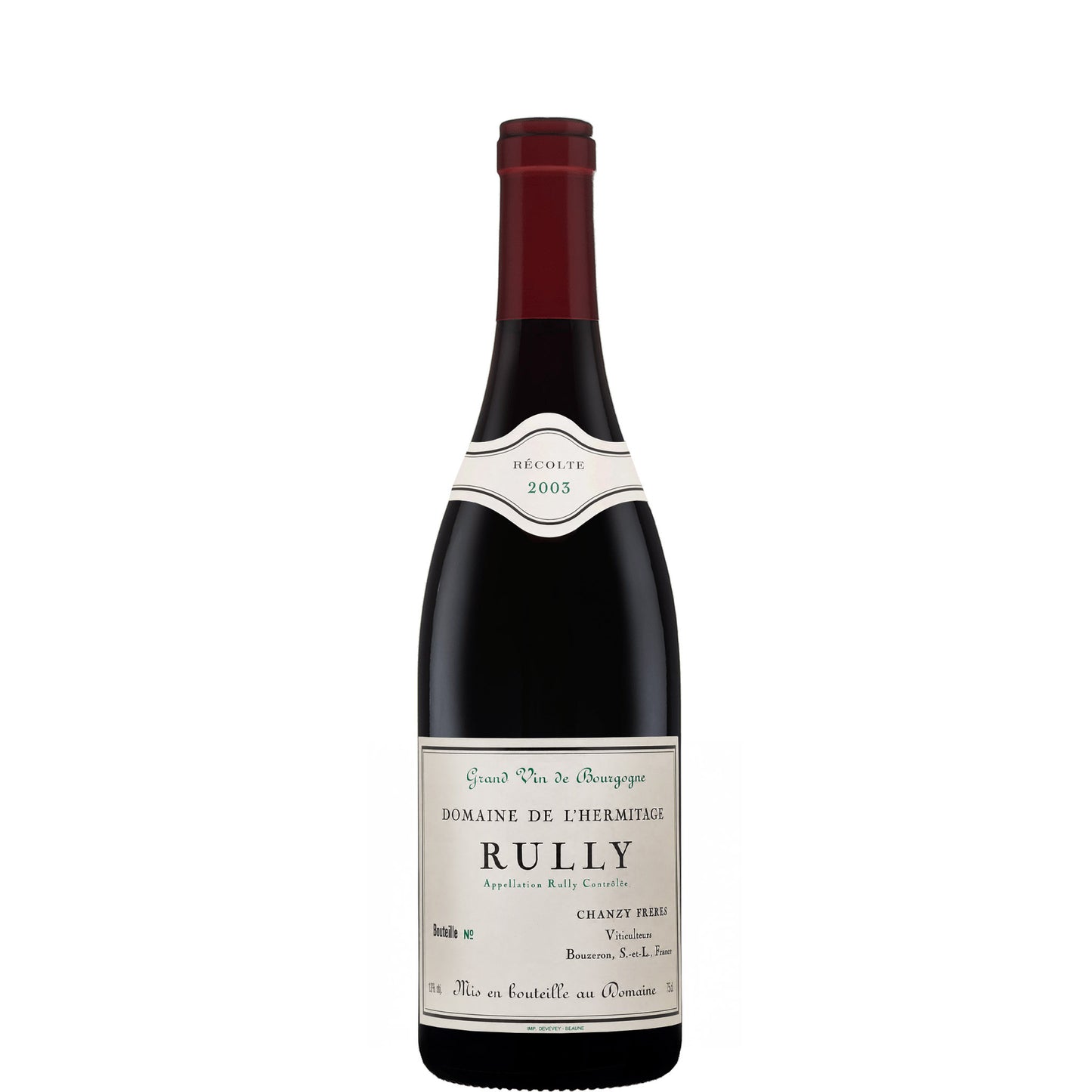
Rully Rouge, L'Hermitage, Domaine Chanzy, 2003
Rully Rouge, L'Hermitage, Domaine Chanzy, 2003
- 75cl
- 13%
- Red Still
- Pinot Noir
Couldn't load pickup availability

Optimal drinking window: 2026 - 2028
Rully sits in the southern reaches of the Côte Chalonnaise, a village that has long punched above its weight for value-conscious Burgundy lovers. Domaine Chanzy's L'Hermitage comes from a single vineyard site and is made in a style that leans into Pinot Noir's quieter, more contemplative register rather than its show-stopping side. The 2003 vintage — that legendary, scorching summer across France — adds an interesting wrinkle: this is a warmer, riper expression of Rully than you'd usually expect, with the fruit carrying a dried, almost confited edge alongside the more typical Côte Chalonnaise earthiness.
At over twenty years old, we'd approach this with curiosity rather than expectation of fresh fruit. It's a wine for an intimate Tuesday dinner rather than a grand occasion, best enjoyed now before the fruit recedes further.
The 2003 vintage's exceptional heat gave Rully Rouge a richness it doesn't always possess, but that same warmth has also accelerated its evolution. By now, the primary fruit has long since integrated into secondary and tertiary notes of dried fruit, earth, leather, and forest floor. The wine is at or just past its plateau — the structural elements that once promised longevity are softening, and the fruit is receding rather than building. Drinking in 2026-2027 will give you the most pleasure this wine still has to offer; beyond 2028, we'd expect the fruit to fade to the point where the wine becomes more academic than enjoyable.
Tasting Notes
AppearancePale garnet with a significant amber-orange rim, indicating meaningful age.
NoseDried cherry, pressed rose petal, and a warm undercurrent of clove and cinnamon — the 2003 heat evident in the slightly confited quality of the fruit. Beneath that, the classic Côte Chalonnaise earthiness comes through: forest floor, damp leaves, a faint mushroom note.
PalateLight-to-medium bodied, with soft, almost silky tannins that have fully resolved over time. The fruit is gentle and dried rather than vibrant — think sour cherry compote rather than fresh — with a pleasant warmth and subtle spice carrying through the mid-palate. Acidity holds the structure together, though only just.
FinishMedium length, with earthy, slightly smoky persistence and a faint leather edge on the close.
Overall impressionA wine that has arrived at its destination — drink it now, thoughtfully, rather than wait any longer.
Food Pairings
In Burgundy's Côte Chalonnaise, this style of aged Pinot Noir would naturally find its way onto the table alongside poulet de Bresse roasted simply with butter, thyme, and garlic. Locals would also reach for it with jambon persillé — the classic cold pressed ham and parsley terrine of the region — where the wine's earthiness and gentle acidity cut through the richness. A plateau of local cheeses, particularly Époisses or a young Comté, would be entirely at home. Given the wine's age and delicacy, avoid anything too bold or heavily spiced; it needs a quiet partner, not competition.
We think this wine would go well with
Serve at around 15-16°C — cooler than you might expect, which will keep the remaining fruit fresh and prevent the alcohol from feeling heavy. Decant gently for no more than 20-30 minutes, just to open it up slightly; too much air risks accelerating any decline. A wide-bowled Burgundy glass will help coax out the nose, which at this age needs a little encouragement to unfold.
The L'Hermitage vineyard in Rully sits on limestone and clay soils typical of the Côte Chalonnaise, where the geology is broadly similar to the Côte d'Or but the climate is a touch more continental and yields generally a little more generous. The soils drain well and warm quickly in spring, giving wines with a characteristic lightness of frame. In 2003, the extreme heat compressed the growing season dramatically, producing wines with higher than usual alcohol and riper, more concentrated fruit than this site typically delivers.
Rully is a village appellation in the Côte Chalonnaise, producing both red and white wines, though it is perhaps better known for its whites. For reds, Pinot Noir is king, and the wines tend toward the lighter, more delicate end of Burgundy's spectrum — earthier and less overtly fruity than Gevrey, with a certain rustic elegance that suits early-to-mid drinking. Compared to neighbours Mercurey and Givry, Rully reds are generally finer-boned and less structured, making them more approachable young but less suited to long ageing.
2003 is Burgundy's heatwave vintage — the one everyone remembers, for better or worse. The summer was ferocious, with temperatures across France reaching historic highs in August and the harvest coming in unusually early, sometimes before the end of that month. The vines cooked, yields collapsed, and grapes arrived at the winery with very high sugar levels and, in many cases, compromised acidity. It was a year that sorted producers ruthlessly: those who picked at the right moment and worked sensitively in the winery made wines of real character; those who hesitated were left with something closer to jam.
The reds are the more compelling story. Pinot Noir produced wines that are thick, generous, and low in the nervous acidity that defines great Burgundy — so whether you love or merely tolerate 2003 depends rather on what you want from the region. The whites, broadly, are past their best; the reds from serious producers are drinking well now and have been for some time, with most bottles not built for the very long haul. Drink up, rather than squirrel away.
FAQs
What does this wine taste like?
Aged and gentle — dried cherry, pressed rose, warm spice, and a characteristic earthiness from the Côte Chalonnaise. The 2003 vintage adds a slightly richer, more confited quality than you'd find in a cooler year. At over twenty years old, this is firmly in its tertiary phase, with soft tannins and a quiet, contemplative character.
When should I drink this wine?
Now, and without hesitation. The window is closing — we'd enjoy it in 2026 or 2027 while there is still pleasure to be had. Waiting further risks the fruit disappearing entirely, leaving only structure and memory behind.
What food should I serve with it?
Think simple, classic Burgundian cooking: roast chicken with herbs and butter, a jambon persillé terrine, or a good plateau of local cheeses. The wine is delicate, so it needs food that complements rather than overwhelms. Avoid heavy sauces or anything too boldly spiced.
How should I serve it?
Serve at around 15-16°C in a wide-bowled Burgundy glass. Decant for no more than 20-30 minutes — enough to open the wine up gently, but not so long that you accelerate any decline. Handle the bottle carefully if there is sediment.
Is this worth cellaring further?
No. This is a light-framed Côte Chalonnaise Pinot Noir from a very warm vintage, and it has already reached its peak. Further ageing will not add complexity.
Who is Domaine Chanzy?
Chanzy is a well-regarded Burgundy producer and négociant based in Bouzeron in the Côte Chalonnaise, known for reliable, fairly priced wines across the region's lesser-celebrated appellations. They produce both estate and négociant wines, with a focus on clean, expressive styles rather than heavy extraction. A solid address for everyday Burgundy without the Côte d'Or price tag.

OUR GROWERS
Chanzy
Explore related wines


What are you looking for tonight? Tell me the occasion, a grape, a region — or just try a suggestion below.
Your recommendations will appear here.
-
-
Speak to one of our Wine Gurus
Speak to a Wine GuruWith years of experience, our team can help you with all your wine buying and selling needs