

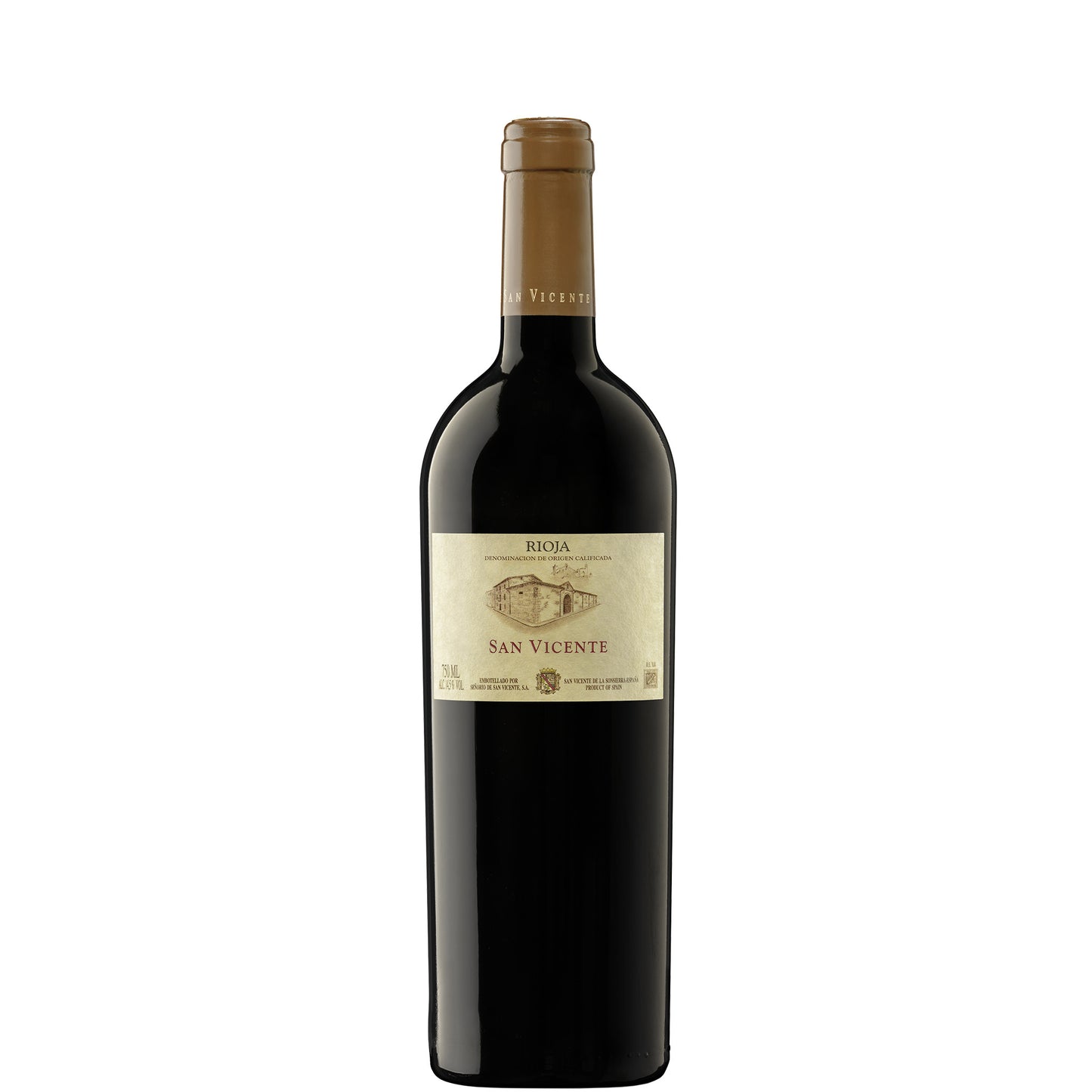
Sierra Cantabria, Señorío de San Vicente Tempranillo, 2018
Sierra Cantabria, Señorío de San Vicente Tempranillo, 2018
- 75cl
- 14.5%
- Red Still
- Tempranillo
- Organic
- Biodynamic
Couldn't load pickup availability

Optimal drinking window: Now - 2038
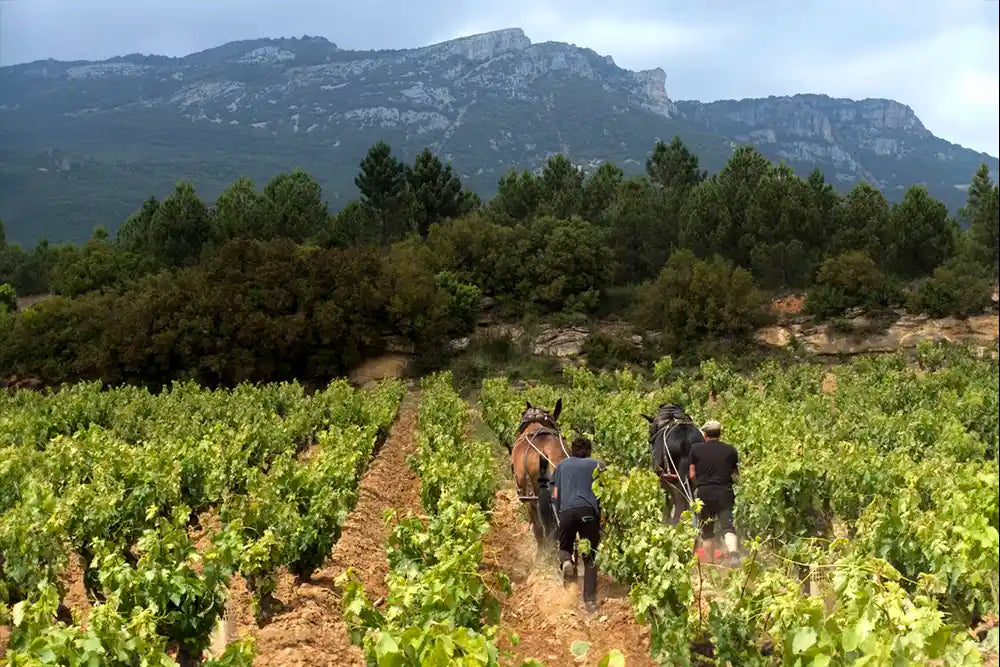
This 2018 from San Vicente is everything a Rioja should be. It is made from the lower yielding sister of the Tempranillo we all know and love, the Tempranillo Peludo, which means 'hairy Tempranillo' distinguished by the small fibres that cover the underside of its leaves.
Marcus, the winemaker's son convinced his father to plant this special variation and have since been pursuing extreme quality over quantity. This concentration provides more intensity and complexity of fruit flavour, making the end result an exceptional Rioja full of spicy fruit, perfectly ripe tannins and extra complexity from ageing in primarily French oak.
This 2018 is currently showing beautifully integrated fruit and oak, having had enough time for the new French oak to marry with the concentrated Tempranillo Peludo fruit. Over the next five years, expect the primary fruit flavours to deepen and develop more savoury complexity, with leather and earth notes emerging. The wine should reach its peak between 2030-2035, when the tannins will have fully softened while maintaining the wine's structure. It will hold this plateau until around 2038, after which the fruit may begin to fade, though the wine will remain enjoyable for drinking.
What the critics say:
"Inky ruby. Powerful, oak-spiced cherry cola, blackberry, potpourri and vanilla scents show sharp definition and pick up a smoky aspect with air. Seamless and penetrating on the palate, offering intense red and dark fruit, floral pastille and mocha flavours and a touch of exotic spices. Shows excellent focus and spicy drive on a long, supple finish framed by finely interwoven tannins. All new oak, 90% French and 10% American."
Tasting Notes
AppearanceDeep, inky ruby with a concentrated core and slight purple rim.
NosePowerful aromas of cherry cola and blackberry leap from the glass, followed by oak spice and vanilla. With air, smoky elements emerge alongside potpourri and a hint of exotic spices that speak to the French oak influence.
PalateSeamless and penetrating, with intense red and dark fruit flavours supported by mocha richness. The palate shows excellent focus with floral pastille notes and that distinctive spicy drive that marks quality Tempranillo. The tannins are finely woven throughout, providing structure without overwhelming the fruit.
FinishLong and supple, with spicy persistence and perfectly integrated oak that lingers beautifully.
Overall impressionThis is Rioja at its most sophisticated, showing both power and elegance in perfect balance.
Food Pairings
In Rioja, this would be the wine for special occasions, paired with cordero asado (roast lamb) seasoned with rosemary and garlic. Locals might also serve it alongside morcilla (blood sausage) or aged Manchego cheese. The traditional pairing would be with cochinillo (roast suckling pig), where the wine's structure matches the richness of the meat. Game dishes like venison or wild boar, often prepared with dried fruit and spices, would also be natural companions in this part of Spain.
We think this wine would go well with
Serve at 17-18°C to allow the complex aromatics to fully express themselves. Decant for at least an hour to let the wine breathe and integrate, though it can handle up to three hours of decanting if you have the time. Use large Bordeaux-style glasses to concentrate the powerful aromatics. The wine will continue to evolve in the glass over several hours, rewarding patient drinkers with increasing complexity.
The San Vicente vineyard sits in Rioja Alavesa, where the altitude and chalky clay soils create ideal conditions for slow ripening. The cooler climate here compared to Rioja Alta allows Tempranillo Peludo to develop its characteristic intensity while retaining freshness. The chalky subsoil provides excellent drainage while the clay retains just enough moisture to sustain the vines through hot summers, resulting in concentrated fruit with natural acidity.
Rioja DOCa is Spain's most prestigious wine region, with strict regulations governing everything from grape varieties to ageing requirements. The region is divided into three sub-zones, with Rioja Alavesa known for producing the most elegant and structured wines thanks to its higher altitude and chalky soils. Unlike the traditional American oak preferences of classic Rioja, modern producers like Sierra Cantabria often favour French oak for its more subtle integration and spice complexity.
We think 2018 might just be Rioja's best-kept secret of the decade. The growing season started with a soggy spring that had growers fretting about disease pressure, but then July and August delivered precisely the sort of warm, dry conditions that make Tempranillo sing. The key was September's cool nights, which preserved acidity whilst allowing the fruit to ripen slowly and evenly across Rioja's three sub-regions.
What emerged was a vintage of remarkable balance and elegance. The wines have lovely concentration without the sometimes overbearing power of 2017, and crucially, they've retained that vibrant freshness that makes Rioja so food-friendly. We find the 2018s sitting beautifully between the structured 2016s and the more immediately charming 2019s. Quality is consistently high from Rioja Alta through to Rioja Oriental, with even the humblest village wines showing real character.
The Crianza wines are drinking beautifully now and will continue to improve through 2027, whilst the Reservas are just hitting their stride and have decades ahead of them. We're particularly excited about how the 2018 Gran Reservas will develop over the next 15-20 years.
FAQs
What does this wine taste like?
Intense and concentrated, with dark cherry and blackberry fruit, mocha richness, and spicy French oak integration. The rare Tempranillo Peludo grape gives it extra depth and complexity compared to regular Rioja.
When should I drink this wine?
It's drinking beautifully now but will reward patience. The wine will continue improving until around 2035 and remain excellent until 2038.
What food pairs best with this wine?
We love it with spiced roast duck breast, but it's perfect with any rich meat dishes. Try it with roast lamb, aged hard cheeses, or game meats where its structure can match the intensity of the food.
Should I decant this wine?
Absolutely. Decant for at least an hour, or up to three hours if you have time. The wine will continue evolving in the glass, showing more complexity as it opens up.
How does this compare to regular Rioja?
This is made from Tempranillo Peludo, a rare lower-yielding cousin of regular Tempranillo that produces more concentrated, complex fruit. Combined with French rather than American oak, it's a more sophisticated style than traditional Rioja.
Is this wine worth cellaring?
Definitely. While approachable now, it's built for ageing and will reward patience with increased complexity and integration over the next decade.
Explore related wines


What are you looking for tonight? Tell me the occasion, a grape, a region — or just try a suggestion below.
Your recommendations will appear here.
-
-
Speak to one of our Wine Gurus
Speak to a Wine GuruWith years of experience, our team can help you with all your wine buying and selling needs