

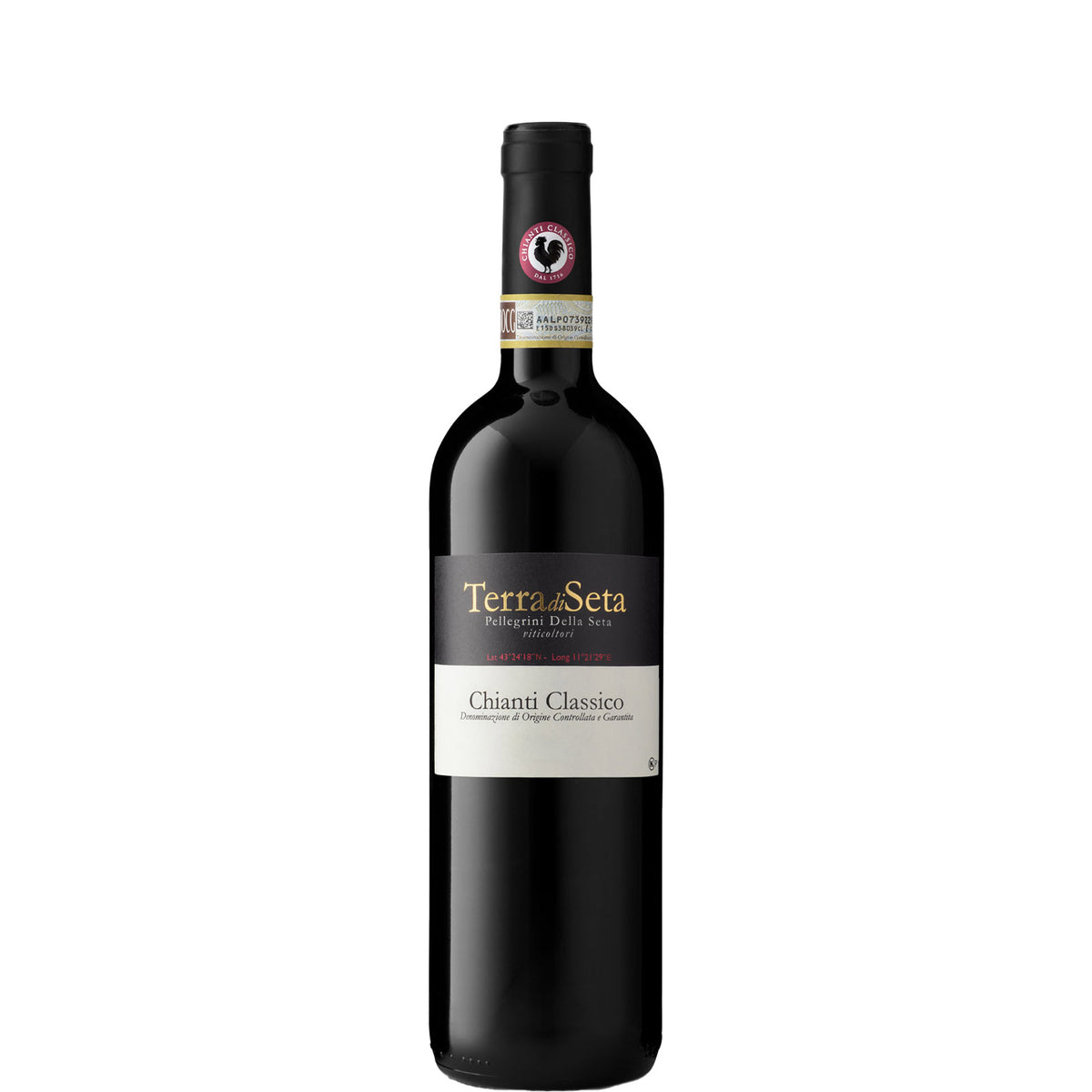
Terra di Seta, Chianti Classico, 2012
Terra di Seta, Chianti Classico, 2012
- 75cl
- 13.5%
- Red Still
- Sangiovese
- Organic
- Biodynamic
- Kosher
Couldn't load pickup availability

Optimal drinking window: 2026 - 2032
Terra di Seta is a small, family-run estate in the Castelnuovo Berardenga subzone, the southernmost and warmest corner of Chianti Classico. Their 2012 is pure Sangiovese — no international varieties dressed up in the blend, no heavy oak to flatter the critics. What you get instead is something altogether more honest: a wine of real structural backbone, dried red fruit, iron-tinged minerality, and the kind of bitter-edged finish that makes you reach for a plate of food.
The 2012 vintage was warm and generous across Tuscany, and at fourteen years old this wine has settled into a lovely, composed middle age. The tannins have softened without surrendering their grip, the fruit has dried and deepened, and there's a savouriness here that's deeply satisfying.
The 2012 is in a genuinely good place — primary fruit has dried and integrated, tannins have softened to a fine, dusty grip, and secondary savoury, leathery, and earthy notes are fully present. It is drinking well now and will continue to do so for the next four to six years without any great transformation.
Tasting Notes
AppearanceMedium ruby with a softening garnet rim — telling signs of composed, graceful age.
NoseDried sour cherry and sun-warmed tomato skin lead, with dried rosemary, leather, and a faint whiff of iron and old violets underneath. It's not showy, but it's genuinely compelling.
PalateMedium-bodied with finely grained tannins that still carry some authority — this wine hasn't gone soft on us. Dried red fruit, a touch of tobacco, and earthy, savoury undertones that speak of age without showing fatigue.
FinishLong and pleasingly bitter at the close, with dried herbs and mineral dust lingering in the best possible way.
Overall impressionA composed, honest Chianti Classico that rewards both dinner and conversation in equal measure.
Food Pairings
In Castelnuovo Berardenga and across southern Chianti, this style of wine is made to sit alongside bistecca alla Fiorentina — the enormous T-bone steak cooked over hot coals, seasoned with nothing more than olive oil and sea salt. Pappardelle al cinghiale, the thick pasta ribbons with slow-cooked wild boar, is another natural match, the richness of the ragù working against the wine's acidity and tannin in exactly the right way. Aged Pecorino Toscano, particularly the harder stagionato version, is a local staple that picks up the wine's savoury, mineral edge beautifully. Even a simple ribollita — the hearty Tuscan bread and vegetable soup — shows how well this style of wine handles humble, flavoursome food.
We think this wine would go well with
Serve at around 17°C — slightly cooler than many expect for a red of this age, which will keep the acidity lively and the fruit precise. A short decant of 20 to 30 minutes will help open it up without stripping any of the evolved complexity that makes a wine of this age interesting. A large Burgundy-style bowl works well here, giving the more delicate aromatics room to breathe without scattering them.
Castelnuovo Berardenga sits at the warmer, drier southern end of Chianti Classico, where galestro — the crumbly, schist-like limestone and clay mix — dominates the soils alongside alberese, the denser clay-limestone that gives structure and grip. Vineyards are typically planted between 250 and 400 metres altitude, which tempers the heat enough to preserve acidity. The combination of free-draining soils and warm days with cooler nights produces Sangiovese that's ripe and generous in fruit but never heavy, with that characteristic iron and dried-herb edge.
Chianti Classico is the historic heartland of Tuscan Sangiovese, the zone between Florence and Siena that pre-dates and outlasts the broader Chianti denomination in almost every meaningful sense. The Classico DOCG requires a minimum of 80% Sangiovese, though many producers now work at 100%, and the zone introduced the Gran Selezione category in 2014 to signal its most serious single-vineyard wines. At the basic Annata level — which this is — the wines must age for at least one year before release, balancing accessibility with genuine character. Compared to Rufina to the north or Colli Senesi to the south, Classico sits at the quality apex of the Chianti family.
The 2012 vintage in Tuscany arrived after a particularly challenging growing season that had producers reaching for their textbooks. Spring brought erratic weather patterns, followed by a summer that tested even the most experienced vignerons. The harvest itself proved tricky, demanding careful selection in the vineyard to separate the wheat from the chaff, so to speak.
What emerged was a vintage of real character, though one that required producers to earn their stripes. The Sangiovese shows a more structured, serious personality than the immediately charming vintages that bookend it, with firm tannins that give the wines backbone and real aging potential. Super Tuscans from this year display remarkable concentration, whilst Chianti Classico producers who managed their yields carefully crafted wines with genuine depth. We find most 2012s are drinking beautifully now, having softened into their stride, though the best examples will continue rewarding patience until 2028.
FAQs
What does this wine taste like?
Dried cherry, iron, leather, and dried herbs — lean and structured rather than rich and plummy. It's a wine of precision and character, with a pleasingly bitter, mineral finish that's classic Sangiovese.
Is it ready to drink now?
Yes, and it's in a lovely spot right now. At fourteen years old the tannins have softened beautifully and the secondary complexity — tobacco, earth, dried herbs — is fully open. No need to wait any longer.
How long will it keep?
We'd drink it now until 2032. It won't dramatically improve from here, but it will hold its composure for another five or six years without trouble.
What food should I serve it with?
This is a wine built for the table. Grilled or roasted red meat is the obvious match — aged hard cheeses and rich pasta dishes work equally well. It needs something with flavour and fat to push against.
How should I serve it?
Around 17°C, with a short decant of 20 to 30 minutes. Use a large-bowled glass to give the aromatics room. Don't serve it too warm or the dried fruit character can tip into something flat.
What makes Chianti Classico different from regular Chianti?
Chianti Classico comes from the historic heartland between Florence and Siena — a strictly defined zone with stricter rules, higher minimum Sangiovese content, and a reputation for wines of significantly greater depth and longevity than the broader Chianti designation. Think of it as the original, before the name got borrowed and diluted.

OUR GROWERS
Terra di Seta
Explore related wines


What are you looking for tonight? Tell me the occasion, a grape, a region — or just try a suggestion below.
Your recommendations will appear here.
-
-
Speak to one of our Wine Gurus
Speak to a Wine GuruWith years of experience, our team can help you with all your wine buying and selling needs