

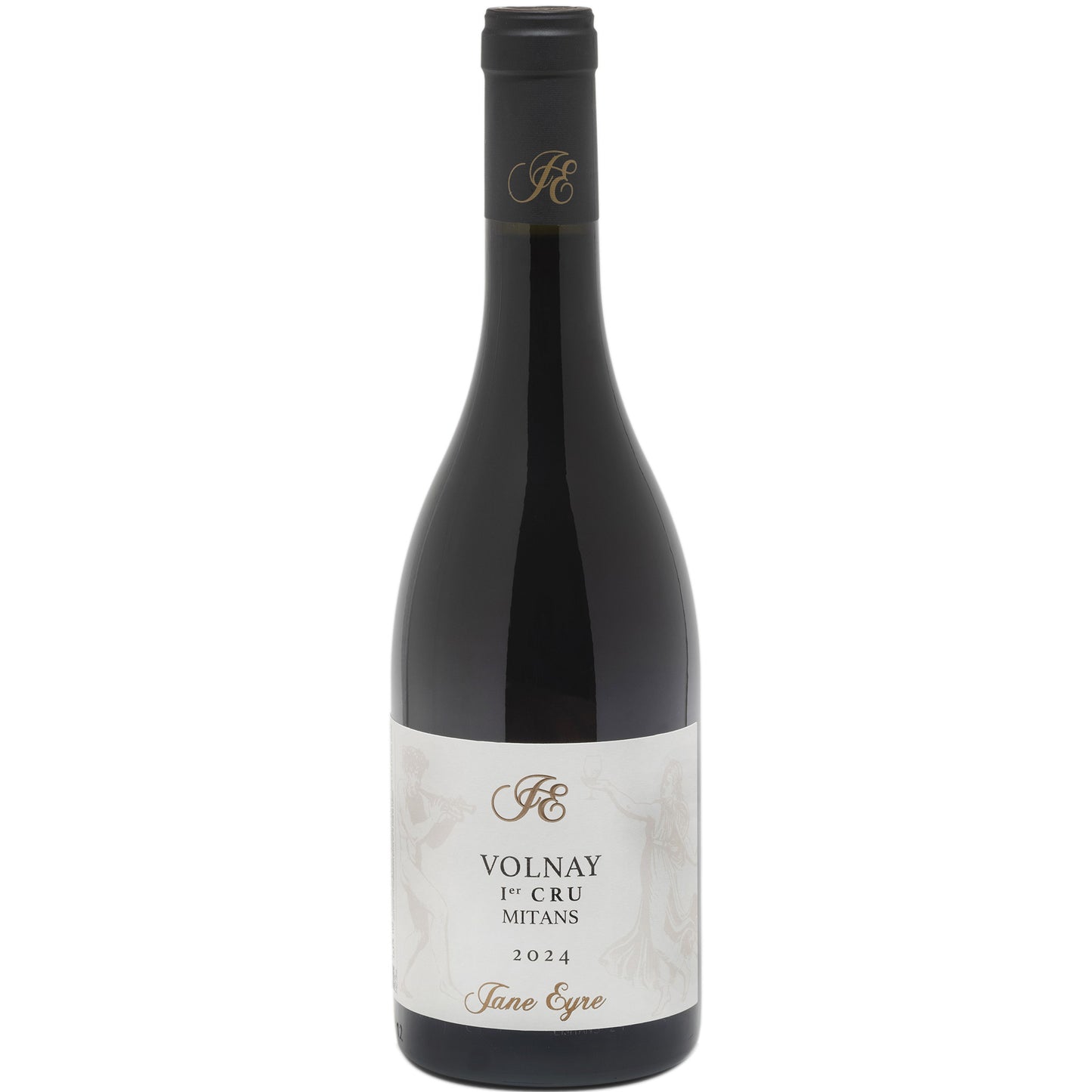
Volnay Premier Cru 'Les Mitans', Jane Eyre, 2024 - Magnum
Volnay Premier Cru 'Les Mitans', Jane Eyre, 2024 - Magnum
- 150cl
- 13%
- Red Still
- Pinot Noir
Couldn't load pickup availability

Optimal drinking window: 2028 - 2040
Les Mitans is one of Volnay's most quietly compelling premiers crus. Tucked between Champans and Taillepieds, it tends to produce wines of real finesse rather than obvious power.
2024 could hardly suit Jane Eyre better. A cool, rain-affected year with low natural alcohols and sharply reduced volumes, it demanded obsessive sorting and restraint in the cellar. Jane delivered both. Sorting varied dramatically by site, with some parcels requiring extraordinary attention, but the results are wines of clarity, finesse, and unmistakable origin.
Whole-bunch use was carefully judged and varied by cuvée. In a vintage where some light-touch producers struggled to find flavour, Jane’s wines retain purity, energy, and real Pinot character.
"Surrounded by serious neighbours and low on the slope. Transparent and mineral, with a delicate, finely etched palate. Subtle oak and a sense of calm authority rather than overt power."
Stewart Pryce, Honest Grapes Wine Club Manager
The magnum format means this wine is still folding in on itself, and patience will be rewarded handsomely. We'd open the first bottle around 2028 and not panic about the last until well into the 2030s.
Right now the wine is still folding inward, its components present but not yet integrated — the tannins are fine but firm, the fruit precise but primary. From around 2028, the black cherry and licorice should begin to deepen into something more brooding, with the mineral quality of Les Mitans becoming more pronounced. By the early 2030s, in magnum, this should be hitting its stride: secondary complexity emerging, the whole-cluster element woven seamlessly into the fabric of the wine. Peak drinking likely runs from 2030 to 2036, after which the fruit will slowly retreat and the wine will lean increasingly on its structure. Don't leave it much beyond 2038.
What the critics say:
"A noble Volnay, this has classy, filigree tannins and stylishly integrated freshness. Licorice, black cherries, mulberries and damp tree bark create a dynamic aromatic profile. This saw 20% whole cluster and was aged in once-used oak. The solid finish and evident concentration suggest it would be ideal to age this several years at least to really see the terroir’s full effect."
Tasting Notes
AppearanceTranslucent ruby with a bright, garnet-tinged rim — the colour of light through a stained-glass window.
NoseFresh red cherry and wild strawberry, edged with dried violet and a cool, flinty mineral note that speaks clearly of the limestone beneath. There is a faint suggestion of whole-cluster earthiness — forest floor after rain — that gives it real intrigue at this early stage.
PalateSilky but not without structure: the tannins are fine-grained and the acidity is the engine, carrying the fruit — kirsch, cranberry, a sliver of blood orange — with real precision. The magnum's slower evolution means it hasn't yet fully revealed itself, but the architecture is clearly exceptional.
FinishLong, cool, and mineral, with a persistent iron-and-rose-petal note that stays in the mouth well after the wine has gone.
Overall impressionA wine of genuine tension and finesse that needs time, but promises to be something rather special.
Food Pairings
In Burgundy, a Volnay premier cru at the table is almost synonymous with roast guinea fowl — ideally with a sauce made from the wine itself and finished with a little crème fraîche. The locals would also pair it with a veal blanquette or a slow-braised rabbit with mustard and tarragon, where the wine's acidity cuts through richness without shouting. A simple plateau of local Époisses or Comté, when the wine has had a few more years, would be the kind of pairing that makes you put the glass down and look at the ceiling. Simpler dishes earn their place too: a good roast chicken, perhaps with mushrooms from the Morvan, is never wrong with Volnay.
We think this wine would go well with
Serve at 15–16°C — cooler than you might expect, which lets the wine's aromatic precision show before it warms in the glass. Given its youth and the magnum format, decant for 30 to 45 minutes, though we'd taste it first and judge; some 2024s are more open than you'd expect. A large-bowled Burgundy glass — Zalto Burgundy or equivalent — is the right vessel, giving the aromatics room to unfurl properly.
Les Mitans lies on the mid-slope of the Volnay hillside, where Bathonian limestone and iron-rich clay soils combine to give the wine its characteristic lift and mineral backbone. The exposure is easterly, which moderates ripeness and preserves the acidity that defines great Volnay. Altitude and aspect conspire to keep yields honest and the fruit precise rather than generous. It is a site that rewards a light hand.
Volnay is a village appellation in the Côte de Beaune, producing exclusively red wine from Pinot Noir — unusual in a côte better known for its whites. Its premiers crus are widely regarded as among the most consistently expressive in all of Burgundy, offering a counterpoint to the weight of Pommard to the south and the breadth of Meursault to the north. Les Mitans is one of several well-regarded premiers crus on the central slope, known for aromatic lift, silky texture, and genuine ageing potential.
The 2024 growing season in Burgundy was, frankly, a test of nerve. A wet spring brought significant mildew pressure, and vignerons who stayed sharp in the vineyard — working fast, keeping canopies open, reducing yields where necessary — came out the other side with something worth talking about. Summer brought warmer, drier conditions that helped the fruit recover composure, and harvest arrived broadly on the later side, with growers picking carefully to find phenolic ripeness without sacrificing freshness. Quantity was down across much of the Côte, which concentrates minds as much as it concentrates wine.
What emerged is a vintage that rewards those who put the work in. The Pinots we have tasted carry real precision and translucency — not because they are light, but because the acidity is lively and the fruit unforced. Chardonnays from the Côte de Beaune look particularly promising: taut, mineral, with genuine length. This is not a vintage to panic-open. Most village and premier cru reds want three to five years at minimum, with the better appellations drinking well until 2035 and beyond. The whites are more approachable now, though the best will reward patience too.
FAQs
What does this wine taste like?
Precise and aromatic rather than rich or weighty. Red cherry, dried violet, cranberry, and a cool mineral edge from the limestone soils of Les Mitans. The tannins are silky and the acidity is the real star — it gives the wine its lift and length. This is Pinot Noir defined by elegance, not power.
When should I drink this wine?
We'd suggest patience. The magnum format and the freshness of the 2024 vintage mean this wine is still finding itself. Give it until at least 2028 for genuine pleasure, and it should hold well until 2040. If you can manage it, a bottle every two or three years will tell an interesting story.
Is a magnum worth it for Burgundy?
For a wine you intend to cellar, almost always yes. The larger format means less oxygen relative to wine volume, which slows development and typically results in finer, more integrated tannins over time. For a 2024 premier cru Volnay, a magnum is the right call if you can spare the rack space.
What food should I serve with this?
Roast guinea fowl, veal, or slow-braised rabbit are the classic Burgundian companions. Simpler options work well too — a good roast chicken with mushrooms, or a plate of aged Comté. Avoid anything too heavily spiced or richly sauced; the wine's precision deserves a partner that won't overwhelm it.
How should I serve it?
Slightly cooler than most people serve red wine — 15 to 16°C is ideal. Decant for around 30 to 45 minutes, though it's worth tasting straight from the bottle first to judge where it is. Use a large Burgundy-style glass to give the aromatics room to open up properly.
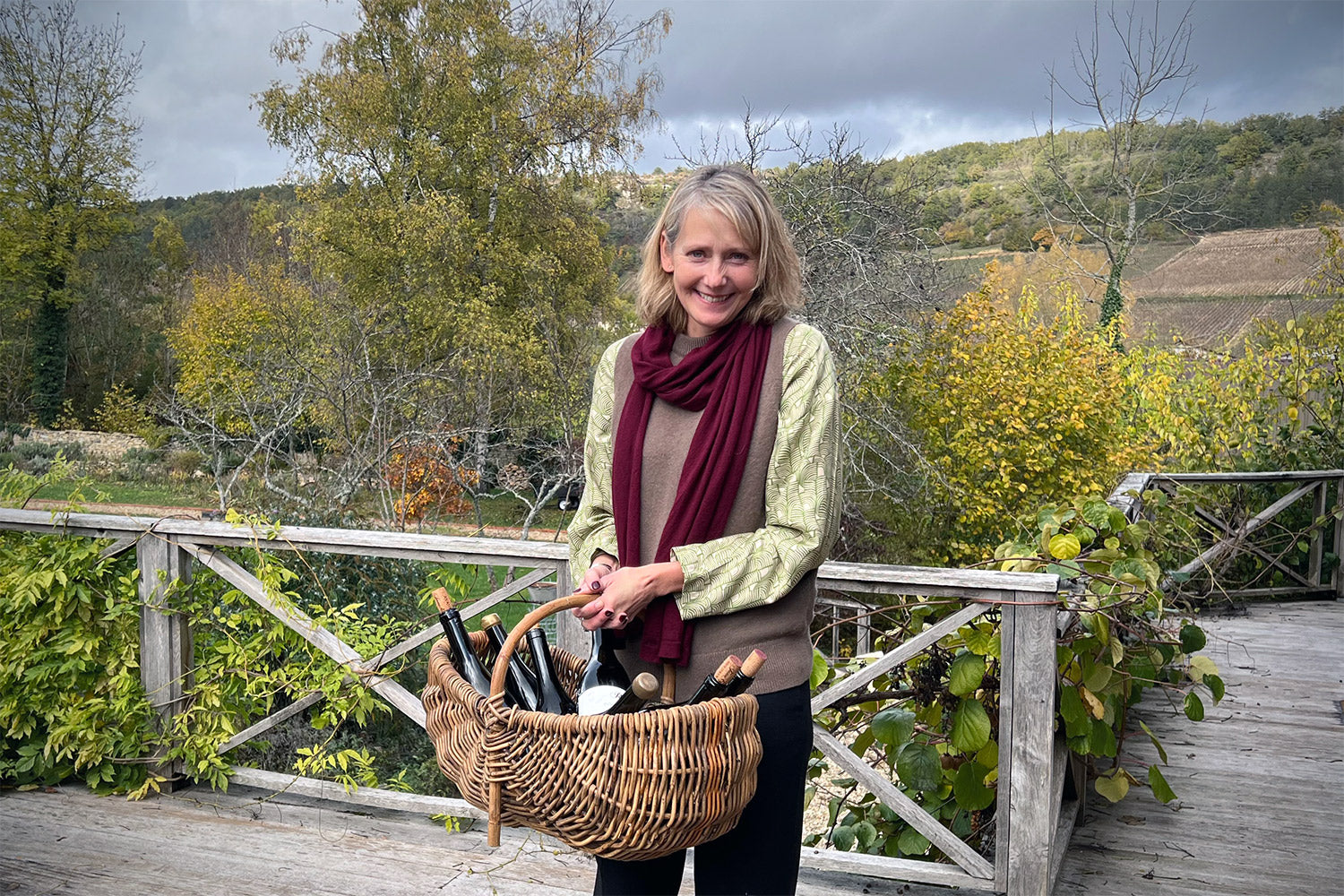
Who is Jane Eyre and why should I trust them with a premier cru Volnay?
Jane Eyre is a small Burgundian domaine with a deliberately understated profile — allocations are limited and the wines are sought out by those in the know rather than shouted from the rooftops. Their approach in both vineyard and cellar is hands-off, prioritising site expression over any imposed house style. The wines speak for themselves, which in Burgundy is the highest possible recommendation.
Explore related wines


What are you looking for tonight? Tell me the occasion, a grape, a region — or just try a suggestion below.
Your recommendations will appear here.
-
-
Speak to one of our Wine Gurus
Speak to a Wine GuruWith years of experience, our team can help you with all your wine buying and selling needs