

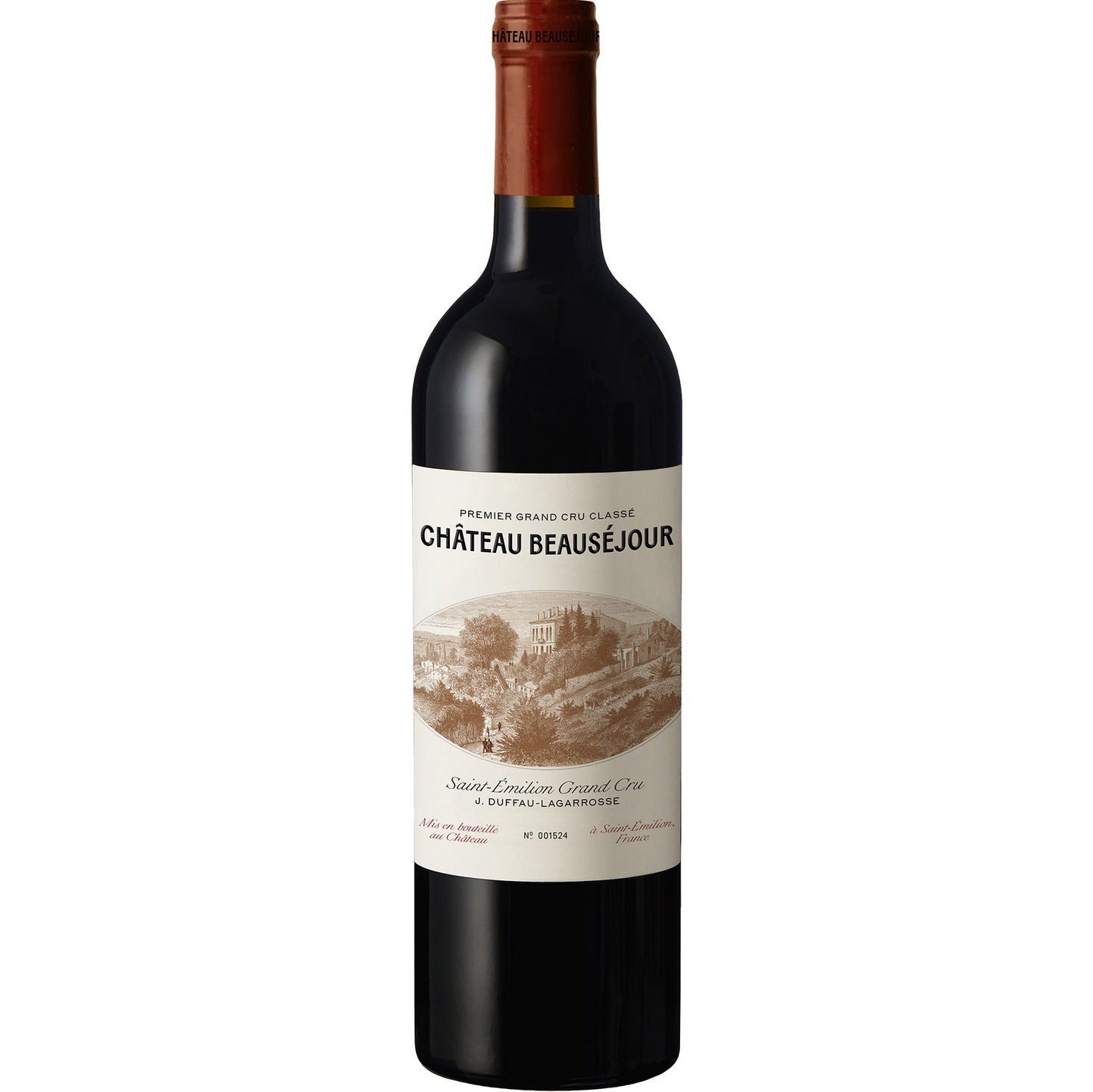
Château Beauséjour, 2025 - Magnum
Château Beauséjour, 2025 - Magnum
- 150cl
- 13.5%
- Red Still
- Merlot, Cabernet Franc
Please note, en primeur wines are not available for delivery until they arrive in the UK
Couldn't load pickup availability
Enquire about this item
Est. delivery in 2028.
Château Beauséjour represents Saint-Émilion at its most serious and cellar-worthy. This Right Bank estate crafts wines that marry the plush fruit of Merlot with the structure and longevity that made Bordeaux famous, creating bottles that reward patience with layers of complexity.
What the critics say:
"Smoky depths, crushed rocks, wet stones, pumice, just delicious and gets better and better the longer it spends in the glass. This is a limestone masterclass, so precise, so tense in a carved and momentum-filled way. Saffron, blueberry, crushed raspberry, wet stones, rose petals, chalk. Feel really energised from tasting it, totally harnessing the power of the year without being overtaken by it. Harvest September 8 to 19. 55% new oak for ageing."
"What a brilliant wine in 2025 – a very true, very authentic and very hands-off wine while delivering superb freshness and vitality. Rose petals with such a floral fragrance, really crystalline and pure with peonies and violets alongside strawberry and red cherry. Softly chewy, immediately really quite fun and friendly in the mouth – purity is the focus here with such clarity and crystalline juiciness. Lightly presented with no muscle or heft, it’s all about the delicacy and freshness. Very limestone but not overly tense. Vibrant but not with citrus acidity. I love the gentleness with salty stones and velvety, powdery tannins on the finish. Juicy, clean, focused and lovely with a very soft chew that emerges after a few minutes. More Merlot now goes into the second wine with the goal of 30% Cabernet Franc in this wine. 3.39pH. A yield of 39hl/ha. Ageing in 55% new oak and the rest one-year-old barrels."
"A blend of 69% Merlot and 31% Cabernet Franc, the 2025 Beauséjour (Duffau Lagarrosse) unwinds in the glass with notes of violets and sweet wild berries, displaying lovely purity and integration. Medium- to full-bodied, concentrated and layered, with bright acids, ripe tannins and a penetrating finish, it's Joséphine Duffau Lagarrosse's most accomplished wine to date, showing just what this exceptional limestone terroir is capable of."
The vineyards sit on the limestone plateau and slopes of Saint-Émilion, where clay-limestone soils provide excellent drainage whilst retaining enough moisture for the vines. The elevated position captures morning sun whilst benefiting from cooling afternoon breezes. This combination of limestone bedrock and clay topsoil creates wines with both power and elegance, giving structure to the Merlot whilst allowing Cabernet Franc to add aromatic complexity.
Saint-Émilion is Bordeaux's most historic wine region, with vineyards dating back to Roman times. Unlike the Left Bank's gravel focus, Saint-Émilion's limestone and clay soils favour Merlot-based blends that offer more immediate charm but can age just as gracefully. The appellation's classification system, revised regularly, ensures quality remains high. Saint-Émilion wines typically show more fruit-forward character than their Médoc counterparts whilst maintaining the structure that defines great Bordeaux.
The 2025 Bordeaux vintage emerged from one of the most demanding growing seasons in recent memory — the earliest budbreak since 1989, June temperatures second only to 2003 since records began, and an unusually early harvest beginning in August for the whites. Conditions that should have produced heavy, overripe wines. They didn't. Decanter's Georgie Hindle, who tasted close to 200 wines ahead of the formal campaign, describes "exceptional concentration, aromatic purity and a freshness that contradicts the record-breaking heat.
The early critical consensus places 2025 stylistically between the precision of 2020 and the structure of 2016, with the brightness of 2023 — a combination that suggests a very serious vintage indeed. Yields are dramatically low, the smallest crop since 1991, with production across the Gironde running around 15% below the five-year average. The quality is here. There simply isn't very much of it.

OUR GROWERS
Château Beauséjour


