

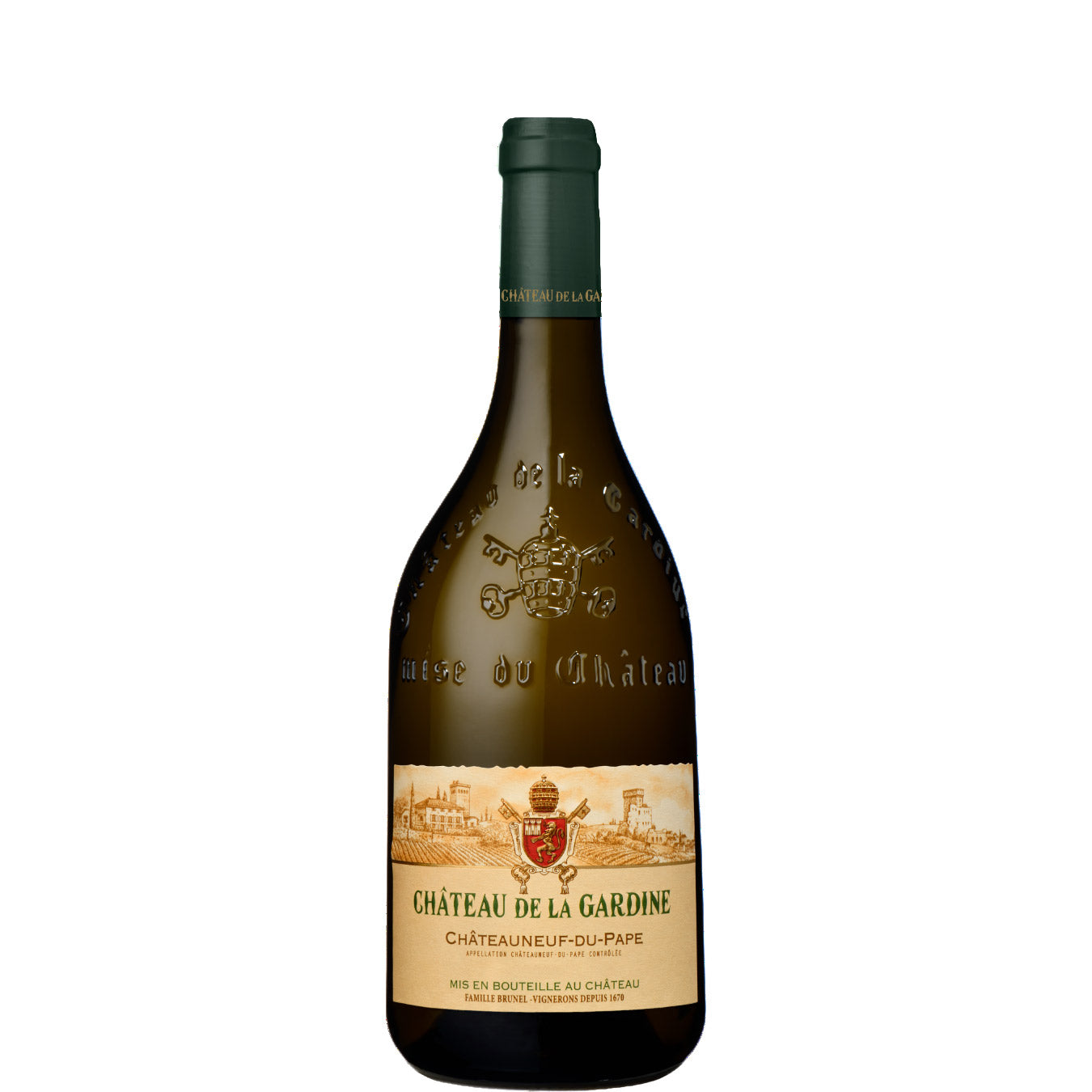
Château De La Gardine, Châteauneuf-Du-Pape Cuvée Tradition Blanc, 2021
Château De La Gardine, Châteauneuf-Du-Pape Cuvée Tradition Blanc, 2021
- 75cl
- 14%
- White Still
- Grenache Blanc, Clairette, Roussanne, Bourboulenc
Couldn't load pickup availability

Optimal drinking window: 2026 - 2032
White Châteauneuf is one of the Southern Rhône's best-kept secrets, and Gardine's Cuvée Tradition is a fine reason to pay attention. The Brunel family have been farming this estate since 1945, and their white is a blend of Grenache Blanc, Clairette, Roussanne, and Bourboulenc — the classic Southern Rhône white cast — picked from old vines on the plateau's famous galets roulés, those smooth, heat-retaining pebbles that define so much of what makes this appellation tick.
The 2021 is generous without being heavy: ripe stone fruit and white flowers, a waxy, almost lanolin texture from the Roussanne, and enough freshness to keep it honest. Serve it cold enough to feel refreshing but not so cold you lose that lovely roundness — think 12°C and rising in the glass.
Right now, in 2026, the 2021 is in a very approachable place — the primary fruit is expressive and the texture has knitted together nicely. Over the next two to three years, the Roussanne will add more complexity, pushing towards honey, beeswax, and toasted almond notes as the wine fills out. By around 2028-2029 it should be at its peak, showing both richness and freshness in good balance. After 2030, the freshness will begin to soften and the wine may start to feel a little flat; drinking it before 2032 is the sensible play.
Tasting Notes
AppearancePale gold with a faint green tint, clear and luminous in the glass.
NoseWhite peach, dried apricot, and acacia blossom upfront, with a subtle waxy, almost honeyed quality from the Roussanne. There's a faint herbal lift — dried garrigue, a touch of fennel seed — that roots it firmly in the Southern Rhône.
PalateMedium to full in body, with a rich, slightly oily texture that coats the palate generously. The Clairette and Bourboulenc bring a citrus edge — preserved lemon, grapefruit pith — that cuts through the richness and keeps the wine from feeling heavy. Good length, with a saline, mineral undercurrent running through the finish.
FinishWarm, lingering, and faintly floral, with a pleasing grip of acidity on the very end.
Overall impressionA textured, genuinely satisfying white Châteauneuf that earns its place at the table.
Food Pairings
In the Southern Rhône, this style of white would be poured alongside brandade de morue — the silky Provençal salt cod and olive oil purée that matches the wine's richness perfectly. Locally caught river fish, simply grilled and dressed with herbs and good olive oil, is another natural companion. The wine's weight also makes it well suited to richer preparations: a cream-sauced chicken with tarragon, a gratin dauphinois, or aged goat's cheese from nearby Banon. In summer, the locals might open it alongside a spread of tapenade, anchoïade, and crudités — the wine's saline mineral quality doing excellent work against all that salt and olive oil.
We think this wine would go well with
Serve at around 12-13°C — cold enough to feel crisp on arrival, but give it ten minutes in the glass and the texture will open up considerably. No need to decant, though pouring it thirty minutes before you sit down does no harm at all. A wide-bowled white wine glass works well here: the Roussanne in particular benefits from a little air to release its waxy, floral character.
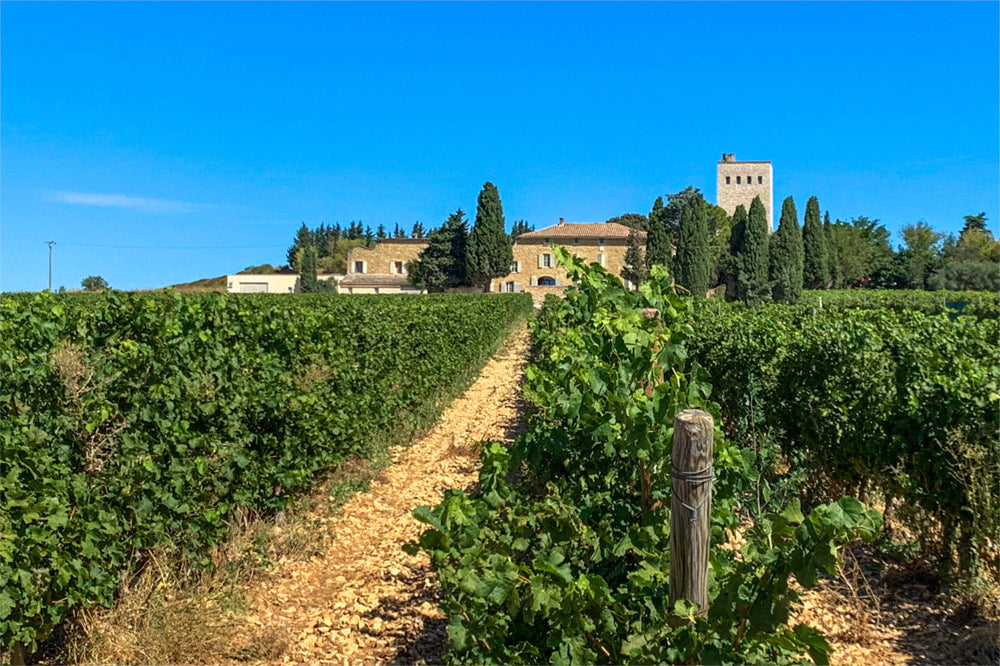
La Gardine's vineyards sit on the plateau north-west of Châteauneuf-du-Pape village, where the soils are characterised by galets roulés — large, smooth, sun-warmed pebbles over sandy clay — which retain heat through the night and promote even ripening. The elevation and exposure to the Mistral wind help temper the Southern Rhône's intense summer heat, preserving aromatic freshness in the whites that might otherwise be baked away. The combination of warmth, drainage, and that steady dry wind is what gives Châteauneuf whites their particular richness-with-lift character.
Châteauneuf-du-Pape is one of France's most famous and strictly governed appellations, with the highest minimum alcohol requirement in France (12.5% minimum, though most wines land considerably higher) and rules governing everything from permitted varieties to vine training. White Châteauneuf accounts for only around 6-7% of production, which makes it something of a rarity, but it can be extraordinary — rich, textured, and long-lived in the best examples. Compared to white Rhône neighbours like Hermitage or Crozes-Hermitage, the style tends to be broader and more opulent, trading some of the northern Rhône's cool-climate precision for a sun-soaked generosity all of its own.
The 2021 Rhône had drama written all over it from the start. Spring frost knocked back yields across the valley, followed by a wet summer that kept growers on edge about disease pressure. When September finally arrived with warm, dry weather, those who'd managed their vineyards carefully through the challenging months found themselves with concentrated, healthy fruit that ripened beautifully in the sunshine.
What emerged defied the difficult growing season: wines with real energy and freshness, particularly impressive in the Northern Rhône where Syrah shows lovely spice and pepper alongside its dark fruit. The Southern Rhône produced Châteauneuf-du-Papes and Côtes du Rhônes with more restraint than the blockbuster years, but we rather like that - there's a liveliness here that makes them brilliant with food. The reds are drinking well now and will continue to develop until 2030 or beyond for the best cuvées, while the whites - often overlooked but particularly successful this year - are singing right now.
FAQs
What does this white Châteauneuf taste like?
Rich and textured, with white peach, dried apricot, and a waxy, almost honeyed quality from the Roussanne. There's a citrus edge and a saline mineral thread that keeps the wine fresh despite its weight.
When should I drink this wine?
It's drinking very well now and will continue to do so until around 2032. The sweet spot is probably 2026 to 2029, when the richness and freshness are in their best balance.
What food should I serve it with?
It's a natural partner for rich, savoury dishes: brandade de morue, cream-sauced chicken, grilled river fish with herbs, or aged goat's cheese. The wine's texture means it can handle food that would flatten a lighter white.
How should I serve it?
Start at around 12-13°C and let it warm slightly in the glass. A wide-bowled white wine glass works best, and there's no need to decant — though giving it half an hour before you pour doesn't hurt.
Is white Châteauneuf-du-Pape worth cellaring?
Good examples can be, yes. This Cuvée Tradition is built more for pleasure than for the long haul, but it will repay three to four more years in the cellar. If you want serious cellaring potential, look to the more premium cuvées from Gardine or to estates like Château Rayas.
What makes this different from white Burgundy or white Bordeaux?
It's broader and more opulent than either. Where Burgundy offers precision and Bordeaux offers structure, white Châteauneuf brings warmth, texture, and a distinctly Southern character — garrigue, stone fruit, and that characteristic waxy richness from Roussanne. A different proposition entirely, and a very good one.
Explore related wines


What are you looking for tonight? Tell me the occasion, a grape, a region — or just try a suggestion below.
Your recommendations will appear here.
-
-
Speak to one of our Wine Gurus
Speak to a Wine GuruWith years of experience, our team can help you with all your wine buying and selling needs