

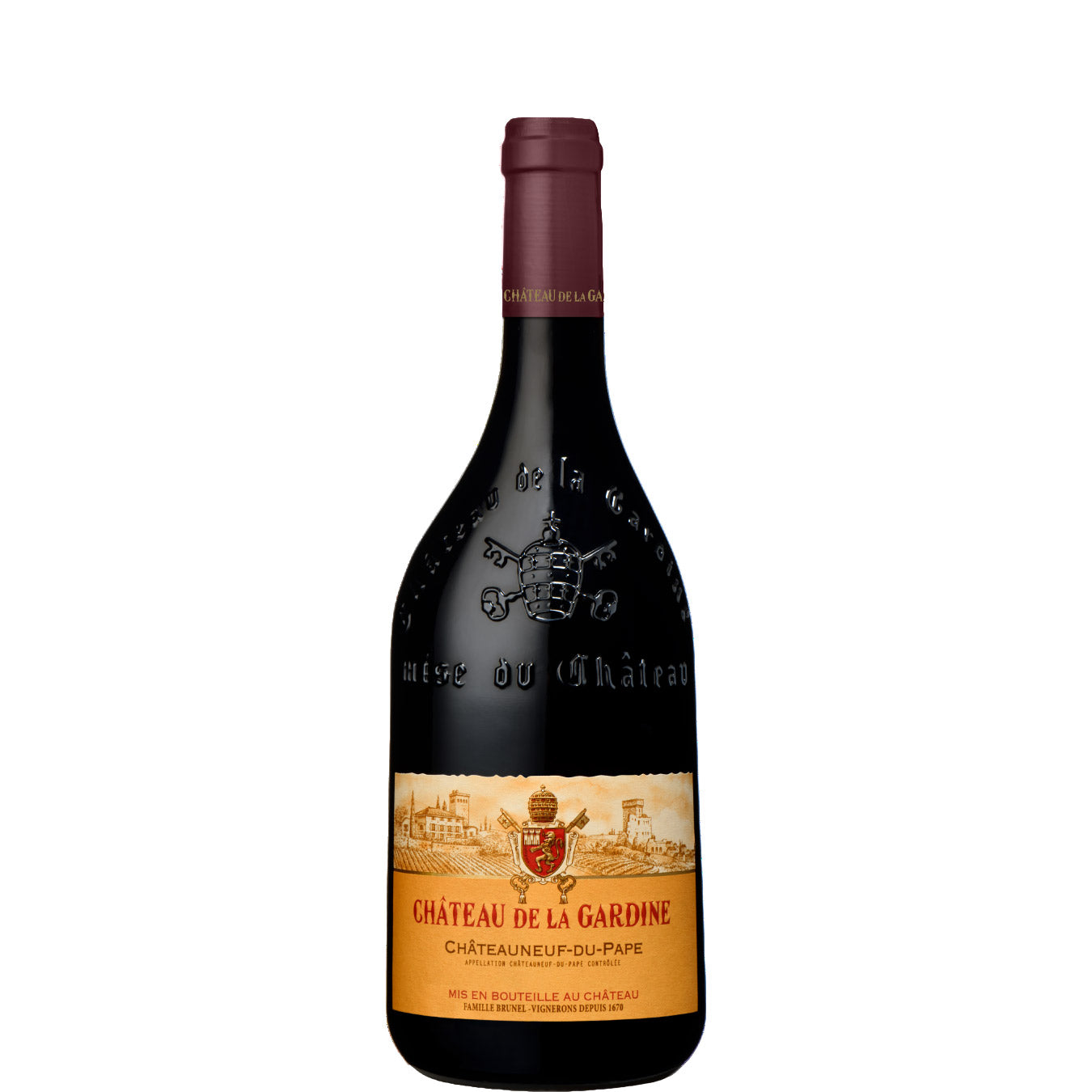
Château De La Gardine, Châteauneuf-Du-Pape Rouge, 2022
Château De La Gardine, Châteauneuf-Du-Pape Rouge, 2022
- 75cl
- 15%
- Red Still
- Grenache, Syrah, Mourvèdre
Couldn't load pickup availability

Optimal drinking window: 2026 - 2038
Châteauneuf-du-Pape is one of the southern Rhône's great names, and La Gardine is one of its most dependable estates. This 2022 rouge is built around Grenache — as almost all serious Châteauneuf is — with Syrah and Mourvèdre adding structure and a darker, more savoury edge. The vintage was warm and generous, producing wines with real depth and flesh. This has the ripe, sun-soaked character you'd expect from that year, but there's enough freshness and grip to keep it honest.
We find it drinking very well already: dark cherry, wild herbs, and something almost meaty on the nose, then a broad, warmly structured palate that finishes with spice and dusty mineral bite.
Right now, the 2022 is in a generous, open phase — the fruit is ripe and expressive, the tannins well-integrated, and it needs nothing more than a good decant to show its best. Over the next two to three years the wine will tighten slightly as the fruit begins to knit with the structure, and patience will be rewarded from around 2028 onwards as secondary notes of leather, dried fig, and earth start to emerge. The plateau of peak drinking runs comfortably to 2036 or 2037. Beyond that, the fruit will begin to recede and the wine will start to live on structure alone — perfectly drinkable, but the generosity that defines this vintage will have faded.
What the critics say:
"Black cherry compote, thyme, licorice and ripe strawberry set the stage for the 2022 Châteauneuf-du-Pape, a full-bodied and tightly structured red that requires at last three more years to come together."
Tasting Notes
AppearanceDeep ruby-garnet with good density and a clean, slightly brick-tinged rim.
NoseDark cherry and dried plum lead, with wild herbs, lavender, and a savoury undercurrent of roasted meat and crushed peppercorn. There's a faint smokiness that lifts with air, and the whole thing smells unmistakably southern and sun-baked.
PalateFull-bodied and warm, with ripe tannins that are plush rather than grippy and a mid-palate that has real generosity to it. The fruit is dark and concentrated — cherry turning towards black olive and fig — with a mineral, stony edge on the back palate that stops it becoming heavy.
FinishLong and spiced, with dried herbs and a dusty, garrigue-tinged persistence that lingers well after the glass is empty.
Overall impressionA classic, generous Châteauneuf built for the table — and honest about what it is.
Food Pairings
In the southern Rhône, this kind of wine is made to go with food, and the locals know exactly what to do with it. A slow-braised daube of beef, cooked with olives and orange peel, is the canonical pairing — the fat from the meat meeting the tannin of the wine with perfect logic. Grilled lamb with herbes de Provence is another natural match, the garrigue in the wine mirroring the herbs on the grill. A roast duck or guinea fowl with thyme jus would work equally well, as would a generous plateau of aged Provençal cheeses at the end of a long lunch. Truffle-based dishes — a simple omelette, or pasta with shaved black truffle — find a particularly sympathetic partner in Grenache-heavy Châteauneuf.
We think this wine would go well with
Serve at around 17°C — any warmer and the alcohol starts to dominate. We'd decant this for at least 45 minutes; the 2022 vintage has good structure that opens up meaningfully with air, and the nose rewards patience. A large-bowled Burgundy-style glass works best here, giving the aromatic complexity room to develop and concentrate rather than blowing off too quickly in a small glass.
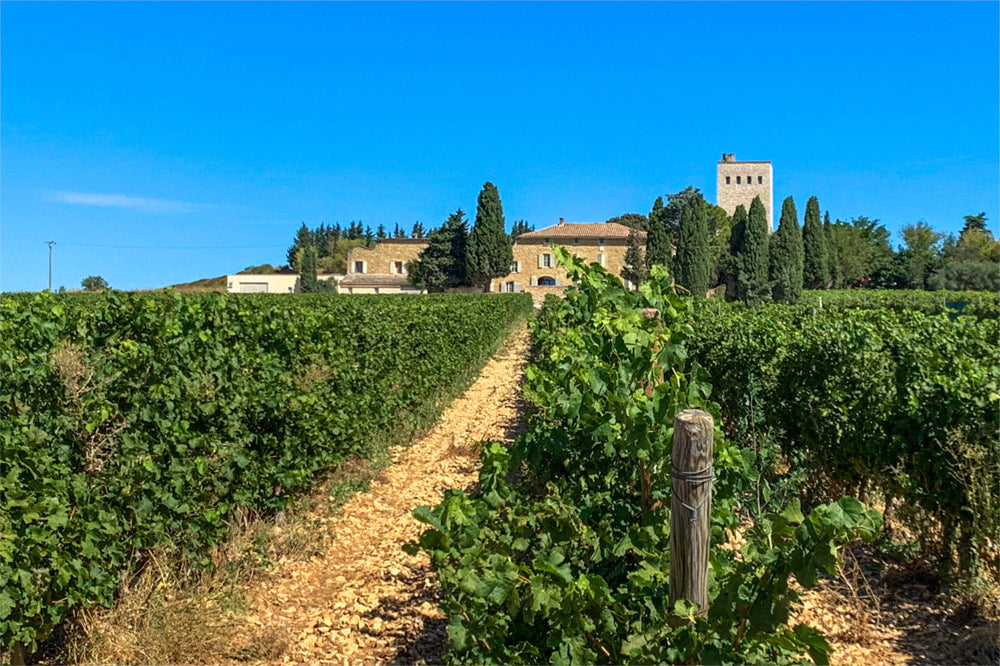
La Gardine's vineyards sit across several distinct parcels within the Châteauneuf-du-Pape appellation, with soils ranging from the iconic large rounded galets roulés — heat-retaining quartzite stones that help ripen Grenache deeply and evenly — to sandy soils and clay-limestone beneath. Altitude within the appellation is relatively modest, but the consistent Mistral wind is crucial, keeping the vines dry and healthy and intensifying fruit concentration. The combination of heat, stony soils, and that drying wind gives the wines their characteristic warmth, grip, and aromatic intensity.
Châteauneuf-du-Pape is the southern Rhône's flagship red appellation, sitting between Orange and Avignon on a raised plateau of ancient alluvial stones. It permits 13 grape varieties — though Grenache dominates the vast majority of blends — and requires a minimum alcohol of 12.5%, though in practice most wines come in considerably higher. Compared to neighbours like Gigondas or Vacqueyras, Châteauneuf tends to be fuller-bodied and more age-worthy, with a broader international reputation and prices to match. It is also one of the few appellations in France where you'll find serious white wine made alongside the reds.
The 2022 growing season in the Rhône started promisingly before delivering one of those vintages that separates the wheat from the chaff. A warm, dry summer tested vine health and vineyard management across both north and south, with August heat pushing some sites to their limits. The harvest came early but remained manageable for growers who kept their nerve, though yields dropped significantly in many appellations.
What emerged feels concentrated rather than cooked, with Syrah from the northern Rhône showing particular poise despite the challenging conditions. The southern appellations produced Grenache-based blends with real intensity and structure, though we're finding the best examples needed careful selection in the cellar. These wines are drinking well now but the stronger examples will reward patience until 2028. Not a vintage for the history books, but one that rewards knowing your producers.
FAQs
What does this wine taste like?
Dark cherry, dried plum, and wild herbs on the nose, with a full, warm palate of concentrated fruit, roasted meat, and a long spiced finish with a stony mineral edge. It is rich and generous without being heavy.
When should I drink this wine?
It is drinking well now and doesn't need more time in the cellar. That said, if you can hold it until 2028 to 2030, you'll see additional complexity emerge. The drinking window runs comfortably until 2038.
What food should I pair it with?
Think slow-cooked, rich, herb-scented dishes. Braised lamb or beef, roast duck with thyme, grilled meats with herbes de Provence, or aged hard cheeses. Truffle-based dishes are a particular highlight with Grenache-dominant Châteauneuf.
Should I decant this wine?
Yes, and it is worth doing. Forty-five minutes to an hour in a decanter makes a real difference, opening up the aromatic complexity and softening any residual grip on the tannins. Serve in a large-bowled glass at around 17°C.
Is this wine worth cellaring?
Absolutely, though it is already very approachable. The 2022 vintage in Châteauneuf was warm and generous, producing wines with real concentration. Holding a bottle or two until 2028 onwards will reveal more complexity and depth as the wine knits together.
How does La Gardine compare to other Châteauneuf producers?
La Gardine sits firmly in the reliable, quality-conscious tier of the appellation. It doesn't carry the cult status of Rayas or Beaucastel, but it consistently delivers well-made, characterful Châteauneuf at a fair price point. Think of it as the serious everyday drinker from a prestigious address.


What are you looking for tonight? Tell me the occasion, a grape, a region — or just try a suggestion below.
Your recommendations will appear here.

-
-
Speak to one of our Wine Gurus
Speak to a Wine GuruWith years of experience, our team can help you with all your wine buying and selling needs