

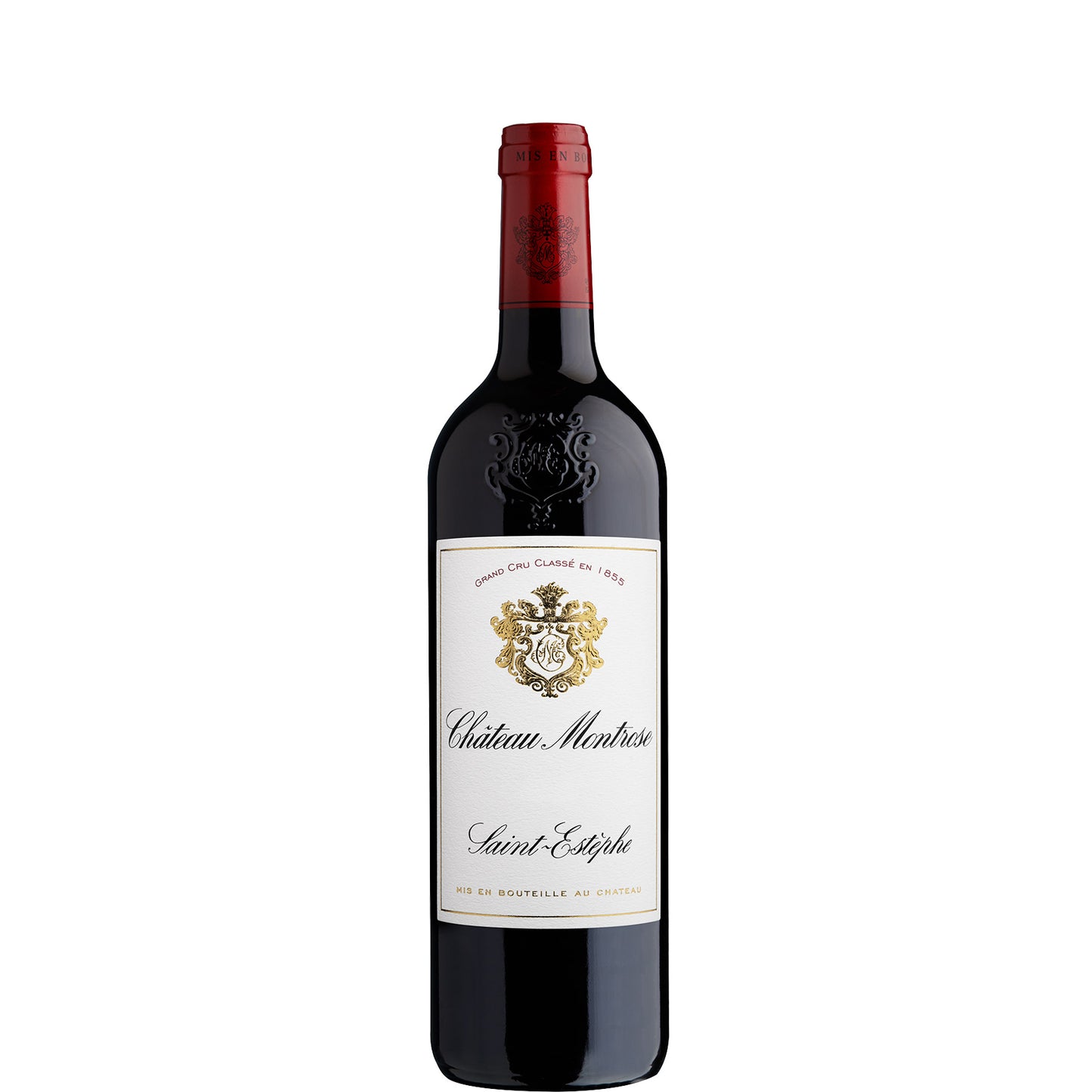
Château Montrose, 2025
Château Montrose, 2025
- 75cl
- 13.5%
- Red Still
- Cabernet Sauvignon, Merlot, Cabernet Franc, Petit Verdot
Please note, en primeur wines are not available for delivery until they arrive in the UK
Couldn't load pickup availability

Optimal drinking window: 2035 - 2065
Est. delivery in 2028
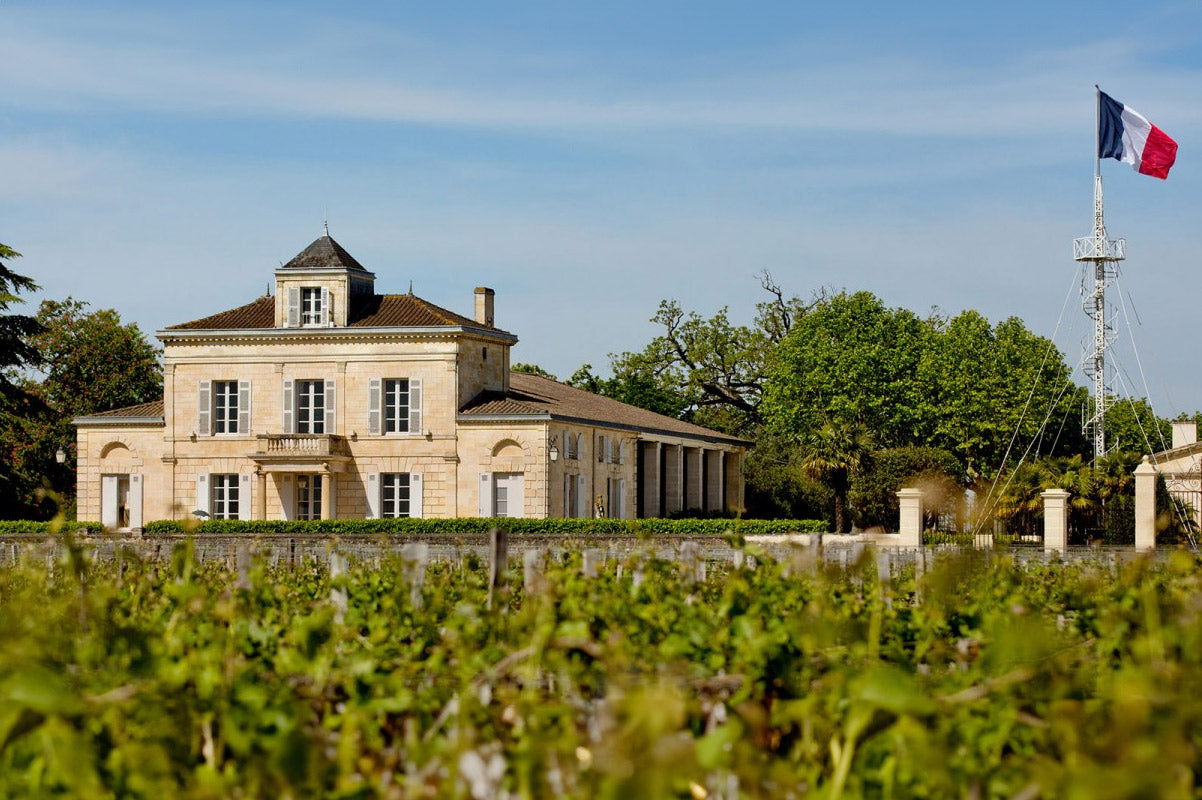
Château Montrose sits like a fortress above the Gironde estuary, making some of Saint-Estèphe's most powerful and long-lived wines. This second-growth Médoc property creates a classically built Bordeaux from gravelly soils overlooking the Gironde estuary, blending predominantly Cabernet Sauvignon with Merlot and smaller portions of Cabernet Franc and Petit Verdot.
What the critics say:
"Deep dark ruby garnet, opaque core, violet reflections, delicate edge brightening. Candied violets, scent of roses, fine cassis, incredibly seductive, delicate notes of precious wood, underlaid with black forest berries. Complex, full-bodied, highly elegant, freshly structured, ripe, supporting tannins, blackberries, nougat and cherries on the finish, lingers for a long time, sure maturity potential."
"A timeless classic in the making, the 2025 Montrose unfurls in the glass with notes of dark berries, black truffle, burning embers and violets, gaining in range and detail with aeration. Full-bodied, dense and elegantly muscular, it's layered and multidimensional, with a prodigiously concentrated core of fruit, exceptional quality of tannin and a long, resonant finish. The 2025 is a blend of 77% Cabernet Sauvignon, 19% Merlot and 4% Cabernet Franc, derived exclusively from the estate's historic core on the fourth terrace situated just in front of the château itself. With a pH of 3.65 and 13.4% alcohol, it remains classically balanced despite its impressive power and intensity. Readers will have a fascinating time parsing the nuances of style and quality between the 2025, 2023 and 2022 over the decades to come!"
"The 2025 Montrose only comes from the Terrace IV, as has been the way since the 2023 vintage. It was picked from August 29 and finished not until September 20, so quite a long harvest, 16 days of picking between those dates. This vintage is matured in 60% new oak. This has another very intense nose with a potent graphite element that infuses the black fruit, beautifully defined but unapologetically classical in style. Wow. The purity of fruit is exceptional. The palate is medium-bodied with supple, very chiselled tannins, exquisite black fruit loaded with minéralité. So much freshness and vibrancy, gentle but insistent grip, very precise and refined on the finish, this is a Montrose that will rank as one for the ages. Wow (again)."
"Cherries, cedar, Cuban cigar wrappers, blackberries, flowers, smoke and black raspberries provide the aromatic nuances. The palate is even better. Concentrated, deep, dark, and energetic, there is a sophisticated, lushness that delivers its regal tendencies while coating your mouth and palate with multiple layers of supple, rich, waves of black fruits, spice, and chocolate. Montrose is on quite the run. Just when you think they cannot produce a better wine, they come out with the 2025! This is the third vintage produced entirely from vines planted in Terrasse 4. The wine blends 77% Cabernet Sauvignon, 19% Merlot, and 4% Cabernet Franc. 13.4% ABV, pH 3.65 pH. Harvesting took place August 29 - September 20. This is the earliest start to harvest in the history in the history of the estate. Yields were 30 hectoliters per hectare. Drink from 2032-2070."
The vineyards sit on a plateau of deep Garonne gravel over clay and limestone subsoils, gently sloping toward the Gironde estuary. The proximity to the estuary is critical: it moderates temperature extremes, reducing frost risk in spring and extending the ripening season into autumn. The clay beneath the gravel retains moisture, which proved particularly valuable in drier recent vintages. This combination of drainage, water retention, and thermal moderation is what gives Montrose wines their unusual combination of power and mineral precision.
Saint-Estèphe is the northernmost of the four great Médoc communes, and the one that most winemakers describe as the most distinctive. Its soils contain more clay than Pauillac or Margaux, which tends to produce wines with deeper colour, firmer tannins, and a particular mineral, almost saline edge that sets them apart. The commune encompasses five classified growths, but it is perhaps best understood through contrast: where Pauillac can be magisterial and Margaux perfumed, Saint-Estèphe is the stoic one — wines that reward patience above almost all else.
The 2025 Bordeaux vintage emerged from one of the most demanding growing seasons in recent memory — the earliest budbreak since 1989, June temperatures second only to 2003 since records began, and an unusually early harvest beginning in August for the whites. Conditions that should have produced heavy, overripe wines. They didn't. Decanter's Georgie Hindle, who tasted close to 200 wines ahead of the formal campaign, describes "exceptional concentration, aromatic purity and a freshness that contradicts the record-breaking heat.
The early critical consensus places 2025 stylistically between the precision of 2020 and the structure of 2016, with the brightness of 2023 — a combination that suggests a very serious vintage indeed. Yields are dramatically low, the smallest crop since 1991, with production across the Gironde running around 15% below the five-year average. The quality is here. There simply isn't very much of it.
OUR GROWERS
Château Montrose
Explore related wines


-
-
Speak to one of our Wine Gurus
Speak to a Wine GuruWith years of experience, our team can help you with all your wine buying and selling needs