

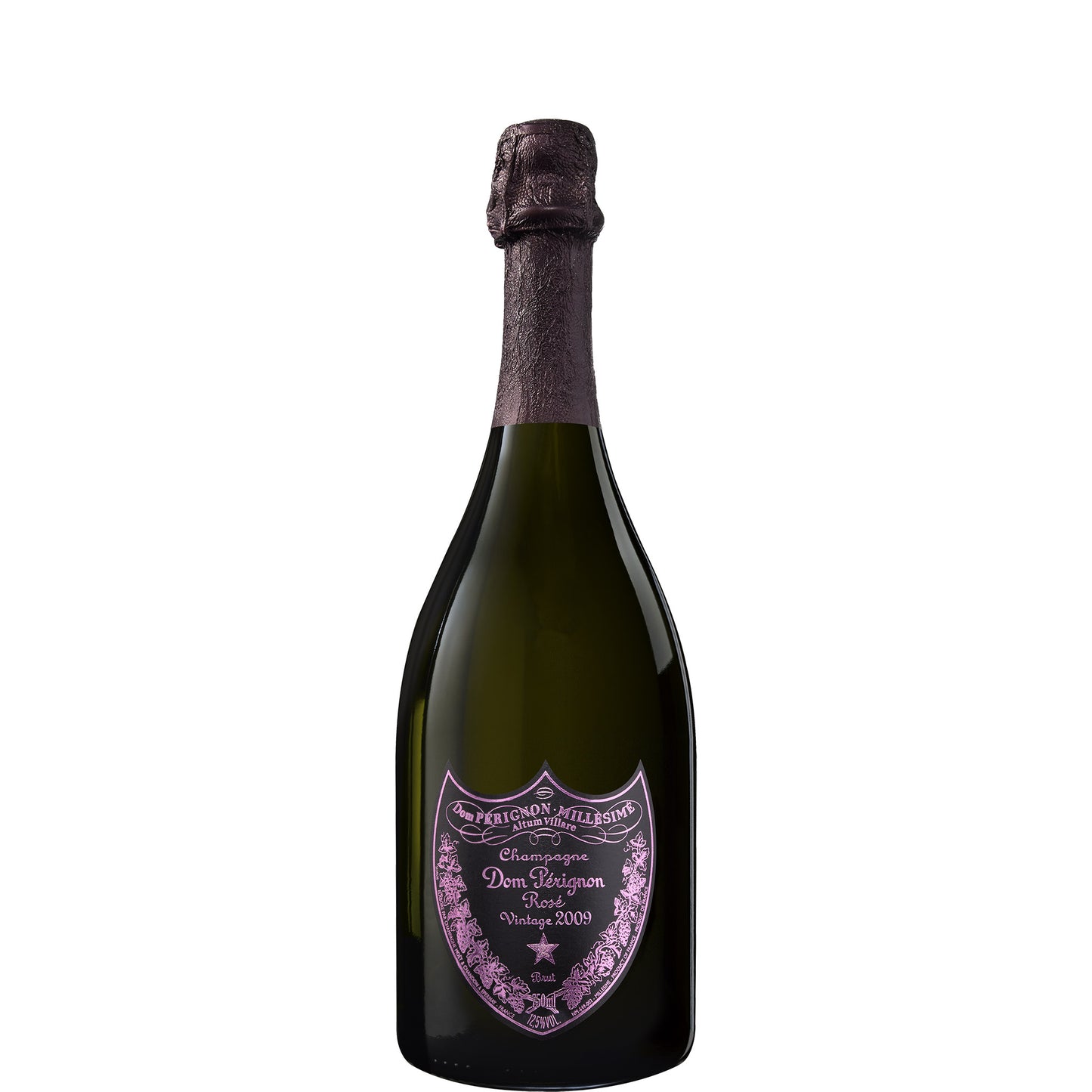
Dom Pérignon, Rosé, 2009
Dom Pérignon, Rosé, 2009
- 75cl
- 12.5%
- Rosé Sparkling
- Pinot Noir, Chardonnay
Couldn't load pickup availability

Optimal drinking window: Now - 2036
Dom Pérignon Rosé 2009 is a magnificent expression of prestige rosé Champagne, showcasing the house's dedication to elegance, intensity, and harmony. Crafted from a blend of Pinot Noir and Chardonnay, this vintage benefits from an exceptional growing season in 2009, marked by warm weather and a generous harvest.
This rosé is a perfect accompaniment to dishes like duck breast, lobster, or creamy cheeses. While already displaying impressive complexity, it has the structure and depth to age gracefully for decades, rewarding patience with even greater refinement and nuance.
At seventeen years old, this 2009 is entering its most expressive phase, where primary fruit has integrated beautifully with secondary complexity from lees ageing. The generous 2009 vintage gives this wine remarkable staying power, and it should continue drinking superbly until 2035 or beyond. Over the next decade, expect the fruit to become more nuanced whilst the creamy, brioche-like notes become more pronounced. The wine's natural acidity and careful winemaking mean it won't peak for several years yet. By 2030, this should be showing even greater harmony between fruit, structure, and age-derived complexity.
What the critics say:
"The 2009 Dom Pérignon Rosé marks a return to a richer style of Rosé following the more ethereal 2008 Rosé. Sweet red cherry, blood orange, spice and pomegranate all build in a creamy, sensual DP Rosé that hits all the right spots. Over the last few years, Chef de Caves Vincent Chaperon and his team have lowered the still Pinot portion of the Rosé down to about 10% from a high of 28% or so, reached around 2004 and 2005. In 2009, the Rosé gains considerable textural presence from the generosity of the year. It is a superb Champagne. I preferred it to the 2008, which was also part of this tasting."
"Peaches, fresh crushed strawberries and roses on the nose. Full-bodied and generous. Fine tannins that frame the wine beautifully and set it up for a fresh finish. Some fruit tea and cedar undertones. Enticing finish with hints of bitterness. Savory. Drink or hold."
Tasting Notes
AppearancePale salmon pink with persistent, fine mousse and a golden rim that hints at maturity.
NoseRed cherry and blood orange leap from the glass, followed by rose petals and warm spice. There's a creamy richness underneath, with hints of brioche and toasted almonds from the lengthy lees ageing. The fruit remains vibrant despite seventeen years of age.
PalateFull-bodied and generous, this shows the warmth of the 2009 vintage beautifully. Sweet strawberry and pomegranate flavours are lifted by perfect acidity, whilst fine tannins from the Pinot Noir add structure and grip. Cedar undertones and a hint of savoury bitterness provide complexity without overwhelming the fruit.
FinishLong and enticing, with fruit tea nuances and a final flourish of spice and mineral precision.
Overall impressionThis is Dom Pérignon Rosé at its most seductive, combining the house's signature elegance with the generosity of a great vintage.
Food Pairings
In Champagne, locals would pair this with coq au Champagne, where chicken is braised in the region's own wine, or andouillettes de Troyes, the region's famous tripe sausages. Wild game like sanglier (wild boar) or venison appears frequently on Champagne tables, especially during autumn hunting season. The region's proximity to the Ardennes means rich, earthy flavours dominate local cuisine. A plateau de fromages featuring aged Chaource and Langres would be a classic ending to any Champagne meal, the creamy, pungent cheeses providing a perfect counterpoint to the wine's acidity.
We think this wine would go well with
Serve at 8-10°C in proper Champagne flutes to preserve the mousse and concentrate the aromatics. No need to decant, but do allow fifteen minutes in the glass for the wine to open fully. The complex aromatics reward a slightly warmer serving temperature than younger Champagnes. Store bottles horizontally in a cool, dark place, and avoid temperature fluctuations that can disturb the delicate balance.
Dom Pérignon's vineyards span seventeen villages across Champagne's finest terroir, all classified as Grand Cru and Premier Cru sites. The chalky soils and cool climate create the tension and minerality that defines the house style. Pinot Noir comes primarily from Ay and Bouzy, bringing structure and red fruit intensity, while Chardonnay from Cramant and Avize provides the backbone of freshness and longevity. This marriage of terroir allows Dom Pérignon to craft Champagnes that age gracefully for decades.
Champagne AOC represents the pinnacle of sparkling wine production, with strict regulations governing everything from grape varieties to pressing methods. Only Chardonnay, Pinot Noir, and Pinot Meunier are permitted, and the méthode champenoise requires a minimum of fifteen months on lees for non-vintage wines. Dom Pérignon goes far beyond these requirements, using only Grand Cru and Premier Cru fruit and ageing for a minimum of eight years. The appellation's chalky soils and cool continental climate create the perfect conditions for wines that balance power with elegance.
The 2009 growing season in Champagne delivered one of those rare gifts that nature occasionally bestows on winemakers: near-perfect conditions from spring through harvest. A warm, dry summer allowed the grapes to ripen beautifully whilst retaining their natural acidity, and the harvest began in late August under gloriously sunny skies. This was textbook Champagne weather, the sort that old-timers nod sagely about whilst younger vignerons wonder if they'll ever see its like again.
What emerged from those sun-drenched vineyards was a vintage of remarkable richness and intensity, particularly for the Pinot Noir, which achieved levels of ripeness that would make Burgundian neighbours envious. The Chardonnay developed gorgeous concentration whilst keeping its spine intact, and even the Pinot Meunier sang with unusual depth and character. We're talking about wines with serious power here, built for the long haul yet surprisingly approachable in their youth. The best 2009 Champagnes are drinking superbly now and will continue rewarding patience until 2030 and beyond.
FAQs
What does Dom Pérignon Rosé 2009 taste like?
Rich and creamy with red cherry, blood orange, and rose petals, balanced by fine tannins and a long, spicy finish. The warmth of the 2009 vintage makes this more generous than usual.
When should I drink this wine?
Perfect now through 2035 and beyond. At seventeen years old, it's hitting its stride beautifully, with primary fruit integrated with complex secondary flavours.
What food pairs well with this Champagne?
Duck breast, lobster, or aged cheeses work brilliantly. The wine's structure and tannins can handle rich, savoury dishes that would overpower lighter Champagnes.
How should I serve Dom Pérignon Rosé?
Serve at 8-10°C in proper flutes and give it fifteen minutes in the glass to open fully. The complex aromatics reward patience and slightly warmer serving than younger Champagnes.
Is this worth cellaring?
Absolutely, though it's drinking beautifully now. The 2009 vintage's natural generosity and Dom Pérignon's winemaking mean this will continue improving for another decade or more.
How does this compare to the white Dom Pérignon?
The Rosé is richer and more textural, with red fruit flavours and gentle tannins from Pinot Noir. It's more food-friendly whilst maintaining the house's signature elegance and ageing potential.

Explore related wines


What are you looking for tonight? Tell me the occasion, a grape, a region — or just try a suggestion below.
Your recommendations will appear here.
-
-
Speak to one of our Wine Gurus
Speak to a Wine GuruWith years of experience, our team can help you with all your wine buying and selling needs