

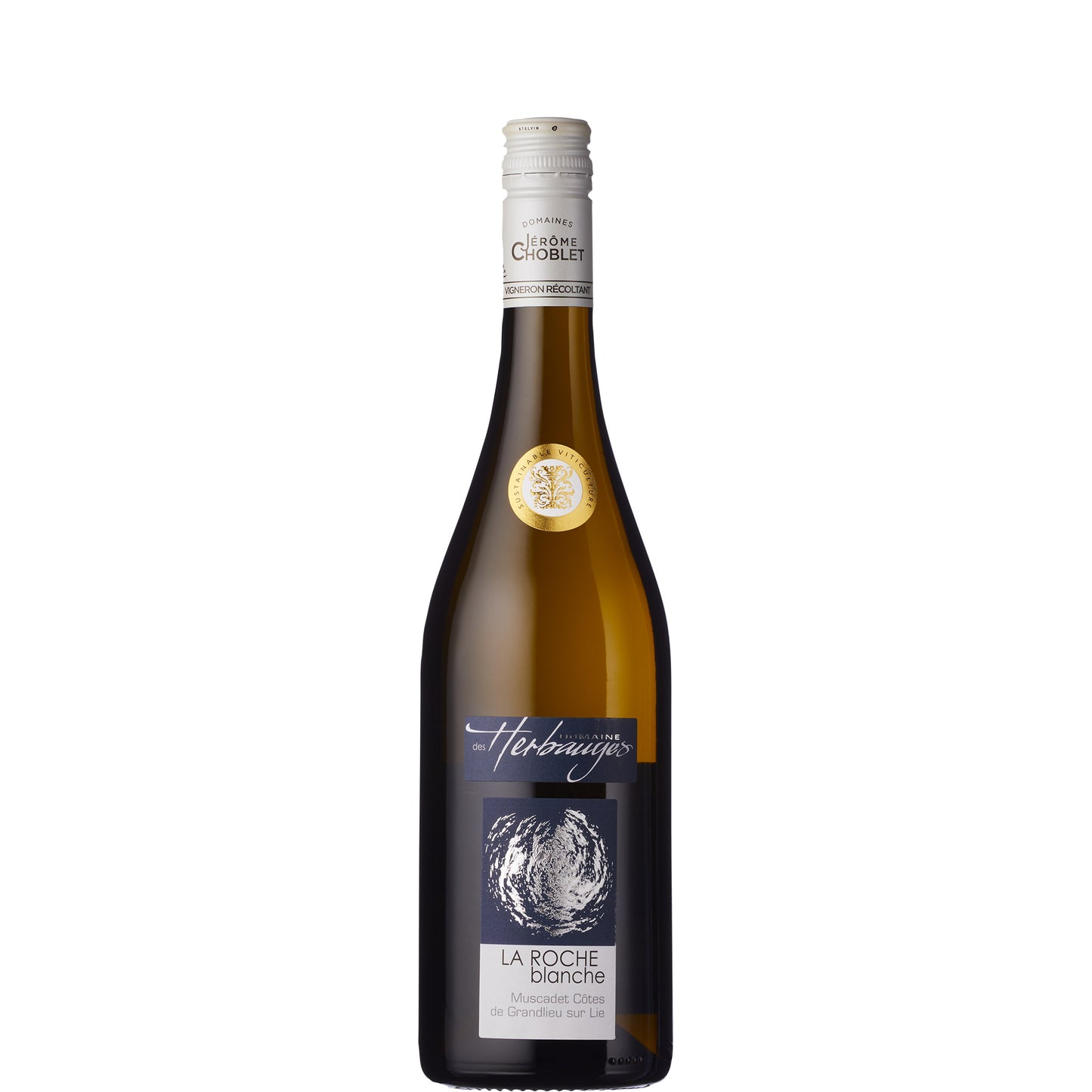
Domaine des Herbauges, Muscadet Sur Lie Côtes de Grandlieu, La Roche Blanche, 2025
Domaine des Herbauges, Muscadet Sur Lie Côtes de Grandlieu, La Roche Blanche, 2025
- 75cl
- 10.5%
- White Still
- Melon de Bourgogne
- Vegetarian
- Vegan
Couldn't load pickup availability

Optimal drinking window: 2026 - 2030
Muscadet gets a bad rap — dismissed as cheap bistro plonk — but the Côtes de Grandlieu is one of the Loire's most interesting sub-appellations, and Domaine des Herbauges is one of its finest advocates. Their La Roche Blanche spends a full year on its lees, which gives the wine a creamy, almost saline weight that sets it apart from the thin, throwaway versions that give the appellation its unfortunate reputation. This is Melon de Bourgogne at its most convincing: taut, mineral, and unmistakably coastal in character.
The 2025 vintage in the Loire was warm but not without freshness, and this wine carries that balance well — there's plenty of citrus bite and oyster-shell salinity, but the lees work rounds it out rather than letting it become austere.
At just a year old, the 2025 is already drinking with real confidence — the lees work is fully integrated and the fruit is vivid and expressive. Over the next two to three years, the citrus will soften slightly and the mineral, stony quality will become more pronounced and complex. By around 2028-2029 it should hit its peak, with the acidity and texture in perfect balance.
Tasting Notes
AppearancePale gold with a faint green shimmer, clear and bright in the glass.
NoseLemon curd, crushed chalk, and something almost oceanic — like a wet stone on a beach at low tide. There's a subtle yeastiness from the lees that adds a little breadth without losing freshness.
PalateCrisp and precise, with citrus and green apple framed by that characteristic saline grip. The lees ageing lends a creamy mid-palate weight that stops it feeling lean, and the acidity is taut but never harsh.
FinishClean and mineral, with a long, stony persistence that lingers well past the last sip.
Overall impressionA serious, site-driven Muscadet that makes the case for the appellation with quiet authority.
Food Pairings
Around the Lac de Grand-Lieu and the Nantes coast, this wine was essentially made to be drunk with shellfish — freshly opened Breton oysters above all else, where the saline minerality in the wine mirrors what's in the shell. Locals would also reach for moules marinières, a bowl of palourdes steamed with white wine and parsley, or pike-perch from the lake cooked simply with butter and shallots. A plate of rillettes de sardine on crusty bread is another classic pairing in this corner of the Loire, where the wine's acidity cuts through the richness with ease.
We think this wine would go well with
Serve well-chilled at around 8-10°C — this is not a wine that benefits from warming up in the glass. No decanting needed; just pull the cork and pour. A tulip-shaped white wine glass works well, keeping the aromatics focused without letting them dissipate too quickly.
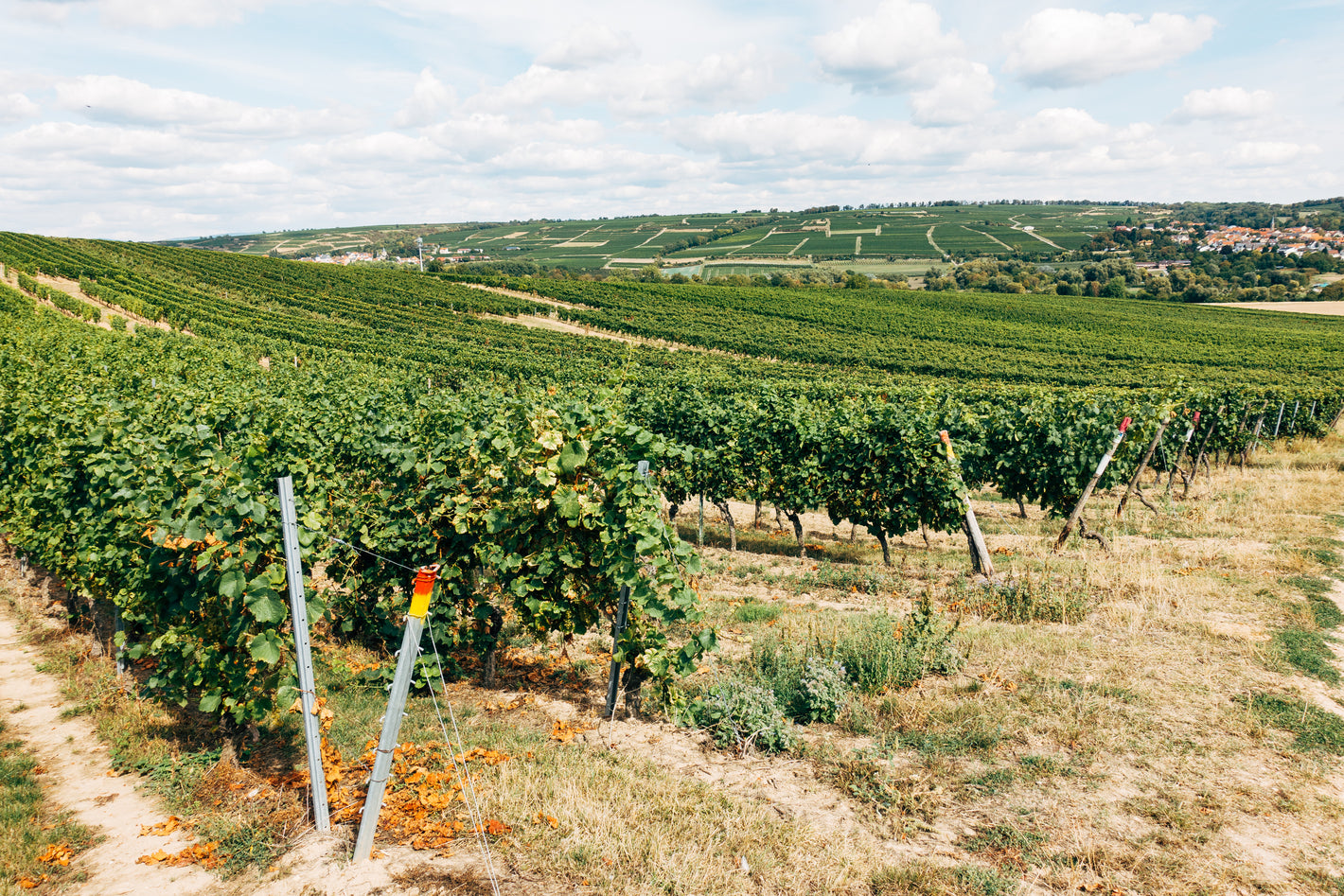
The La Roche Blanche vineyard sits on ancient orthogneiss and granite-derived soils — broken, free-draining rock that forces the vines to dig deep and contributes to the wine's characteristic flinty, stony edge. The proximity to Lac de Grand-Lieu moderates temperatures and maintains humidity, which slows ripening and preserves the natural acidity that makes this style so food-friendly. It is this combination of hard, poor soils and a cool, lake-influenced microclimate that gives Grandlieu its distinctly saline, mineral personality.
Muscadet Côtes de Grandlieu is one of three cru communaux within the broader Muscadet appellation, alongside Sèvre et Maine and Coteaux de la Loire. It covers the area around Lac de Grand-Lieu, southwest of Nantes, and requires a minimum of nine months of lees ageing before release. The appellation produces wines with a more coastal, saline character than the more widely known Sèvre et Maine, and tends to run slightly fuller in texture. It remains underappreciated relative to its quality, which means the prices are still — for now — very much in its favour.
The 2025 vintage hasn't happened yet — we're still firmly planted in 2024, watching this year's grapes ripen along the Loire. While we'd love to peer into our crystal decanter and predict what nature has in store, even our most enthusiastic soothsaying has its limits. What we can tell you is that the Loire continues to deliver some of France's most thrilling wines, vintage after vintage, from the mineral-driven Muscadet of the Atlantic coast to the profound Cabernet Franc of Chinon and Bourgueil.
For now, we're busy celebrating the brilliant 2022s that are drinking superbly, the structured 2020s that reward patience, and the occasional treasure from earlier decades that reminds us why Loire wines age so gracefully. Check back with us in late 2025 when we've actually tasted what the vines produce, rather than what our imagination conjures. We promise the wait will be worth it — the Loire rarely disappoints, and when it does deliver, we'll be the first to tell you exactly why you should be excited.
FAQs
What does this wine taste like?
It's crisp and mineral with lemon, oyster shell, and a stony, almost salty edge. The year spent on its lees gives it a creamy texture that lifts it well above the thin, neutral Muscadets you might have encountered before.
When should I drink it?
It's drinking well right now and will continue to do so until around 2030. This is not a wine built for long cellaring — catch it while the fruit is bright and the mineral character is at its most vivid.
What food should I pair it with?
Oysters, full stop. After that, mussels, clams, grilled fish, or anything with butter and lemon. It's a natural at the table wherever the sea is involved.
Is Muscadet worth taking seriously?
The top cru communaux — of which Côtes de Grandlieu is one — absolutely are. Extended lees ageing and serious viticulture from producers like Herbauges produce wines with real site character and food-matching versatility. The reputation for cheap, bland wine belongs to a different category entirely.
How should I serve it?
Serve it cold, around 8-10°C, straight from the fridge. No decanting required. A standard white wine glass is fine — no need to overthink it.

OUR GROWERS
Domaine des Herbauges
Explore related wines


What are you looking for tonight? Tell me the occasion, a grape, a region — or just try a suggestion below.
Your recommendations will appear here.

-
-
Speak to one of our Wine Gurus
Speak to a Wine GuruWith years of experience, our team can help you with all your wine buying and selling needs