
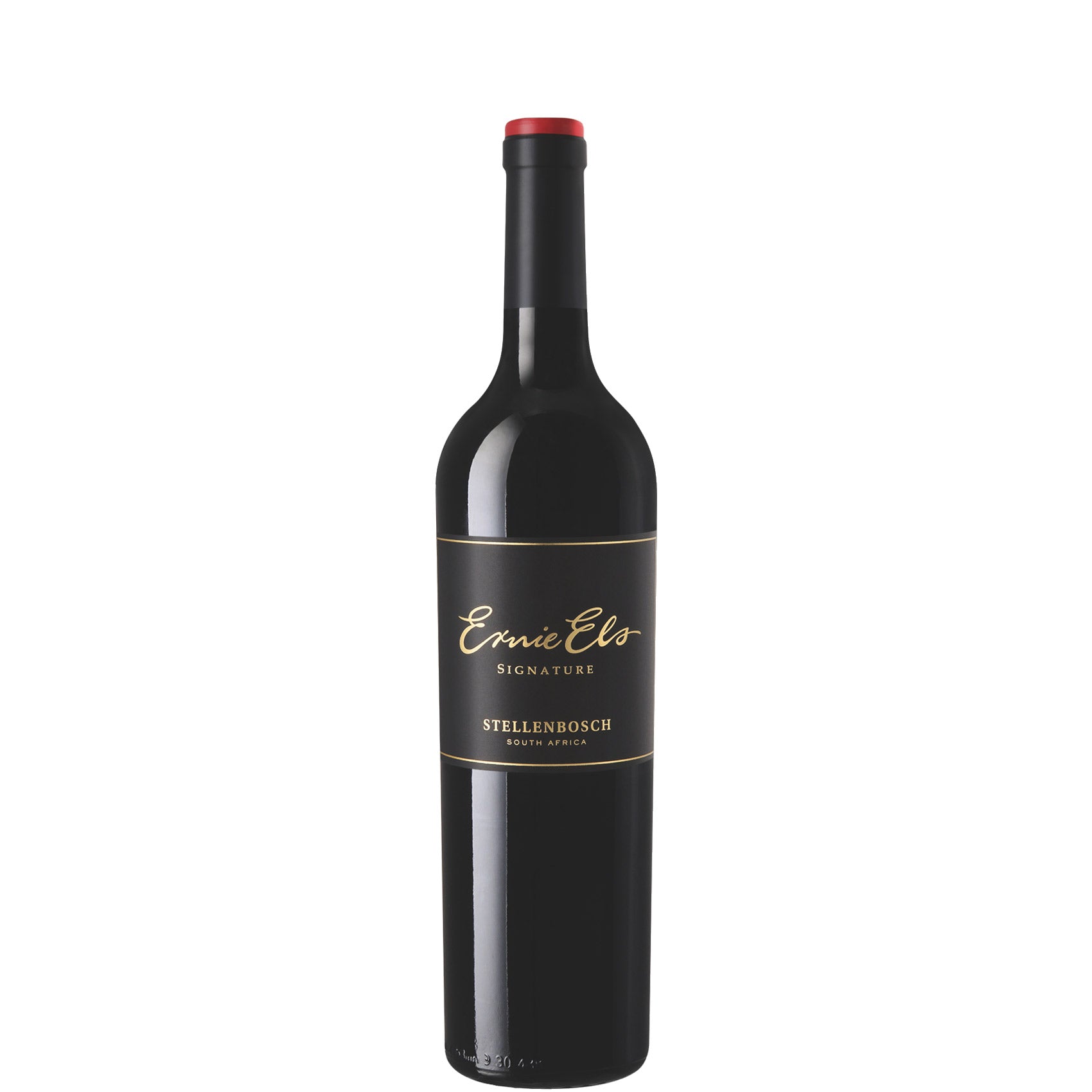
Ernie Els, Signature Red, 2016
Ernie Els, Signature Red, 2016
- 75cl
- 14.5%
- Red Still
- Cabernet Sauvignon, Merlot
Couldn't load pickup availability

Optimal drinking window: Now - 2028
About Ernie Els, Signature Red, 2016
Ernie Els Signature Red is an intense and powerful Bordeaux-style blend from Stellenbosch. Composed predominately of Cabernet Sauvignon, this dark, silky wine has a candied orange aroma with undertones of cardamom, clove, and black olives.
The palate is full of graphite, cassis, and rich tannins.
Currently in its drinking prime, with primary fruit still vibrant but beginning to integrate with the spice and mineral elements from oak and terroir. Over the next two years, expect the candied orange aromatics to develop into more complex citrus peel and marmalade characters whilst the tannins continue to soften. The graphite minerality will become more prominent as the fruit recedes slightly, adding earthy complexity. Peak drinking is likely now through 2028, after which the fruit may begin to fade though the structure will remain intact for several more years.
What the critics say:
"The 2016 Signature blend is mostly Cabernet Sauvignon, supported by 25% Merlot, 5% Cabernet Franc, 5% Petit Verdot and 5% Malbec. This maturing yet still vibrant red blend boasts a nose of ripe fruit and generous and succulent aromas of dusty dark red berries and fresh baking spices. Full-bodied and balanced, the palate is firm, structured and food-friendly, concluding with a spicy and lingering tannic edge. This red blend aged 20 months in 70% new French oak barrels. Only 13,723 bottles were made. Drink date: 2023-2028"
Tasting Notes
AppearanceDeep ruby-purple with a dense, youthful core and slight opacity that speaks to its concentration.
NoseCandied orange peel leads, followed by warming spices of cardamom and clove that suggest the French oak influence. Black olive tapenade adds savoury complexity, whilst dark berry fruit lurks beneath. There's a mineral graphite edge that lifts the aromatics.
PalateFull-bodied and structured, with cassis and dark plum fruit supported by firm but ripe tannins. The graphite minerality carries through, adding backbone and length. Spice builds through the mid-palate, with the oak well-integrated rather than dominant.
FinishLong and savoury, with the tannins providing grip whilst the spice and mineral elements linger appealingly.
Overall impressionA serious, structured red that shows both power and restraint, drinking beautifully now but built to last.
Food Pairings
In the Western Cape, this style of red traditionally accompanies boerewors fresh off the braai, the smoky char and rich meat complementing the wine's structure perfectly. Springbok loin with wild mushrooms is another regional favourite, the gaminess playing beautifully with the wine's savoury olive and spice elements. Cape Malay bobotie, with its sweet-savoury spicing, finds harmony with the candied orange aromatics. Local ostrich steaks, lean but flavourful, benefit from the wine's tannins whilst not overwhelming its elegance. Many Stellenbosch estates serve this style with karoo lamb, slow-roasted with indigenous herbs like buchu and wild rosemary.
We think this wine would go well with
Serve at 17-18°C to allow the aromatics to fully express whilst keeping the tannins from dominating. Decant for 45 minutes to an hour - this wine benefits from aeration to soften its structure and reveal its complexity. Use large Bordeaux glasses to concentrate the aromatics whilst providing enough surface area for the wine to breathe. If serving immediately, open the bottle 30 minutes beforehand as a minimum.
The Els vineyards sit on the lower slopes of the Helderberg Mountains in Stellenbosch, where decomposed granite soils with clay subsoils provide excellent drainage whilst retaining enough moisture for the vines. The maritime influence from False Bay, just 20 kilometres away, moderates the warm Mediterranean climate with cooling afternoon breezes. These conditions favour Bordeaux varieties, allowing for slow, even ripening that builds concentration whilst preserving freshness and natural acidity.
Stellenbosch is South Africa's premier red wine region, often called the Napa Valley of the Cape. Established in 1679, its Mediterranean climate and diverse soils have made it the heartland for Cabernet Sauvignon and Bordeaux blends. The region's reputation rests on its ability to combine Old World structure with New World fruit intensity, producing wines that age gracefully whilst remaining approachable. Stellenbosch reds typically show more power and concentration than their Constantia neighbours, with the mountain slopes providing ideal conditions for premium viticulture.
The 2016 vintage in Stellenbosch arrived after a particularly challenging growing season that kept producers on their toes. A dry winter meant water reserves were already stretched before the season began, whilst a hot, arid summer pushed vines to their limits. Those who managed their vineyards carefully found their fruit concentrated beautifully, but the vintage demanded serious attention in both vineyard and cellar. Harvest came early and fast, with many producers picking in the cool of night to preserve what freshness they could capture.
What emerged were wines with real intensity and power, though the best examples balance that concentration with surprising freshness. The reds show particular promise: Cabernet Sauvignon displays the dark, brooding character that made Stellenbosch famous, whilst Syrah from the cooler sites turned out some genuinely exciting wines with real grip and personality. We find the top wines drinking beautifully now but reckon they'll reward patience until 2028. The vintage might not have the immediate charm of easier years, but there's serious quality here for those who chose their vineyards wisely.
FAQs
What does this wine taste like?
A powerful Bordeaux-style red with candied orange aromatics, cassis fruit, graphite minerality, and warming spices from French oak. The palate is full-bodied with firm tannins and a long, savoury finish.
When should I drink this wine?
Perfect to drink now through 2028. The 2016 vintage has reached its prime drinking window, offering both fruit vibrancy and developing complexity.
What food pairs well with this wine?
Excellent with grilled red meats, especially lamb or beef. The structure handles rich, savoury dishes beautifully - think braai favourites, roasted game, or aged hard cheeses.
Should I decant this wine?
Yes, decant for 45-60 minutes to soften the tannins and allow the complex aromatics to fully emerge. Serve at 17-18°C in large Bordeaux glasses.
How does this compare to Bordeaux?
Shows similar structure and complexity to a good Médoc, with the added richness and power typical of Stellenbosch. The graphite minerality and cassis fruit are distinctly Bordeaux-like in character.
Is this wine worth cellaring?
Drinking beautifully now and will continue to evolve gracefully until 2028. Beyond that, the fruit may begin to fade, so we recommend enjoying it within its current prime drinking window.

OUR GROWERS
Ernie Els
Explore related wines


What are you looking for tonight? Tell me the occasion, a grape, a region — or just try a suggestion below.
Your recommendations will appear here.
-
-
Speak to one of our Wine Gurus
Speak to a Wine GuruWith years of experience, our team can help you with all your wine buying and selling needs