
Meursault Premier Cru, Les Charmes, Domaine Yves Boyer-Martenot, 2021
Meursault Premier Cru, Les Charmes, Domaine Yves Boyer-Martenot, 2021
- 75cl
- 13.5%
- White Still
- Chardonnay
- Organic
Couldn't load pickup availability

Optimal drinking window: Now - 2034
This 4th generation estate is now run by Vincent Boyer, whose unique take on Meursault is already making serious waves in the Cote d'Or.
The domaine practices organic farming, uses only indigenous yeasts and minimal new oak, while every winter the wines ferment in either cement vats or 900 litre oak foudres, preserving the integrity of the fruit. The wines mature gently at cooler temperatures and thus they require less filtration and fining.
Vincent is one of the rising stars of Burgundy and his tenacity is evident in his sumptuous yet impeccably balanced wines that provide a fresh perspective on Meursault. This estate is truly a hidden gem of Burgundy!
Right now, in 2026, this is already giving a lot of pleasure — the 2021 vintage produced wines with lovely natural freshness and the primary fruit is vivid and expressive. Over the next two to three years, that initial fruitiness will begin to knit with the wine's underlying structure, and a more complex, nutty, almost honeyed character will start to emerge. By around 2028-2030, it should be hitting its stride, with the acidity, weight, and secondary complexity in full conversation. The plateau is likely to extend comfortably until 2033-2034, and given Boyer-Martenot's precise, low-intervention approach, it won't suddenly drop off a cliff after that — it will fade gracefully rather than collapse.
Tasting Notes
AppearancePale gold with a bright, lively rim — the kind of clarity you get when a winemaker hasn't over-handled the wine.
NoseWhite peach and ripe pear up front, then a deeper current of toasted hazelnut and warm brioche that's more about the grape and vineyard than the barrel. There's a chalky, almost mineral lift underneath — cool and precise — that keeps everything honest.
PalateFuller than you might expect from the nose, with real weight through the mid-palate — that Les Charmes clay at work. Citrus pith and green apple provide the tension, while the texture is generous without ever tipping into heaviness; the restrained oak (those 900-litre foudres earn their place) keeps the fruit centre-stage. The acidity in 2021 is genuinely fine, cutting cleanly through the richness.
FinishLong and saline, with a stony, almost chalky persistence that lingers well after the fruit has faded.
Overall impressionA Meursault that has the village's warmth without losing its nerve — precise, generous, and built to last.
Food Pairings
In Burgundy, a premier cru Meursault like this would most naturally appear at a table with a classic poulet à la crème — the rich, cream-finished sauce and the wine's weight are made for each other. Locals would also pair it with quenelles de brochet, the delicate pike dumplings served in Nantua sauce that are a Burgundian Sunday classic. Roast veal with a butter and herb jus is another natural match, the wine's acidity cutting through the richness while the two amplify each other's savoury depth. A ripe Époisses or Comté aged two years would also do no harm at all.
We think this wine would go well with
Serve at 12-13°C — cool enough to keep the freshness alive, but not so cold that you close down the mid-palate weight. No need to decant, but do give it 15 minutes in the glass to open up if you're pulling it straight from the cellar; it rewards a little air. A wide-bowled white Burgundy glass is the right call here — you want enough surface area to let the wine breathe and for the more subtle, nutty aromas to develop as it warms slightly.
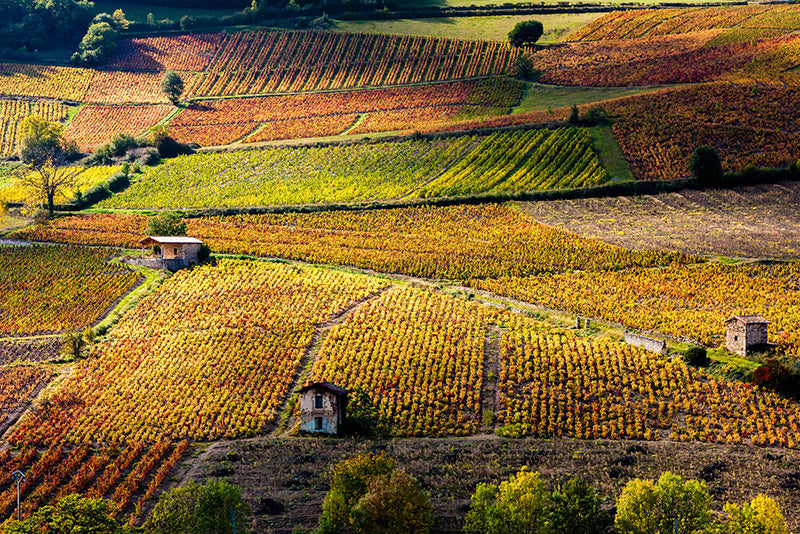
Les Charmes sits on the lower slopes of the Meursault hillside, where the gradient eases and the soils shift to deeper, richer limestone mixed with brown clay. That clay content is what gives Les Charmes its signature generosity — more flesh and weight than the tighter, stonier premiers crus higher up the slope. The altitude is modest, around 260 metres, and the east-facing aspect captures morning sun while avoiding the worst of afternoon heat, helping to preserve freshness even in warmer vintages like 2021.
Meursault is Burgundy's great white wine village, producing more premier cru Chardonnay than any other commune on the Côte de Beaune. Unlike Puligny-Montrachet to the south, Meursault has no grand cru, which is a source of ongoing debate among those who've tasted the best premiers crus at their peak. The appellation rules are those of white Burgundy broadly — Chardonnay only, low yields, and strict geographical boundaries — but what really defines Meursault is its character: richer, more buttery and nutty than Puligny, with a weight and warmth that makes it the most immediately seductive of the three great white wine villages.
The 2021 growing season in Burgundy started badly and got worse before pulling off one of wine's great escapes. Spring frost in April devastated vineyards across the Côte d'Or, followed by a summer that alternated between biblical downpours and scorching heat. Many producers lost 50% or more of their crop to the frost alone, then watched hail batter what remained in some unlucky villages. By August, with rot creeping through rain-soaked vineyards, even the most optimistic vignerons were writing off the vintage.
What emerged from this chaos surprised everyone: wines with remarkable freshness and purity, if you can find them. The tiny yields meant those grapes that survived were intensely concentrated, while the September sunshine saved the day with perfect ripening conditions. We find the reds show beautiful fruit clarity without heaviness, drinking with an immediacy that makes them irresistible now but promising a decade or more of evolution. The whites are particularly stunning, with a mineral intensity that cuts through their richness. Yes, there's not much 2021 Burgundy about, and yes, it's expensive, but this is one of those vintages where disaster bred greatness.
FAQs
What does this wine taste like?
Think white peach, ripe pear, and toasted hazelnut with a creamy, generous mid-palate and a long, stony, saline finish. It has the characteristic weight of Meursault — more substance than Puligny — but Boyer-Martenot's restrained use of oak means the fruit stays front and centre rather than getting lost in vanilla and butter.
When should I drink this wine?
It's already drinking well in 2026 and you don't need to hold back on opening a bottle. That said, it will be even better from 2028 onwards, when the primary fruit starts to integrate and a more complex, nutty depth emerges. We'd drink it with confidence until 2034.
Is this worth cellaring?
Yes — particularly if you have more than one bottle. The 2021 vintage has excellent natural acidity, which is the key to longevity in white Burgundy, and Boyer-Martenot's minimal-intervention approach produces wines that age gracefully. Set one aside for 2030 and you won't regret it.
What food should I serve with this?
Classic Burgundian cream sauces — chicken, veal, or the traditional pike dumplings — are the natural home for a wine like this. Roast fish with a butter sauce works brilliantly, as does a well-aged Comté or a ripe Époisses if you want to keep things simple and local.
How should I serve this wine?
At around 12-13°C, in a wide-bowled white Burgundy glass. No need to decant, but give it 10-15 minutes in the glass if it's come straight from a cold cellar — the mid-palate opens up considerably with a little warmth and air.
What makes Boyer-Martenot different from other Meursault producers?
Vincent Boyer is part of a new generation in Burgundy taking a quieter, less interventionist approach than the rich, heavily oaked style that made Meursault famous in the 1990s. Organic farming, indigenous yeasts, and large-format oak foudres rather than new barrique mean the wine is shaped by the vineyard rather than the cellar. The result is a Meursault with real freshness and precision alongside the generosity the village is known for.
Explore related wines


What are you looking for tonight? Tell me the occasion, a grape, a region — or just try a suggestion below.
Your recommendations will appear here.
-
-
Speak to one of our Wine Gurus
Speak to a Wine GuruWith years of experience, our team can help you with all your wine buying and selling needs