

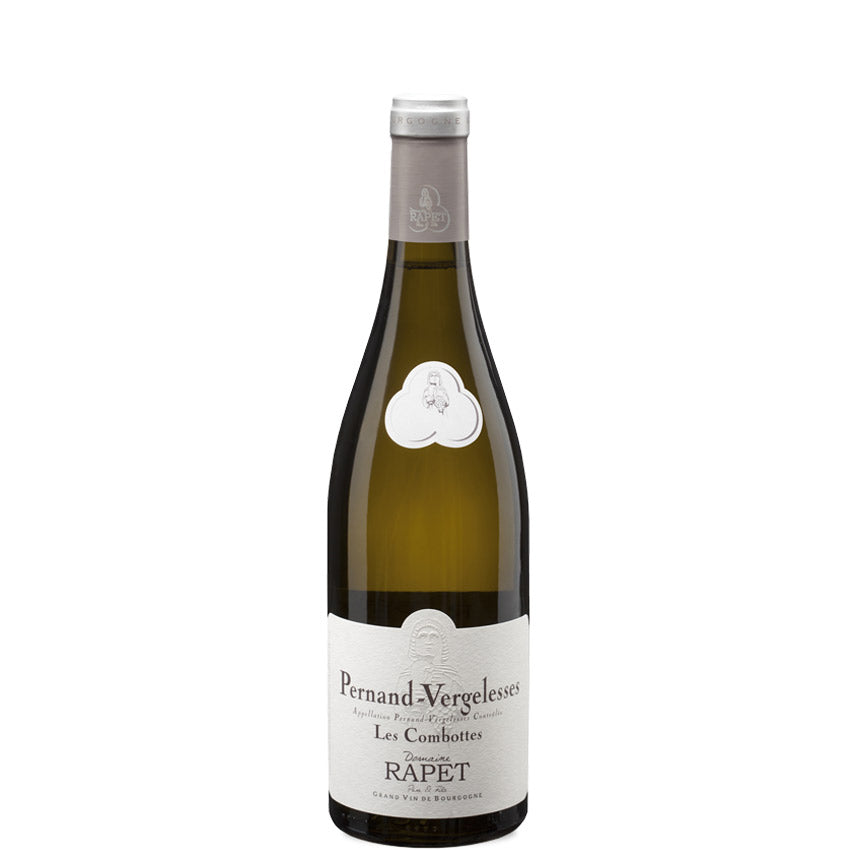
Pernand-Vergelesses 'Les Combottes', Domaine Rapet Père & Fils, 2022
Pernand-Vergelesses 'Les Combottes', Domaine Rapet Père & Fils, 2022
- 75cl
- 13.5%
- White Still
- Chardonnay
Couldn't load pickup availability

Optimal drinking window: Now - 2034
Pernand-Vergelesses sits in the shadow of Corton, which has always done it a quiet favour — the village remains one of Burgundy's least over-hyped, and Rapet, who farm some of the finest parcels here, are among the region's most quietly brilliant producers. Les Combottes is a premier cru-quality lieu-dit delivering Chardonnay of real precision: lean and mineral in its youth, with white stone fruit and a chalky, flinty backbone that speaks plainly of its limestone soils and cool, elevated exposure.
The 2022 vintage brought generous ripeness across Burgundy without tipping into excess, and Rapet have handled it with characteristic restraint. This has the freshness and structure to develop beautifully in bottle. If you want village-level Burgundy that punches well above its postcode, this is exactly where to look.
Right now, Les Combottes 2022 is drinking with its primary fruit very much front and centre — stone fruit, citrus, clean acidity. From around 2027 onwards, expect that to integrate and a more complex, secondary character to emerge: toasted nuts, beeswax, and deeper mineral expression. It should reach its peak somewhere between 2028 and 2031, when the fruit and the structure find their equilibrium. Hold until 2034 if your patience stretches that far — Rapet's wines age with real grace.
Tasting Notes
AppearancePale gold with a greenish rim, bright and clear in the glass.
NoseWhite peach and green apple give way to something more mineral — wet limestone, a squeeze of lemon rind, and a faint suggestion of hazelnut that hints at things to come. It's precise rather than expansive, and all the better for it.
PalateThe 2022 warmth is there in the texture — rounder than you might expect from Pernand — but the acidity holds its line, keeping everything focused and long. Stone fruit sits alongside a chalky, saline mineral quality that gives the wine its identity and its promise.
FinishClean, persistent, and mineral, with a citrus thread that runs all the way to the end.
Overall impressionA wine that earns your patience — drink it too soon and you'll miss the point.
Food Pairings
In the villages around Pernand and Beaune, this kind of Chardonnay would naturally land alongside a poulet de Bresse roasted simply with butter and tarragon — the wine's acidity cutting through the richness without effort. Freshwater fish is a local staple too: a pike quenelle with a beurre blanc sauce is a classic Burgundian match that flatters wines of exactly this structure. A slice of Époisses, ripe but not yet aggressive, works surprisingly well once the wine has a year or two more in bottle. Simpler options — a plate of jambon persillé, cold and gelatinous from the fridge — are equally at home.
We think this wine would go well with
Serve at 11-13°C — cold enough to feel fresh, warm enough to let the mineral character open up. There's no need to decant, though pouring it twenty minutes before you drink it will do no harm. A wide-bowled white Burgundy glass, rather than a narrow flute, gives the wine the room it needs to show its texture and length.
Les Combottes sits on the eastern-facing slopes above the village of Pernand-Vergelesses, at an altitude that brings cooler temperatures and a longer growing season than the valley floor. The soils are predominantly Jurassic limestone with a mix of clay and marl, giving the wines their characteristic mineral grip and linear acidity. This elevation and orientation are critical — they preserve freshness even in warm vintages like 2022, keeping the wine taut where it might otherwise be soft.
Pernand-Vergelesses is one of the lesser-known villages of the Côte de Beaune, tucked behind the great hill of Corton and producing both red and white wines under its own communal AOC. White wines here are Chardonnay; reds are Pinot Noir. The village is unusual in sharing the Corton and Corton-Charlemagne grand cru hill with Aloxe-Corton and Ladoix-Serrigny, meaning some of Burgundy's most exalted white wine grows practically next door. As a result, the village-level whites often offer exceptional value relative to their pedigree.
The 2022 growing season in Burgundy began with a worryingly dry spring that had vignerons checking soil moisture levels weekly, followed by a summer that alternated between intense heat and welcome rainfall. The vines handled the stress remarkably well, producing smaller berries with concentrated flavours, though yields dropped significantly across both the Côte d'Or and Chablis. Harvest began earlier than usual, with many producers picking in late August under bright skies.
What emerged from the cellars shows a vintage of surprising finesse given the challenging conditions. The Pinot Noirs display vivid fruit and firm tannins without the jammy weight you might expect from a hot year, whilst the Chardonnays retained their mineral backbone alongside ripe stone fruit flavours. We're finding the village-level wines particularly compelling right now, drinking beautifully with just a year or two of bottle age, though the premier and grand crus will reward patience until the late 2020s.
FAQs
What does this wine taste like?
It's precise and mineral rather than lush — white peach, lemon rind, and a chalky, saline quality that's very characteristic of Pernand's limestone soils. The 2022 vintage adds a little extra texture and roundness without losing focus.
When should I drink this wine?
It's approachable now but genuinely rewards patience. We'd suggest starting from 2028 and drinking until around 2034. The primary fruit is still very lively at the moment; give it time and the mineral and secondary complexity will catch up.
What food should I pair it with?
Classic white Burgundy territory: roast chicken, fish with butter sauces, mild soft cheeses. A simple roast poulet de Bresse or a pike quenelle with beurre blanc would be hard to beat. It's also excellent alongside cold charcuterie if you're keeping things informal.
Is this worth cellaring?
Yes, genuinely. Rapet age their wines well, and the 2022 has the structure and acidity to develop in bottle. If you have the space, hold a few until 2029 or 2030 and you'll be rewarded with something considerably more complex than what's in the glass today.
How should I serve it?
Serve at around 11-13°C in a wide-bowled white Burgundy glass. No need to decant, but give it fifteen to twenty minutes in the glass before drinking — it opens up noticeably with a bit of air.
How does this compare to better-known Burgundy villages?
Pernand-Vergelesses sits right next to the Corton hill, sharing limestone soils and cool elevations with some of Burgundy's most famous grand cru sites. What you get here is a similar mineral precision and ageing potential at a fraction of the price. It's one of the region's most genuinely undervalued appellations.
Explore related wines


What are you looking for tonight? Tell me the occasion, a grape, a region — or just try a suggestion below.
Your recommendations will appear here.
-
-
Speak to one of our Wine Gurus
Speak to a Wine GuruWith years of experience, our team can help you with all your wine buying and selling needs