

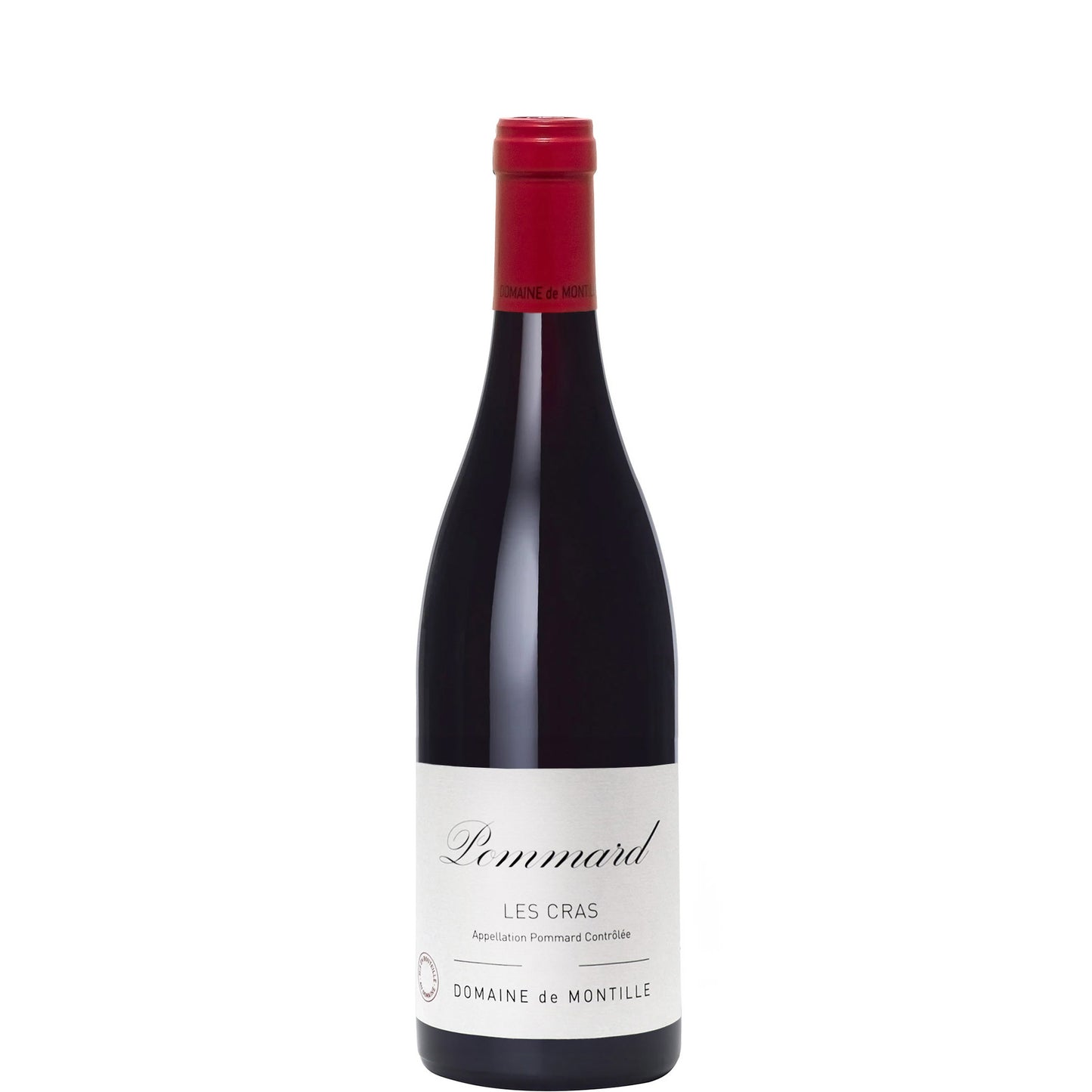
Pommard, Les Cras, Domaine de Montille, 2017
Pommard, Les Cras, Domaine de Montille, 2017
- 75cl
- 12.5%
- Red Still
- Pinot Noir
- Organic
- Biodynamic
Couldn't load pickup availability

Optimal drinking window: Now - 2033
Domaine de Montille is one of Burgundy's great reference points for Pinot Noir made without cosmetic intervention — wines that are lean, precise, and built to last. Les Cras sits on the northern edge of Pommard, just below Volnay, and it shows: there's an elegance here that isn't typical of Pommard's more muscular reputation, with fine-grained tannin and a cool, iron-edged character that sets it apart from the richer, chunkier wines further south in the appellation.
The 2017 vintage across the Côte de Beaune produced wines of real concentration — a warm, dry summer after a frost-reduced crop — and Les Cras has responded beautifully with depth without heaviness.
In 2026, the 2017 is in an interesting transitional phase: primary fruit is still clearly present but secondary development is beginning to layer in, with forest floor and spice starting to emerge alongside the cherry and iron. By 2028-2030, we'd expect the tannins to have fully integrated and the wine to hit a plateau of genuine complexity, where the terroir character of Les Cras is at its most expressive.
Tasting Notes
AppearanceTranslucent ruby, bright and lively, with a garnet tinge at the rim that hints at seven years of graceful age.
NoseDark cherry and dried rose petal open first, followed by something earthier and more compelling — iron filings, forest floor, a faint brush of leather. With air, warm spice and a whisper of sous bois emerge without crowding out the fruit.
PalateTaut and precise on entry, with focused red and dark fruit framed by firm but finely textured tannin — this is Pommard with Volnay's manners. The acidity is bracing and clean, giving the wine real length and cut. There's density here from 2017's concentrated crop, but it never tips into weight.
FinishLong, mineral, and coolly austere, with iron and dried cherry persisting well after the glass is down.
Overall impressionA wine of real character and restraint — the kind that rewards patience and punishes impatience in equal measure.
Food Pairings
In Burgundy, this kind of structured village Pinot Noir finds its natural home at the table alongside a coq au vin made with the local Pinot, where the wine's earthy tannin mirrors the braised depth of the dish. Boeuf bourguignon is the other obvious companion, particularly a version where the beef has had time enough to surrender to the sauce. Further afield in the region, roast guinea fowl with wild mushrooms and thyme would be an elegant match, as would a simple roast Bresse chicken with jus and gratin dauphinois. A well-aged Époisses, pungent and creamy, is the local cheese of choice — and controversial as it sounds with red wine, it works beautifully here.
We think this wine would go well with
Serve at 16-17°C — cooler than you might think, as it preserves the freshness and precision that makes this wine interesting. Decant for 45 minutes to an hour if drinking now; the wine opens considerably with air and the tannins soften from grip to structure. A large-bowled Burgundy glass — the classic tulip shape — will capture the aromatic complexity without scattering it.
Les Cras lies at the northern tip of Pommard, on a gentle slope of Bathonian limestone interlaced with red clay and iron-rich marl. The elevation sits at roughly 260-290 metres, enough to preserve freshness in warmer years. The iron content in the soil is significant — it's what gives wines from this part of the appellation their characteristic mineral grip and ferrous edge. Proximity to Volnay's border means the wines here tend to be lighter in frame than classic Pommard, with more lift and floral character than the appellation's south.
Pommard is a village appellation in the Côte de Beaune, Burgundy, producing exclusively red wines from Pinot Noir. It has no Grand Cru vineyards, but its two most celebrated Premiers Crus — Rugiens and Epenots — are among the most sought-after in the entire Côte d'Or. The appellation's reputation rests on wines of structure and robustness, with firmer tannin and darker fruit than neighbouring Volnay. Les Cras, however, sits at the Volnay border and occupies a more nuanced middle ground, making it one of the more interesting and underappreciated sites in the commune.
The 2017 vintage in Burgundy arrived after a series of weather curveballs that kept growers on their toes from spring through harvest. April frosts dealt a brutal blow across the Côte d'Or, slashing yields by up to 60% in some villages, whilst those who escaped relatively unscathed found themselves with healthier vines and more concentrated fruit. The summer that followed was warm and dry, ripening what remained on the vine beautifully, and harvest began early in late August under ideal conditions.
What emerged from this challenging year surprises us still: wines of remarkable purity and focus, where the reduced yields translated directly into intensity without heaviness. The Pinot Noirs show beautiful red fruit clarity with firm but approachable tannins, whilst the Chardonnays display precision and mineral backbone that speaks clearly of their terroir. We find the whites drinking beautifully now and will continue to reward patience over the next decade, whilst the reds are starting to show their considerable charm and should peak between now and 2030.
FAQs
What does this wine taste like?
Dark cherry, dried rose, iron-tinged earth, and forest floor, framed by firm but fine tannin and a mineral, austere finish. It's a Pommard that leans toward Volnay in its elegance — structured without being heavy, precise without being cold.
When is the best time to drink this?
It's approachable now, but we'd hold it until 2028-2030 for the full picture. The tannins are softening, secondary complexity is emerging, and there's no urgency. Drink until 2033 for peak pleasure.
What food should I serve with it?
Classic Burgundian fare works best: coq au vin, boeuf bourguignon, or a simple roast guinea fowl with wild mushrooms. If you want something simpler, a roast chicken with good jus and potatoes will do the job perfectly.
How should I serve it?
Serve at 16-17°C in a large-bowled Burgundy tulip glass. Decant for 45 minutes to an hour — it opens considerably with air and the wine is more generous for it.
Is this worth cellaring?
Yes, genuinely. The 2017 vintage in the Côte de Beaune produced concentrated, structured wines that are built for medium-term ageing. Les Cras has the acidity and tannin to develop well until 2033, and Domaine de Montille's wines are known for ageing gracefully rather than fading fast.
How does Les Cras compare to other Pommard Premiers Crus?
Les Cras is not one of Pommard's most famous Premiers Crus — that distinction belongs to Rugiens and Epenots — but it is one of the most interesting. Sitting at the Volnay border, it produces wines with more floral lift and finer tannin than typical Pommard, which makes it something of a connoisseur's choice for those who find classic Pommard a little blunt.
Explore related wines


What are you looking for tonight? Tell me the occasion, a grape, a region — or just try a suggestion below.
Your recommendations will appear here.
-
-
Speak to one of our Wine Gurus
Speak to a Wine GuruWith years of experience, our team can help you with all your wine buying and selling needs