

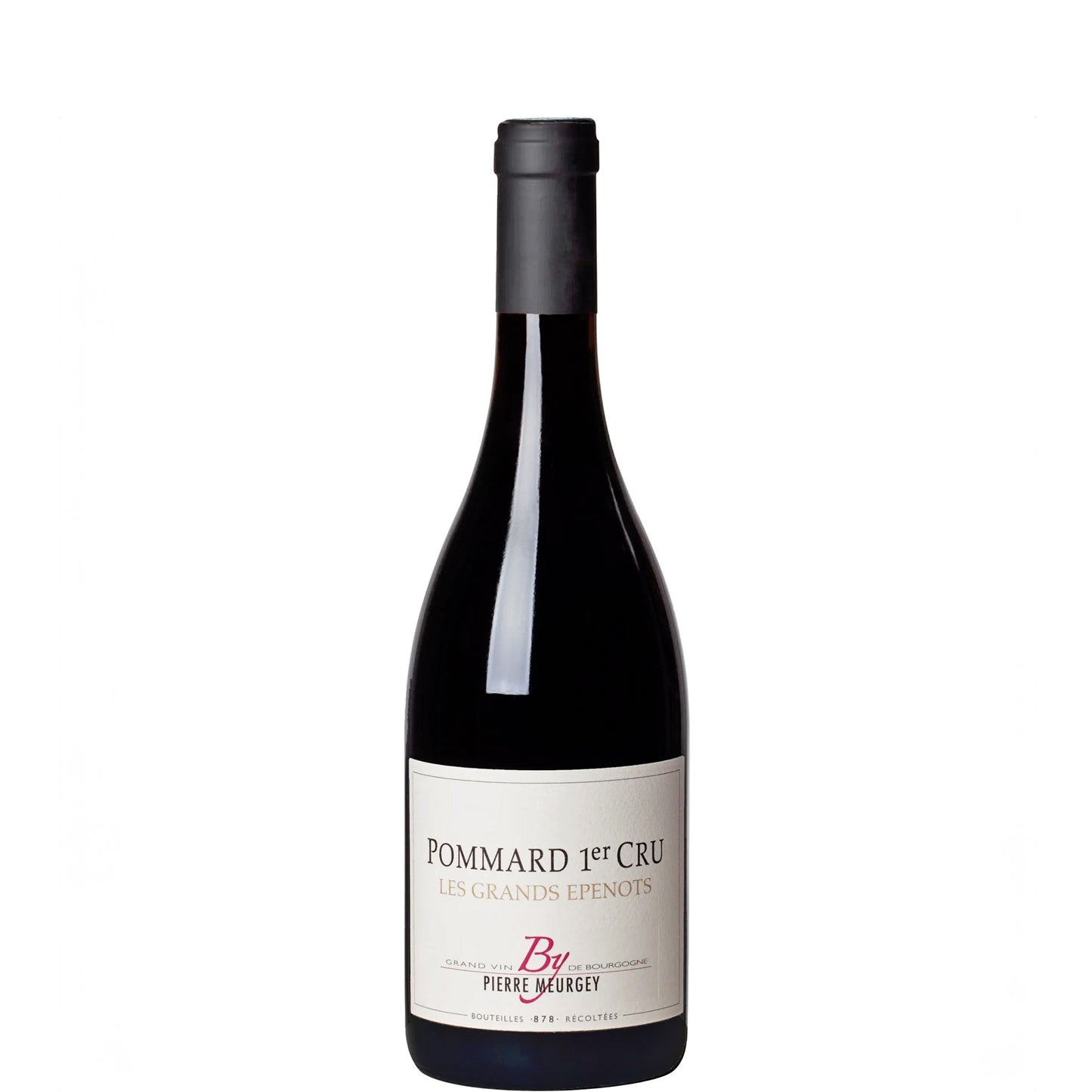
Pommard Premier Cru 'Les Grands Epenots', Pierre Meurgey, 2018
Pommard Premier Cru 'Les Grands Epenots', Pierre Meurgey, 2018
- 75cl
- 13.5%
- Red Still
- Pinot Noir
Couldn't load pickup availability

Optimal drinking window: Now - 2039
Les Grands Epenots is one of Pommard's most celebrated premier crus, and for good reason. Sitting just below the village boundary with Beaune, it produces Pinot Noir of real authority — darker and more structured than you might expect from a Côte de Beaune address, with the kind of chewy, iron-edged grip that is pure Pommard.
Pierre Meurgey brings a deft hand to it: the wine has weight without being heavy, and the 2018 vintage - warm, generous, and beautifully ripe across Burgundy - lends the whole thing a plush, giving quality that makes it unusually approachable for such a serious site.
We find this sits in that sweet spot where you can open a bottle now and genuinely enjoy it, though the underlying structure means it has plenty left to say over the next decade. Expect dark cherry, dried violets, a streak of iron, and the kind of savoury depth that makes Pommard so distinctive among its more delicately perfumed Côte de Beaune neighbours.
The 2018 is already showing well, with the vintage's natural generosity making it accessible earlier than a cooler Pommard year would be. Primary dark fruit is still very much in charge right now, but the iron-mineral character of Grands Epenots is already present underneath, waiting its turn.
Tasting Notes
AppearanceDeep ruby with a translucent garnet rim and good depth of colour for a Côte de Beaune Pinot.
NoseDark cherry, dried violet, and a distinctive iron-mineral quality that is very much Pommard rather than anywhere else. The 2018 warmth adds a touch of ripe plum and a suggestion of sweet spice from the oak, but neither dominates. Give it twenty minutes in the glass and a layer of forest floor starts to emerge.
PalateMedium to full-bodied with the firm, slightly grippy tannins that define Grands Epenots, though they are already beginning to soften into the wine's generous fruit. There is real energy here — the acidity keeps everything honest, preventing the 2018 ripeness from tipping into flabbiness. Dark cherry, a whisper of cocoa, and that savoury, almost meaty quality Pommard does so well.
FinishLong, iron-edged, and dry, with a persistence that confirms this wine still has something to prove.
Overall impressionA serious premier cru in a generous vintage — approachable now, but rewarding patience.
Food Pairings
In Burgundy, a wine like this would most naturally find itself alongside boeuf bourguignon — the long-braised, wine-soaked beef that shares the same earthy, iron-inflected depth as Pommard itself. Coq au vin is another natural companion, particularly if made with a splash of the same wine. The locals would also think nothing of pairing it with a well-aged Époisses or a generous slab of Cîteaux cheese, both of which can stand up to the wine's structure without being overwhelmed. Roasted pigeon or duck breast with a cherry reduction plays to the wine's dark fruit character brilliantly. On a more modest evening, a simple roast lamb with garlic and thyme works as well here as almost anywhere.
We think this wine would go well with
Serve at 16–17°C — slightly cooler than you might think, as the wine will warm in the glass and reveal more as it does. The 2018 is open enough to drink without decanting if you are pouring within the next year or two, though an hour in a decanter will help lift the nose and soften the tannins noticeably. Beyond 2028, decanting becomes less necessary as the wine will have done more of that work itself. Use a generous Burgundy bowl — the wide opening is not affectation; it genuinely allows the wine's more delicate aromatic layers to gather and open.
Les Grands Epenots sits on the southern edge of Pommard's premier cru belt, on gentle east-facing slopes at around 250–280 metres. The soils are predominantly brown limestone over hard Bathonian rock, with a higher proportion of clay than you find further up the slope — it is this clay content that gives Pommard its characteristic density and tannic grip. Drainage is good despite the clay, which keeps the vines honest in warm years like 2018. The combination of clay-limestone and the slightly cooler, more sheltered position of Grands Epenots relative to some neighbours tends to produce wines with more refinement than raw power, though power is never far away.
Pommard is the only commune in the Côte de Beaune with no white wine production at premier cru level — it is unapologetically red, unapologetically structured, and rather proud of both. Its 28 premier cru vineyards produce wines of considerably more variation than the appellation's reputation for brute force might suggest: the best sites, including Les Grands Epenots and Les Rugiens, can produce wines of genuine elegance and longevity. The AOC rules require Pinot Noir exclusively, with minimum ageing in barrel, and yields are tightly controlled. Pommard sits between Volnay to the south, which tends to produce silkier, more feminine wines, and Beaune to the north, whose premier crus are generally lighter and more floral — Pommard occupies the muscular middle ground.
Burgundy growers will tell you that 2018 was the vintage that reminded them why they fell in love with their vineyards in the first place. A glorious summer of sustained warmth without the punishing heat that can strip freshness from Pinot Noir, followed by cool nights that preserved the acidity. The flowering went smoothly, fruit set was generous, and harvest arrived early but without panic—exactly the sort of classical growing season that becomes rarer each decade.
What landed in the cellars was Burgundy at its most seductive: Pinot Noir with real depth of colour and fruit concentration, yet still dancing on its toes rather than plodding along. The Chardonnays show beautiful ripeness balanced by that crucial mineral backbone, particularly from the better sites in Chablis and the Côte de Beaune. We're drinking these wines now with enormous pleasure—they hit that sweet spot where primary fruit hasn't faded but the tannins have softened into silk. The top cuvées will cellar beautifully for another decade, but frankly, why wait?
FAQs
What does this wine taste like?
Dark cherry, dried violet, and a distinctive iron-mineral quality that marks it out as Pommard rather than anywhere else. The 2018 vintage adds a plush, ripe generosity to the whole thing, but there is real structure underneath — firm tannins, good acidity, and a long savoury finish. It is a wine with weight and backbone, not a delicate or floral style of Pinot Noir.
Is Pommard Premier Cru worth cellaring?
For this style, yes. Pommard premier cru is one of Burgundy's more age-worthy appellations, and Les Grands Epenots in particular has the structure and depth to develop well. The 2018 vintage is a good candidate precisely because the generous fruit acts as a cushion during the ageing process — it does not need to be austere to age well.
What food should I serve with this?
Think rich, slow-cooked meat dishes: boeuf bourguignon, coq au vin, braised duck. Roast lamb with garlic and thyme is a reliable choice. If you are going cheese, aged Époisses or Cîteaux from the region are the local answer, and they work. Avoid anything too delicate — this wine will overpower it.
How should I serve it?
Serve at around 16–17°C and use a large Burgundy bowl. An hour in a decanter is worthwhile if you are opening it in the next couple of years; after 2028 or so the wine will have opened up enough on its own. Do not serve it too warm, or the alcohol will push to the front and the subtler aromatic layers will get lost.
How does Les Grands Epenots compare to other Pommard premier crus?
Grands Epenots sits on slightly more refined ground than Les Rugiens, Pommard's most celebrated premier cru, which tends to produce darker, more tannic wines. Grands Epenots is typically a touch more approachable and aromatic — still unmistakably Pommard in its iron-edged character, but with a bit more elegance.

Explore related wines


What are you looking for tonight? Tell me the occasion, a grape, a region — or just try a suggestion below.
Your recommendations will appear here.
-
-
Speak to one of our Wine Gurus
Speak to a Wine GuruWith years of experience, our team can help you with all your wine buying and selling needs