

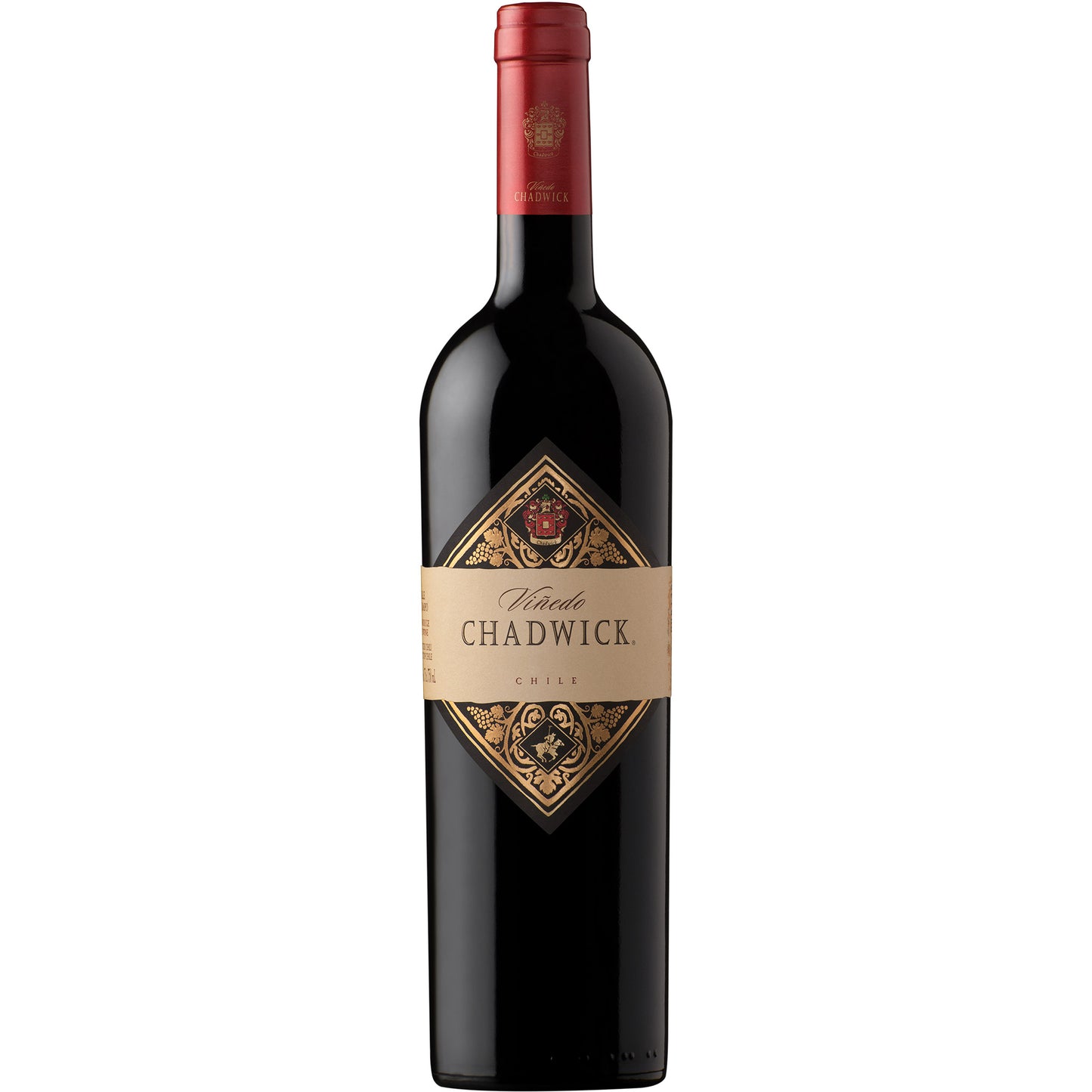
Viñedo Chadwick, 2024 - Magnum
Viñedo Chadwick, 2024 - Magnum
- 150cl
- 14.5%
- Red Still
- Cabernet Sauvignon, Petit Verdot
Couldn't load pickup availability
Enquire about this item

Drinking window: 2028 - 2050
Viñedo Chadwick is the wine that put Chilean fine wine on the world map — literally. When the 2000 vintage beat out Château Margaux and Almaviva at the 2004 Berlin tasting, the argument that Chile could produce world-class Cabernet Sauvignon stopped being an argument.
The estate occupies the former polo ground of the Chadwick family in Puente Alto, on the edge of the Andes in Maipo, and the wine is pure Cabernet Sauvignon from vines that have had decades to push deep into the gravelly, alluvial soils. The 2024 is still very much finding itself — serious, tightly wound, with the kind of structural ambition that demands time.
What the critics say:
"The 2024 Viñedo Chadwick is 98% Cabernet Sauvignon and 2% Petit Verdot from the Haipo Valley. It is still unfolding in bottle yet already shows notable precision. It was aged for 18 months, 80% in French oak barrels and 20% in foudres. Harvested at a finely judged point, where red fruit begins to shift toward black, the 2024 captures a spectrum of primary nuances between those two registers. The nose opens with cassis and elderberry, accented by lightly balsamic herbal notes, then gains finesse with soft spices and a hint of orange peel. Juicy and energetic, the palate is shaped by fine, tight tannins that lend definition without weight. Calibrated and poised, it follows the same refined line seen in the reference-point 2021."
"The 2024 Viñedo Chadwick is a bold wine, not because of its flavor profile but due to its position in the contemporary Chilean wine landscape as one of the most coveted bottles in the country, thus giving it the confidence required to present what is, by measure of alcohol, the "lightest" example of the wine produced to date, which is particularly commendable. The product of a predominantly cool and cloudy vintage with an exceptionally late harvest preceded by ample time on the vine, it presents a notably dark, floral, elegant and sophisticated bouquet that gradually reveals greater detail and depth while remaining stark and minimal, as the world's most compelling wines often do. The mouthfeel proves beyond a doubt that ample density and concentration can be had at a lower alcohol content, as it exudes enviable power and weight while remaining nimble and light on its feet through a resonant, persistent and strikingly complete finish. This is unquestionably my favorite of the new-release Chadwick's I've had the pleasure of reviewing, and I suspect it will be quite long-lived. It is a blend of 98% Cabernet Sauvignon and 2% Petit Verdot that matured for 18 months in 80% barrels and 20% foudre."
The Puente Alto sub-zone of Maipo sits at around 700 metres altitude, close to the Andes, where afternoon breezes off the mountains cool the vineyard dramatically after the intense Andean sun. Soils are deep alluvial gravel over clay and sand, deposited by the Maipo River, with excellent drainage that stresses the vines gently and concentrates the fruit. The diurnal temperature range here — often 15°C or more between day and night — is critical to retaining freshness and aromatic precision in what is otherwise a powerful, warm-climate red. This cooling influence is what separates Puente Alto Cabernet from the broader, flatter styles found lower in the valley.
The Maipo Valley is Chile's most historically prestigious wine region, stretching east from Santiago towards the Andes, and has long been considered the country's spiritual home of Cabernet Sauvignon. Within Maipo, Puente Alto is the most prized sub-zone, producing wines of a distinctly cooler, more mineral character than other parts of the valley. Chile's denominaciones de origen are relatively permissive compared to European appellations — the rules govern geography and grape labelling but not yields or winemaking methods — which means that quality here is driven by individual producers rather than regulated constraints. The result is that the gap between the best estates and the rest can be enormous.
The 2024 vintage in Maipo arrived after a growing season marked by lower than average temperatures through the critical ripening period, which stretched the harvest out and kept acidity lively. Rainfall was broadly well timed, avoiding the kind of late-season pressure that can force growers into difficult decisions about when to pick. The Andes snowpack held well, keeping irrigation water available through the dry summer months — not glamorous, but genuinely important in a valley where water management is as consequential as any weather event.
The results lean toward precision rather than brute force, which suits modern Maipo Cabernet Sauvignon rather well. Tannins are firm but not aggressive, and the wines have the sort of structure that rewards patience without demanding it — most are drinking well now with a decant, but the better bottles will repay cellaring until 2030 and beyond. Carmenère, where it appears, looks particularly good: the longer hang time did it real favours.

OUR GROWERS
Viñedo Chadwick

