

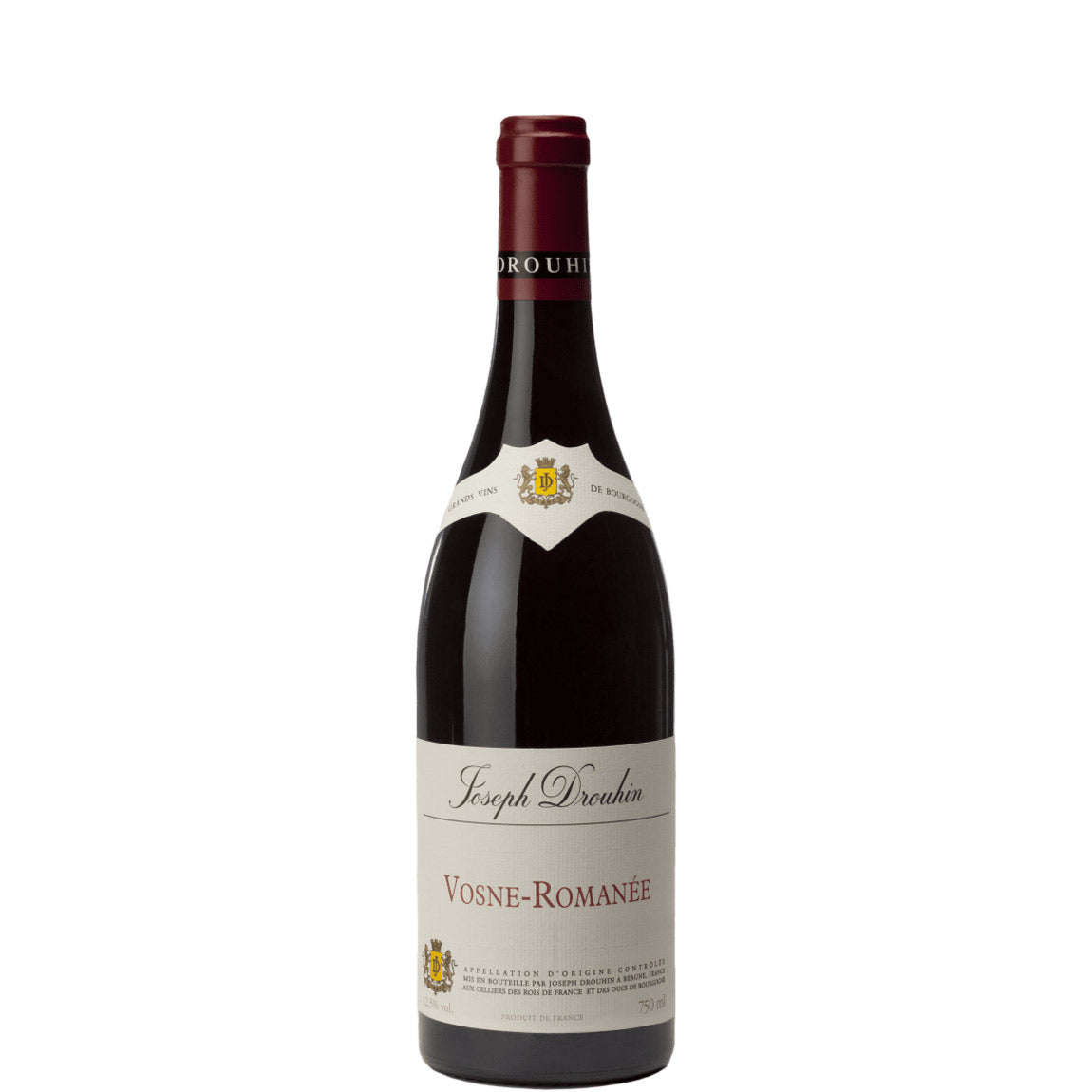
Vosne-Romanée, Domaine Joseph Drouhin, 2021
Vosne-Romanée, Domaine Joseph Drouhin, 2021
- 75cl
- 13.5%
- Red Still
- Pinot Noir
- Organic
- Biodynamic
Couldn't load pickup availability

Optimal drinking window: Now - 2034
The Vosne-Romanée 2021 from Domaine Joseph Drouhin is a refined expression of one of Burgundy’s most sought-after villages. It’s silky and precise, with fine, powdery tannins and a mineral thread that carries the fruit into a long, graceful finish - everything you’d hope for from Vosne: seductive, detailed, and confident rather than showy.
2021 was a cooler, more classical Burgundy vintage, marked by low yields due to frost but producing wines with purity, energy, and finesse. This bottle reflects that style perfectly; fresh, transparent and terroir-driven, with real ageing potential despite its early charm.
Domaine Joseph Drouhin is one of Burgundy’s most respected houses, founded in 1880 and now run by the fourth generation. Known for their organic and biodynamic farming and a philosophy of finesse over power, Drouhin wines are admired for their precision, elegance, and sense of place — and this Vosne-Romanée is a standout example of that approach.
Right now, in 2026, this is already giving real pleasure — the fruit is fresh and the tannins are approachable, and there is no reason to hold back if you want to drink it tonight. Over the next two to three years, the primary red fruit will begin to integrate and the wine will start to show more secondary complexity: a little more forest floor, a little more spice, a hint of the savoury quality that makes mature Vosne so compelling. By 2030 it should be hitting its stride, with everything in balance and the mineral thread more pronounced. We would expect it to plateau somewhere between 2030 and 2033 before slowly, gracefully beginning to fade. Drinking it after 2034 is possible but optimistic — this is a village wine built on finesse, not a grand cru built for decades.
What the critics say:
"A very refined Vosne-Romanee with aromas of bark, violets, lemon peel, cranberries and cloves. Elegant and medium-bodied, with nicely tight tannins and a direct finish. Drink or hold."
"The 2021 Vosne-Romanee Village comes from three parcels. It has a pretty violet-tinged bouquet that is simple but effective, well-defined with red cherries and kirsch. The palate is balanced with moderate weight, pure red fruit with an appealing, slightly tart finish. This punches above its weight. Savour this over the next 8-10 years. "
Tasting Notes
AppearanceBright, translucent ruby with a violet-tinged rim that speaks to the vintage's cool, precise character.
NoseRed cherries, kirsch, and a whisper of dried violet, with a delicate earthy undercurrent of bark and damp stone. There is a freshness here — almost a crispness — that is very much 2021's signature. Given a few minutes in the glass, a faint spice emerges, something between clove and white pepper.
PalateMedium-bodied, pure, and precise, with red fruit that is bright rather than rich and tannins that are fine enough to almost disappear. The acidity is the engine: it lifts everything and keeps the wine feeling alive and focused. A slightly tart, mineral edge on the mid-palate is exactly what you want from this appellation at this level.
FinishLong, clean, and mineral, with the fruit fading gracefully and a stony quality lingering.
Overall impressionA village Vosne that genuinely punches above its classification — transparent, energetic, and more interesting than many wines with grander labels.
Food Pairings
In Burgundy, a wine like this would most naturally find itself on the table alongside a classic coq au vin, where the dish's earthy depth and soft acidity mirror the wine's own character. The locals also have a great affinity for Époisses or Langres — the pungent washed-rind cheeses of the region — which, despite sounding aggressive, are tamed beautifully by the wine's mineral freshness. A simple roast guinea fowl with thyme and butter, or a duck breast rested and sliced thin, would be just as welcome. For something more rustic, jambon persillé, the cold pressed ham and parsley terrine that appears on every Burgundian bistrot table, is a quietly perfect match.
We think this wine would go well with
Serve at around 16°C — cool enough to keep the aromatics lifted and the acidity lively, but not so cold that the tannins tighten up. A brief decant of 20 to 30 minutes will open the wine up and coax out the spice and earth that sit quietly beneath the fruit. A large, tulip-shaped Burgundy glass is worth the effort here; the wide bowl lets the nose breathe and the shape directs the wine to the right part of the palate. Avoid over-chilling, which will flatten the very qualities that make this wine worth drinking.
Vosne-Romanée sits on the Côte de Nuits between Nuits-Saint-Georges to the south and Vougeot to the north, on gently east-facing slopes at around 250 to 300 metres. The soils are a mix of limestone and clay with varying amounts of iron-rich red marl, which gives Vosne its characteristic combination of mineral grip and silky, almost perfumed fruit. The village sits directly above some of the most celebrated grand cru land in the world, and even at village level the wines carry a structural complexity that sets them apart from neighbouring appellations. Drouhin sources from multiple parcels across the appellation, allowing them to blend for balance and expression rather than relying on a single site.
Vosne-Romanée is widely regarded as the most prestigious village appellation on the Côte de Nuits, home to six grand crus including Romanée-Conti, La Tâche, and Richebourg. Village-level wines must be 100% Pinot Noir and come from vineyards within the commune not classified as premier or grand cru. The reputation of the appellation is such that even village wines carry extraordinary cachet and, when well made, genuine complexity. Compared to neighbours like Nuits-Saint-Georges, Vosne tends to be less muscular and more ethereal: the tannins are finer, the fruit more lifted, and there is a silky, almost haunting quality that is difficult to find anywhere else in Burgundy.
The 2021 growing season in Burgundy started badly and got worse before pulling off one of wine's great escapes. Spring frost in April devastated vineyards across the Côte d'Or, followed by a summer that alternated between biblical downpours and scorching heat. Many producers lost 50% or more of their crop to the frost alone, then watched hail batter what remained in some unlucky villages. By August, with rot creeping through rain-soaked vineyards, even the most optimistic vignerons were writing off the vintage.
What emerged from this chaos surprised everyone: wines with remarkable freshness and purity, if you can find them. The tiny yields meant those grapes that survived were intensely concentrated, while the September sunshine saved the day with perfect ripening conditions. We find the reds show beautiful fruit clarity without heaviness, drinking with an immediacy that makes them irresistible now but promising a decade or more of evolution. The whites are particularly stunning, with a mineral intensity that cuts through their richness. Yes, there's not much 2021 Burgundy about, and yes, it's expensive, but this is one of those vintages where disaster bred greatness.
FAQs
What does this wine taste like?
Think red cherries, kirsch, dried violet, and a faint earthy spice, all pulled into focus by a bright, mineral acidity. It is precise and silky rather than rich, with fine tannins and a clean, stony finish. Classic Vosne character at village level.
When is the best time to drink it?
It is already drinking well in 2026 and will continue to improve until around 2030 to 2033. If you want the full picture, give it another two or three years in the cellar. If you want to enjoy it now, decant for 30 minutes and it will open up nicely.
Is this wine worth cellaring?
Yes, though it is not built for the very long haul. The 2021 vintage produced wines of real purity and energy, and this will develop genuine complexity over the next four to seven years. Beyond 2034 we would start drinking rather than waiting.
What food should I serve with it?
Roast duck, guinea fowl, coq au vin, or any dish where earthy, savoury notes and gentle acidity are your friends. Burgundian washed-rind cheeses like Époisses work surprisingly well, as does a simple jambon persillé. Avoid anything too rich or heavily sauced — this wine rewards restraint on the plate.
How should I serve it?
Serve at around 16°C in a large Burgundy glass. A short decant of 20 to 30 minutes is worthwhile and will bring out the spice and earth that sit beneath the fruit. Do not over-chill it.
How does this compare to other Drouhin Burgundies?
Drouhin make wines at every level of the Burgundy hierarchy, and their style is consistent: finesse, precision, and a light touch rather than extraction or power. This Vosne-Romanée sits at village level but carries real character — it overdelivers for its classification, which is exactly what you want from a reliable house at this price point.

OUR GROWERS
Domaine Joseph Drouhin
Explore related wines


What are you looking for tonight? Tell me the occasion, a grape, a region — or just try a suggestion below.
Your recommendations will appear here.
-
-
Speak to one of our Wine Gurus
Speak to a Wine GuruWith years of experience, our team can help you with all your wine buying and selling needs