

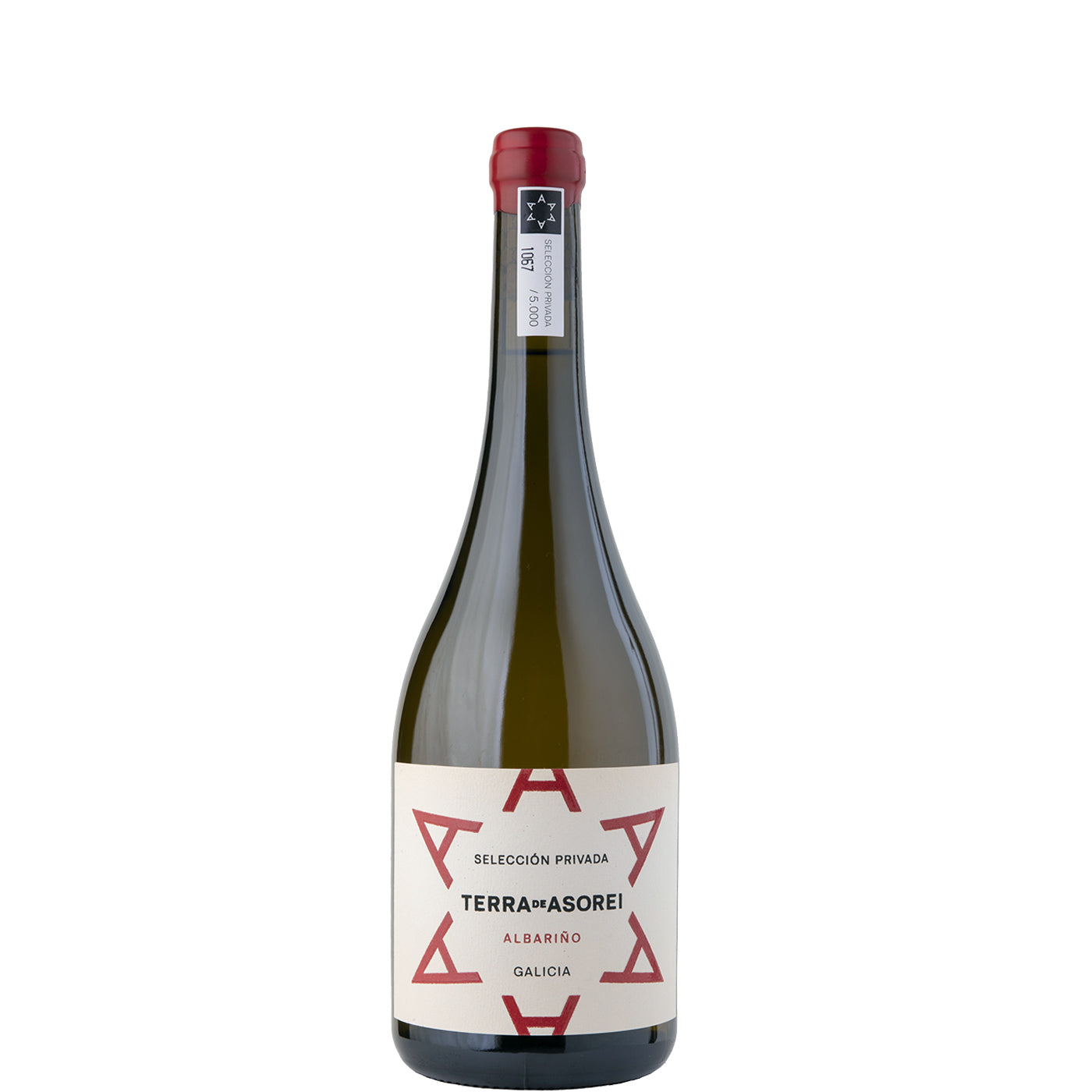
Asorei, Selección Privada, Albariño, 2022
Asorei, Selección Privada, Albariño, 2022
- 75cl
- 13%
- White Still
- Albariño
Couldn't load pickup availability

Optimal drinking window: Now - 2029
Albariño doesn't always get the credit it deserves for ageing. Most is drunk young, which is fine, but the better examples from Rías Baixas — the ones with real concentration and vineyard ambition — reward a little patience. Terra De Asorei's Selección Privada is very much in that camp. Made from older vines and given more careful selection than the standard bottling, it has the structure and depth to develop properly in the glass and in the bottle.
On the palate, it's taut and mineral-edged with white peach, citrus zest, and a saline quality that is entirely the Atlantic's doing. The texture is the giveaway that this is something above the everyday: there's a waxy richness here that coats the palate without ever feeling heavy. Drink it now with something from the sea, or hold it for another year or two and watch it knit together beautifully.
At four years old, the 2022 is in a pleasing spot right now — the primary fruit is vibrant and the acidity is doing exactly what it should. Over the next one to two years, the waxy, textural quality should deepen and the mineral character become more pronounced as the fruit softens slightly. By around 2027-2028, it will likely be at its most complete, with primary and secondary elements in balance. Beyond 2029, the fruit will begin to fade faster than the structure, and while it won't fall apart, it will start to feel more austere than rewarding. Drink it with intention rather than leaving it as an afterthought.
Tasting Notes
AppearancePale gold with a faint green tint and bright, lively clarity.
NoseWhite peach, lemon oil, and crushed stone open things up, with a subtle floral lift and a whisper of beeswax that signals the older vine selection. There's a saline, almost oyster-shell quality underneath that anchors everything and keeps it taut.
PalateCrisp and focused, with good weight for the variety — that waxy texture is the standout, giving the wine a presence that lighter Albariño lacks. The acidity is bright but not aggressive, carrying citrus pith and ripe nectarine through to the mid-palate before the mineral spine reasserts itself.
FinishLong, saline, and clean with a persistent stony quality that lingers well after the fruit has gone.
Overall impressionA serious, site-expressive Albariño that earns its Selección Privada label without having to shout about it.
Food Pairings
In Galicia, this kind of wine is almost inseparable from the sea. Pulpo a feira — octopus dressed with olive oil, smoked paprika, and coarse salt on a wooden board — is the region's most iconic pairing, and it works brilliantly with the mineral, saline edge of a wine like this. Grilled percebes (barnacles), steamed mussels from the Rías themselves, or a plate of razor clams with garlic and white wine are equally natural choices. Inland, Galicians might pair it with empanada de bacallao, the salt cod pie that is as comforting as it sounds. The rule of thumb in this part of the world is simple: if it came from the water, it goes with Albariño.
We think this wine would go well with
Serve at 10-12°C — cool enough to preserve the aromatic lift, but not so cold that it shuts down the texture. No need to decant; pour it straight from the bottle into a medium-sized white wine glass with a reasonably wide bowl, which will let the saline, stony aromas open up over the first few minutes. If anything, give it ten minutes in the glass before you commit to your first sip.
The Val do Salnés sits on the Atlantic coast of Galicia in northwestern Spain, and the ocean is never far from your mind when you taste the wines. Soils here are predominantly granite-derived, sandy and free-draining, giving the wines their characteristic mineral edge and lean structure. The climate is cool and wet, with high humidity tempered by Atlantic breezes that reduce disease pressure and preserve the natural acidity that makes great Albariño so compelling. Older vine selections, as used here, draw deeper into these soils and produce less fruit with considerably more character.
Rías Baixas is Galicia's flagship DO, and for most wine drinkers it means one thing: Albariño. The DO covers five subzones, of which Val do Salnés is the largest and most celebrated, hugging the coastline south of Santiago de Compostela. Rules require that Albariño make up at least 70% of any white blend, and single-varietal expressions like this one are the norm. Compared to the richer, more inland styles of Condado do Tea, Val do Salnés wines tend to be leaner, more aromatic, and more overtly saline — the sea, as ever, calling the shots.
The 2022 growing season across Rías Baixas was shaped by the same brutal heat that swept much of Europe that summer, bringing prolonged dry spells that would have been alarming in almost any other Atlantic-facing region. Here, the cooling maritime influence from the Rías and the altitude of inland subzones like Ribeiro and O Rosal did meaningful work, tempering what could have been a disaster. Yields were down, skins thickened under the stress, and the harvest came in earlier than usual — but the fruit that arrived at the winery was concentrated and healthy, with natural acidity largely intact thanks to those Atlantic breezes doing their job right to the end.
The result is a vintage of Albariño that feels a little more structured and serious than the region's breezy reputation might suggest. The wines have more weight and grip than a cool year like 2021 would give you, without losing the saline, citrus-driven freshness that makes this corner of Galicia so addictive. Single-vineyard and old-vine bottlings in particular are showing real depth. Most are drinking very well now and will hold until 2026 or 2027 with ease; the better Salnés and Condado do Tea expressions may surprise you with a few more years in them yet.
FAQs
What does the Asorei Selección Privada taste like?
It's a textured, mineral-driven Albariño with white peach, lemon oil, and a saline, almost oyster-shell quality. The standout feature is the waxy mid-palate weight that sets it apart from lighter, everyday Albariño. The finish is long, stony, and clean.
When is the best time to drink this wine?
It's drinking well now and will continue to do so until around 2029. The sweet spot is probably 2026-2028, when the fruit and mineral elements should be in their best balance. There's no need to rush, but equally no need to cellar it for a decade.
What food should I pair it with?
Anything from the sea works brilliantly — mussels, clams, grilled fish, oysters, or octopus with smoked paprika in the Galician style. It's also good with salt cod dishes and lighter seafood pasta. The saline, citrus-edged character means it cuts through rich, oily fish without flinching.
How is this different from a standard Albariño?
The Selección Privada is drawn from older vines and given more careful selection, which means lower yields and more concentrated fruit. The result is noticeably more texture and depth than a typical young Albariño, along with a more pronounced mineral quality. It's still recognisably Galician in character, but with more to say.
How should I serve it?
Serve at around 10-12°C in a medium-sized white wine glass. No decanting needed, but give it ten minutes in the glass before your first sip to let the aromas open up. Don't over-chill it — too cold and you'll miss the texture that makes this wine worth buying.

Explore related wines


What are you looking for tonight? Tell me the occasion, a grape, a region — or just try a suggestion below.
Your recommendations will appear here.
-
-
Speak to one of our Wine Gurus
Speak to a Wine GuruWith years of experience, our team can help you with all your wine buying and selling needs