

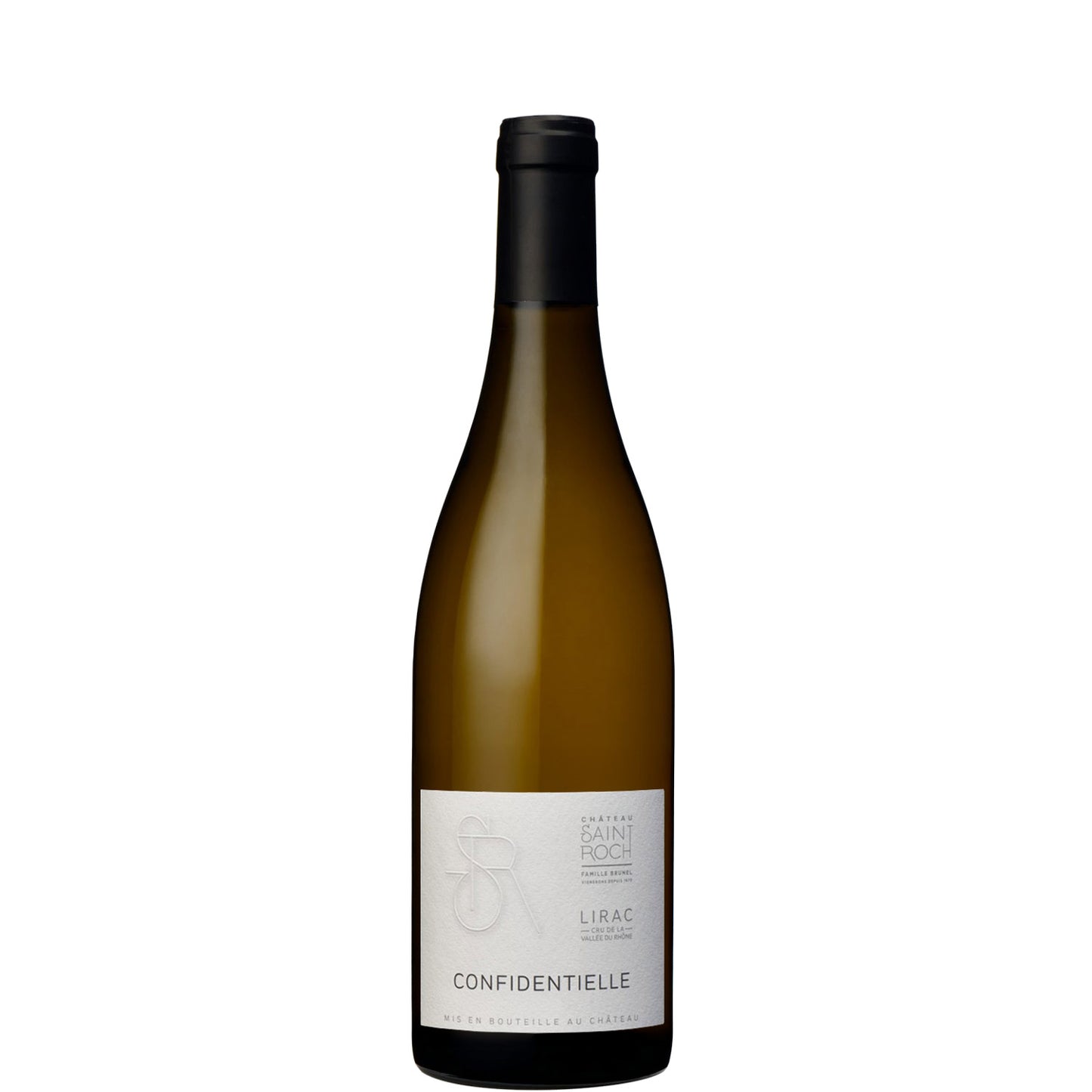
Château Saint-Roch, Lirac Cuvée Confidentielle Blanc, 2020
Château Saint-Roch, Lirac Cuvée Confidentielle Blanc, 2020
- 75cl
- 13%
- White Still
- Clairette, Grenache Blanc, Roussanne
Couldn't load pickup availability

Optimal drinking window: 2026 - 2030
Lirac is one of the southern Rhône's best-kept secrets, and Château Saint Roch's Cuvée Confidentielle Blanc is exactly the sort of wine that makes you wonder why the appellation isn't more famous. Built from a blend of Clairette, Grenache Blanc, and Roussanne, this 2020 is everything a great southern white should be: generous in texture, precise in its mineral backbone, and altogether more interesting than its modest price tag suggests.
We find it in a lovely place right now — the primary fruit is vivid, the waxy, almost lanolin-like richness from the Roussanne is starting to integrate beautifully with the saline mineral edge, and the whole thing finishes with real length. Drink it with something simple and good from the table: a roast chicken, a plate of aged goat's cheese, or nothing at all.
At six years old, the 2020 is in a very good place — primary fruit is still vivid and the mineral backbone is providing real energy. Over the next year or two, we would expect the waxy, honeyed character from the Roussanne to become more pronounced as the primary aromatics soften. By 2028 it may be at its most complete, with fruit, texture, and mineral depth all in balance. After 2030 the freshness will likely begin to fade, and the wine may tip into an oxidative, nutty register that not everyone enjoys. Drink sooner rather than later to catch it at its brightest.
Tasting Notes
AppearancePale gold with a bright, lemon-tinged rim and good clarity.
NoseWhite peach, dried fennel, and orange blossom lead, with a waxy, almost beeswax quality underneath that signals the Roussanne. There is a saline, almost chalklike lift that keeps it from feeling heavy.
PalateGenerous and full without being flabby — the Clairette provides real structure and a citrus snap that cuts through the Grenache Blanc's roundness. Ripe pear, preserved lemon, and a touch of almond skin, with the texture doing most of the talking.
FinishLong and mineral, with a saline persistence that lingers well after the fruit has faded.
Overall impressionA serious southern Rhône white that earns its confidence without shouting about it.
Food Pairings
In the Gard and around Lirac, this style of white is the natural companion to brandade de morue — the silky salt cod and olive oil puree that is practically a regional religion. Locals would also reach for it alongside grilled sea bass with herbs de Provence, or a simple aioli with seasonal vegetables. A plate of tapenade and good bread is really all you need to understand why whites like this exist. Aged Pélardon, the small, intense goat's cheese of the Languedoc, is another natural match, its acidity cutting cleanly through the wine's texture.
We think this wine would go well with
Serve at around 12-13°C — cold enough to preserve freshness but warm enough to let the Roussanne's texture and aromatic complexity open up. No need to decant, though giving it 20-30 minutes in the glass before drinking makes a real difference. A wide-bowled white Burgundy glass works well here, giving the wine enough air to show its complexity without losing the mineral precision.
The Lirac vineyards sit on a plateau of large rolled galets roulés — the same rounded pebbles associated with Châteauneuf-du-Pape just across the Rhône — overlying sandy clay and limestone. These stones retain heat through the night, helping grapes achieve full ripeness, while the sandy subsoils provide natural drainage and a distinctive mineral freshness. The mistral wind, a constant presence here, cools the vines and concentrates flavour without excessive water stress. The result is white wines with both weight and lift, which is not easy to achieve in the southern Rhône's warm, dry conditions.
Lirac sits on the west bank of the Rhône, directly across from Châteauneuf-du-Pape, and shares much of the same geological and climatic character. It has been an AOC since 1945 but has long lived in its famous neighbour's shadow, which means quality-to-price ratios here tend to be rather generous. White Lirac is made primarily from Clairette, Grenache Blanc, Roussanne, and Viognier, and at its best produces wines of real texture and mineral precision. The appellation allows a broader blend than Châteauneuf-du-Pape and tends to produce whites with a slightly more lifted, aromatic character.
The 2020 growing season in the Rhône delivered one of those vintages where nature seemed determined to keep vignerons on their toes. A relatively mild winter gave way to variable spring weather, followed by a summer that brought serious heat spikes alongside crucial cooling periods. Harvest timing became critical as producers navigated the balance between ripeness and freshness, with many picking earlier than usual to preserve the vibrant acidity that would prove essential to the vintage's success.
What emerged is a vintage of surprising energy and focus, particularly in the Northern Rhône where Syrah shows remarkable purity and drive. The reds possess an immediacy that makes them approachable young whilst maintaining the structure for proper cellaring. Grenache in the South responded beautifully to the conditions, producing wines with concentrated fruit but without the jammy heaviness that extreme heat can bring. Most 2020 Rhônes are drinking brilliantly now and will continue to reward patience until 2035, though the best Hermitage and Châteauneuf will easily see 2040 and beyond.
FAQs
What does this wine taste like?
Generous and textural, with white peach, preserved lemon, dried fennel, and a waxy, beeswax quality from the Roussanne. There is a saline mineral backbone that gives it real precision and a long, clean finish.
When should I drink this wine?
It is drinking well now and will continue to do so until around 2030. The fruit is vivid, the texture is generous, and the mineral backbone is keeping everything in balance. We would not wait too much longer — this is a wine built for pleasure, not for patience.
What food should I serve it with?
It is a natural partner for roast chicken with herbs, grilled fish with aioli, or anything involving olive oil and the flavours of Provence. Aged goat's cheese is another excellent match. At its simplest, a plate of good tapenade and bread will do the job perfectly.
How should I serve it?
Serve at around 12-13°C in a wide-bowled white wine glass. No need to decant, but give it 20-30 minutes in the glass before drinking and you will be rewarded with more complexity and aromatic depth.
Is Lirac worth exploring beyond this wine?
Absolutely. Lirac is one of the southern Rhône's most underrated appellations, sharing much of the same geology and climate as Châteauneuf-du-Pape but at considerably more reasonable prices. Both the whites and reds repay attention, and producers like Château Saint-Roch are making a compelling case for the appellation's seriousness.
How does this compare to a white Châteauneuf-du-Pape?
It shares the same broad character — texture, warmth, herbal and mineral complexity — but tends to be a little more aromatic and slightly lighter on its feet. White Châteauneuf can have more weight and age more dramatically, but for everyday drinking at this quality level, Lirac blanc is hard to beat.


What are you looking for tonight? Tell me the occasion, a grape, a region — or just try a suggestion below.
Your recommendations will appear here.
-
-
Speak to one of our Wine Gurus
Speak to a Wine GuruWith years of experience, our team can help you with all your wine buying and selling needs