

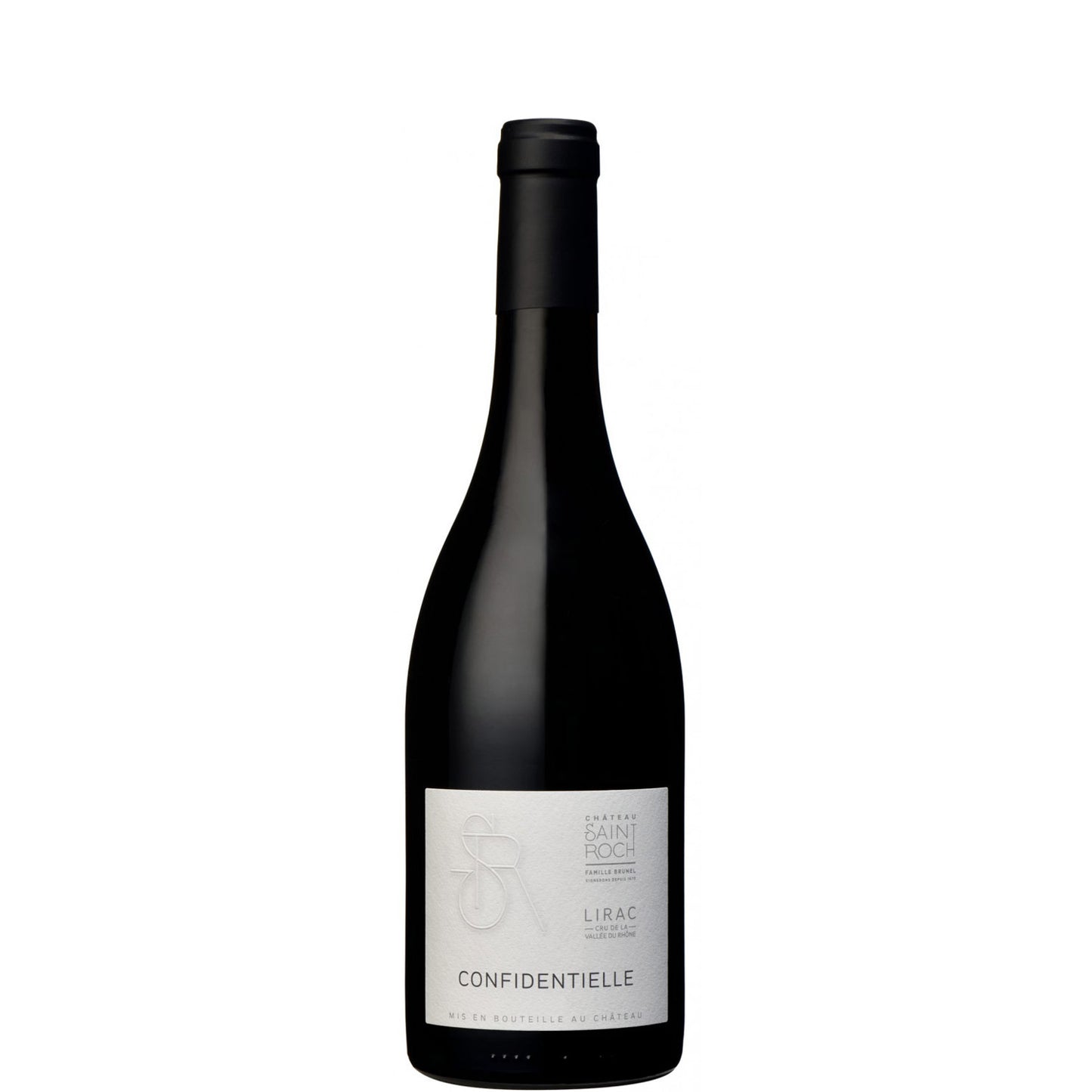
Château Saint-Roch, Lirac Cuvée Confidentielle Rouge, 2023
Château Saint-Roch, Lirac Cuvée Confidentielle Rouge, 2023
- 75cl
- 14.5%
- Red Still
- Grenache, Syrah, Mourvèdre
Couldn't load pickup availability

Optimal drinking window: 2026 - 2033
Lirac sits just across the Rhône from Châteauneuf-du-Pape and has long been the region's best-kept secret; similar soils, similar grapes, a fraction of the price. Château Saint Roch's Cuvée Confidentielle is a quietly confident expression of that: a GSM blend with real southern swagger, built around ripe Grenache giving the warmth and generosity, with Syrah and Mourvèdre adding backbone and a streak of peppery, herbal energy. The 2023 vintage brought plenty of sun-driven ripeness, but Saint Roch has kept things focused rather than flabby.
The garrigue character is vivid and distinctly southern Rhône, the tannins are ripe rather than grippy, and the finish has a warmth that invites a second glass before you've quite finished the first.
Right now the 2023 is in a generous, open phase — the fruit is front and centre, the tannins are soft, and it drinks very easily. Over the next two to three years the primary cherry and plum fruit will begin to knit with the herb and spice elements, adding more complexity and mid-palate interest. By 2029 or so it should be at its most harmonious, with secondary savoury notes of dried meat and earth beginning to emerge. Beyond 2031 the fruit will start to lighten and the wine may lose some of its freshness, so we would aim to drink it before 2033 rather than push it further.
Tasting Notes
AppearanceDeep ruby with a garnet edge and good clarity in the glass.
NoseRipe dark cherry and black plum lead, with a vivid waft of wild herbs — thyme, lavender, dried rosemary — that is unmistakably southern Rhône. There is a subtle undercurrent of cracked pepper and a hint of sun-warmed stone that gives it a real sense of place.
PalateThe Grenache speaks loudest here: round, warm, and generous, with fleshy red and black fruit and a softness to the texture that makes it immediately approachable. Syrah and Mourvèdre sharpen the edges — a peppery lift, some iron and dried herb — keeping the wine honest and stopping it from tipping into jamminess.
FinishWarm and savoury, with lingering herb and a gentle grip of tannin that fades cleanly.
Overall impressionA proper southern Rhône red with personality and enough structure to sit happily on a shelf for a few more years.
Food Pairings
Around Lirac and Tavel, this kind of wine is made for the table — specifically the Provençal table, where slow-cooked lamb with olives and herbes de Provence is something close to a religion. Grilled tapenade-rubbed lamb chops would be the obvious call, but it would be equally at home alongside a daube de boeuf, the beef braised long and slow in local wine with orange peel and anchovy. In summer, the locals might pour it alongside a wild boar stew or a hearty ratatouille built on proper market vegetables. A plateau of aged Comté or a slab of Roquefort would also do very nicely alongside it at the end of a meal.
We think this wine would go well with
Serve at around 16-17°C — cool enough to keep the wine lively but warm enough to let the Grenache open up. We would decant for 45 minutes to an hour; the wine is accessible young but benefits from a little air to unfurl the herbal and spice elements. A standard Burgundy-style bowl works well here, giving the aromas room to breathe without concentrating the alcohol uncomfortably.
Lirac's vineyards sit on a mix of sandy soils, limestone, and the rounded alluvial pebbles — galets roulés — that also define Châteauneuf-du-Pape across the river. These free-draining soils force the vines to dig deep and regulate their own water intake, which concentrates flavour and preserves freshness even in warm vintages. The mistral wind is a constant presence, reducing disease pressure and helping grapes achieve phenolic maturity without overheating. The result is wines with southern warmth that never feel heavy.
Lirac is a small southern Rhône appellation on the Gard side of the river, sandwiched between Tavel to the south and the Côtes du Rhône villages to the north. It permits the classic GSM blend and shares many of Châteauneuf-du-Pape's geological characteristics, though it remains significantly less famous and accordingly less expensive. For reds, the wines tend to be a little lighter and more herb-driven than their celebrated neighbour, with real charm and freshness when yields are kept sensible. It is an appellation worth paying attention to.
The 2023 growing season in the Rhône started promisingly with a mild winter and early budbreak, but spring brought its challenges with late frosts affecting some vineyards, particularly in the north. Summer delivered the heat we expect here, though without the punishing extremes that can shut down photosynthesis entirely. What saved the vintage was September's cooling temperatures and occasional rain, allowing the grapes to retain freshness while completing their ripening cycle. Harvest began earlier than usual but proceeded at a measured pace, giving producers flexibility to pick at optimal moments.
The result is a vintage that captures the Rhône's sunny disposition without the overwrought power that can make these wines feel heavy-handed. Syrah from the northern appellations shows particular promise, combining the grape's natural spice and dark fruit intensity with surprising lift and precision. In the south, Grenache-based blends benefit from that late-season freshness, offering immediate charm whilst maintaining enough structure for proper ageing. Most 2023s are drinking beautifully now and will continue to develop until 2035, making this a vintage that rewards both early drinking and patient cellaring.
FAQs
What does the Cuvée Confidentielle taste like?
Think ripe dark cherry and black plum, wild herbs like thyme and lavender, cracked pepper, and a warm, savoury finish. It is generous and approachable rather than austere — the kind of wine you open on a weeknight and immediately wish you had opened two bottles.
When is the best time to drink this wine?
It is drinking well now and will continue to do so until around 2033. We would open it from 2026 onwards, ideally with at least an hour in a decanter to let it fully express itself. The sweet spot is probably 2027 to 2030.
What food should I pair it with?
Lamb is the natural match — roasted, grilled, or slow-braised. It also works very well with wild boar, beef stew, tapenade, and hard or blue cheeses. Anything from the Provençal or southern French kitchen will feel at home alongside it.
Is Lirac worth exploring if I love Châteauneuf-du-Pape?
Absolutely. Lirac shares much of the same geology — limestone, sand, and those characteristic rounded pebbles — and uses the same grape varieties. The wines tend to be a touch lighter and more herb-driven, but the quality-to-price ratio is considerably more generous. If you love Châteauneuf, Lirac is the appellation you should already be drinking.
How should I serve this wine?
Serve at 16-17°C and decant for 45 minutes to an hour. A wide-bowled Burgundy glass gives the aromas enough room to open up without concentrating the alcohol.
Is this wine suitable for the cellar?
Yes, though it is not a long-distance runner. A few years in the rack will add complexity and allow the fruit and herb elements to knit together more fully. We would aim to drink it by 2033 at the latest.


What are you looking for tonight? Tell me the occasion, a grape, a region — or just try a suggestion below.
Your recommendations will appear here.
-
-
Speak to one of our Wine Gurus
Speak to a Wine GuruWith years of experience, our team can help you with all your wine buying and selling needs