

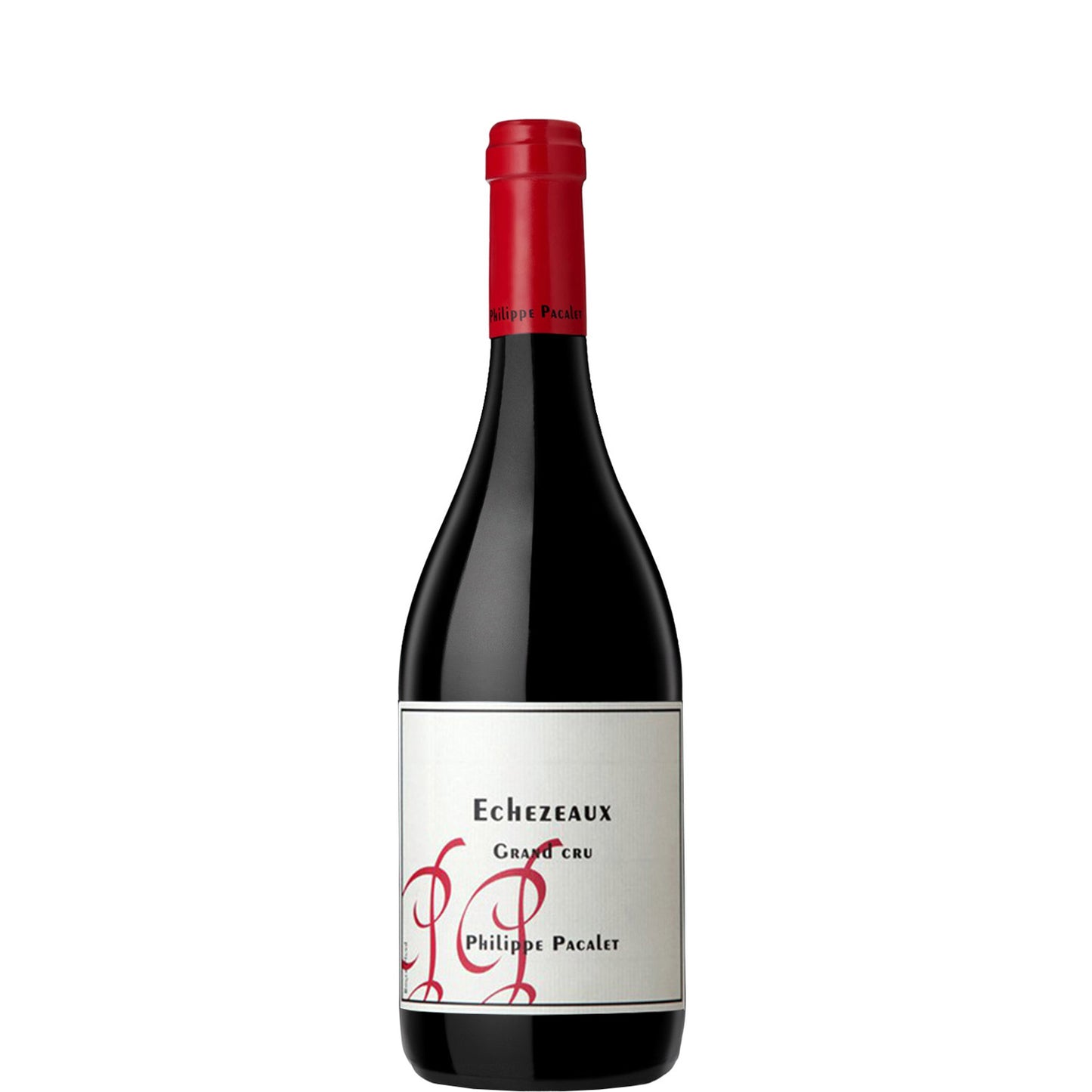
Échezeaux Grand Cru, Philippe Pacalet, 2024
Échezeaux Grand Cru, Philippe Pacalet, 2024
- 75cl
- 13%
- Red Still
- Pinot Noir
- Organic
- Biodynamic
Couldn't load pickup availability

Optimal drinking window: 2029 - 2045
Philippe Pacalet is one of Burgundy's most singular voices — a nephew of Marcel Lapierre, trained under Guy Accad, and for many years winemaker at Prieuré-Roch before striking out alone. He works without sulphur, ferments with whole clusters, and handles his wines with a lightness of touch that makes the fruit sing rather than shout. His Échezeaux sits within the Vosne-Romanée commune, directly above the village, and has a habit of wrong-footing people who expect Grand Cru weight. It's all nerve and perfume instead.
"4.25 barrels (feuillettes). From Rougeaux Dessus and a small portion of Clos Saint-Denis. Brooding, spicy black fruit with a strong tannic core. Powerful and glorious, but will need time."
Nathan Hill, Chairman
Philippe was clear that while yields were historically low, the payoff is in the glass. Aromatic clarity, saline finishes and finely judged tannins run through the range, and the wines show real charm already alongside the structure to age. A year where selection mattered enormously, and in Pacalet’s hands, the results are compelling.
Philippe Pacalet is one of Tim Atkin's 2024 Top 15 Négociants & Cooperatives.
What the critics say:
"Delightfully refined, pure and precise in fruit quality and in structure, this starts with perfumes of black peppercorn, peony and blackberries. This is nicely dry with a black plum skin bitterness that wraps around the mid-palate flesh. A firm core of acidity keeps the mouth watering from start to finish. Lovely balance. This comes from one-third Les Trueux and two-thirds Les Rouges du Bas. It is a terrific Echézeaux, keep on the lookout for this one!"
"The Echézeaux from Philippe Pacalet is more accessible in 2024 than it has been in some years, with an appealingly ripe cherry fruit and hints of peony and leather. The texture is less tannic than the other grands crus in this cellar (Ruchottes, Vougeot) but there is enough substance to suggest ageing for the mid-term or longer. The grapes are from two parcels; one in the Clos St-Denis, south of Grands Echézeaux, and the other at elevation in Rouges du Bas."
Échezeaux is a large Grand Cru of around 37 hectares straddling the boundary between Flagey-Échezeaux and Vosne-Romanée, sitting at roughly 250-280 metres altitude on a gentle east-facing slope. The soils are predominantly shallow limestone-clay with significant Bathonian limestone bedrock, giving wines a mineral iron-tinged quality distinct from the deeper, richer soils of nearby Grands Échézeaux. The relatively cooler aspect compared to the Vosne premier crus means ripening is slower and more even, preserving the nervous acidity that defines the best examples. Pacalet's parcel sits in the upper, stonier section, which amplifies that mineral quality.
Échezeaux was classified as a Grand Cru in 1937 and is one of Burgundy's largest at the top level — a fact that fuels plenty of debate about consistency and whether every parcel truly deserves the designation. It sits just north of Clos de Vougeot and south of Grands Échézeaux, and while the latter commands higher prices and greater critical reverence, Échezeaux from the right hands can be every bit as compelling. The AOC rules mandate Pinot Noir only, with maximum yields of 35hl/ha, though the best growers work well below that. At its finest it combines the floral lift of Vosne with a more earthy, iron-inflected backbone that sets it apart from its neighbours.
The 2024 growing season in Burgundy was, frankly, a test of nerve. A wet spring brought significant mildew pressure, and vignerons who stayed sharp in the vineyard — working fast, keeping canopies open, reducing yields where necessary — came out the other side with something worth talking about. Summer brought warmer, drier conditions that helped the fruit recover composure, and harvest arrived broadly on the later side, with growers picking carefully to find phenolic ripeness without sacrificing freshness. Quantity was down across much of the Côte, which concentrates minds as much as it concentrates wine.
What emerged is a vintage that rewards those who put the work in. The Pinots we have tasted carry real precision and translucency — not because they are light, but because the acidity is lively and the fruit unforced. Chardonnays from the Côte de Beaune look particularly promising: taut, mineral, with genuine length. This is not a vintage to panic-open. Most village and premier cru reds want three to five years at minimum, with the better appellations drinking well until 2035 and beyond. The whites are more approachable now, though the best will reward patience too.

Explore related wines


-
-
Speak to one of our Wine Gurus
Speak to a Wine GuruWith years of experience, our team can help you with all your wine buying and selling needs