

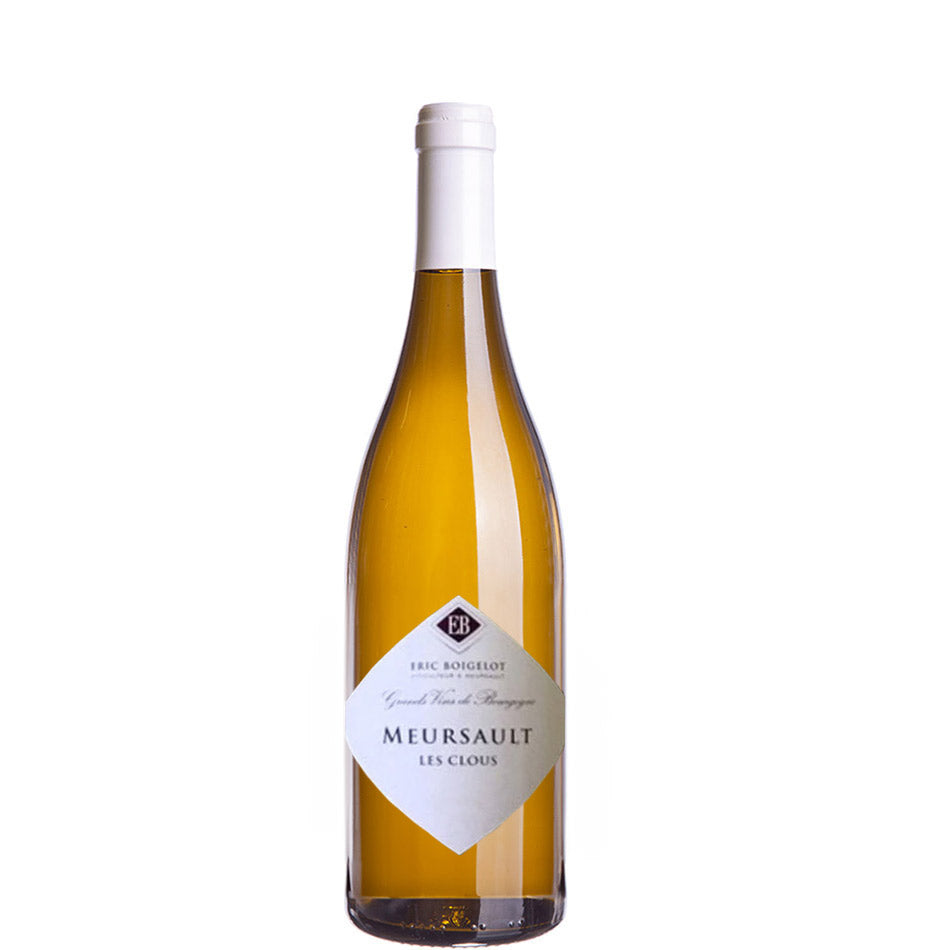
Meursault Les Clous, Domaine Éric Boigelot, 2019
Meursault Les Clous, Domaine Éric Boigelot, 2019
- 75cl
- 13%
- White Still
- Chardonnay
Couldn't load pickup availability

Optimal drinking window: Now - 2033
Les Clous 2019 is a superb white Burgundy, a Lieu-dit on the same elevation as Narvaux but with a unique Saint-Christophe viewpoint. Neal Martin recently tasted the domaine’s 2023s and described Les Clous as “thoroughly enjoyable” and “quintessential Meursault.”
The 2019 vintage is drinking beautifully now, showing classic Meursault richness, citrus-driven freshness, and that silky, precise texture that makes Boigelot so compelling.
“Every time I taste this wine I am blown away by the quality and price point. I've now taken it along to multiple dinners where it is usually wine of the night, against some stiff (and expensive) competition and yet to meet anybody that doesn't love it too. Top tip - stick it in a decanter for an hour if you are able and it will open up beautifully.”
James, Wine Guru
“Lieu dit on same elevation as Narvaux but other side of town up by Saint Christophe view point. Cereal crops, ripe pears, salted butter nose. Palate is more linear than aromas suggest, with vibrant acidity, a touch of smoke and white stone dust, spicy, sweet and supple, refreshingly green-edged.”
Tom, Head Wine Guru
The 2019 vintage in Meursault produced wines with excellent natural richness balanced by good acidity, and Les Clous is drinking very well right now in 2026 — the fruit is generous, the texture is resolved, and there is no need to wait. That said, there is enough structural acidity and mineral backbone here to reward another three to five years in the cellar, during which time the primary pear and citrus fruit will integrate further and a more complex, nutty secondary character will begin to emerge. We would expect the wine to plateau somewhere around 2028-2030 before beginning a slow, graceful decline. Drinking it now is not a compromise; holding it is an option for the patient.
Tasting Notes
AppearanceBright, medium gold with a faint green rim — lively and inviting in the glass.
NoseRipe pear and cereal grains up front, with that classic Meursault note of salted butter woven through. A gentle smokiness develops with air, along with something flinty and clean — white stone dust rather than flint in the showy sense.
PalateMore linear than the nose suggests, which is one of the things we love about this wine: the aromas promise generosity and the palate delivers precision. Vibrant acidity keeps everything taut, with sweet ripe fruit balanced by a refreshing green edge and a faint spicy warmth on the mid-palate. The texture is silky without being heavy — Chardonnay at genuine equilibrium.
FinishLong and mineral, with white stone and a clean citrus lift that keeps you coming back.
Overall impressionQuintessential Meursault at a price that makes its regular competition at the dinner table almost unfair.
Food Pairings
In Burgundy, a wine like this would most naturally appear alongside a roast poulet de Bresse — the region's revered free-range chicken — finished with cream and tarragon. Locally cured jambon persillé, the parsley-studded pressed ham terrine that appears on every good Burgundian table, is another natural partner. Dijon's own gougères, fresh from the oven and still puffed, are the classic aperitif companion. Further afield, Époisses — the region's famously pungent washed-rind cheese — can work brilliantly with a wine that has this much acidity and body to stand up to it. Simple grilled river fish, écrevisse in a light bisque, or a gratin dauphinois would all be at home here too.
We think this wine would go well with
Serve at 11-13°C — cold enough to show the acidity cleanly, but not so cold that the texture closes up. If you have the time, decant for 45 minutes to an hour: the wine opens up considerably with air and the nose becomes more expressive. A wide-bowled white Burgundy glass is ideal — it gives the aromas room to develop without letting the wine warm too quickly.
Les Clous sits at the same elevation as Narvaux on Meursault's upper slopes, but on the opposite side of the village towards Saint-Christophe. The soils here are limestone-rich with a clay component that retains just enough moisture to keep freshness intact even in warmer vintages. That elevation matters: it tempers ripeness and preserves the wine's characteristic linear acidity, which you can taste clearly against the fuller, richer texture that lower-lying Meursault plots tend to produce. The result is a lieu-dit that bridges Meursault's generosity with a precision more often associated with its premier cru neighbours.
Meursault is Burgundy's great white wine village, sitting between Puligny-Montrachet to the south and Volnay to the north in the Côte de Beaune. It produces no grand crus but has a galaxy of premier crus and named lieux-dits, each with a distinct character shaped by altitude, aspect, and soil depth. The appellation's hallmark is a particular combination of richness and savoury mineral edge — what people mean when they say Chardonnay can taste of salted butter and white stone at the same time. Compared to Puligny, Meursault tends to be rounder and more immediately generous; compared to Chassagne, it is more structured and less fruit-forward.
The 2019 vintage in Burgundy delivered exactly what vignerons needed after a string of challenging years: a textbook growing season that let the grapes ripen slowly and evenly. Spring arrived gently, summer stayed warm without punishing heat spikes, and crucially, September brought those cool nights that preserve acidity whilst allowing full phenolic ripeness. We find ourselves talking about 2019 as one of those vintages where nature simply cooperated, giving winemakers healthy fruit with natural balance rather than forcing them to correct for extremes in the cellar.
What emerged are Burgundies with remarkable freshness married to genuine depth—the Pinot Noirs show that silky texture and bright red fruit character that makes great Burgundy so compelling, whilst the Chardonnays have both the mineral backbone and subtle richness that age beautifully. The quality runs impressively deep across all appellations, from village wines that drink like premier crus to grand crus that remind you why Burgundy commands such devotion. These wines are drinking beautifully now if you fancy them young and vibrant, though we suspect the better bottles will reward patience well into the 2030s.
FAQs
What does Meursault Les Clous taste like?
Think ripe pear and cereal on the nose, with salted butter and a flinty, smoky edge. On the palate it is more linear and precise than the aromas suggest — vibrant acidity, a silky texture, and a long mineral finish. Classic Meursault richness without the heaviness.
When should I drink this wine?
It is drinking very well now and will continue to do so until around 2030. If you want to open it tonight, give it 45 minutes in a decanter first — it opens up noticeably with air. There is no need to wait, but a few more years in the cellar will add further complexity.
What food should I pair with this wine?
Roast chicken with cream sauce is the local Burgundian answer, and it is a good one. Beyond that, think rich fish dishes, scallops, gratin dauphinois, soft-rind cheeses, or simply good bread and butter. The wine has enough body and acidity to handle something with real weight.
Is this wine worth cellaring?
Yes, though it does not demand it. The 2019 vintage has the structure to develop until around 2030, when it should show more nutty, secondary complexity alongside the fruit. If you are looking for a Meursault to lay down rather than drink soon, it will reward the patience.
How does Les Clous compare to Meursault premier cru?
Les Clous sits at a similar elevation to Narvaux, one of Meursault's better-regarded lieux-dits, and shares that upper-slope precision. It is not classified as premier cru, but in terms of character — the linear acidity, the mineral edge, the textural precision — it punches well above its station. The price reflects the classification, not the quality.
Why is Domaine Éric Boigelot worth seeking out?
Boigelot is one of Meursault's under-the-radar names — serious quality without the inflated price tag that comes with domaine celebrity. Neal Martin recently described this very lieu-dit as quintessential Meursault. We have been recommending it for years and the feedback from customers bears that out: it regularly outperforms far more expensive wines at the dinner table.
Explore related wines


What are you looking for tonight? Tell me the occasion, a grape, a region — or just try a suggestion below.
Your recommendations will appear here.
-
-
Speak to one of our Wine Gurus
Speak to a Wine GuruWith years of experience, our team can help you with all your wine buying and selling needs