

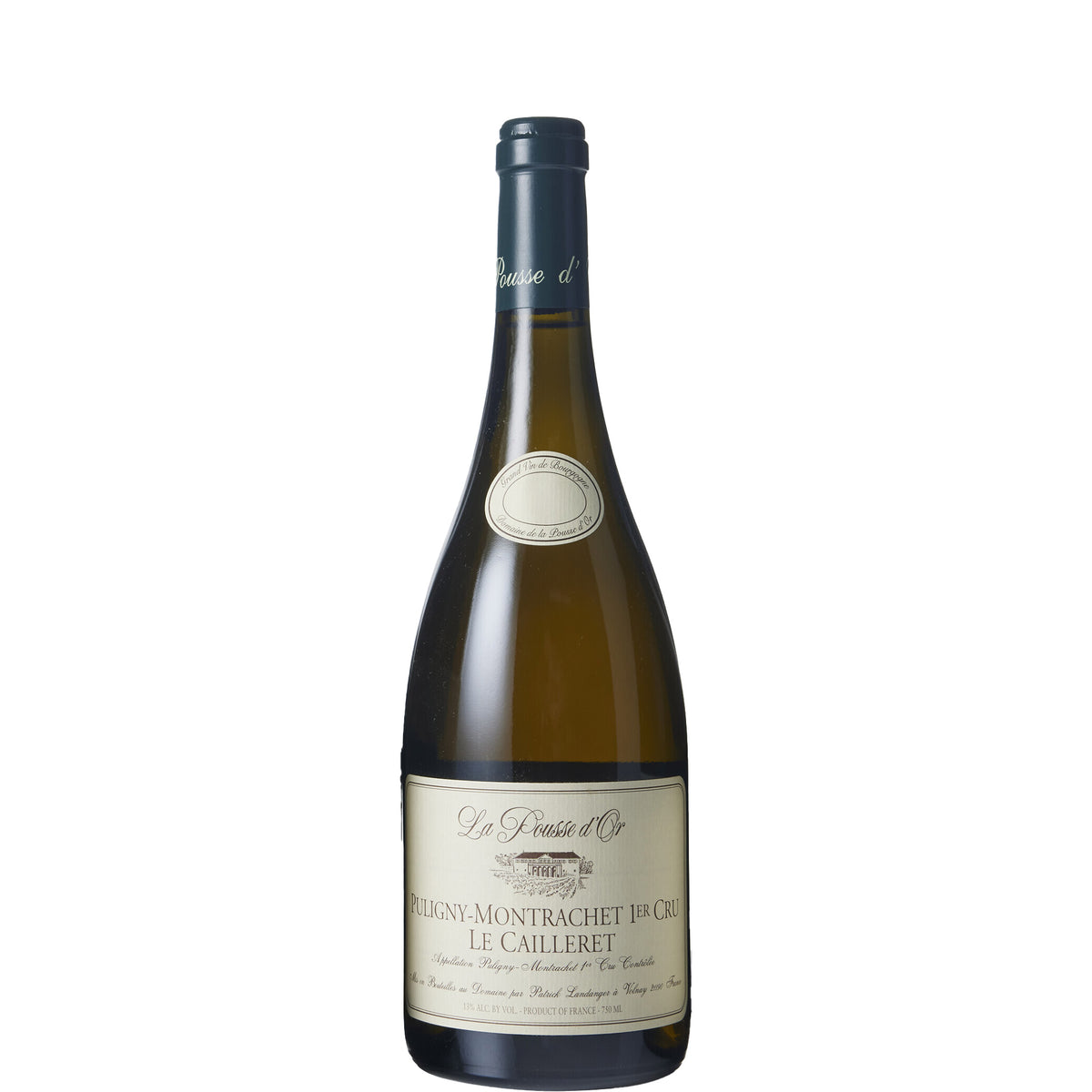
Puligny-Montrachet Premier Cru 'Le Cailleret', Domaine de la Pousse d'Or, 2018
Puligny-Montrachet Premier Cru 'Le Cailleret', Domaine de la Pousse d'Or, 2018
- 75cl
- 13%
- White Still
- Chardonnay

Optimal drinking window: 2027 - 2038
Few names in white Burgundy carry quite the swagger of Le Cailleret, the Puligny premier cru that sits a mere stone's throw from Montrachet itself and, on its day, can give the grand cru a run for its money. This 2018 from Domaine de la Pousse d'Or, a Volnay-based estate better known for its reds but increasingly assured with white, delivers all the tension and perfume the vineyard promises without ever feeling austere. The 2018 vintage gave generous ripeness in Burgundy, and here that warmth is held in check by Cailleret's limestone backbone.
Expect white blossom, lemon zest and a flinty, saline edge that sharpens on the finish, with the toasted, nutty richness of good barrel ageing woven through rather than draped over the top.
At eight years old, the primary citrus and blossom notes are beginning to fold into something richer, with toasted and nutty tones starting to show through. Expect the next few years to bring out more honeyed depth and a creamier texture, while the mineral spine keeps everything honest. It should hit a lovely plateau between 2029 and 2035, holding its precision rather than fading, before gently easing into a more tertiary, savoury phase beyond that.
Tasting Notes
AppearancePale gold with a greenish glint at the rim.
NoseWhite blossom, lemon zest and crushed stone, with a gentle toasted hazelnut lift from careful oak ageing.
PalateTaut and precise, lemon curd and ripe orchard fruit carried on a saline, mineral frame with real cut and drive.
FinishLong, chalky and persistent, with a final flicker of citrus oil.
Overall impressionA Puligny premier cru of real pedigree, poised rather than showy.
Food Pairings
In Puligny, this is the wine for the Saône's freshwater fish, think pike quenelles in a light cream sauce, or a simple turbot grilled with butter. Locals might pour it alongside a plate of jambon persillé or a young Chaource cheese, where the wine's acidity cuts cleanly through the richness. We'd also happily put it beside a lobster vol-au-vent or roast chicken with morels, letting the wine's minerality do the talking rather than fighting for attention.
We think this wine would go well with
Serve at 12-13°C, cool but not fridge-cold, in a generous white Burgundy glass that lets the aromatics open up. Decanting isn't essential but 20-30 minutes in the glass or a quick splash decant will coax out the nose nicely. Avoid serving too cold, it only mutes the wine's chalky, saline character.
Le Cailleret sits on a mid-slope band of shallow, free-draining limestone and clay soils, immediately adjacent to Le Montrachet, sharing much of its exposure and drainage if not quite its depth of soil. The vines face east to southeast, catching morning sun while avoiding the full intensity of afternoon heat, which helps preserve acidity even in warmer vintages like 2018. It's this proximity to grand cru ground, geologically rather than administratively, that gives the wine its mineral drive and why growers and buyers alike treat Cailleret with such reverence.
Puligny-Montrachet Premier Cru covers a patchwork of vineyards on the slopes above the village, each with its own character but united by the commune's reputation for the most precise, mineral-driven Chardonnay in Burgundy. Le Cailleret is widely considered the finest of these premier crus, bordering Le Montrachet and sometimes bottled as 'Les Demoiselles' by certain producers. Compared to neighbouring Meursault, Puligny tends towards a tighter, more linear style, with less overt richness and more focus on structure and length.
Burgundy growers will tell you that 2018 was the vintage that reminded them why they fell in love with their vineyards in the first place. A glorious summer of sustained warmth without the punishing heat that can strip freshness from Pinot Noir, followed by cool nights that preserved the acidity. The flowering went smoothly, fruit set was generous, and harvest arrived early but without panic—exactly the sort of classical growing season that becomes rarer each decade.
What landed in the cellars was Burgundy at its most seductive: Pinot Noir with real depth of colour and fruit concentration, yet still dancing on its toes rather than plodding along. The Chardonnays show beautiful ripeness balanced by that crucial mineral backbone, particularly from the better sites in Chablis and the Côte de Beaune. We're drinking these wines now with enormous pleasure—they hit that sweet spot where primary fruit hasn't faded but the tannins have softened into silk. The top cuvées will cellar beautifully for another decade, but frankly, why wait?
FAQs
What does this wine taste like?
Taut and mineral, with white blossom, lemon zest and a toasted hazelnut richness underneath, finishing long and saline.
When should I drink this wine?
It's drinking well now but will reward patience, ideally giving it until 2028 to settle, with a long plateau until 2038.
What food pairs well with this wine?
Classic Burgundian fare such as pike quenelles, turbot in butter, or roast chicken with morels all suit it beautifully.
How should I serve this wine?
Serve at 12-13°C in a good-sized white Burgundy glass, with a short decant or simply time in the glass to open it up.
Is this wine worth cellaring?
Yes, Le Cailleret is one of Puligny's finest premier cru sites and this bottling has the structure to improve for another decade.

Explore related wines


What are you looking for tonight? Tell me the occasion, a grape, a region — or just try a suggestion below.
Your recommendations will appear here.
-
-
Speak to one of our Wine Gurus
Speak to a Wine GuruWith years of experience, our team can help you with all your wine buying and selling needs