

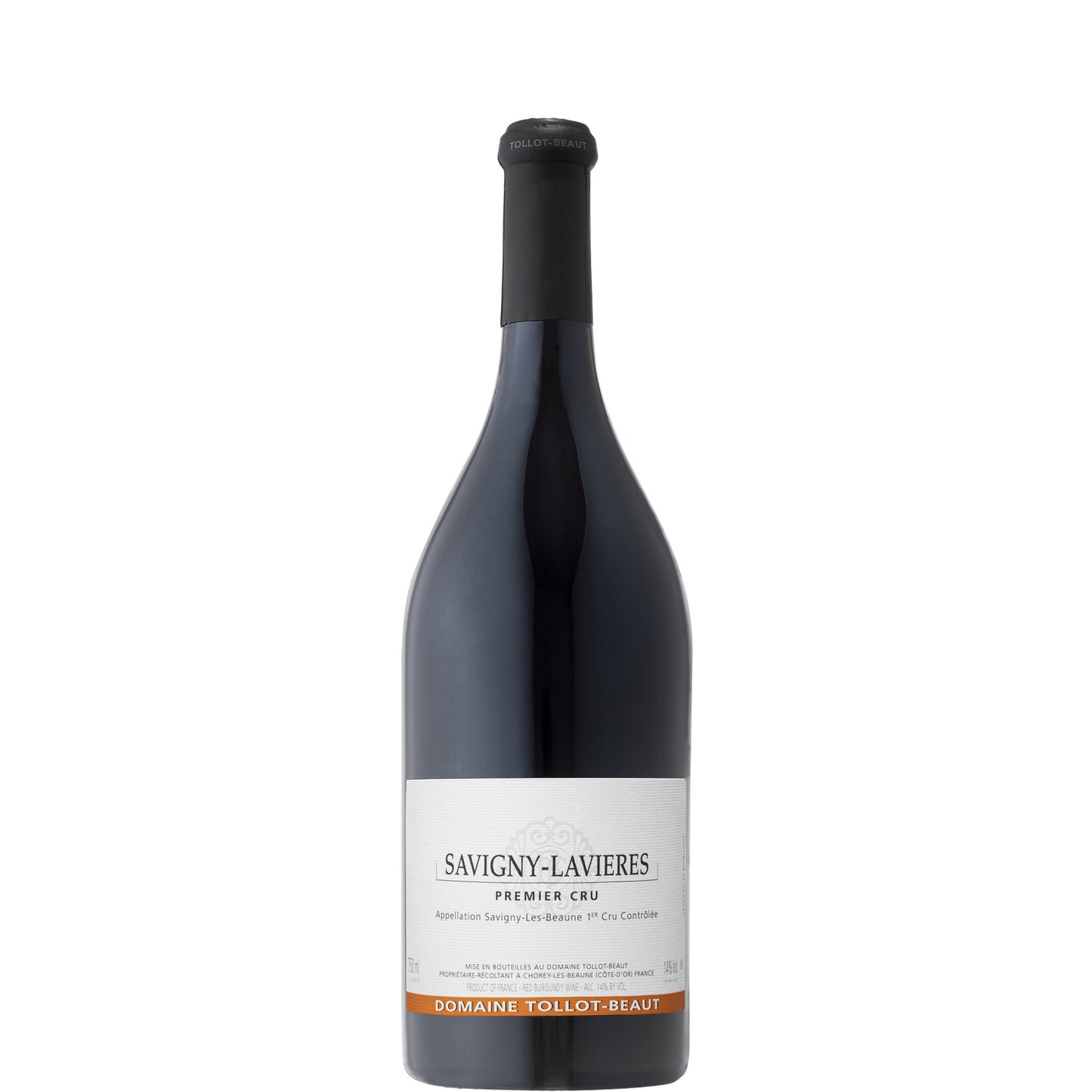
Savigny-lès-Beaune Premier Cru 'Les Lavières', Domaine Tollot-Beaut, 2020
Savigny-lès-Beaune Premier Cru 'Les Lavières', Domaine Tollot-Beaut, 2020
- 75cl
- 14.5%
- Red Still
- Pinot Noir
Couldn't load pickup availability

Optimal drinking window: Now - 2035
Domaine Tollot-Beaut produce high-quality, classic Burgundies that highlight the unique characteristics of each vineyard, with Les Lavières being one of the standout Premier Cru sites in Savigny-lès-Beaune. The Les Lavières vineyard lies on gentle slopes with stony, limestone-rich soils, ideal for producing delicate yet structured Pinot Noir. The name 'Lavières' refers to the layers of stone slabs found in the soil, which contribute to the vineyard’s excellent drainage and minerality.
The 2020 growing season in Burgundy was marked by warm weather, resulting in early harvests. However, despite the warmth, the wines retained excellent balance thanks to cool nights and careful vineyard management. The fruit from this vintage is concentrated, but the wines remain fresh and elegant, with refined tannins and vibrant acidity.
This is an excellent choice for lovers of elegant, terroir-driven Burgundy, offering both immediate pleasure and aging potential. Pair with roast chicken, duck, or game birds. It also complements mushroom dishes, pork, and soft cheeses like Brie or Camembert.
Right now, in 2026, this is in a pleasing early-drinking phase — the primary fruit is vibrant and the tannins already well-integrated thanks to 2020's generous ripeness. Over the next two to three years, that primary cherry-and-strawberry character will begin to deepen, giving way to more savoury, earthy secondary notes: forest floor, dried herbs, a little leather. The window of peak complexity is likely to fall somewhere between 2028 and 2033, when fruit and structure are in genuine dialogue. After that, it will soften gracefully rather than fade dramatically, though the very finest bottles may hold to 2035 or a little beyond.
What the critics say:
"Heady red cherry comes to the fore on the expressive nose that speaks of ripeness Overtones of Amarena do their bit. The palate is smooth and rounded with tannins that bode well for the future. An unusually powerful but hedonistic Savigny!"
Tasting Notes
AppearanceBright, medium ruby with a translucent rim — classic Pinot clarity, nothing heavy about it.
NoseRed cherry and wild strawberry up front, with a faint iron-and-stone quality underneath that signals the limestone soils. Give it a few minutes and a little dried rose petal and forest floor start to come through, adding intrigue without obscuring the fruit.
PalateThe 2020 warmth gives the fruit real presence — ripe and generous — but the acidity keeps everything honest and the tannins are fine-grained rather than grippy. There is a stony, almost chalky texture mid-palate that is very much Les Lavières talking.
FinishClean, mineral, and persistent, with a lingering note of dried cherry and a faint savouriness that makes you reach for another sip.
Overall impressionA village-level Premier Cru that punches well above its postcode — structured enough to age, characterful enough to enjoy now.
Food Pairings
In Burgundy, this is exactly the wine you'd open with a poulet de Bresse roasted simply with butter and tarragon — the classic pairing for good reason, since neither the wine nor the bird tries to dominate the other. Locals would also reach for this alongside a proper coq au vin, where the wine's acidity cuts through the richness of the sauce. A plate of jambon persillé, the region's beloved cold pressed ham terrine, is another natural match. In autumn, anything involving cèpe mushrooms — whether a tart, a risotto, or simply sautéed on toast — finds a willing partner in Les Lavières' earthy, mineral character.
We think this wine would go well with
Serve at around 15-16°C — slightly cooler than you might think, which keeps the red fruit lifted and the acidity bright. A 20-30 minute decant is worth doing if you're opening it now, just to let it open up and shake off any initial reticence. A wide-bowled Burgundy glass is the right call, giving the aromatics room to gather and evolve as the wine warms in the glass.
Les Lavières sits on the northern flanks of Savigny-lès-Beaune, where the slope is gentle and the soils are predominantly stony limestone with a shallow topsoil. The name itself tells you something useful: 'lavières' refers to the flat stone slabs layered through the earth, which drain water efficiently and force the vine roots to work hard. That stress on the vine is a good thing here, concentrating flavour without sacrificing freshness. The elevation and northeast-facing aspect keep temperatures cooler than the village's south-facing plots, and it shows in the wine's structure and energy.
Savigny-lès-Beaune sits just northwest of Beaune itself, flanked by Pernand-Vergelesses to the north and Chorey to the east. It has long played second fiddle to its more famous neighbours, which is frankly the wine buyer's gain: the quality of the Premier Crus here is serious, the prices considerably less so. The appellation produces predominantly red Pinot Noir, with the best Premier Cru sites divided between the northern slopes — where you find more structure and mineral edge — and the southern slopes near Beaune, which tend to be rounder and more immediately giving. Les Lavières is firmly in the northern camp.
We'll be honest: 2020 in Burgundy was a vintage that kept everyone on their toes. A warm, dry spring brought early budbreak, then summer turned properly scorching with temperatures hitting 40°C in August. The saving grace came from perfectly timed August rains that rescued the vines from serious drought stress, followed by ideal September weather that allowed for unhurried picking. Yields were mercifully normal after several years of frost-ravaged harvests, and crucially, the heat never tipped into the jammy territory that can plague warmer vintages here.
What emerged were wines with surprising freshness despite the heat, showing ripe fruit balanced by good acidity and lovely mineral precision. The reds have more immediate charm than the structured 2019s, with silky tannins and generous Pinot Noir character, whilst the whites display beautiful richness without losing that crystalline Burgundian tension we adore. This isn't a legendary vintage like 2005 or 2010, but it's thoroughly delicious and more approachable in youth than many Burgundy vintages. The village wines are drinking beautifully now, Premier Crus are just hitting their stride, and the Grands Crus will reward patience for another five to ten years.
FAQs
What does this wine taste like?
Think ripe red cherry and wild strawberry with a stony, mineral edge underneath — that chalky quality comes from the limestone-rich soils of the Les Lavières vineyard. The 2020 vintage adds a little extra fruit weight, but the acidity keeps it fresh and the tannins are fine rather than firm. It is more about elegance and character than power.
When should I drink it?
It is drinking well now and will continue to do so until around 2033, with the sweet spot likely falling between 2028 and 2032 when the fruit deepens and savoury complexity starts to emerge. If you are opening it today, give it a short decant to let it open up. If you can hold on a couple of years, do.
What food does it pair with?
Roast chicken is the classic match and it works brilliantly here. Beyond that, duck breast, game birds, mushroom-based dishes, and anything with earthy depth — a cep tart, a coq au vin — all play well with this wine's character. Softer cheeses like Brie or Camembert work too, especially with a bit of age on the wine.
How should I serve it?
Serve it at around 15-16°C, which is slightly cooler than room temperature in most British homes. A short decant of 20-30 minutes is recommended if you are drinking it now. Use a wide-bowled Burgundy glass to give the aromatics space to develop as it warms.
Is it worth cellaring?
Yes, with the understanding that this is a village-scale Premier Cru rather than a grand vin built for a decade in the dark. It has the structure and balance to reward patience until the early 2030s, and the 2020 vintage is particularly well-suited to medium-term ageing thanks to good natural acidity beneath the ripe fruit. Do not expect it to turn into something fundamentally different — but it will gain complexity and lose any remaining angular edges.
How does Tollot-Beaut compare to other Savigny producers?
Tollot-Beaut is one of the most reliable names in the appellation — a domaine that does not chase trends or over-extract, just makes honest, well-defined Burgundy that reflects where it comes from. Les Lavières is one of their standout sites and the wine consistently offers very good quality relative to what it costs, especially compared to Premier Crus from Beaune or Pommard just down the road.

Explore related wines


What are you looking for tonight? Tell me the occasion, a grape, a region — or just try a suggestion below.
Your recommendations will appear here.
-
-
Speak to one of our Wine Gurus
Speak to a Wine GuruWith years of experience, our team can help you with all your wine buying and selling needs