

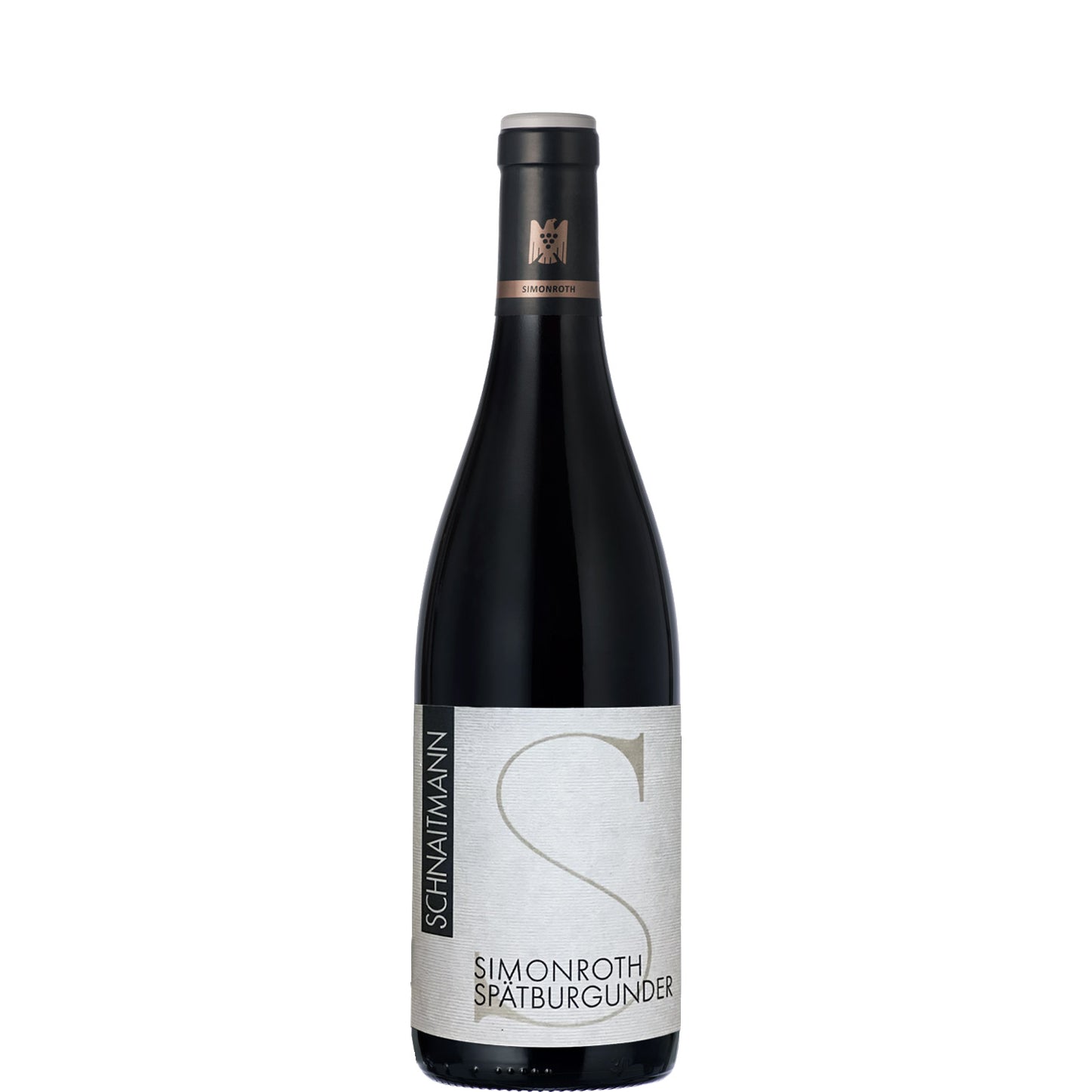
Weingut Schnaitmann, Simonroth Spätburgunder, 2015
Weingut Schnaitmann, Simonroth Spätburgunder, 2015
- 75cl
- 12.5%
- Red Still
- Spätburgunder
- Organic
- Biodynamic
Couldn't load pickup availability

Optimal drinking window: Now - 2035
Württemberg is not the first name that comes to mind when someone says 'great German Pinot Noir', but Rainer Schnaitmann has spent two decades dismantling that prejudice. His Simonroth vineyard, in the Remstal hills east of Stuttgart, produces a Spätburgunder that would hold its head up in any Burgundy tasting — not because it imitates Burgundy, but because it doesn't need to. The 2015 has had a decade to find itself, and what it's found is impressive: a wine of precision and restraint, with the kind of cool, earthy character that comes from soils with real personality.
In the glass, expect red cherry and dried rose underpinned by something mineral and almost saline, with tannins that are silky rather than grippy.
At ten years old, the 2015 Simonroth is in a good place — the primary red fruit has softened and integrated, and the secondary, earthier character is coming through with real interest. We'd say it's at or close to its peak right now, with that satisfying combination of freshness and complexity that marks a Spätburgunder at its best.
What the critics say:
"Savoury and mineral with redcurrant, cranberry and citrus over leafy, earthy tones. Silky tannins and firm acidity guide a juicy yet drying palate. Subtle and complex with good ageing potential."
Tasting Notes
AppearanceClear, medium ruby with a garnet edge — a wine that's settling into itself gracefully.
NoseRed cherry and dried rose lead, followed by something more earthy: damp clay, dried herbs, and a faint whiff of old bark. There's a mineral, almost stony quality underneath that feels very much of this specific place.
PalateElegant rather than powerful, with fine-grained tannins and a cool acidity that keeps everything taut. The fruit is precise — red rather than dark, fresh rather than cooked — with a savoury, slightly spiced mid-palate that lifts it beyond simple fruitiness.
FinishLong and mineral, with a clean persistence that lingers on iron and dried cherry skin.
Overall impressionA serious, site-specific Spätburgunder that makes a compelling case for Württemberg on the world stage.
Food Pairings
In Württemberg, this style of Spätburgunder would naturally find its way onto the table alongside Maultaschen — the region's beloved pasta parcels, often filled with minced meat and spinach, served in a clear broth or pan-fried in butter. A plate of Rostbraten, the local take on roast beef with crispy onions, is another classic pairing. Wild mushroom dishes, particularly those built around chanterelles or porcini, are a natural fit for the wine's earthy, savoury character. In autumn, locals would pair it without hesitation with venison or wild boar from the surrounding Swabian forests.
We think this wine would go well with
Serve at around 16°C — slightly cooler than you might instinctively reach for, to keep the acidity lively and the aromatics fresh. A brief decant of 20 to 30 minutes will do it good, opening up the nose without blowing off the more delicate floral notes. A large-bowled Burgundy glass is ideal, giving the wine room to breathe and funnel those subtle aromatics where they belong.
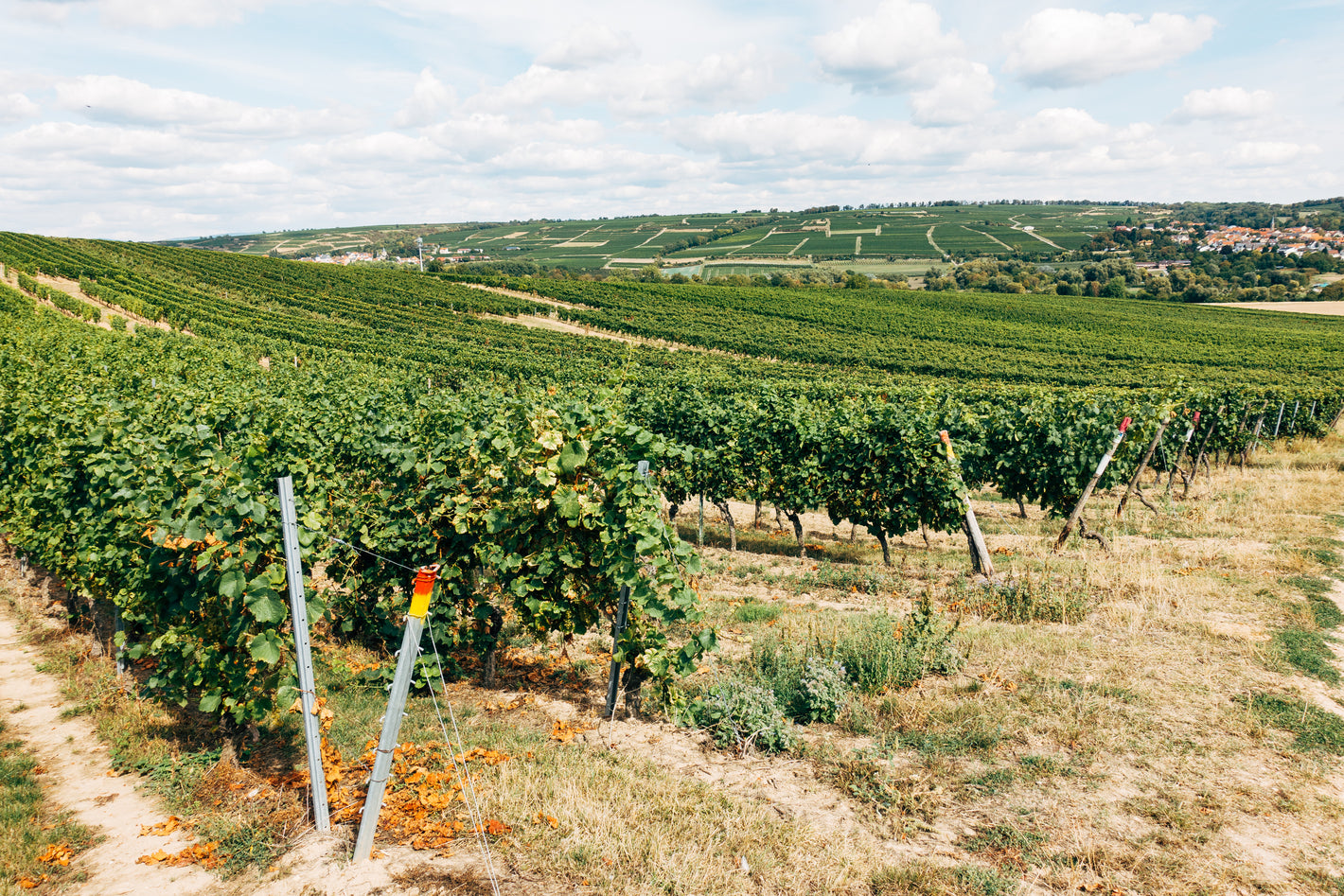
The Simonroth vineyard sits in the Remstal hills, where Keuper (a local red sandstone and clay-marl mix) provides the dominant soil character. This gives the wine a distinctive mineral grip and earthy depth quite different from the sandier, lighter soils elsewhere in Württemberg. Altitude brings cooler nights that preserve acidity and slow ripening, helping the grape hold onto its aromatic finesse rather than tipping into jamminess.
Württemberg is Germany's fourth-largest wine region and has long been known domestically as red wine country, even if the world outside Germany has been slow to take notice. Spätburgunder (Pinot Noir) and Trollinger are the dominant varieties, though quality from ambitious producers like Schnaitmann bears little resemblance to the light, quaffable style once associated with the region. The Remstal, within Württemberg, has emerged as the most serious sub-zone for fine red wine, with its varied soils and cooler mesoclimate setting it apart from the warmer Neckar valley sites.
Württemberg in 2015 benefited from the same warm, dry summer that made the vintage so celebrated across much of Germany — long sunshine hours, well-timed rainfall, and a healthy harvest with good physiological ripeness. The region's continental climate, with its relatively warm temperatures even by German standards, meant Trollinger, Lemberger, and Schwarzriesling all came in with real concentration and ripe tannins rather than the lean, tart profiles the region can sometimes produce. There were no dramatic disasters, no catastrophic hail or rot pressure to speak of — just a growing season that rewarded growers who managed their canopies carefully.
The wines that resulted sit firmly in the riper, more substantial camp for Württemberg — the Lembergers in particular have real stuffing, with the kind of structured, grippy backbone that wants food rather than casual sipping. These are not wines that flatter immediately; the best examples are drinking well now but will hold comfortably until 2025 to 2028. If you've been sitting on a good Lemberger from a serious producer, it's probably right in its window. The regional reds from lesser sites are probably best enjoyed sooner rather than later.
FAQs
What does the Simonroth Spätburgunder taste like?
Think elegant red cherry, dried rose, and earthy minerals rather than dark or jammy fruit. It's closer in spirit to a village-level Burgundy than a big, extracted red — precise, cool, and genuinely interesting to drink.
When is the best time to drink the 2015?
At ten years old it's in a lovely window, with the primary fruit having settled and secondary earthy complexity coming through.
What food should I serve with this?
It's a natural with roasted or braised meats — think roast chicken, veal, or pork. Wild mushroom dishes are a great match too. If you want to go regional, try it with Maultaschen or a simple Rostbraten with crispy onions.
How should I serve it?
Slightly cooler than room temperature — around 16°C. Give it a short decant of 20 to 30 minutes and use a large Burgundy-style glass. Resist the temptation to serve it too warm, which will flatten those delicate aromatics.
Is Württemberg really worth taking seriously for Pinot Noir?
Yes, and Schnaitmann is the reason why. The Simonroth site produces Spätburgunder that competes genuinely with serious Burgundy. The Keuper soils give a mineral, earthy character that's all its own — this isn't an imitation of anything.
Is Weingut Schnaitmann committed to sustainable farming?
Yes. The estate is certified under the Fair'n Green programme, which covers environmental practices, resource use, and social responsibility. Their vineyard work reflects that commitment to minimal intervention and long-term soil health.
Explore related wines


What are you looking for tonight? Tell me the occasion, a grape, a region — or just try a suggestion below.
Your recommendations will appear here.
-
-
Speak to one of our Wine Gurus
Speak to a Wine GuruWith years of experience, our team can help you with all your wine buying and selling needs