

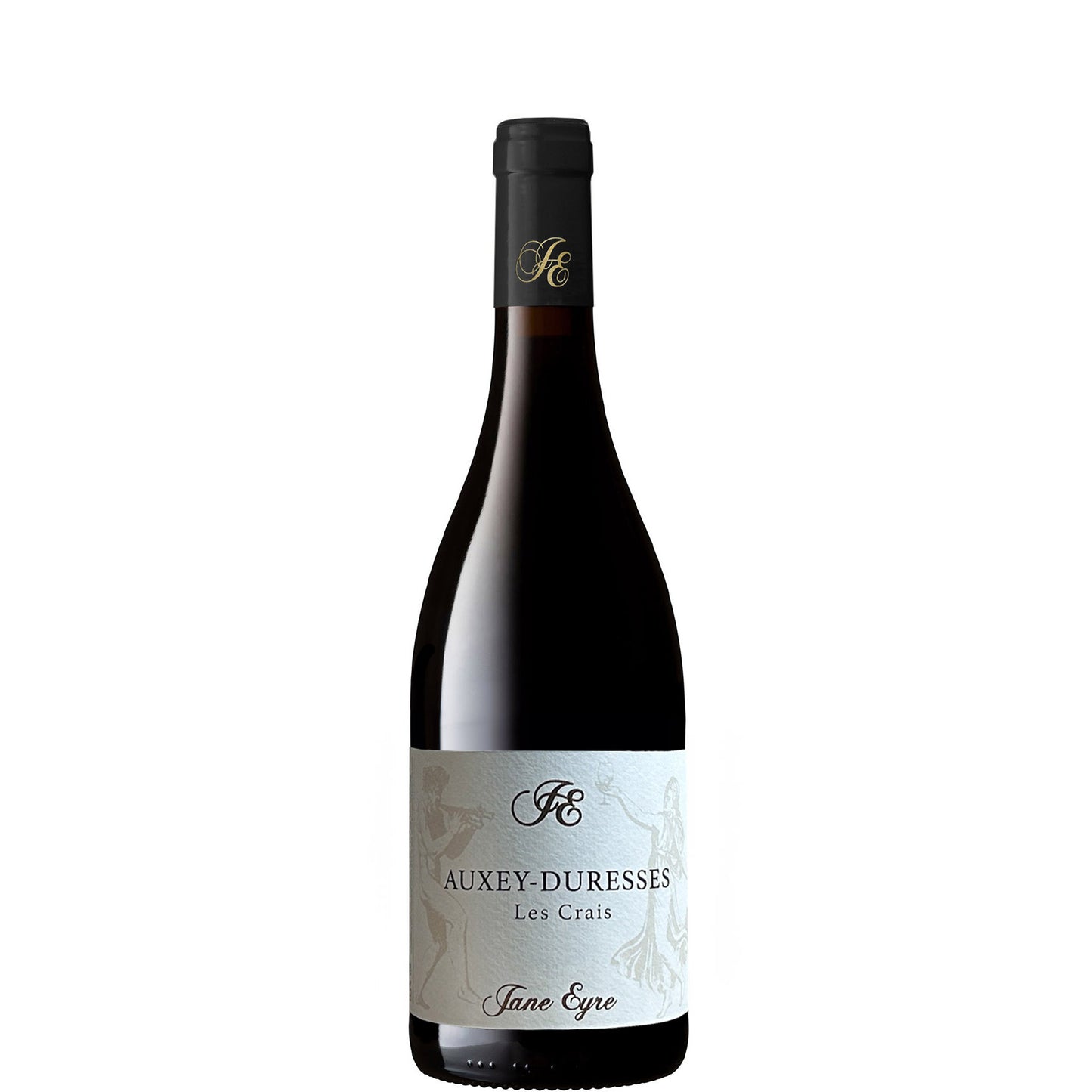
Auxey-Duresses 'Les Crais', Jane Eyre, 2024
Auxey-Duresses 'Les Crais', Jane Eyre, 2024
- 75cl
- 13%
- Red Still
- Chardonnay
Couldn't load pickup availability

Optimal drinking window: 2028 - 2034
"A quintessential “Jane wine”. Lifted, airy, and precise, with understated fruit and effortless balance. Elegant without being fragile."
Stewart Pryce, Honest Grapes Wine Club Manager
Transparency, Precision, and a Vintage That Fits Like a Glove
2024 could hardly suit Jane Eyre better. A cool, rain-affected year with low natural alcohols and sharply reduced volumes, it demanded obsessive sorting and restraint in the cellar. Jane delivered both. Sorting varied dramatically by site, with some parcels requiring extraordinary attention, but the results are wines of clarity, finesse, and unmistakable origin.
Whole-bunch use was carefully judged and varied by cuvée. In a vintage where some light-touch producers struggled to find flavour, Jane’s wines retain purity, energy, and real Pinot character. Barrel ageing has played a quiet but crucial role, rounding edges and knitting everything together without obscuring the transparency she prizes. These are wines that reward attention, and in cooler years like this, you truly see where they are from.
Volumes are around half of last year. Every bottle matters.
What the critics say:
"Exciting and gentle and looks hugely pleasurable. What fun! This is (reasonably) affordable red burgundy."
Les Crais takes its name from the cailloutis calcaires — the chalky, stony limestone debris that characterises this part of the Auxey-Duresses valley. The soils are thin and well-drained, forcing the vines to work hard, which translates directly into the wine's lean, mineral character. The valley orientation gives slightly cooler conditions than Meursault to the east, lending natural freshness and keeping alcohol in check. It is terroir that rewards precision winemaking rather than generous fruit.
Auxey-Duresses is a village appellation in the Côte de Beaune, tucked into a side valley between Meursault and Saint-Romain. It produces both red and white wines, though the whites — made from Chardonnay — are increasingly what the appellation is celebrated for. The rules follow standard Burgundy village AOC conventions: hand harvesting is common among quality producers, yields are regulated, and only Chardonnay is permitted for white wines. Compared to Meursault, the wines are typically leaner and more mineral, with less of that famous buttery richness — which in the right hands is a virtue, not a limitation.
The 2024 growing season in Burgundy was, frankly, a test of nerve. A wet spring brought significant mildew pressure, and vignerons who stayed sharp in the vineyard — working fast, keeping canopies open, reducing yields where necessary — came out the other side with something worth talking about. Summer brought warmer, drier conditions that helped the fruit recover composure, and harvest arrived broadly on the later side, with growers picking carefully to find phenolic ripeness without sacrificing freshness. Quantity was down across much of the Côte, which concentrates minds as much as it concentrates wine.
What emerged is a vintage that rewards those who put the work in. The Pinots we have tasted carry real precision and translucency — not because they are light, but because the acidity is lively and the fruit unforced. Chardonnays from the Côte de Beaune look particularly promising: taut, mineral, with genuine length. This is not a vintage to panic-open. Most village and premier cru reds want three to five years at minimum, with the better appellations drinking well until 2035 and beyond. The whites are more approachable now, though the best will reward patience too.
Explore related wines


-
-
Speak to one of our Wine Gurus
Speak to a Wine GuruWith years of experience, our team can help you with all your wine buying and selling needs