

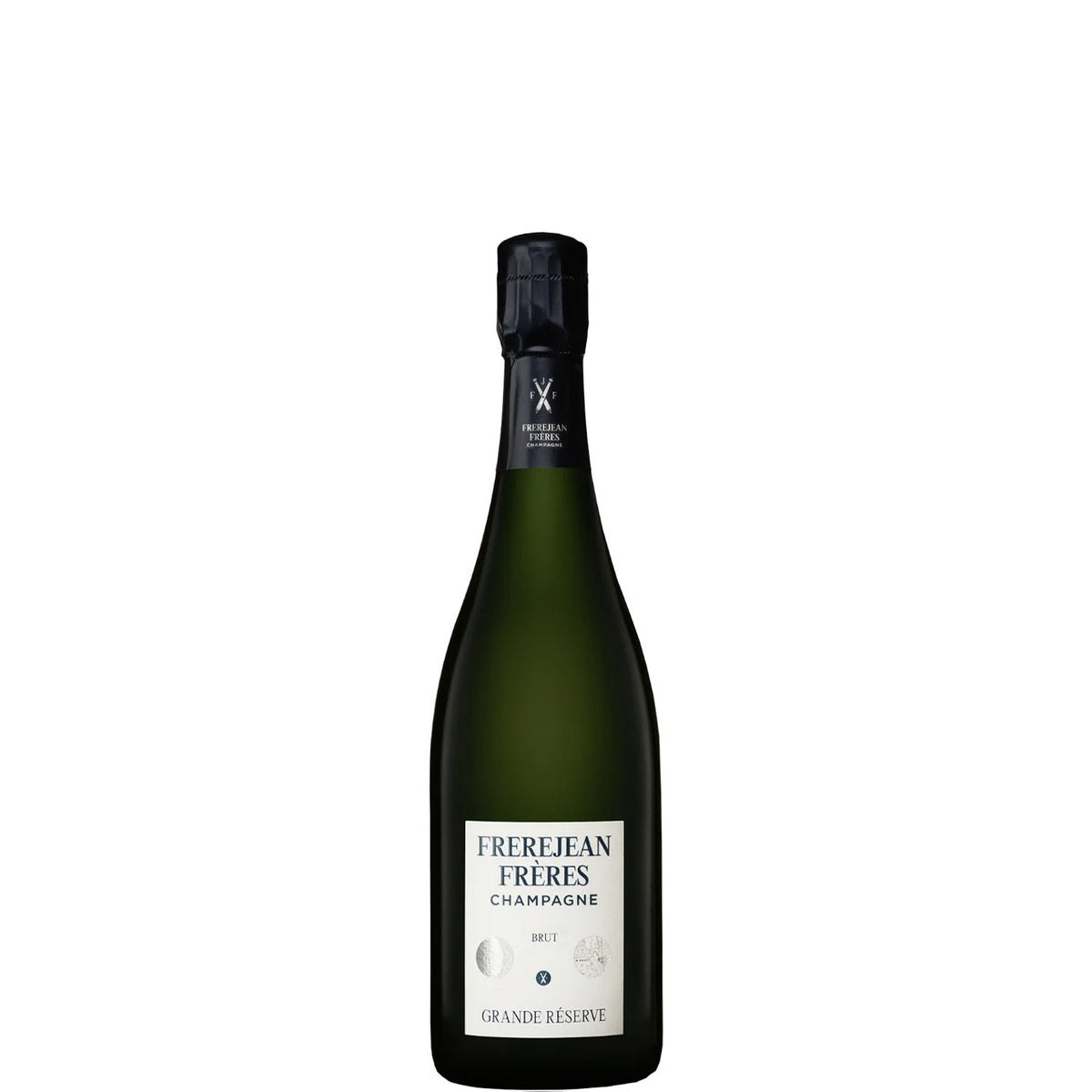
Frerejean Frères, Champagne Brut Grande Réserve, NV - Half-bottle
Frerejean Frères, Champagne Brut Grande Réserve, NV - Half-bottle
- 37.5cl
- 12%
- White Sparkling
- Chardonnay, Pinot Noir, Pinot Meunier
Couldn't load pickup availability

Optimal drinking window: 2026 - 2030
Frerejean Frères are one of Champagne's more compelling stories: a family house re-founded in 2005 by brothers who traced their roots back to a 19th-century grower dynasty in the Côte des Blancs. Their Grande Réserve is built around Chardonnay, which gives it that characteristic precision and brightness, while a backbone of Pinot Noir adds structure and a little weight. The result is a Champagne with real personality — not the blockbuster non-vintage style of the grandes maisons, but something more articulate and site-driven.
It's fresh and generous, with bright citrus-and-green apple aromas, a touch of white peach, and subtle floral and brioche nuances from its Champagne ageing. On the palate, it feels crisp and energetic — lively acidity carries mineral-driven freshness along with delicate stone-fruit and lemon zest flavours. The mousse is fine and persistent, giving good lift and a clean, refreshing finish with a hint of toast and minerality.
As a non-vintage Brut, it offers great value: elegant enough for celebrations, but easygoing enough for everyday moments.
Tasting Notes
AppearancePale gold with a fine, persistent bead and a clean, bright rim.
NoseFresh and Chardonnay-forward: white pear, green apple, and a drift of brioche with a clean, chalky undercurrent. There's a gentle floral lift — acacia rather than anything showy — and the overall impression is of precision rather than richness.
PalateCrisp and focused on entry, with the acidity doing the structural work elegantly. Orchard fruit sits at the centre, framed by lees-derived creaminess and that characteristic Côte des Blancs minerality — stony, clean, almost saline at the edges. The dosage is well-judged: present but not sweet.
FinishClean and persistent, with chalk and citrus zest lingering longer than the price might suggest.
Overall impressionA Chardonnay-driven Champagne of genuine refinement — leaner and more precise than most at this level.
Food Pairings
In the villages of the Côte des Blancs, this style of Champagne would be poured alongside gougères fresh from the oven, or with a plate of rillettes de lapin. Oysters from the Normandy coast are the obvious pairing — the salinity of both pointing at each other. Locally, you might also find it alongside a simple langoustine with good butter, or a piece of young Chaource cheese, which has the same chalky, lactic quality as the wine itself.
We think this wine would go well with
Serve at 8-10°C — cold enough to keep the bead lively, warm enough for the Chardonnay fruit to show. No decanting needed; just pour straight from a well-chilled bottle. A tulip-shaped Champagne glass works better than a flute here, giving the nose a little more room. Because this is a half-bottle, it will warm up faster than a full bottle — keep it in the ice bucket between pours.
The Côte des Blancs is Champagne's most celebrated Chardonnay country, running south from Épernay over a spine of east-facing slopes where the topsoil is thin and the chalk beneath is deep — in places running down 200 metres or more. That chalk acts as both water reservoir and reflector, moderating the cool continental climate and lending wines a mineral sharpness that no amount of winemaking can entirely replicate. Avize and Cramant, Frerejean Frères' heartland, are among the finest grand cru sites on the slope, consistently producing Chardonnay of real tension and precision.
Champagne is the world's most tightly regulated sparkling wine appellation, covering around 34,000 hectares in the Marne and surrounding departments, with strict rules on grape varieties (Chardonnay, Pinot Noir, and Pinot Meunier are the big three), yields, pressing, and minimum ageing on lees. Non-vintage wines must spend at least 15 months on lees before release; in practice, serious houses age them considerably longer. What sets Champagne apart from every other fizz isn't just the method — it's the accumulated reserve wines, blended across vintages, that give non-vintage cuvées their consistency and complexity.
FAQs
What does the Grande Réserve taste like?
It's Chardonnay-led and focused rather than rich — think white pear, fresh brioche, and a clean chalky bite, with good acidity keeping everything lively. Precise and refreshing rather than opulent.
When should I drink this?
The half-bottle format means it's best enjoyed in 2026-2030 while the fruit is fresh and the fizz is at its most animated. Don't sit on it for too long.
What food works well with this?
Oysters are the easy answer, but it's just as good with langoustines, a light fish dish, or gougères. The lean, chalky character cuts through anything creamy or lightly salty with ease.
How should I serve it?
Chill to around 8-10°C and serve in a tulip glass rather than a flute — it gives the Chardonnay fruit a little more room. Keep it in the ice bucket between pours; half-bottles warm up quickly.
Is Frerejean Frères worth knowing about?
Very much so. They're a small, Chardonnay-obsessed house based in the grand cru villages of Avize and Cramant on the Côte des Blancs — serious wine, still slightly under the radar, which is exactly where we like to find things.
Explore related wines


What are you looking for tonight? Tell me the occasion, a grape, a region — or just try a suggestion below.
Your recommendations will appear here.
-
-
Speak to one of our Wine Gurus
Speak to a Wine GuruWith years of experience, our team can help you with all your wine buying and selling needs