

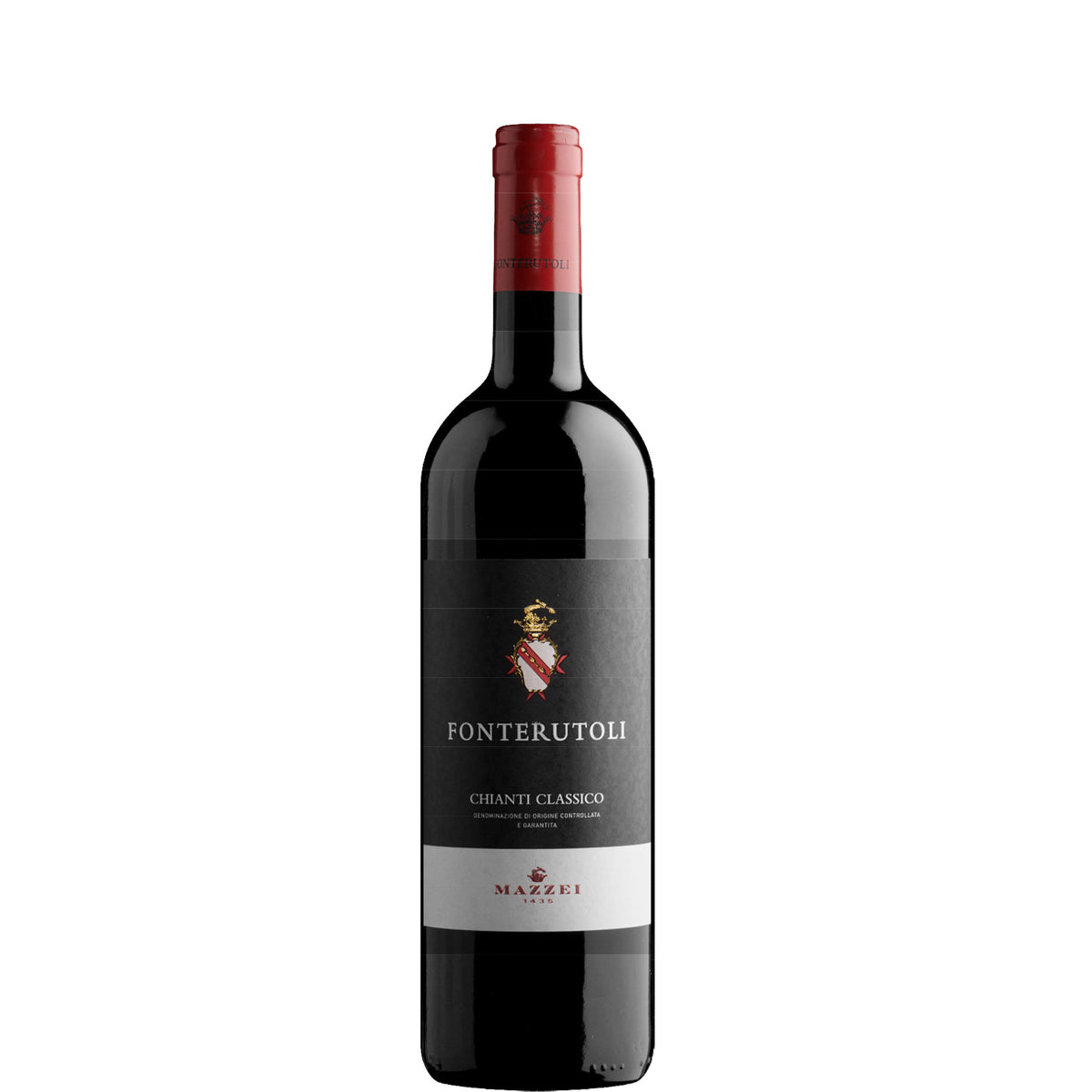
Mazzei, Castello di Fonterutoli, Chianti Classico, 2023
Mazzei, Castello di Fonterutoli, Chianti Classico, 2023
- 75cl
- 13.5%
- Red Still
- Sangiovese, Malvasia Nera, Colorino
Couldn't load pickup availability

Optimal drinking window: 2026 - 2033
Castello di Fonterutoli sits at the heart of Chianti Classico, and this bottling is about as pure an expression of the Mazzei family's style as you'll find: Sangiovese-led, with small amounts of Merlot and the old local variety Colorino for colour and a touch of weight. It's a wine that wears its tradition lightly, modern in its precision but entirely faithful to the place.
Expect morello cherry, dried thyme, and a savoury, almost bloody undertone that marks out serious Sangiovese from the supermarket stuff. The tannins are fine rather than fierce, the acidity keeps everything upright, and there's a gentle grip on the finish that asks for food rather than demanding it.
In its first two or three years the cherry fruit will be front and centre, bright and slightly tart. By 2028 or so, expect the tannins to soften further and a more savoury, dried-herb character to emerge alongside the fruit. Given a few more years in bottle, subtle notes of leather and dried fig should start to layer in, without ever losing that core of Sangiovese freshness.
What the critics say:
"Complex Gallo Nero, showing graphite and a whiff of minerality alongside dark cherries, floral notes and earthy depth. Very juicy and supple with medium body, crisp acidity and ripe, velvety tannins. Drink or hold."
Tasting Notes
AppearanceBright ruby red with a faint garnet rim.
NoseMorello cherry and redcurrant mingle with dried herbs, a touch of leather, and a faint iron-like savouriness typical of good Sangiovese.
PalateMedium-bodied with lively acidity, fine sandy tannins, and a core of red cherry fruit that stays bright rather than jammy.
FinishSavoury and dry, with a lingering note of tea leaf and spice.
Overall impressionA honest, food-ready Chianti Classico that over-delivers on its price.
Food Pairings
In Tuscany this would be poured with bistecca alla fiorentina, that enormous, barely-cooked T-bone that demands a wine with enough acid to cut through the fat. It's equally at home with pappardelle in a wild boar ragù, or simply with a plate of pecorino and salami at a trattoria table. The acidity and savoury tannin make it a natural partner for tomato-based dishes too, think ribollita or a rustic pasta al pomodoro.
We think this wine would go well with
Serve at around 16-17°C, cool cellar temperature rather than full room warmth. A brief decant of 20-30 minutes will open up the aromatics without blowing off the fresher fruit notes. A standard Bordeaux-style glass or a tulip-shaped Burgundy glass both work well, giving the cherry and herb notes room to breathe.
The Fonterutoli estate lies in the southern part of Chianti Classico, around Castellina in Chianti, where altitude (around 350-400 metres) and a mix of galestro and alberese soils give the wine its lift and mineral spine. Days are warm and nights cool, which helps Sangiovese hold onto its acidity even in ripe vintages. The family has mapped the estate's soils in extraordinary detail, matching clone to parcel with almost obsessive care.
Chianti Classico is the historic heartland from which the broader Chianti zone later expanded, and it operates under its own stricter rules, minimum 80% Sangiovese, lower yields, and the black rooster (Gallo Nero) seal that marks the original zone. Compared to generic Chianti, Classico wines tend to show more structure, less simple fruitiness, and a genuine sense of place. This bottling sits at the accessible, everyday end of the Mazzei range, below their Riserva and Gran Selezione wines.
The 2023 vintage in Tuscany delivered precisely what nobody expected after a challenging start. Spring brought excessive rainfall that had growers fretting about disease pressure, whilst a scorching July tested even the most experienced vignerons. Yet August's return to more moderate temperatures, combined with crucial diurnal temperature swings, allowed the vines to regain their composure just when it mattered most. The harvest stretched longer than usual, with producers able to pick at optimal ripeness rather than racing against the clock.
What emerged from the cellars shows Tuscany's remarkable ability to transform adversity into opportunity. The Sangiovese displays a freshness we haven't seen in recent warm years, with that characteristic cherry brightness sitting beautifully alongside more structured tannins. Super Tuscans from the coast fared particularly well, where maritime influences helped moderate the summer extremes. These aren't blockbuster wines built for decades of cellaring, but rather Tuscan reds with an approachable charm that makes them dangerously drinkable now whilst still having the backbone to reward five to eight years of patience.
FAQs
What does this wine taste like?
Bright morello cherry and dried herbs with a savoury edge, fine tannins, and a dry, spicy finish.
When should I drink this wine?
It's ready now and will drink well until around 2033, gaining a touch of leather and spice along the way.
What food should I pair it with?
Classic Tuscan fare: grilled steak, pasta with tomato or wild boar ragù, or simply bread, cheese, and cured meats.
How should I serve this wine?
Serve at 16-17°C in a standard red wine glass, with a short 20-30 minute decant to open it up.
Is this wine worth cellaring?
It's made for relatively near-term drinking rather than decades in the cellar, but a few years of bottle age will add welcome complexity.

OUR GROWERS
Mazzei
Explore related wines


What are you looking for tonight? Tell me the occasion, a grape, a region — or just try a suggestion below.
Your recommendations will appear here.
-
-
Speak to one of our Wine Gurus
Speak to a Wine GuruWith years of experience, our team can help you with all your wine buying and selling needs