

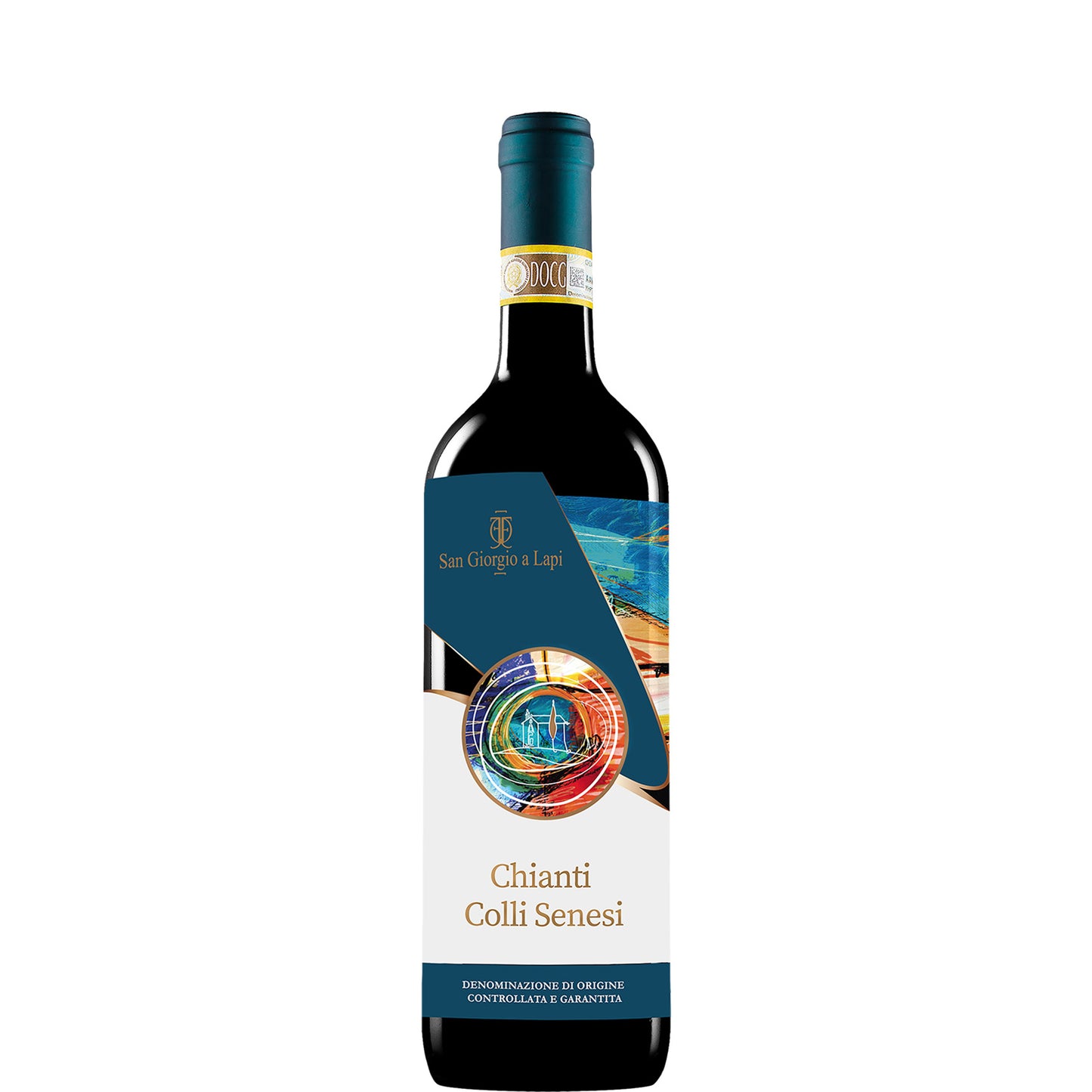
San Giorgio a Lapi, Chianti Colli Senesi, 2024
San Giorgio a Lapi, Chianti Colli Senesi, 2024
- 75cl
- 13%
- Red Still
- Sangiovese
Couldn't load pickup availability

Optimal drinking window: 2026 - 2028
San Giorgio a Lapi sits in the Colli Senesi, the gently rolling hills south of Siena where Sangiovese produces something altogether lighter on its feet than its Classico cousins.
This is Chianti in its most unguarded form: ripe red cherry and wild berry, a whisper of violet, and that characteristic snap of acidity that makes the grape so naturally suited to the table. There's a touch of earth and dried spice to keep things honest, but the tannins are soft and the whole thing moves with an easy, thirst-provoking energy.
This is a wine built for the near term, and that's entirely the point. Right now in 2026, the fruit is vibrant and the acidity is doing its best work at the table. By 2027 it will still be drinking well, perhaps with a touch more integration between the spice and the red fruit. By 2028 you're at the outer edge of its pleasure zone — drink it up before then. There's no secondary complexity waiting to emerge here; this is a wine for the present, and it's rather good at it.
Tasting Notes
AppearanceBright ruby with a lively, youthful rim.
NoseFresh and inviting, with ripe red cherry and wild strawberry up front, followed by a lift of violet and a subtle dried herb note. There's a faint earthy undercurrent — the kind that tells you this is Sangiovese from proper limestone soils rather than somewhere warmer and richer.
PalateLight to medium-bodied with the sort of bright, cherry-driven freshness that makes you reach for a second glass before you've finished the first. Soft tannins offer gentle grip without any roughness, and the acidity is properly lively — cutting through food rather than standing apart from it. A flick of dried spice on the mid-palate adds just enough interest.
FinishClean and refreshing, with a lingering note of red fruit and a dry, stony close.
Overall impressionStraightforward, unpretentious, and genuinely easy to enjoy — Sangiovese doing exactly what it does best.
Food Pairings
Around Siena, a wine like this would arrive at the table alongside a plate of pappardelle al cinghiale — wide ribbons of pasta with wild boar ragu, slow-cooked with juniper and red wine until it collapses into something deeply savoury. Bistecca alla Fiorentina is the obvious regional showstopper, but the locals are just as likely to pour this with grilled sausages, a bowl of ribollita, or a platter of local salumi and pecorino senese. The bright acidity was made to cut through the fat in all of the above. Simple, seasonal, and deeply satisfying.
We think this wine would go well with
Serve at around 16°C — cool enough to keep the fruit fresh, warm enough to let the spice and earth show. No need to decant; this is a wine that opens up readily in the glass within minutes. A standard Bordeaux or universal red wine glass works well, though a wider bowl won't hurt if you want to coax out a little more of that violet lift on the nose.
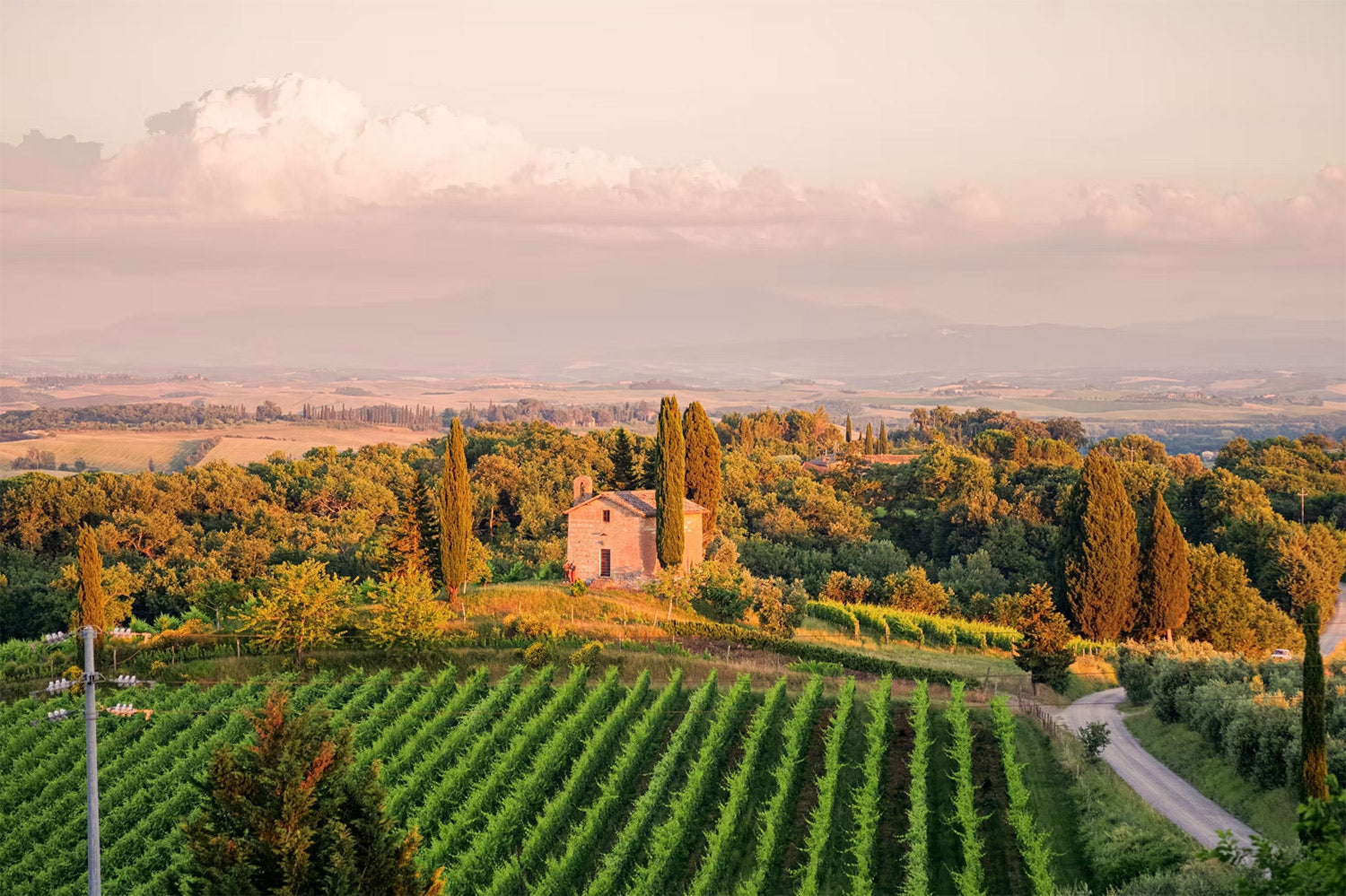
The Colli Senesi hills south of Siena sit at moderate altitude, with soils that are predominantly galestro — the crumbly, schist-like limestone that drains well and forces Sangiovese to work for its living. The result is wines with a naturally higher tone: fresher acidity, more perfume, and a leaner frame than grapes grown on the heavier clay soils of the Chianti Classico zone. The continental climate, with warm days and genuinely cool nights, helps retain that brightness in the fruit.
Chianti Colli Senesi is one of seven sub-zones within the broader Chianti DOCG, covering the hills surrounding Siena in southern Tuscany. It requires a minimum of 75% Sangiovese, with the remainder drawn from a range of permitted varieties including Canaiolo, Colorino, and small amounts of international grapes. Compared to Chianti Classico, the wines here tend to be lighter, earlier-drinking, and more affordable — less celebrated, perhaps, but often excellent value for precisely the kind of fresh, food-friendly red that Sangiovese does so naturally well. Think of it as Chianti without the fanfare.
FAQs
What does this wine taste like?
Ripe red cherry and wild berry with a lift of violet, a touch of dried spice and earth, soft tannins, and a bright, refreshing finish. It's light to medium-bodied and built for easy, food-friendly drinking.
When should I drink it?
Now, frankly. This is a wine made for immediate pleasure rather than patience. Drink it from 2026 until 2028 while the fruit is at its most vivid and the acidity is doing its best work at the table.
Is it worth cellaring?
No. This is a fresh, early-drinking style of Chianti and it won't improve with time in the cellar. Open it, enjoy it, and move on to the next bottle.
What food works well with it?
Almost anything Italian and unfussy: pasta with meat ragu, grilled sausages, pizza, antipasti, or a good board of salumi and aged cheese. The bright acidity is its greatest asset at the table.
How should I serve it?
Slightly cool, around 16°C. No decanting needed — just pour and enjoy. A standard red wine glass is perfectly adequate.
How does this compare to Chianti Classico?
Chianti Colli Senesi is lighter, fresher, and more immediately drinkable than most Chianti Classico. It won't have the same structure or ageing potential, but it's often better value for everyday drinking and arguably more honest about what Sangiovese does naturally well.
Explore related wines


What are you looking for tonight? Tell me the occasion, a grape, a region — or just try a suggestion below.
Your recommendations will appear here.
-
-
Speak to one of our Wine Gurus
Speak to a Wine GuruWith years of experience, our team can help you with all your wine buying and selling needs